
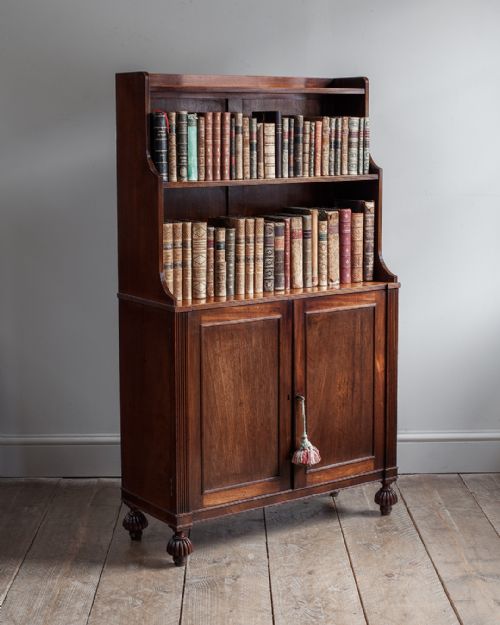
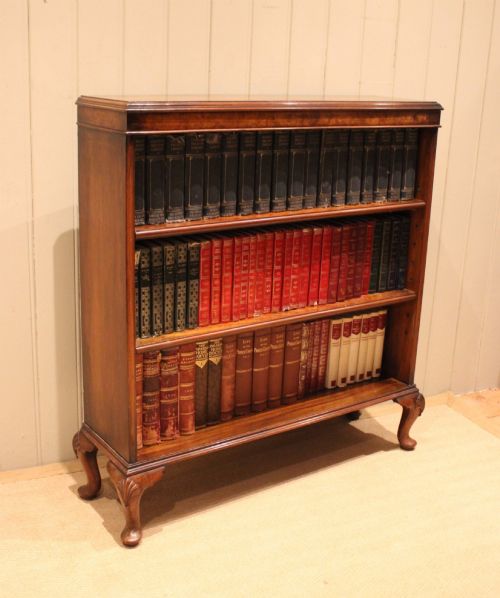
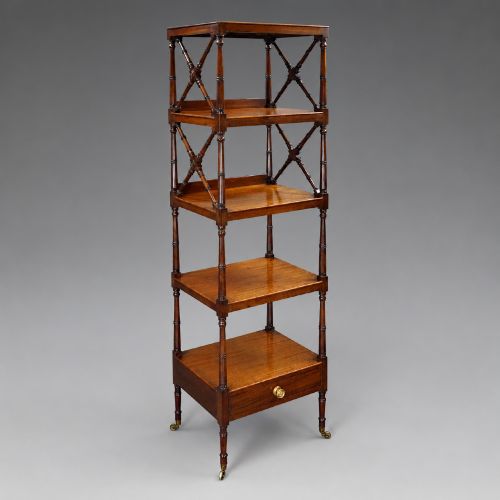
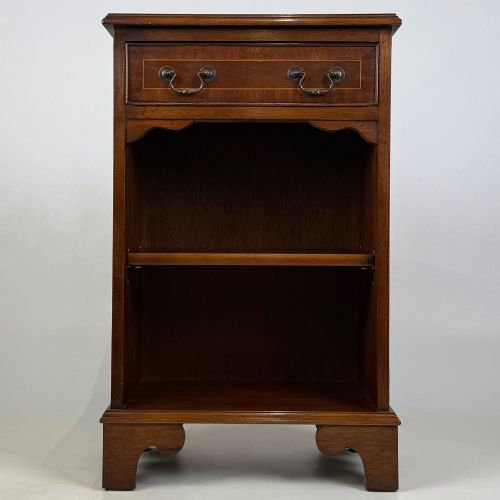
Georgian Open Bookcase
A georgian open bookcase brings architectural proportion and accessible shelving to a room, offering a refined way to display a library.
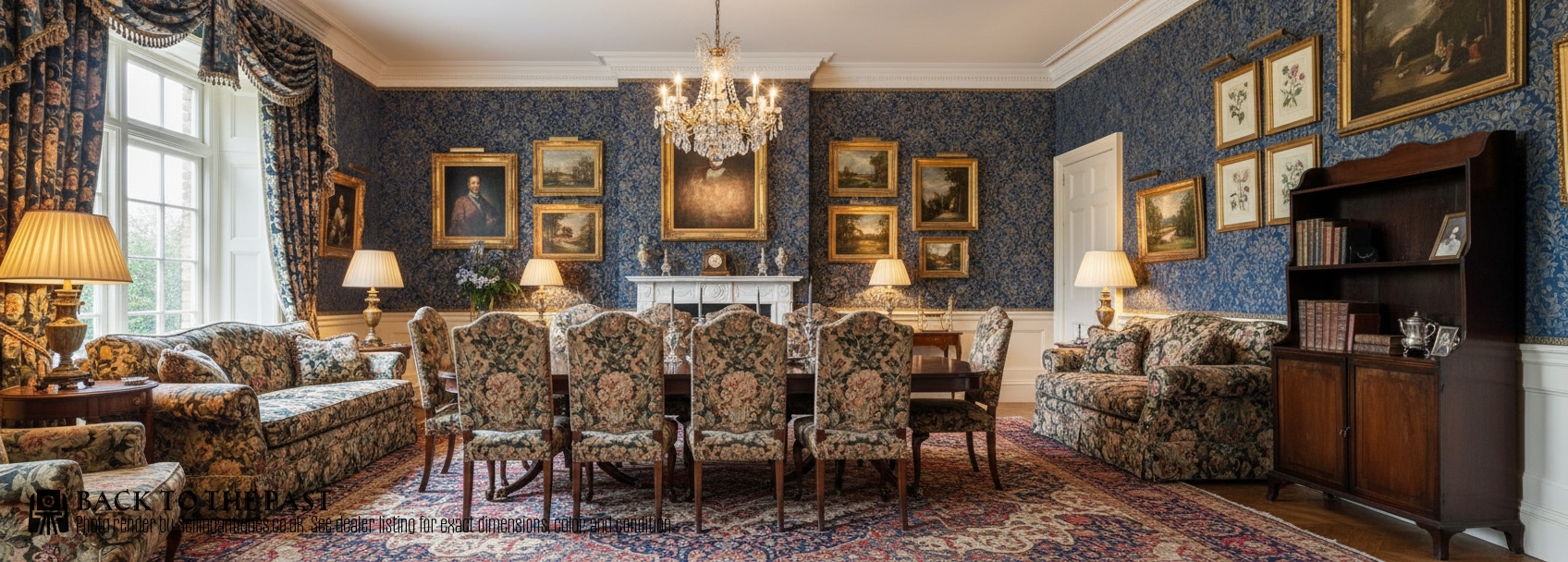
The Form and Character of Open Bookcases
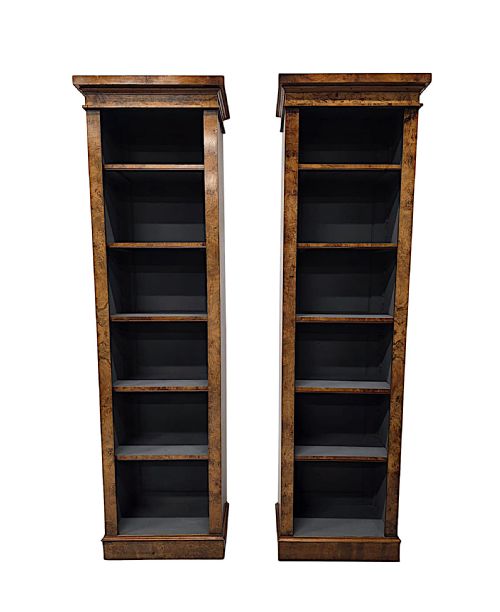
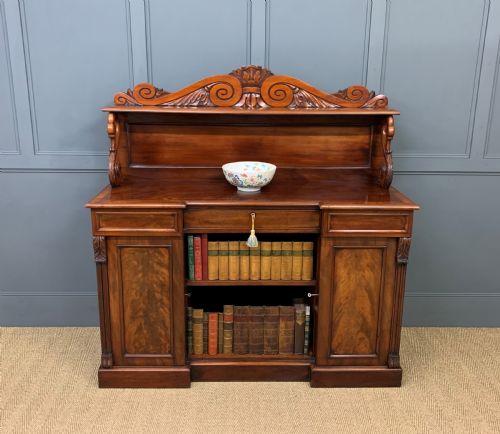
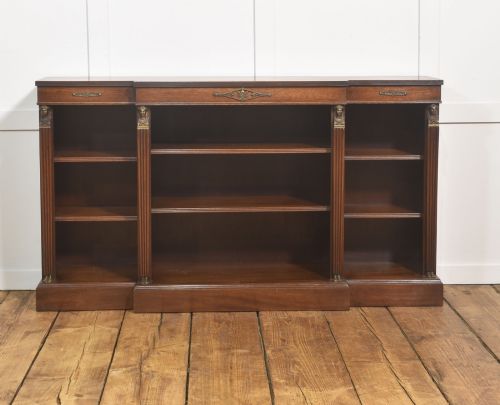
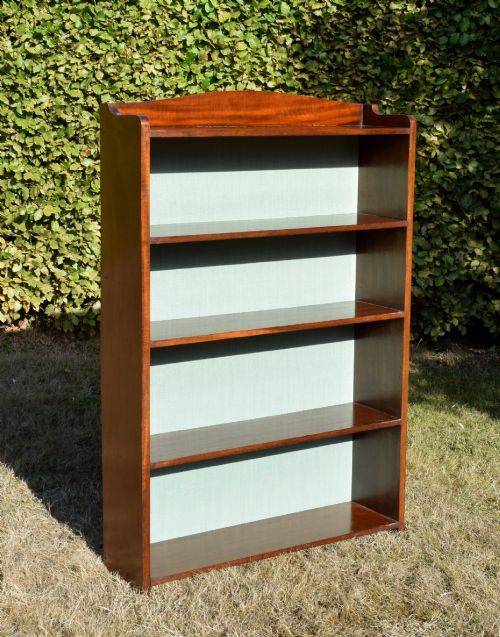
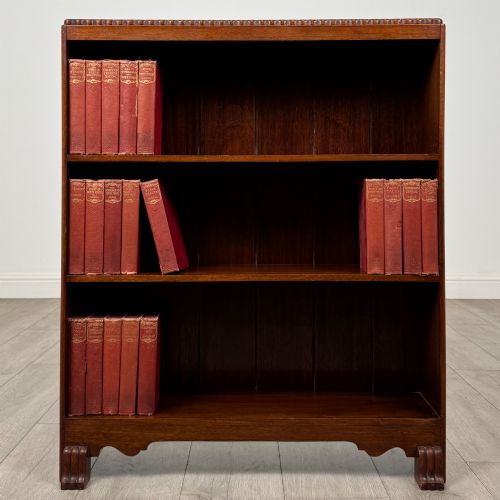
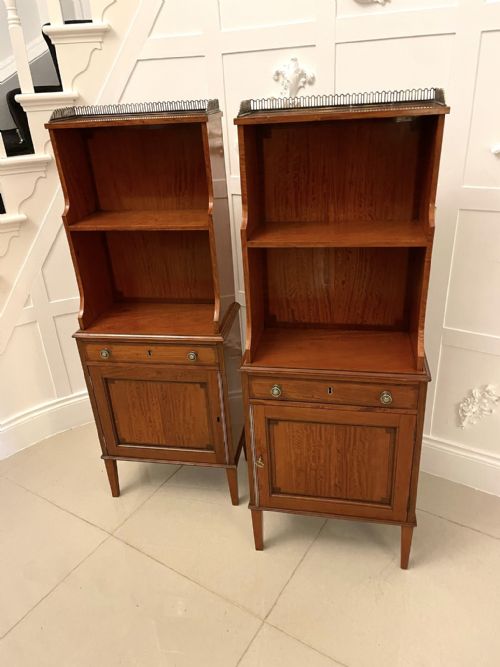
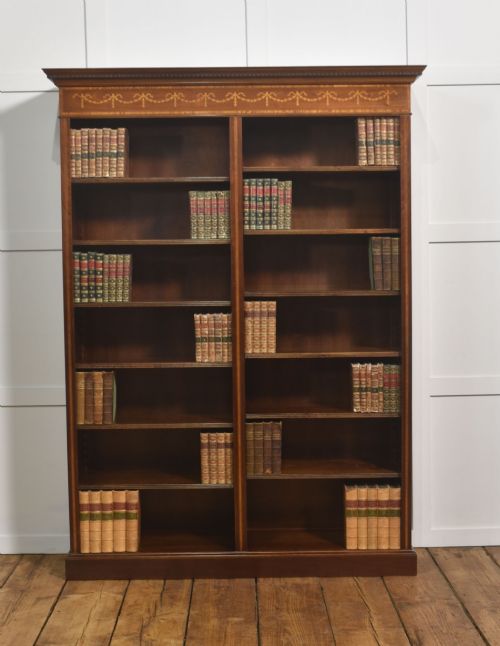
A georgian open bookcase stands as a practical and elegant piece of furniture designed for everyday access to volumes rather than enclosed storage behind glass doors. These items range from modest dwarf versions to taller breakfront designs, often featuring graduated shelves.
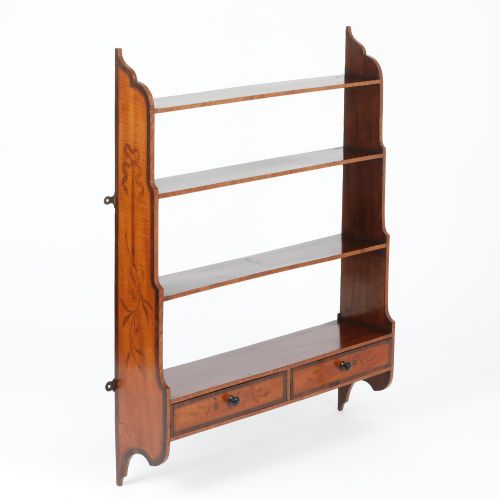
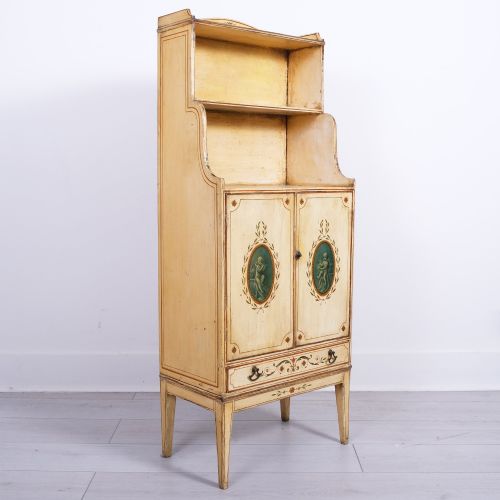
The pieces appearing on this page span several eras alongside the primary period, including Regency, William IV, Victorian, and Edwardian examples. Mahogany remains the dominant timber, though pieces in oak, rosewood, and walnut also surface.
Materials and Construction Methods
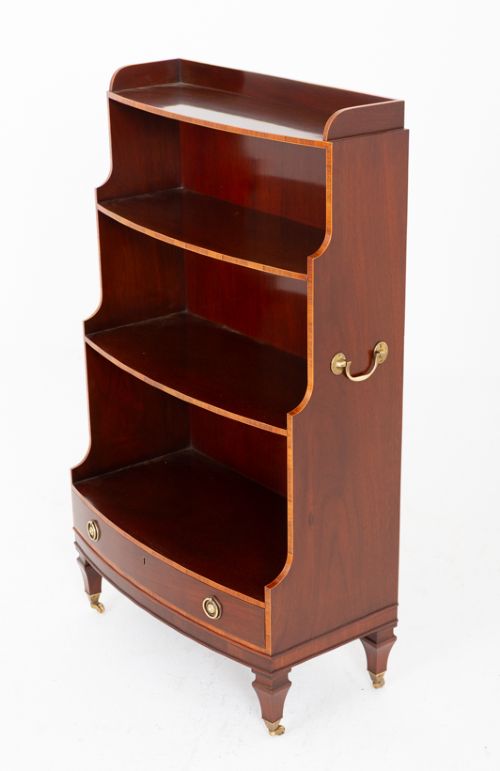
Cabinet makers relied heavily on solid mahogany and flame mahogany veneers applied to secondary woods such as pine. Brass fittings appear on adjustable shelf supports and occasionally on gallery rails.
Construction techniques involve sturdy dovetail joints for carcases and clever mechanisms for adjusting shelf heights to accommodate volumes of varying sizes.
Retail Price Guide 2026
Typical UK retail prices for georgian open bookcase, calculated from the Sellingantiques database of over a million retail prices indexed since 2003. This retail price guide relies exclusively on Sellingantiques data; no external sources or auction records are used, so the figures do not describe the wider market.
Listings feature mahogany, pine, brass, flame mahogany, oak, walnut, and rosewood across Georgian, Regency, William IV, Victorian, and Edwardian periods.
Distinctions in Execution
The gradation between standard examples and finer pieces rests upon the selection of timber, such as highly figured flame mahogany or richly grained rosewood. Finer grain matching and subtle moulding details elevate the architectural presence of the carcase.
Consideration is also given to the sophistication of the joinery and whether the shelving adjustments utilise period brass ratchets or simpler wooden supports.
The Georgian Open Bookcase Glossary
- Breakfront
- A piece of furniture where the central section projects forward from the flanking wings. This layout creates depth and dynamic shadow lines across a room.
- Waterfall bookcase
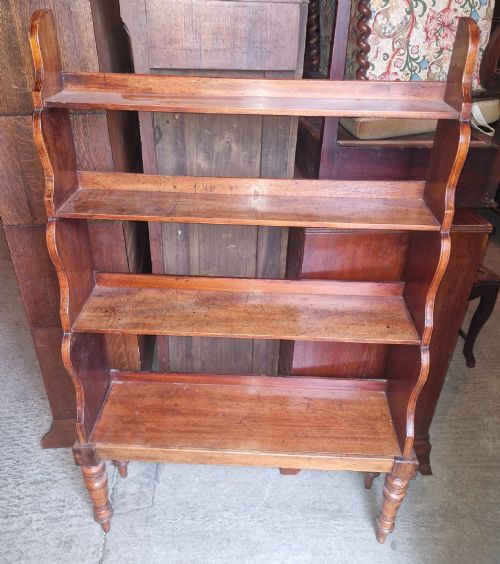
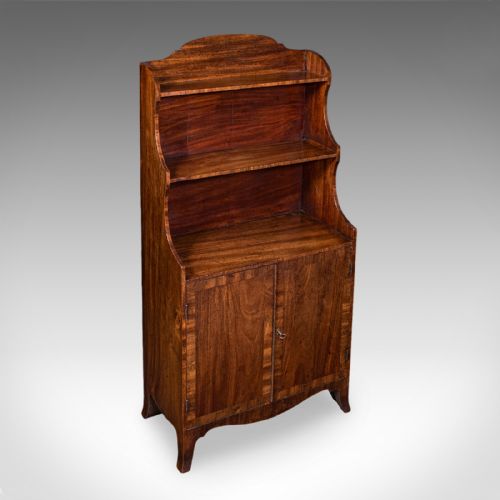
- A shelving unit featuring graduated shelves that step back progressively from bottom to top. The profile resembles the cascading tiers of a waterfall.
- Dwarf bookcase
- A low shelving unit designed to sit beneath window height or picture rails. These compact pieces offer sturdy top surfaces for displaying decorative objects.
- Flame mahogany
- Timber cut from the fork of the mahogany tree where the branch meets the trunk. This produces a distinctive flickering, flame-like grain pattern highly prized by cabinet makers.
- Adjustable shelf
- A movable internal shelf resting on pins, ratchets, or saw-tooth supports. This mechanism allows the owner to alter vertical clearances for different book sizes.
Frequently Asked Questions
How do I date an open bookcase?
Dating relies on examining the secondary timbers, the style of the mouldings, and the presence of adjustable shelf mechanisms. Earlier examples often show hand-cut joinery and native oak linings.
Later revival pieces from the Victorian and Edwardian periods typically incorporate machine-sawn timbers and standardised brass fittings while mimicking the classic proportions.
Are the shelves usually adjustable?
Many examples feature adjustable shelves supported by wooden bearers, brass studs, or rack-and-pinion strips. This flexibility accommodated varying heights of leather-bound volumes.
Fixed shelving is more commonly found in smaller or simpler regional pieces where rigid structure took priority over adaptability.
Where should I place a low bookcase?
Low or dwarf versions sit comfortably beneath dado rails or windows without blocking natural light. Their top surfaces provide a convenient stage for small sculptures, clocks, or decorative ceramics.
Placing them away from direct sunlight and heat sources protects the polished mahogany or rosewood surfaces from fading and drying out.
What woods were used besides mahogany?
While mahogany and flame mahogany dominate the listings, cabinet makers also utilised oak, walnut, and rosewood. Oak frequently appears in earlier country pieces or robust regional furniture.
Walnut and exotic rosewood surface more often in formal library settings, offering contrasting grain patterns and deep natural colouration.