
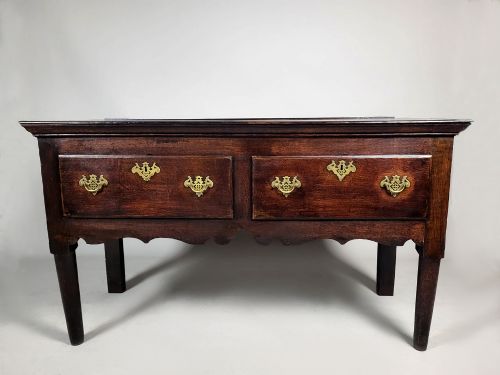
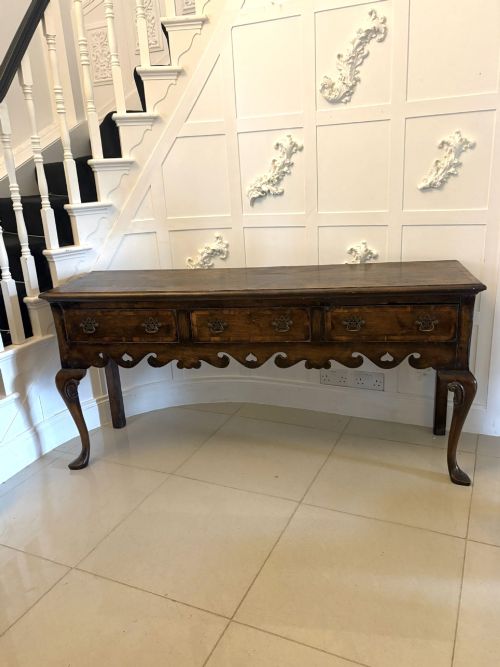
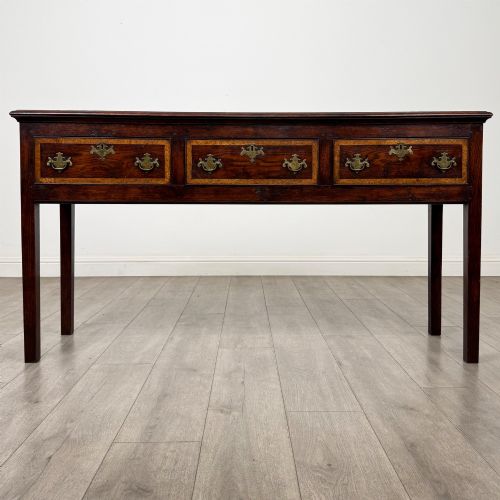
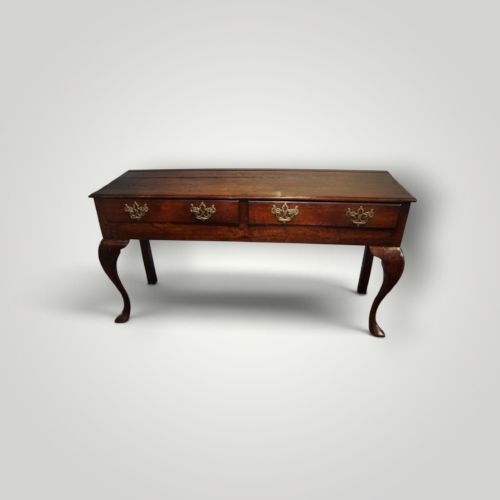

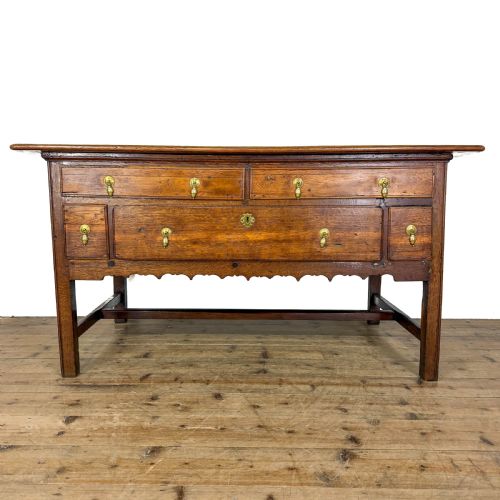


Georgian Oak Serving Table
A georgian oak serving table brings grounded warmth and practical dining storage into a room.
Georgian Oak Serving Table
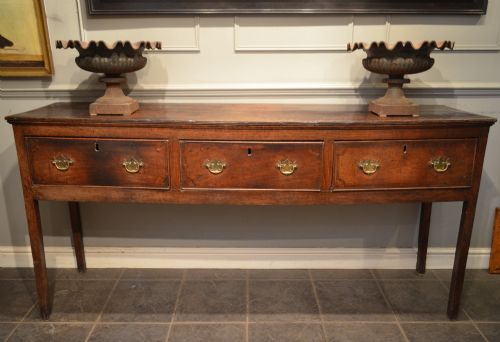
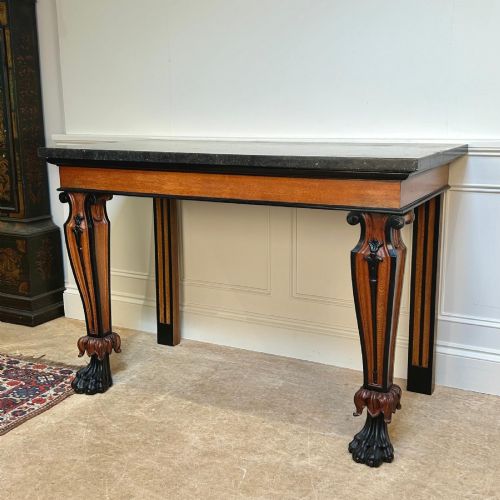
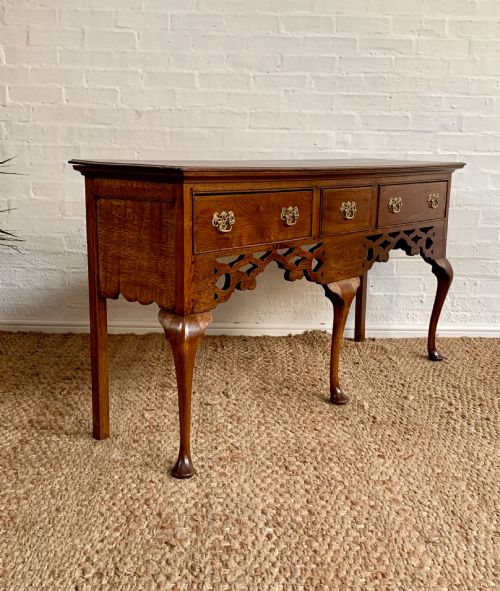
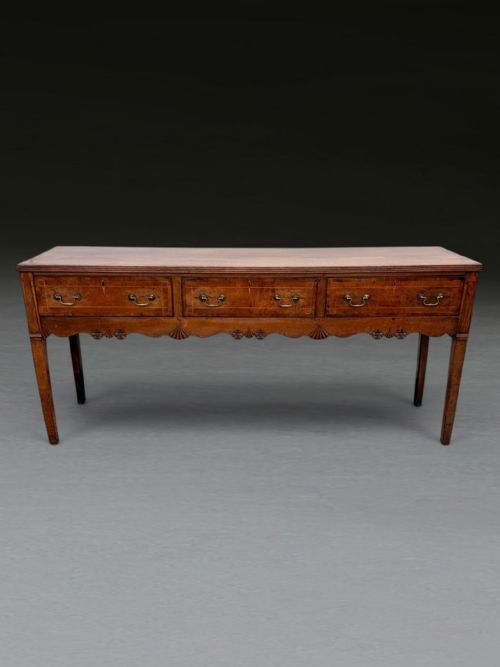
When you search for a georgian oak serving table, you encounter robust timber furniture designed for utility and display in dining spaces. The pieces appearing under this description range from formal George III designs to sturdy country house variants and later revival interpretations.
How they were made
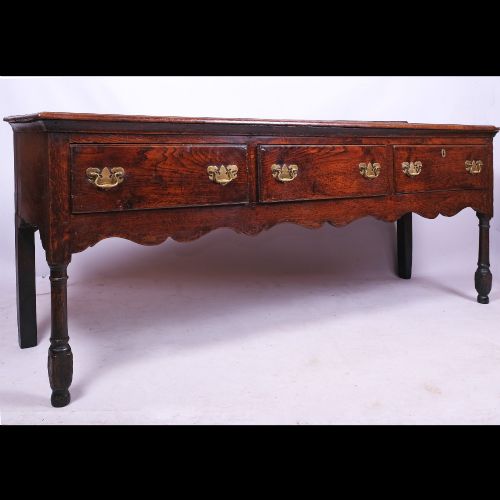
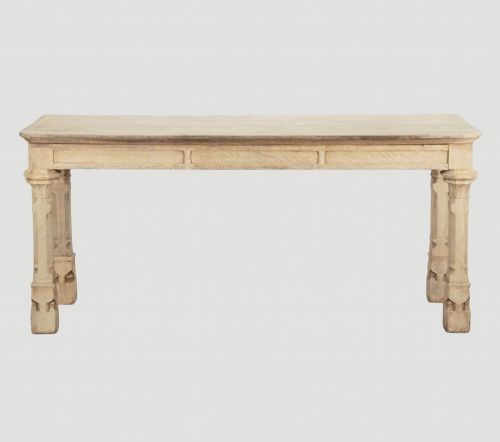
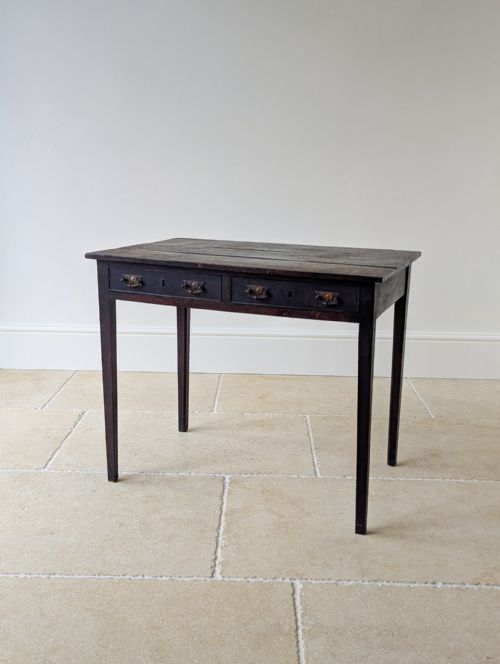
Cabinet makers utilised solid oak for the primary carcass and framing, sometimes combining it with contrasting timbers such as mahogany or employing ebonised wood for decorative emphasis. Surfaces occasionally incorporate inlay work or are finished to highlight the natural grain of bleached or polished oak.
Hardware played an essential functional and decorative role, with original brass drop handles and drawer pulls securing the joinery. Construction techniques combined traditional mortise and tenon joints with hand-cut dovetails on the drawer linings.
Georgian Oak Serving Table Retail Price Guide 2026
Typical asking prices for georgian oak serving table among the pieces listed under this phrase on Sellingantiques today, from the lower quarter to the upper quarter. They describe what is for sale here now, not the wider market.
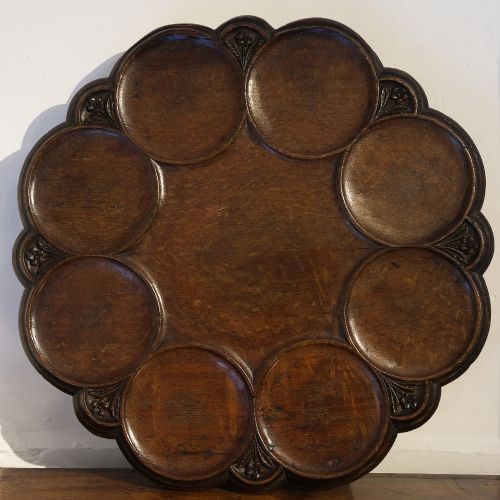
A revolving lazy susan appears among the serving pieces, proving that sharing dinner condiments easily is a thoroughly traditional pursuit.
What varies in quality
The distinction between standard utility pieces and finer examples rests on the crispness of timber selection and the presence of original brasses. Superior items display well-figured grain, balanced proportions, and minimal structural alteration over the centuries.
Regional variations also influence character, with Welsh and Westmoreland examples often exhibiting distinct drawer configurations and pot board arrangements compared to standard English urban pieces. The integrity of the structural oak and the retention of early surfaces dictate overall desirability.
The Georgian Oak Serving Table Glossary
- Dresser base
- A low wooden unit with drawers, functioning independently from any upper plate rack. It served as a primary work surface and storage point in dining rooms.
- Pot board
- An open lower shelf fitted between the legs of a dresser base or serving table. It was originally used for storing heavy pots and serving dishes.
- Lowboy
- A small, low table with one or more rows of drawers, standing on four legs. These pieces were frequently utilised as serving surfaces or dressing tables.
- Cabriole leg
- A furniture leg that curves out and then in, resembling an animal's hind leg. This form appears frequently on mid-eighteenth-century tables and dresser bases.
- Pollard oak
- Timber taken from trees that were pollarded, resulting in tightly clustered growth rings and burr patterns. This decorative wood was selected for high-status cabinet fronts.
Georgian Oak Serving Table: Frequently Asked Questions
How were these tables used originally?
These tables stood in dining rooms and halls to hold dishes before service or to store linens and cutlery in their drawers. The lower shelves and pot boards accommodated heavy serving platters and kitchen copper.
Over time, their role shifted from utilitarian kitchen storage to prominent placement in country house dining rooms and reception spaces.
What is the difference between a dresser base and a serving table?
A dresser base typically incorporates a configuration of multiple drawers across the front, sometimes paired with a pot board below. Serving tables often emphasise a cleaner table frame without the deeper drawer banks found on standard dressers.
Both forms overlap significantly in the historical record, as makers and later dealers used the terms interchangeably for furniture sharing similar proportions.
Are all these tables from the eighteenth century?
The listings include pieces dating from the eighteenth century alongside nineteenth-century examples and later Edwardian or twentieth-century revivals. Authentic eighteenth-century pieces display period construction methods and timber ageing consistent with their age.
Revival pieces from later periods replicate the earlier styles using similar oak materials while exhibiting different interior secondary woods and tool marks.
How do I care for antique oak furniture?
Antique oak benefits from stable indoor humidity and protection from direct sunlight to prevent the timber from drying or splitting. Regular dusting with a dry cloth maintains the surface without the buildup of modern silicones.
Occasional application of traditional beeswax feeds the grain and preserves the historic sheen of the wood over decades of daily use.