


Georgian Oak Pendulum Clock
A georgian oak pendulum clock brings ticking weight-driven movement and timber warmth to a hallway or living room.

Georgian Oak Pendulum Clock
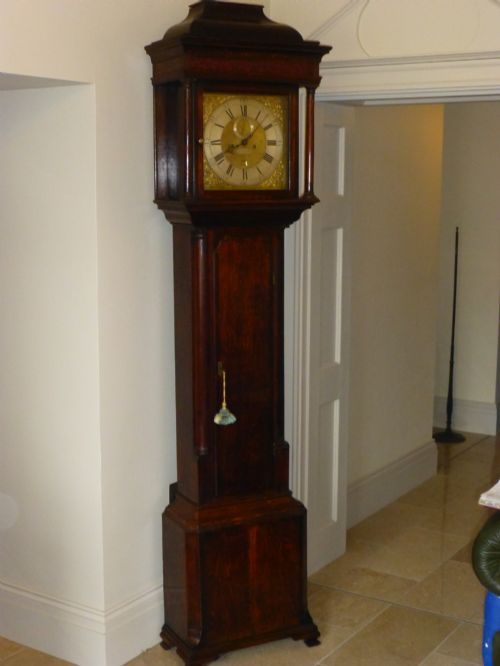
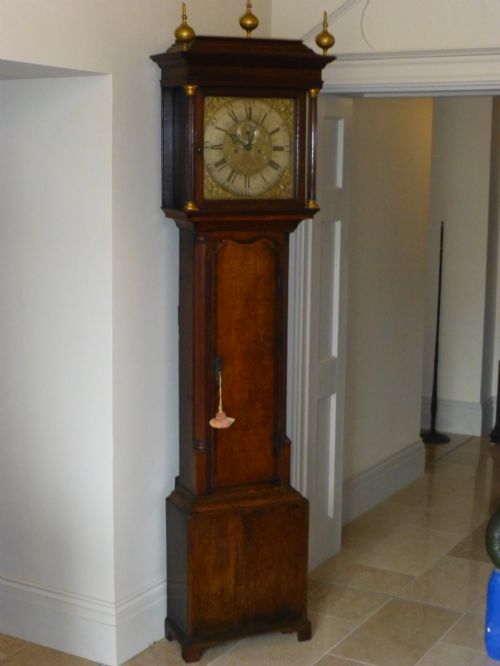
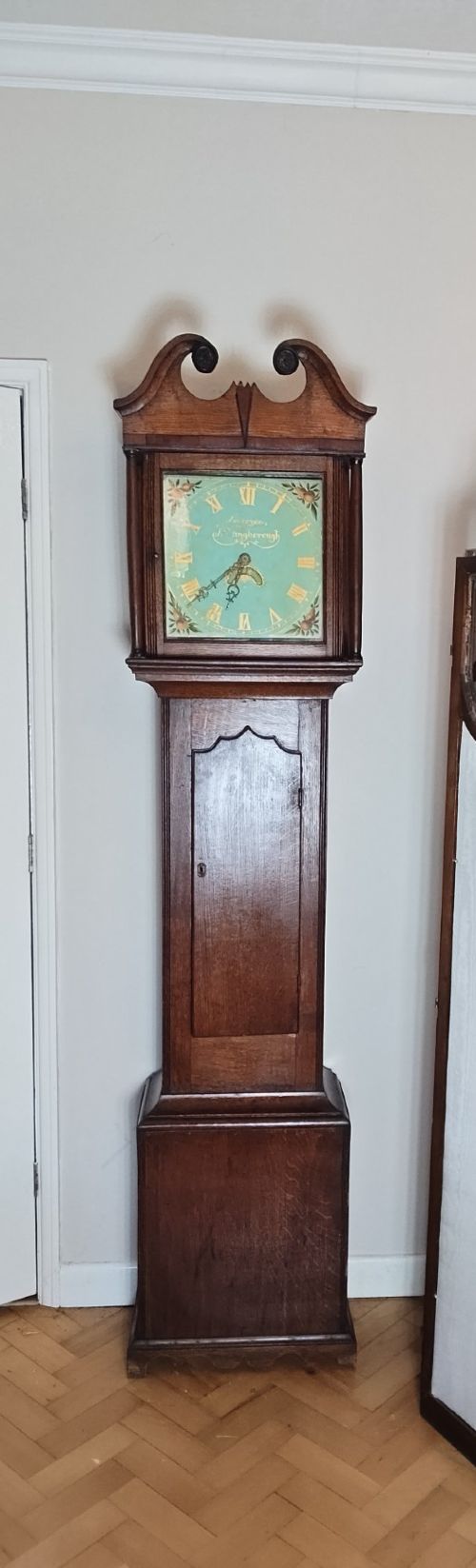
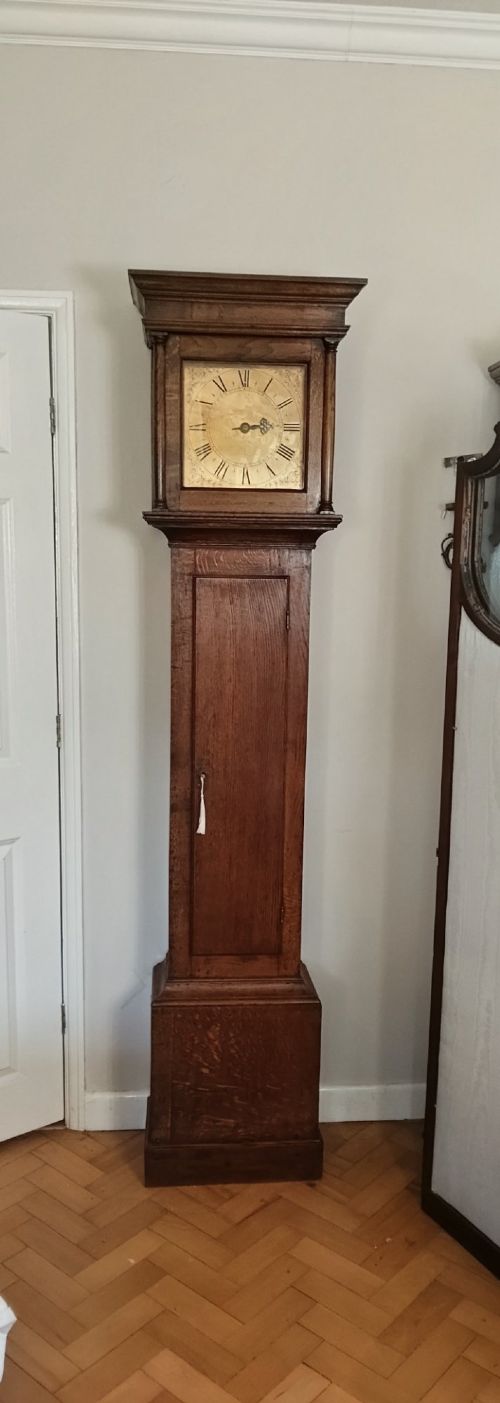
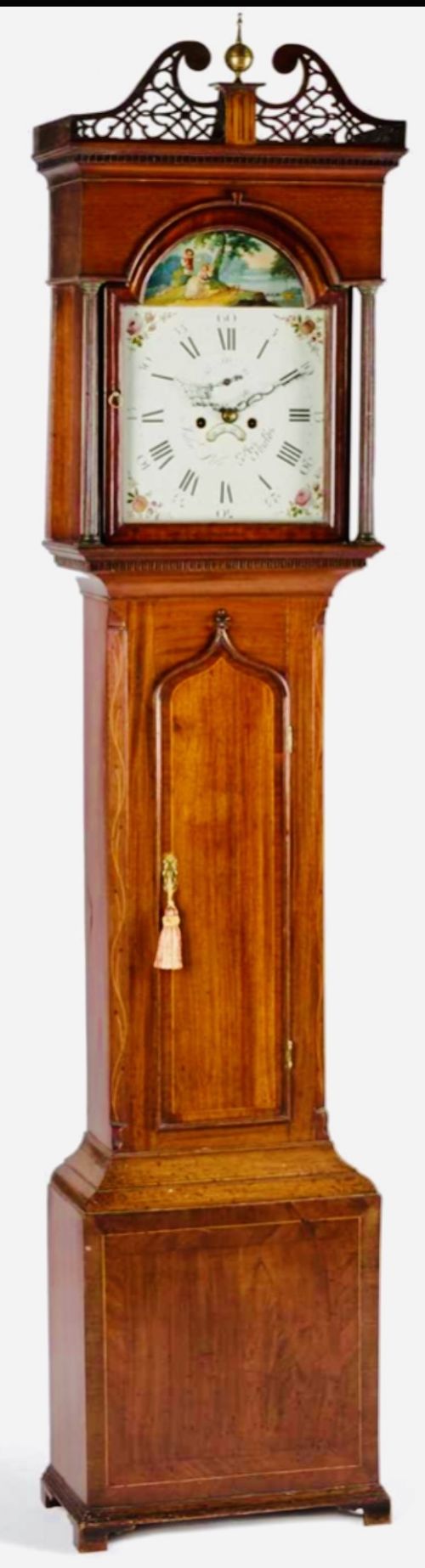
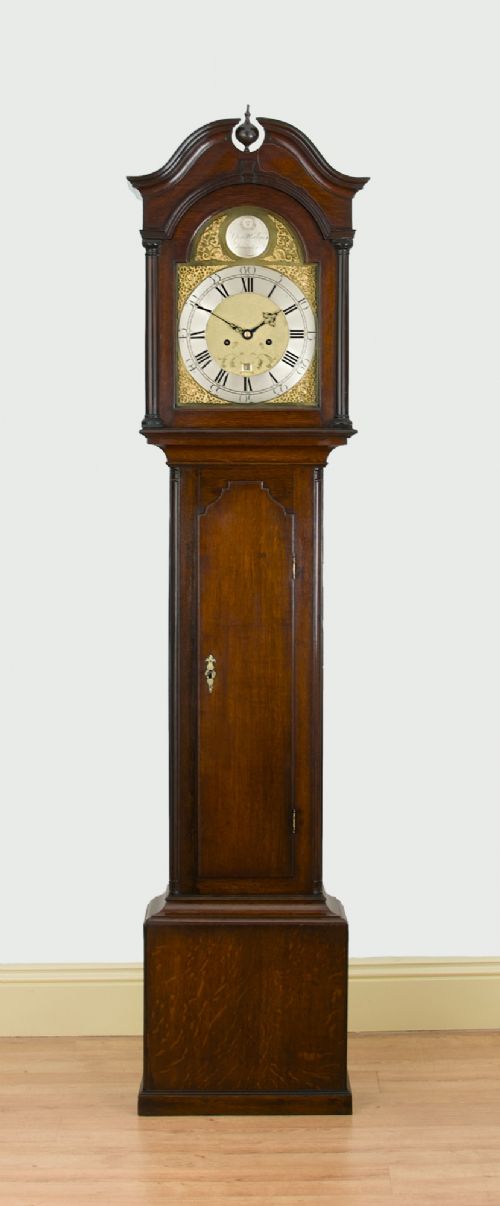
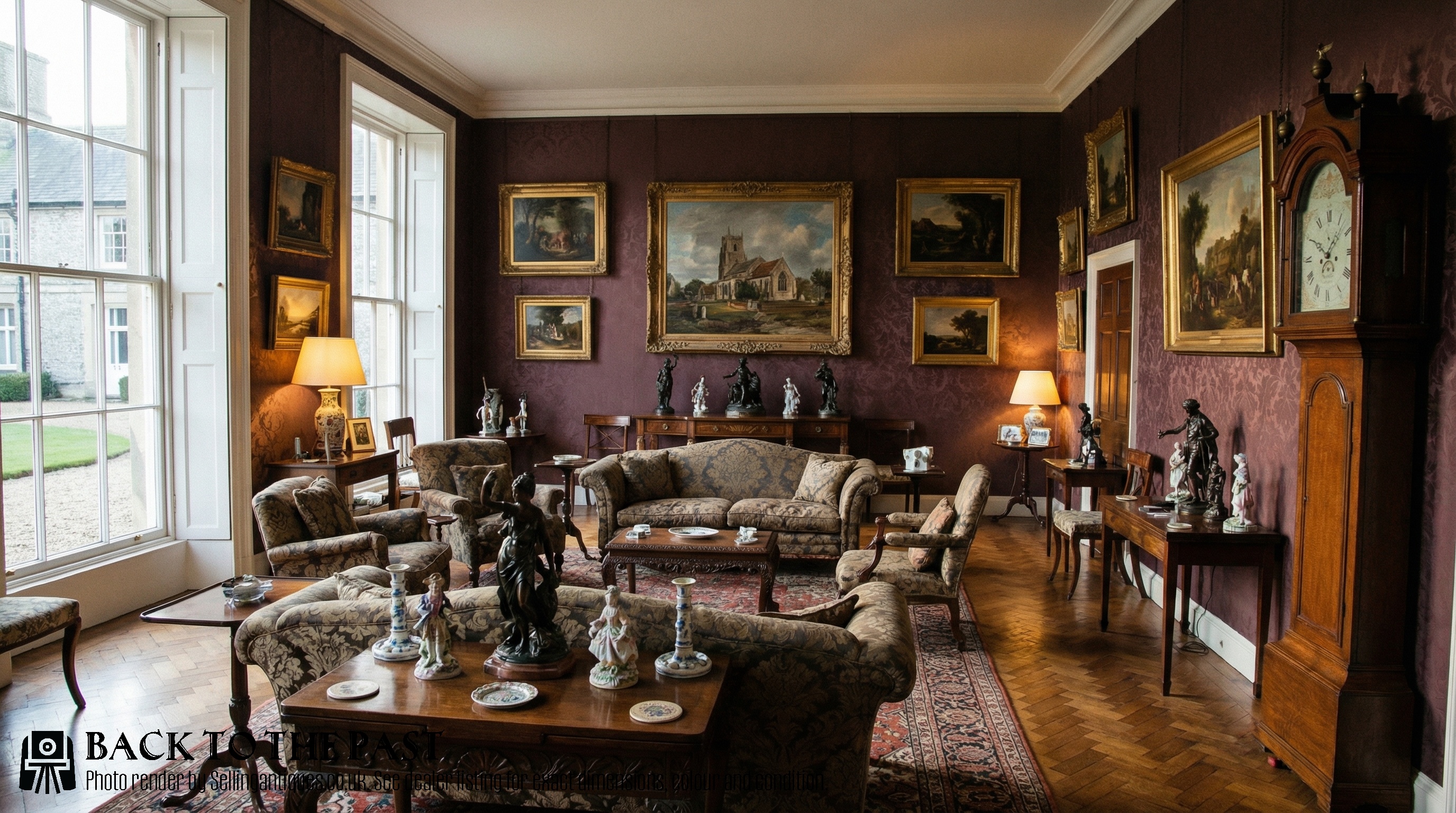
A georgian oak pendulum clock appears primarily as a tall longcase or grandfather clock, alongside wall-mounted variations spanning the eighteenth century and the early nineteenth century. These tallcase pieces house a swinging pendulum and weights within a wooden trunk, designed to stand upright against a domestic wall.
The versions most commonly met on this page include eighteenth-century and George III examples, often incorporating brass dials and regional movements signed by makers from Chester to Stockport.

Materials and Construction
Makers built the structural cases predominantly from solid oak, frequently incorporating mahogany or walnut crossbanding, brass for the visible dial plates, and glass to protect the clock face. Iron components form the internal mechanism parts, while painted iron and enamel appear on later dials.
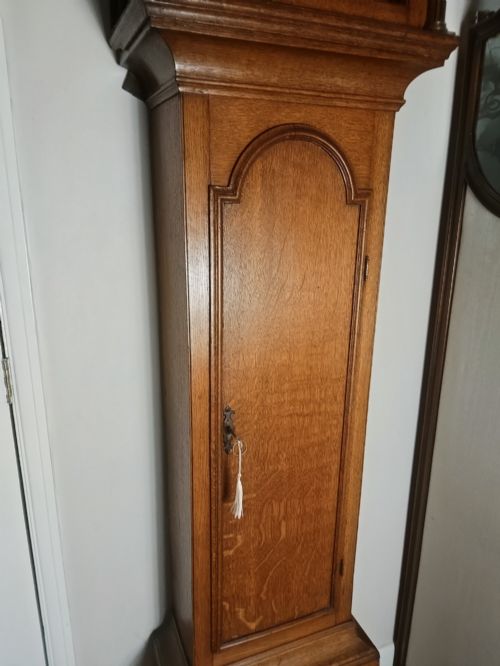
The timber cases combine joinery with hinged hood doors that lift or swing open to grant access to the brass dial and the pendulum suspended inside.
Listings on this page span the Georgian, 18th Century, 1800, 19th Century, and 1930 periods, incorporating oak, mahogany, walnut, brass, glass, and iron.
Dial Work and Timber Figure
The choice and figure of the oak timber, alongside secondary woods like mahogany banding or walnut veneers, determine the visual depth of the case work.
Richard Corless of Stockport·Smith of Chester·George Hallifax Of Doncaster·Edward White Birmingham·Henry Deykin Worcester·Richard Prew Of Tewksbury·John Wylde Nottingham·Richard Alexander Devizes·James Coster Of Henley·John Salmon Nantwich·Grocott Holywell·Stanyer Nantwich
The Georgian Oak Pendulum Clock Glossary
- Longcase clock
- A tall, weight-driven pendulum clock housed in a protective wooden case standing directly on the floor. These are frequently called grandfather clocks in domestic settings.
- Moonphase
- A rotating disc behind the dial showing the lunar cycle phases. This complication tracks the appearance of the moon through the month.
- Spandrel
- The decorative corner ornament placed on a clock dial outside the chapter ring. These cast brass pieces often help date the movement by their style.
- Crossbanding
- A strip of veneer laid across the grain direction of the primary timber to form a border. It appears frequently on drawer fronts and trunk doors.
- Fusee
- A conical pulley used in spring-driven clocks to equalise the driving force as the mainspring unwinds. This mechanism helps maintain accurate timekeeping.
Georgian Oak Pendulum Clock: Frequently Asked Questions
Where were these longcase clocks placed originally?
Tallcase clocks stood in hallways, stairwells, or main living chambers where family members could hear the hourly strike and check the time.
Their height dictated placement in rooms with sufficient vertical clearance.
How do you date an oak longcase clock?
Dial shape, signature styles, and cabinet timber combinations provide clues to the decade of manufacture.
Early pieces feature square brass dials, while arched top plates and mahogany crossbanding generally indicate later eighteenth-century or George III work.
How do you keep a pendulum clock running?
The case must stand level on the floor to ensure the pendulum swings evenly and the escapement ticks with a regular beat.
Weights must be wound carefully using the crank key provided without pulling the suspension spring.