

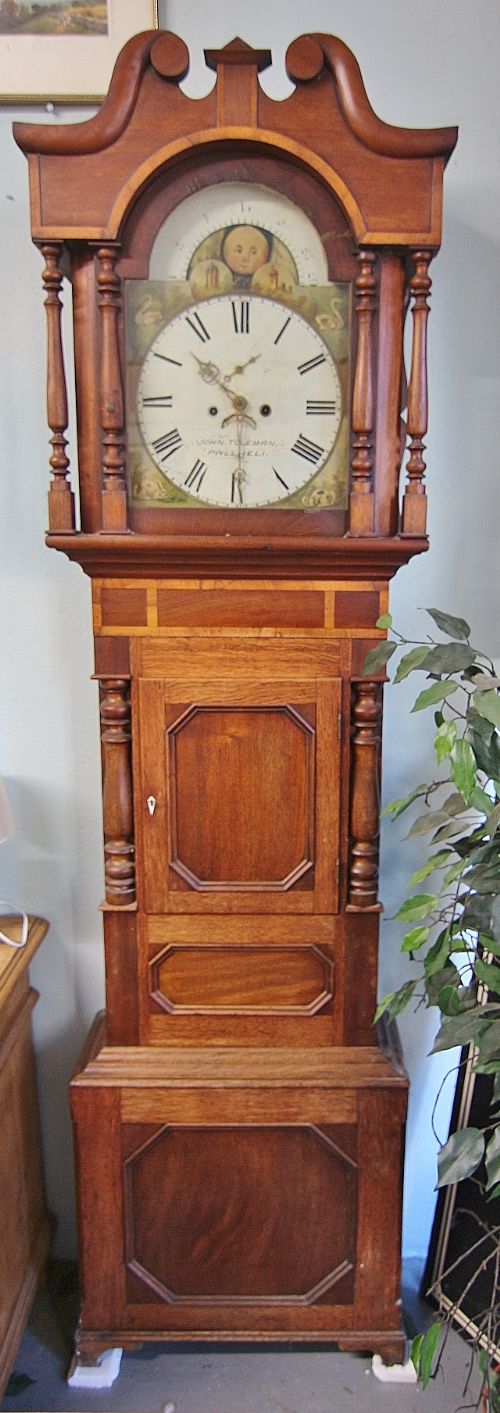
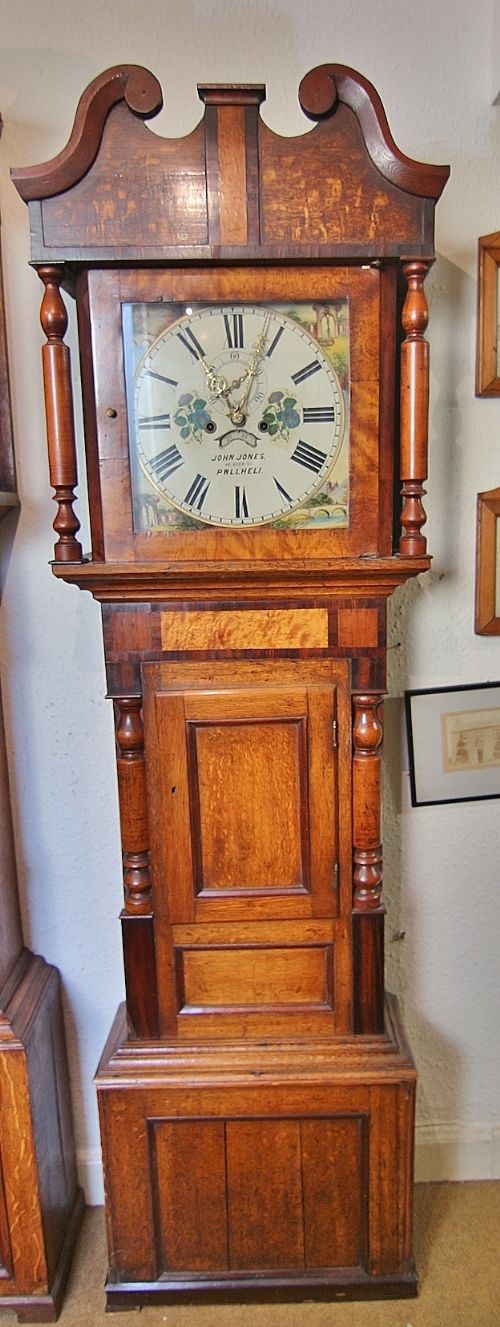


Welsh 8 Day Clock
These welsh 8 day clock pieces are tall floor-standing timepieces crafted by regional makers during the eighteenth and nineteenth centuries.

Welsh 8 Day Clock
When you search for a welsh 8 day clock, you are looking at tall floor-standing timepieces that measure time across a full week before needing to be wound again. The pieces you are most likely to meet on this page hail from the eighteenth and nineteenth centuries, spanning the Georgian, William IV, and Victorian eras.
These longcase clocks, often referred to as grandfather clocks, typically combine regional cabinetmaking with complex mechanical movements. You will find them housed in tall wooden cases designed to protect the weights and pendulum that drive the mechanism.
The origins of these timepieces trace back to local Welsh workshops and towns, bearing the names of makers from places like Llanrwst, Crickhowell, and Pwllheli on their dials. They reflect a distinct regional tradition that differed significantly from English urban clockmaking of the same periods.
Materials and construction
The cases of these longcase clocks are constructed predominantly from native oak and mahogany, with occasional examples utilising burr oak veneer for decorative impact. Early pieces rely heavily on pegged joints in their construction.
Dial construction combines brass or painted iron and metal, often embellished with rolling moon mechanisms, arch dials, and star-burst details set into the door. Glass protects the delicate face and hands of the clock.
Welsh 8 Day Clock Retail Price Guide 2026
Typical asking prices for welsh 8 day clock among the pieces listed under this phrase on Sellingantiques today, from the lower quarter to the upper quarter. They describe what is for sale here now, not the wider market.
Dial designs recorded on these pieces include painted iron, brass, arch formats, and rolling moon displays.
Quality and craftsmanship
The distinction between standard examples and finer pieces rests in the sophistication of the dial work and the cabinetmaker's choice of timber. Clocks featuring rolling moon phases or complex arch painted dials generally represent the upper tier of regional production.
The integration of the movement with the case, alongside the crispness of the local maker's signature inscribed on the dial, determines the overall standing of an individual clock. Richly figured mahogany or well-selected oak housings separate the more ambitious workshop outputs from simpler vernacular pieces.
D Williams of Crickhowell·James Harvey of Abergavenny·Grocott Holywell·Watkin Owen Llanrwst·M Thomas Caernarfon·John Jones Pwllheli·David Griffith Carnarvon·Joyce Ruthin·Owen of Llanrwst
The Welsh 8 Day Clock Glossary
- Longcase clock
- A tall, floor-standing pendulum clock enclosed in a wooden case designed to protect the weights and movement. These are also commonly known as grandfather clocks.
- Arch dial
- A clock face featuring a curved semicircular upper section above the main circular dial. This space often houses a rolling moon mechanism or subsidiary calendar displays.
- Rolling moon
- A mechanical display behind the dial arch that tracks the lunar phases through a rotating painted disk. It shows whether the moon is waxing, full, waning, or new.
- Peg jointed
- A traditional method of joining wooden frame members using small wooden pegs rather than metal fasteners. This technique appears frequently in earlier country pieces.
- Brass dial
- A metal clock face typically produced before the widespread adoption of painted iron dials. These earlier faces often feature engraved detail and applied cast brass spandrels.
Welsh 8 Day Clock: Frequently Asked Questions
How do 8 day movements work?
An eight-day movement relies on two hanging weights suspended by cords or chains from drums inside the clock. As the weights slowly descend over the course of a week, they power the gear train that drives the hands and strikes the hour.
To keep the clock running, the weights must be manually pulled back up to the top of the case using a winding key every week. This mechanical setup allowed domestic clocks to maintain steady timekeeping without daily intervention.
How do I tell oak from mahogany cases?
Oak cases display a prominent, open grain pattern with visible growth rings and flecks, typically showing a warm golden-brown colour. Mahogany presents a tighter, smoother grain that deepens into rich reddish-brown tones over centuries.
Cabinetmakers often utilised mahogany for grander urban-influenced commissions, while oak remained the traditional choice for earlier and more rural Welsh workshops.
Where should I place a longcase clock?
Longcase clocks require a stable, dry interior location against a solid wall to prevent vibrations from disrupting the pendulum. Placing them away from direct sunlight and heat sources protects the timber case from warping or drying out.
Because these clocks are tall, they must be securely fixed to the wall using the bracket inside the hood to prevent accidental tipping.
What is a rolling moon dial?
A rolling moon dial is a mechanical feature set into the arch above the main clock face that depicts the lunar cycle. Two painted moons rotate across a twenty-nine-and-a-half-day cycle to track the phases of the moon.
Clockmakers included this complication for agricultural and tide-dependent communities who relied on moonlight for evening travel and work.