




Welsh Grandfather Clock
A welsh grandfather clock is a tall floor-standing timekeeper that anchors a room with regional craftsmanship, offering local dials and sturdy timbers.

Welsh Grandfather Clock
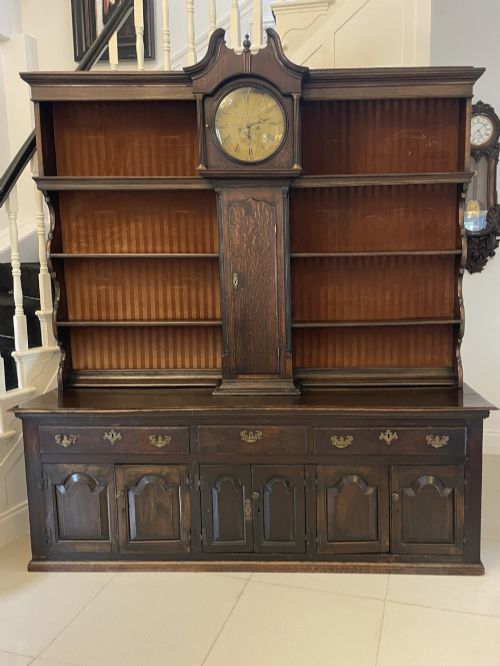
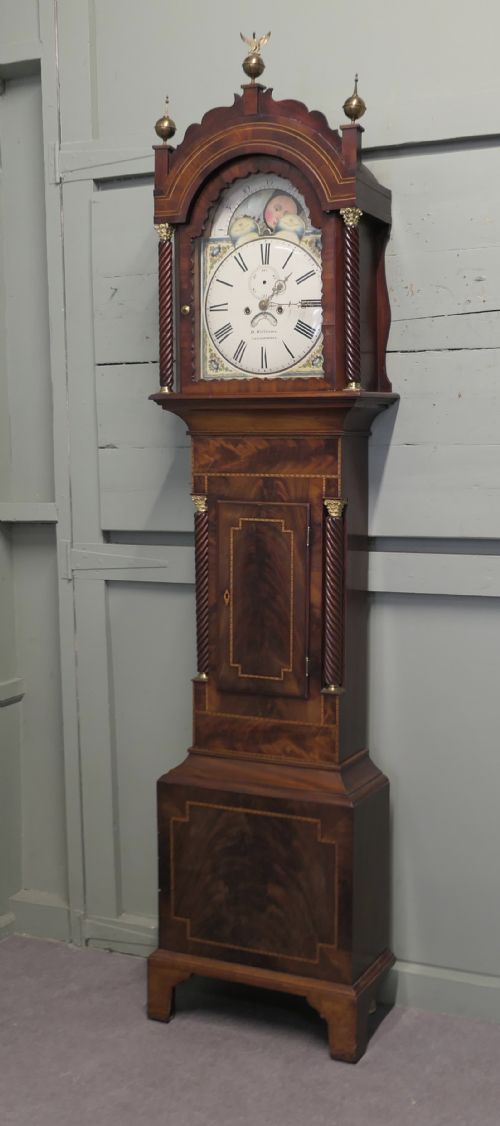
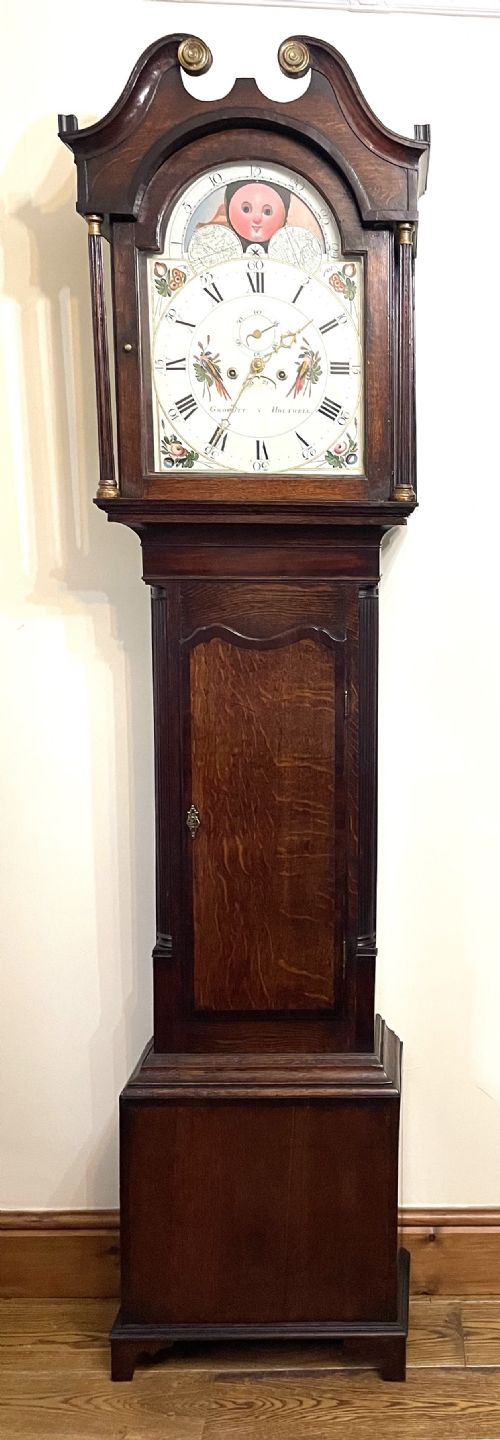
A buyer examining a welsh grandfather clock encounters tall wooden cases housing longcase timepieces made across various regions of Wales. These pieces frequently appear in oak or mahogany, occasionally showing pine or burr oak variations.
The objects span from the late seventeenth century through the nineteenth century, encompassing Georgian, George III, William IV, and Victorian periods. Dial variations include brass, painted iron, and painted metal, often featuring arch dials or rolling moon mechanisms.
Makers inscribed on these longcase clocks include regional horologists such as D Williams of Crickhowell, Thomas Webbe of New Quay, James Harvey of Abergavenny, Grocott Holywell, Rob Parry Pwllheli, Watkin Owen Llanrwst, M Thomas Caernarfon, John Jones Pwllheli, David Griffith Carnarvon, Joyce Ruthin, Owen of Llanrwst, and D Jones Bethesda.
Materials and construction methods
Makers constructed the tall floor cases primarily using native oak and mahogany, with occasional examples in pine, burr oak, and painted wood finishes. Peg joints appear in country examples, reflecting traditional joinery techniques of the period.
Welsh Grandfather Clock Retail Price Guide 2026
Typical asking prices for welsh grandfather clock among the pieces listed under this phrase on Sellingantiques today, from the lower quarter to the upper quarter. They describe what is for sale here now, not the wider market.
Listings span the seventeenth, eighteenth, and nineteenth centuries, utilising oak, mahogany, pine, and brass across various regional workshops.
Assessing quality in regional longcase clocks
Quality differences emerge through the selection of timber, such as figured mahogany or dense oak, alongside the sophistication of the case proportions. Regional details like star-burst inlays in the door or rolling moonphase complications elevate specific examples.
The execution of the dial workmanship, whether engraved brass or detailed painted iron by named regional makers, distinguishes standard production from superior craftsmanship.
D Williams of Crickhowell·Thomas Webbe of New Quay·James Harvey of Abergavenny·Grocott Holywell·Rob Parry Pwllheli·Watkin Owen Llanrwst·M Thomas Caernarfon·John Jones Pwllheli·David Griffith Carnarvon·Joyce Ruthin·Owen of Llanrwst·D Jones Bethesda
The Welsh Grandfather Clock Glossary
- Longcase clock
- A tall pendulum clock enclosed in a wooden case designed to stand directly on the floor. These pieces are frequently referred to as grandfather clocks.
- Arch dial
- A clock face featuring a curved semicircular upper section above the main dial ring. This space often houses subsidiary mechanisms like moonphase displays.
- Rolling moon
- A mechanical dial feature that tracks the lunar cycle through a rotating painted disk. It illustrates the phases of the moon behind a shaped aperture.
- Peg joint
- A traditional timber connection secured by a wooden pin rather than metal fasteners. This construction method appears in regional country workshop furniture.
- 8-day movement
- A clock mechanism that requires winding once every week to maintain operation. This setup typically utilises driven weights suspended on lines or chains.
Welsh Grandfather Clock: Frequently Asked Questions
What is a welsh grandfather clock?
A welsh grandfather clock is a tall floor-standing timekeeper produced by horologists working in Wales during the eighteenth and nineteenth centuries.
These pieces combine regional cabinetmaking in timbers like oak and mahogany with mechanical movements housed beneath glass-fronted hoods.
How do I date a longcase clock?
Dating relies on stylistic shifts in the timber case design, transitioning from early oak constructions to later mahogany arch dial formats.
Inscriptions naming regional makers and the evolution from brass to painted iron dials provide further chronological markers.
What is an eight day movement?
An eight day movement is a weight-driven mechanism designed to run continuously for over a week before needing a manual wind.
This setup allows the clock to operate reliably between weekly maintenance intervals.
How do moonphase dials work?
Moonphase dials employ a rotating painted disk behind an arch aperture to track the synodic month.
This mechanical display mirrors the visible phases of the moon over the course of the lunar cycle.