




Georgian Oak Low Dresser
A georgian oak low dresser is a heavy, functional farmhouse server designed for family life and dining service.
What these pieces are
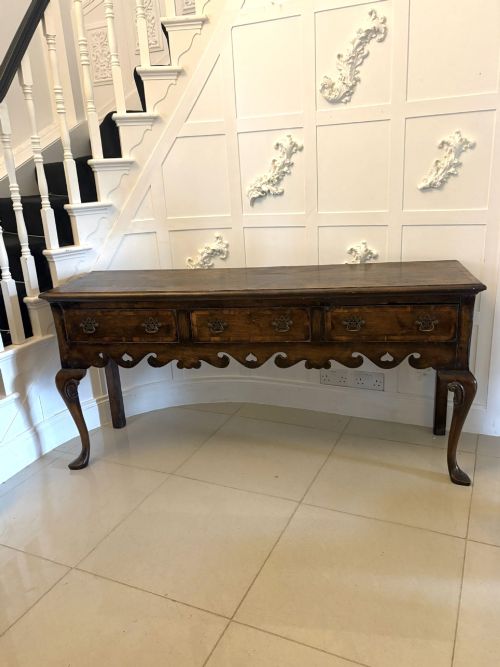
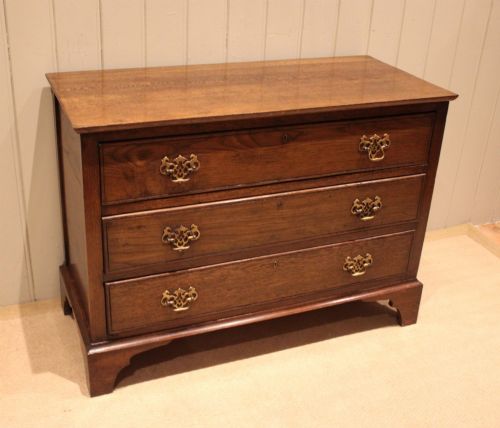
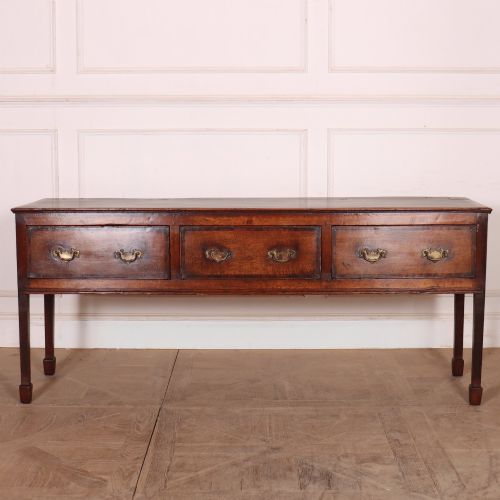
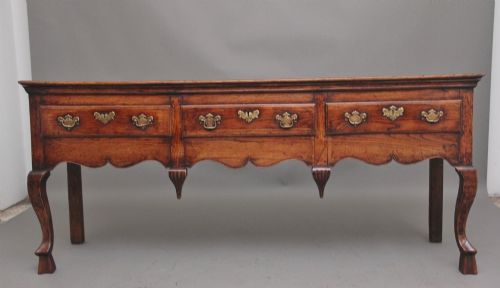
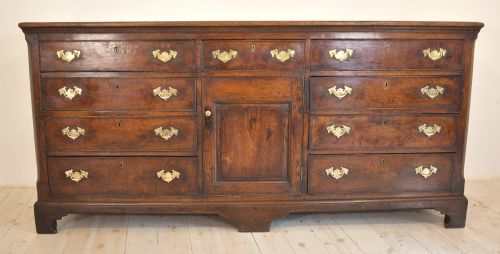
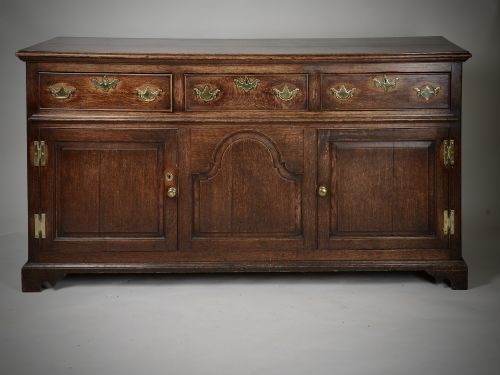
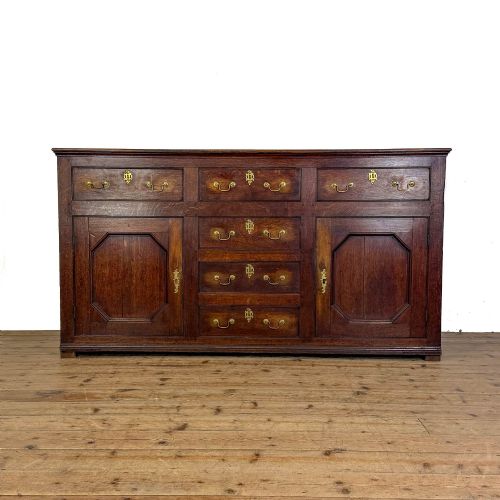
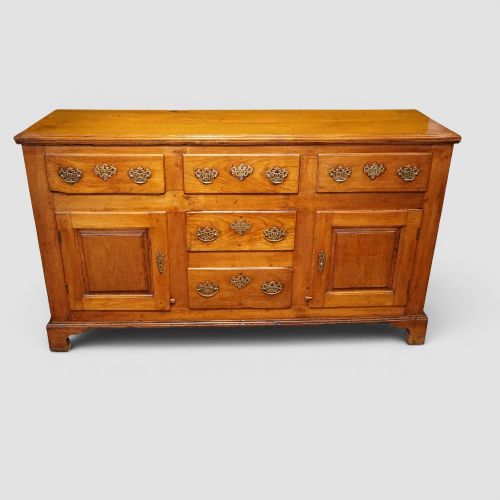
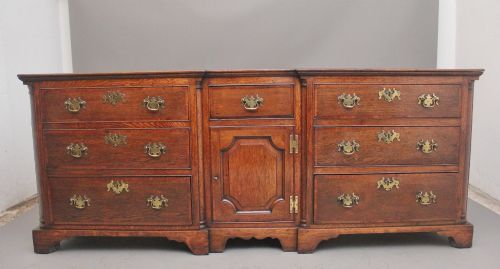
A georgian oak low dresser provides a broad serving surface and practical under-storage for a kitchen or dining room. The form usually combines long low proportions with multiple drawers arranged beneath the top board.
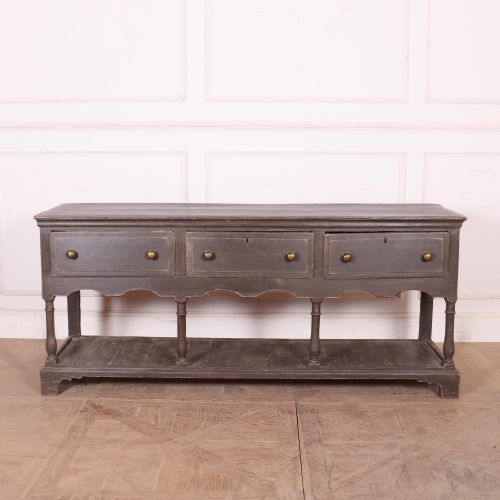
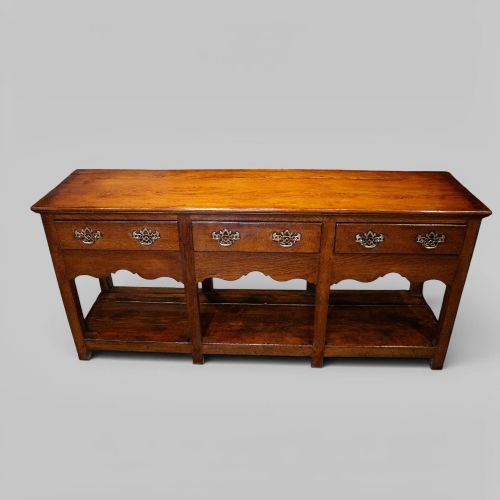
Regional variations connect these sideboards to specific localities such as Wales, Shropshire, Cheshire, and Lancashire. Many examples incorporate open potboard shelves underneath for displaying or storing heavy kitchen wares.
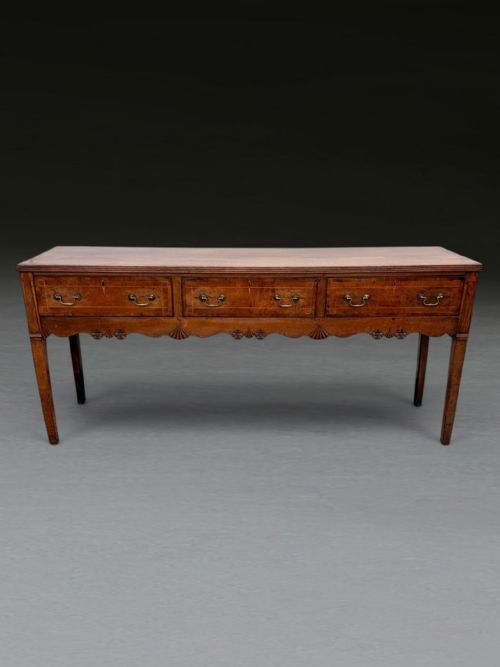
The material palette centres on sturdy native timber with occasional contrasting crossbanding in mahogany and functional brass hardware. Regional cabinetmakers built these servers to withstand heavy daily use across rural households.
How they were made
Local joiners constructed these low dressers using solid timber planks joined with traditional framing methods. Drawer fronts and framework show hand-planed surfaces that reveal the grain of the oak.
Secondary details involve applied brass handles and escutcheons secured to drawer faces. Selected examples feature mahogany elements combined with the primary oak structure.
Many a heavy oak server still bears the faint ink stains and deep scratches left by generations of rural cooks.
What varies in quality
The standard of timber selection and depth of regional character define the upper tier of these low servers. Finer pieces demonstrate careful alignment of grain across multiple drawers and well-proportioned potboard shelves.
Proportion and integrity of the original base construction distinguish standard regional work from more refined cabinetmaking. The presence of period brass hardware and untouched timber patination adds to the visual strength of the piece.
The Georgian Oak Low Dresser Glossary
- Potboard
- A lower shelf fitted beneath the main body of a dresser for storing heavy pots and dishes. This open platform sits just above the floor.
- Dresser base
- The lower portion of a dining room server comprising drawers and cupboards without the upper plate rack. Many surviving pieces function independently as sideboards.
- Cabriole leg
- A curved furniture support inspired by animal legs, swelling outward at the knee and tapering inward to the foot. This form appears on specific regional dressers.
- Joined
- A term describing furniture constructed with pegged mortise and tenon joints rather than metal screws or modern adhesives. This method defines traditional vernacular cabinetmaking.
Frequently Asked Questions
Where were low dressers used?
These servers stood primarily in large farmhouse kitchens and dining spaces where daily meals were prepared and served. Families used the broad top surface for food preparation and plating.
The lower drawers and open potboard shelves held heavy earthenware, utensils, and provisions close at hand for household staff.
How do I style a low dresser?
A low dresser functions effectively as a sideboard in a modern dining room or kitchen. The long top board provides an ideal display surface for lamps, ceramics, and textiles.
The deep drawers offer practical concealed storage for tableware, linens, and everyday household items.
How do regional styles differ?
Regional low dressers reflect the distinct vernacular traditions of areas like Wales, Shropshire, and Lancashire. Cabinetmakers in different counties utilised local joinery methods and specific timber arrangements.
Some districts favoured open potboards while others built enclosed cupboards or incorporated cabriole legs into the design.