
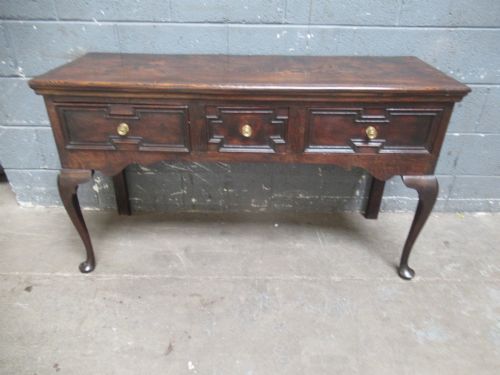


Queen Anne Dresser Base
These queen anne dresser base examples bring honest early wooden utility straight into a modern room.
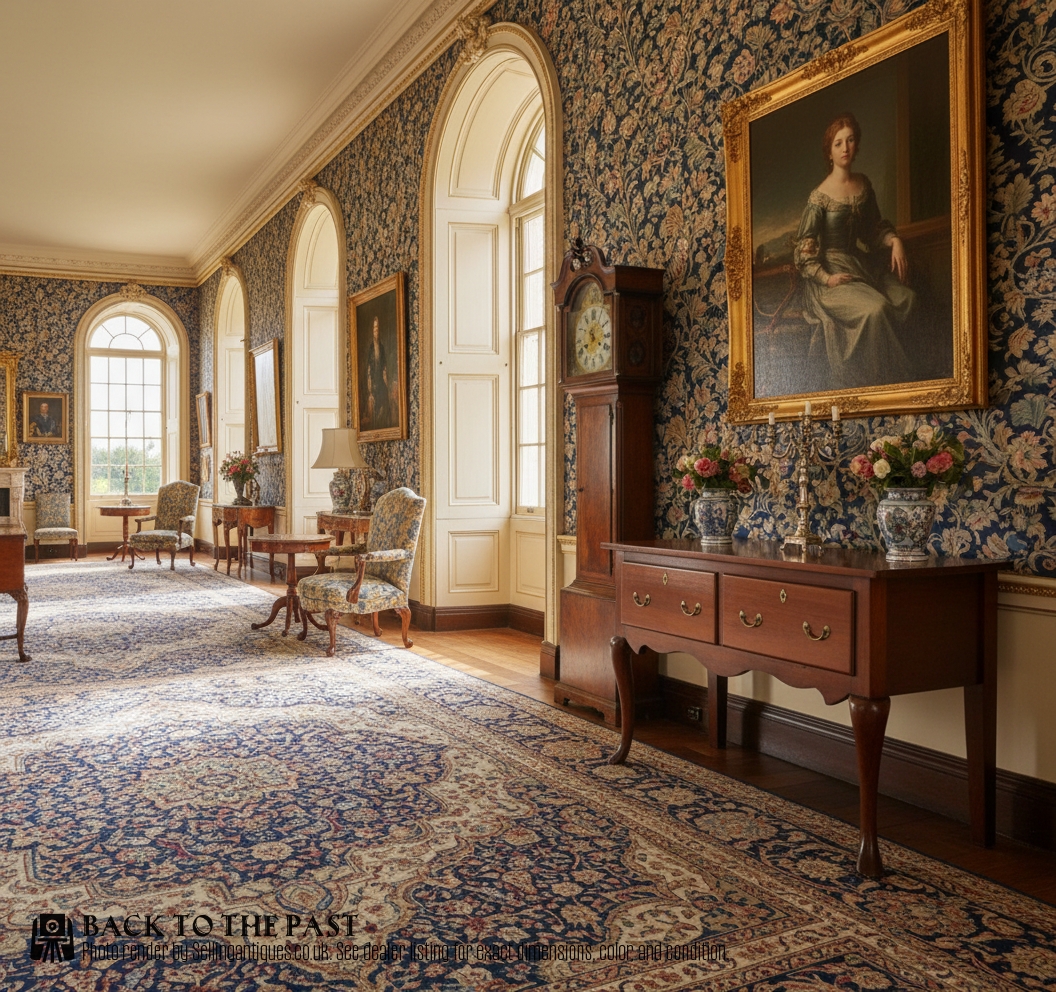
Queen Anne Dresser Base
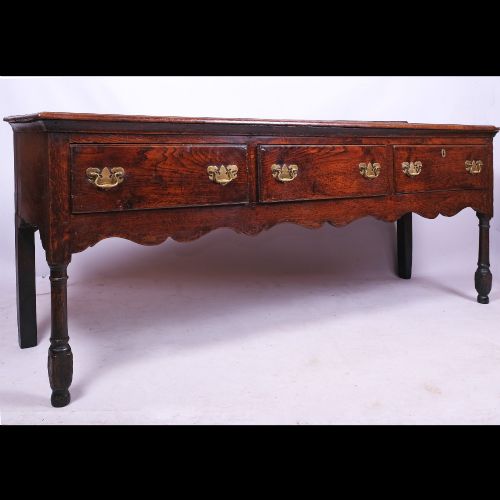
When you search for a queen anne dresser base, you are looking at substantial low storage furniture built for the dining room or kitchen. These pieces provide a broad timber top above rows of drawers or cupboards, designed to hold domestic service items.
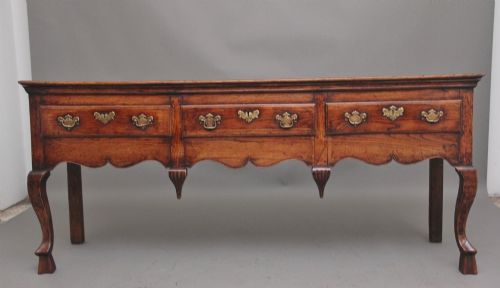
You are most likely to meet oak and walnut versions on this page, spanning the early eighteenth century up to later revival periods. The forms range from plain planked tops to walnut crossbanded surfaces with cabriole legs.
How they were made
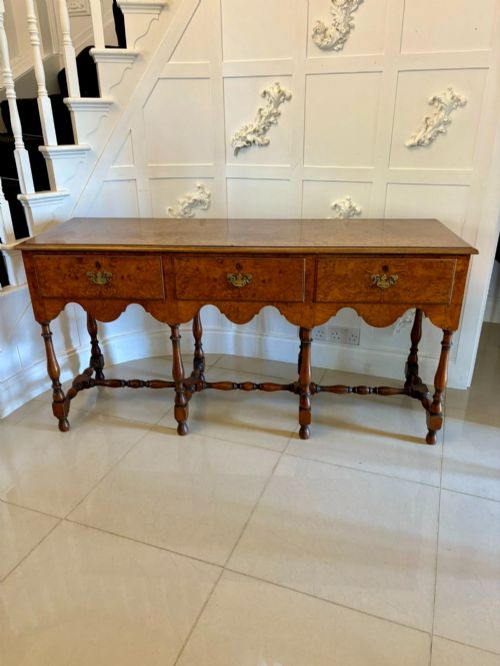
Makers built these pieces using solid timber construction, primarily oak and walnut, often enhanced with burr walnut veneers or pine carcasses. Surfaces frequently show crossbanding to frame the drawer fronts and decorative grain patterns.
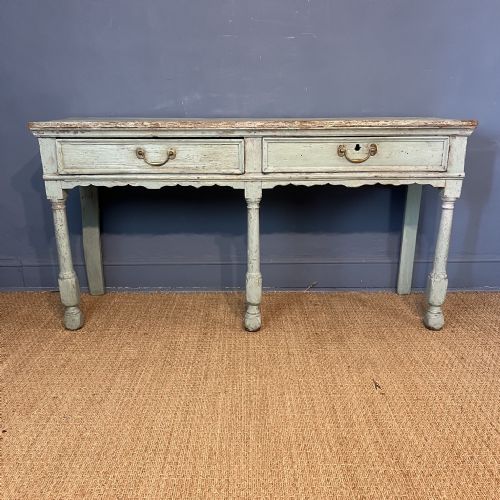
Working by hand, joiners shaped cabriole legs and fitted brass hardware such as drop handles and backplates. Painted finishes also appear, applied directly to pine structures during early periods.
Queen Anne Dresser Base Retail Price Guide 2026
Typical asking prices for queen anne dresser base among the pieces listed under this phrase on Sellingantiques today, from the lower quarter to the upper quarter. They describe what is for sale here now, not the wider market.
Some pine examples carry layers of old paint that survived three centuries of kitchen use.
What varies in quality
Quality rests in the choice of timber figure and the crispness of the joinery details. Finer examples display carefully selected burr walnut veneers and well-proportioned cabriole supports rather than heavier, plain secondary woods.
The integrity of the surface patination distinguishes the more desirable pieces from later revivals. Original timber surfaces show age through a soft, worn texture that machine sanding removes.
The Queen Anne Dresser Base Glossary
- Cabriole leg
- A furniture leg that curves out and then narrows inward, resembling an animal's curving leg. This style is characteristic of early eighteenth-century design.
- Crossbanding
- A border of veneer laid with the grain running perpendicular to the surrounding wood. This technique creates a neat framing effect on drawer fronts.
- Burr walnut
- A figured wood taken from the burl growth of a walnut tree, prized for its swirling patterns. It is used as a decorative veneer on statement furniture.
- Dresser base
- A low utilitarian cabinet with drawers and sometimes cupboards, historically used for serving food and storing tableware. It lacks the upper plate racks of a full dresser.
Queen Anne Dresser Base: Frequently Asked Questions
What is a queen anne dresser base?
A low wooden cabinet featuring drawers and sometimes cupboards, designed for domestic service and storage. They sit lower than full dressers because they omit the upper shelving.
Most examples date from the early eighteenth century or later revival periods, built primarily in oak, walnut, or pine.
How do I spot a revival piece?
Revival pieces often date from around nineteen hundred or the Victorian era, copying the earlier styles. Look closely at the timber colour, tool marks, and construction methods to gauge the age.
Earlier examples show distinct hand-cut joinery and natural wear that later copies struggle to replicate accurately.
What timber was used?
Oak and walnut dominate these listings, alongside pine and mahogany. Walnut frequently appears with decorative crossbanding or burr veneer figures.
Some pine pieces feature early painted finishes rather than polished wood surfaces.
How do I live with one?
These bases function well as sideboards in dining rooms, hallways, or living spaces for surface display and drawer storage. Their low profile prevents them from dominating smaller rooms.
Keep them away from direct heat sources to protect the older timbers and decorative veneers from drying out.