


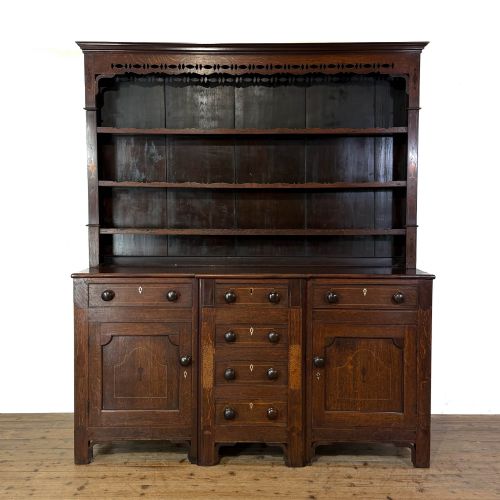


Georgian Oak Kitchen Cupboard
When you search for a georgian oak kitchen cupboard, you find honest timber furniture built for daily service in country houses and farmhouses.
Georgian Oak Kitchen Cupboard
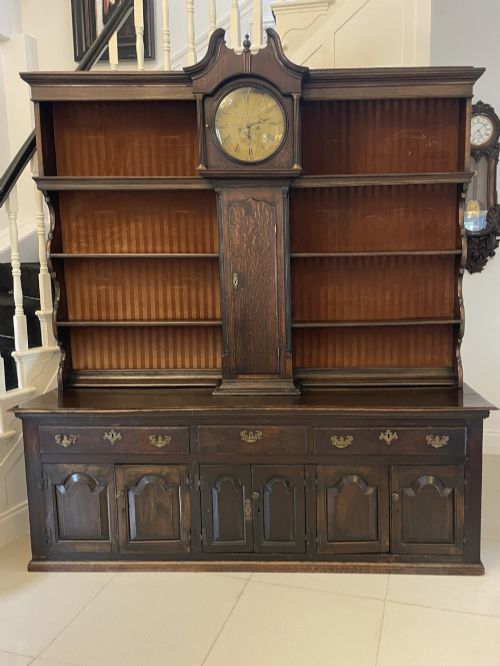
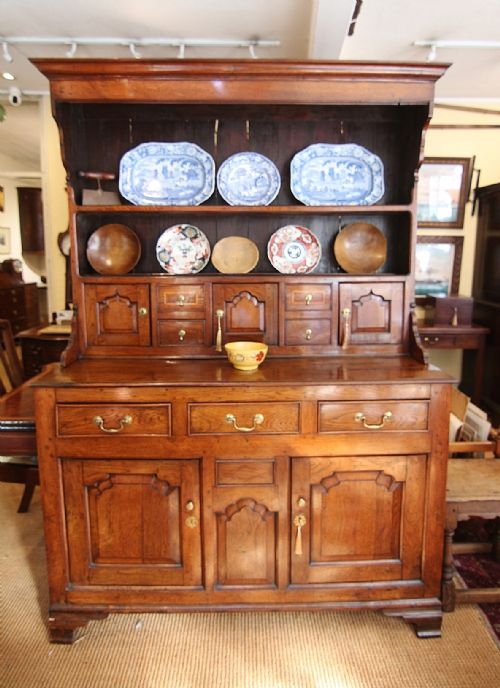
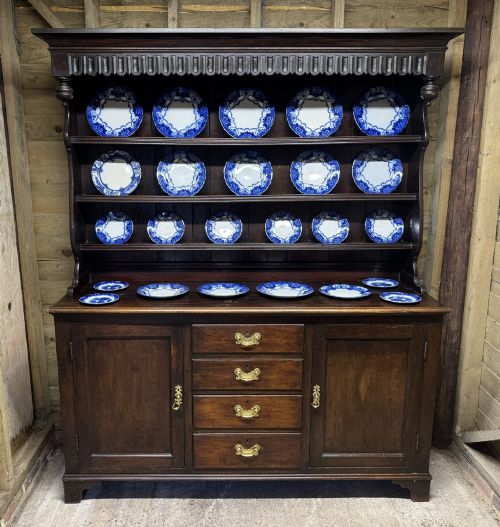
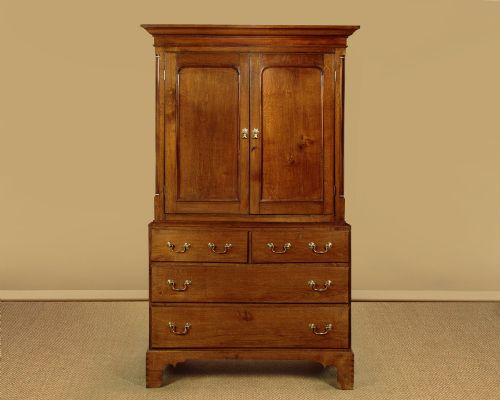
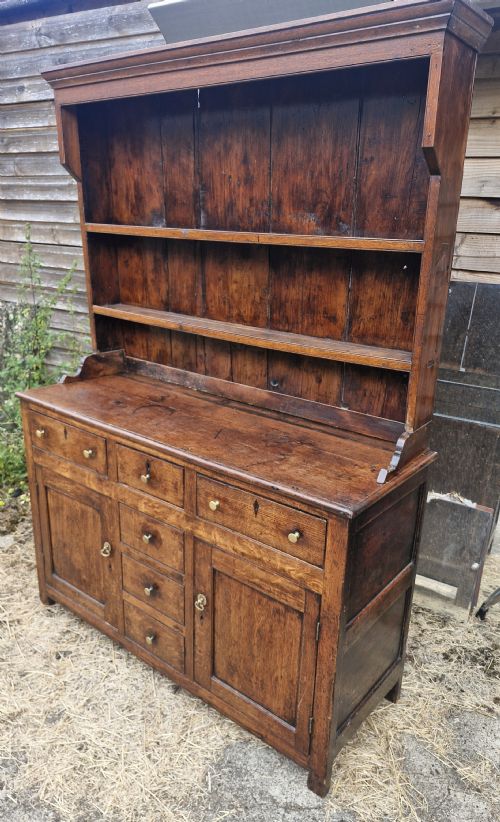
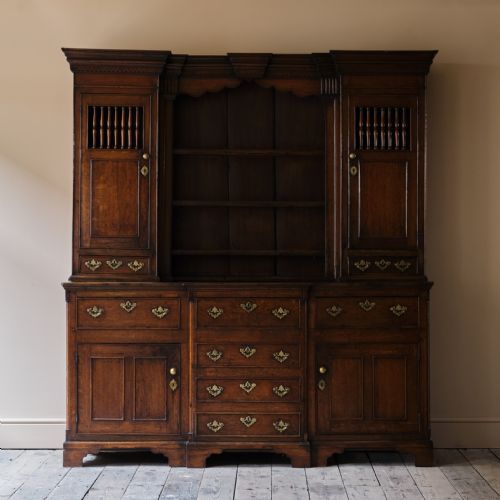
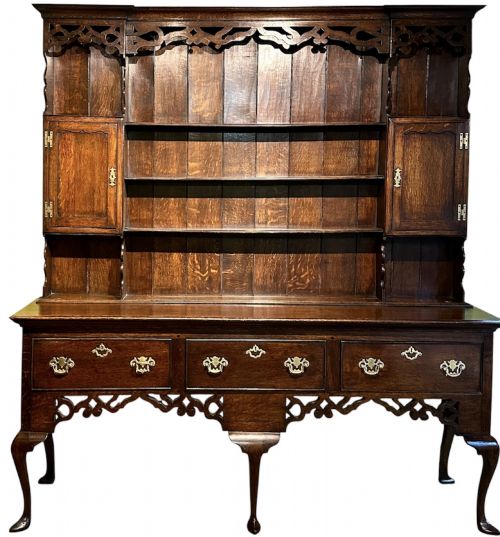
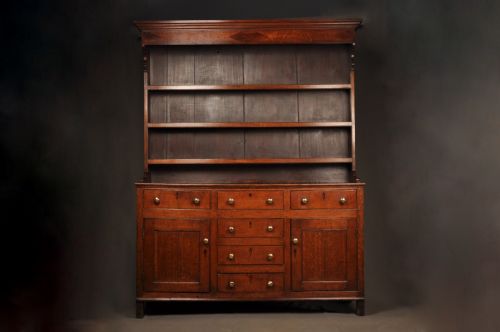
A georgian oak kitchen cupboard represents the utilitarian heart of domestic life, spanning dressers, housekeepers cupboards, spice cupboards, and food safes. These pieces originate largely from regional workshops in Wales, England, and the West Country.
The selection ranges from open-backed plate rack dressers and pot board bases to enclosed livery presses and bread and cheese cupboards. Regional variations define the character, showing distinct vernacular traits from Snowdonia, Llanrwst, and Anglesey.
Most examples date from the eighteenth and early nineteenth centuries, though later interpretations echo the established Georgian style. Buyers encounter native timbers shaped by local cabinet makers to serve specific domestic storage needs.
Materials and construction
Makers relied primarily on native oak supplemented by elm, pine, and mahogany for secondary elements and decorative inlays. Brass hardware, bone details, and glass panels appear where utility met display, while painted wood surfaces survive on specific regional pieces.
Joinery techniques relied on traditional pegged frames, panelled doors, and robust board construction designed to endure heavy daily use. Regional workshops utilised local timber reserves, meaning grain patterns and board widths vary according to geographic origin.
Bread and cheese cupboards feature ventilated spindle doors designed specifically to outwit hungry farmhouse mice.
Distinctions in standard
Quality rests upon the integrity of the timber selection and the restraint of the regional design. Superior pieces display well-figured native oak with harmonious proportions, whereas lesser examples show utilitarian expediency or unsympathetic timber mixing.
Originality of surface finish and untouched structural hardware separate the finest survivors from heavily restored instances. The crispness of geometric carvings, inlay work, and the survival of original pot boards or plate racks dictate the standing of each piece.
The Georgian Oak Kitchen Cupboard Glossary
- Pot board
- A low slatted or boarded shelf fixed near the floor of a dresser base, traditionally used for storing pots and pans.
- Bread and cheese cupboard
- A regional storage piece featuring perforated splines or turned spindles for ventilation, designed to keep food safe from pests.
- Housekeepers cupboard
- A large enclosed storage unit with doors and internal shelving, utilised for household linens and dry stores.
- Plate rack
- An upper wooden framework featuring vertical slats or plate rails, fixed above a dresser base to display ceramic tableware.
- Vernacular
- Architecture and furniture styling rooted in local traditions and materials rather than academic or metropolitan design canons.
Georgian Oak Kitchen Cupboard: Frequently Asked Questions
How were these cupboards used?
These pieces served as the central storage units for rural kitchens and pantries, holding dry foodstuffs, heavy crockery, and household linens.
Open racks displayed everyday ceramics while enclosed lower compartments and deep drawers protected provisions and utensils from dust and damp.
Where were regional styles made?
Production centred in rural workshops across Wales, the West Country, and provincial English counties using locally felled timber.
Distinct structural traits emerged from specific valleys and market towns, allowing specialists to trace pieces to areas like Snowdonia or Anglesey.
How do I care for antique oak?
Maintain stable humidity and temperature away from direct heat sources to prevent the timber from splitting or warping.
Feed the dry wood sparingly with traditional beeswax to preserve the natural grain and maintain a soft historic sheen.
How do I distinguish eighteenth from nineteenth century pieces?
Eighteenth-century examples often exhibit deeper hand-planed board surfaces, pegged frame construction, and simpler regional mouldings.
Nineteenth-century items frequently incorporate machine-sawn elements, standardised hardware, and occasionally secondary timbers like pine or mahogany.