
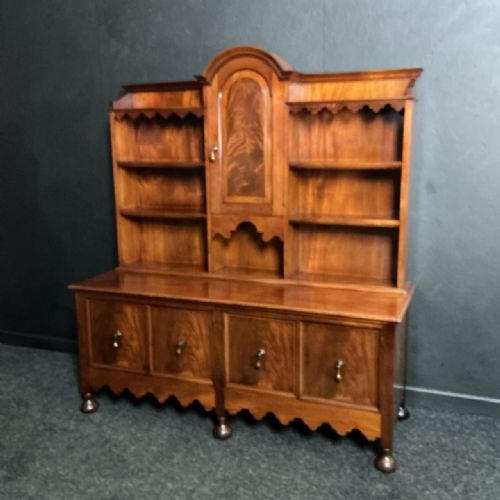
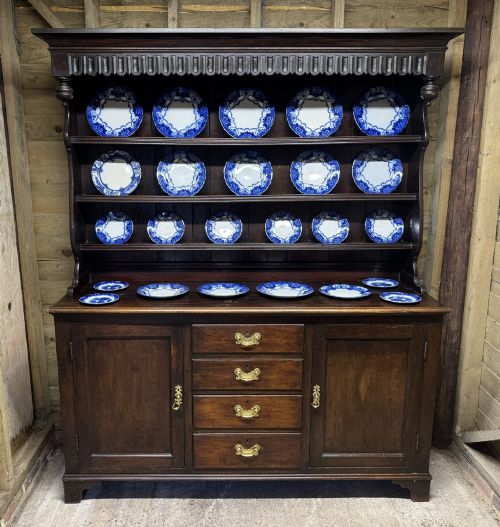
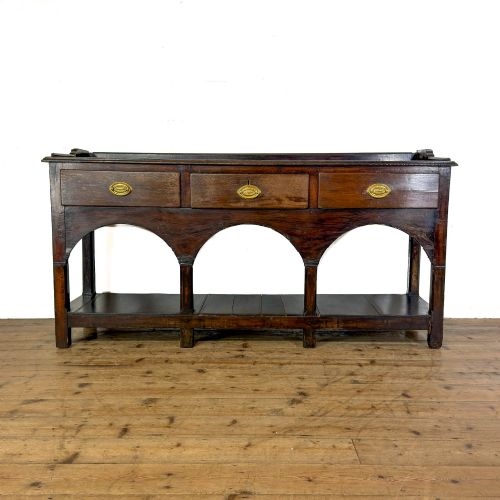


Dark Wood Open Dresser
A dark wood open dresser brings immediate warmth and practical display space to a room, grounding your dining area or kitchen with generations of craft.
Dark Wood Open Dresser
When you search for a dark wood open dresser, you are looking for substantial storage furniture combining base cabinets or drawers with open upper shelves for display. The pieces you encounter span distinct periods from the eighteenth century through the Edwardian era and into the nineteen-thirties.
The most common examples you will meet on this page are constructed from oak or mahogany, often taking the form of traditional Welsh dressers or dresser bases paired with plate racks. These range from rustic English country farmhouse pieces to formal Georgian and Regency designs.
How they were made
Cabinet makers relied primarily on solid oak, mahogany, and pine, often selecting flame mahogany veneers for decorative fronts and incorporating brass hardware for handles and escutcheons. Regional workshops utilised local timber availability, meaning West Country pine and Welsh oak form distinct construction traditions.
Joinery techniques combined traditional hand-cut framing with pegged joints on earlier pieces, while later nineteenth-century examples integrated glass panels and rosewood inlay work. Carved detailing appears on select eighteenth-century formats, alongside painted finishes on specific country variants.
One recorded piece includes carved depictions of kings alongside traditional kitchen storage.
What varies in quality
The distinction between standard utility furniture and superior examples lies in timber selection and the refinement of surface patination. Higher quality pieces display well-figured grain, particularly in flame mahogany or quarter-sawn oak, alongside proportioned cornices and balanced drawer arrangements.
Structural integrity and originality of elements also define the tier of a piece, separating integrated dresser bases and racks from married combinations assembled at later dates. Finer cabinet work shows in the crispness of mouldings and the retention of original brass fittings.
The Dark Wood Open Dresser Glossary
- Dresser base
- The lower section of a dresser featuring cupboards and drawers, which sometimes stands independently without an upper plate rack.
- Plate rack
- The open upper shelving unit attached to or hung above a dresser base, designed originally for displaying ceramic plates.
- Pot board
- The low bottom shelf on traditional country dressers, historically used for storing large pots and heavy kitchen utensils.
- Breakfront
- A cabinet design where the central section projects forward from the flanking outer wings, creating architectural depth.
- Flame mahogany
- A decorative mahogany veneer cut from the branch junction where the grain pattern resembles flickering flames.
Dark Wood Open Dresser: Frequently Asked Questions
What is an open dresser?
An open dresser is a dual-purpose storage item featuring closed cupboards or drawers below and open shelves above.
This configuration was traditionally designed for both storing kitchen tableware and displaying prized ceramic collections in domestic living spaces.
How do I date an oak dresser?
Dating relies on observing construction methods, timber choice, and overall stylistic vernacular from specific periods.
Earlier eighteenth-century pieces often display hand-pegged joinery and native oak timber, whereas Victorian and Edwardian examples incorporate machine-sawn elements and varied secondary woods.
Where should I place a dresser?
These pieces suit dining rooms, large kitchens, and open-plan living areas where wall space allows for their substantial proportions.
The open shelving provides an ideal display focal point for books, ceramics, and decorative objects.
Are dresser bases separate?
Many dresser bases function as standalone sideboards, while others originally anchored a matching upper rack.
Checking the top surface of a base often reveals fixing marks that indicate whether it once held upper shelving.