

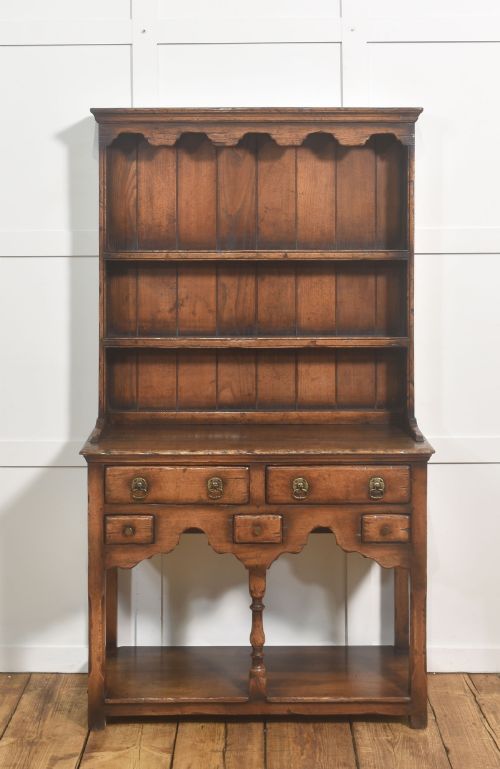
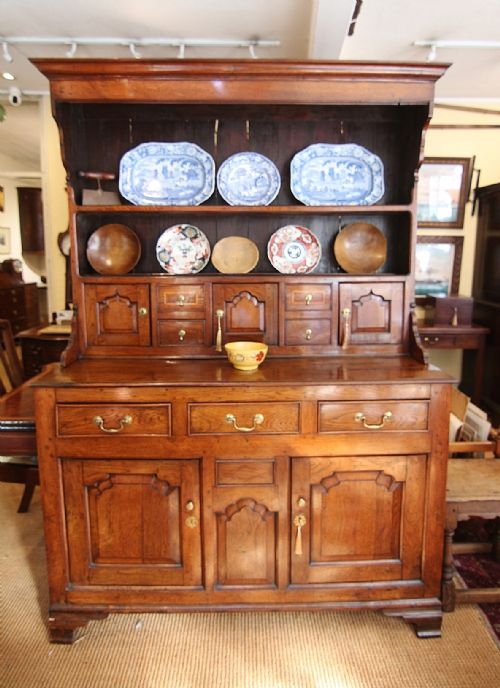
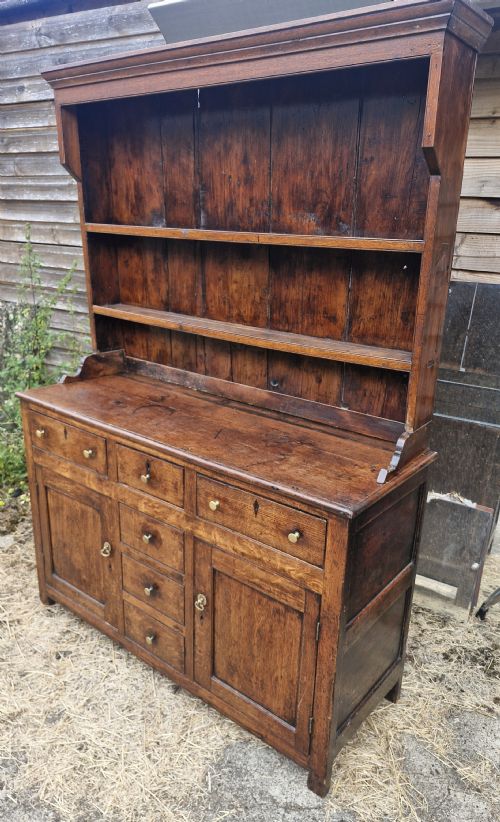
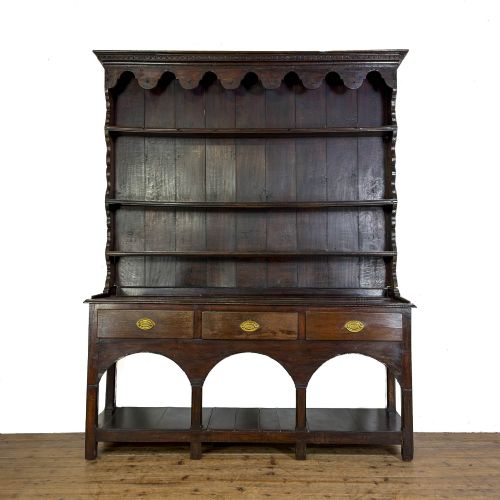
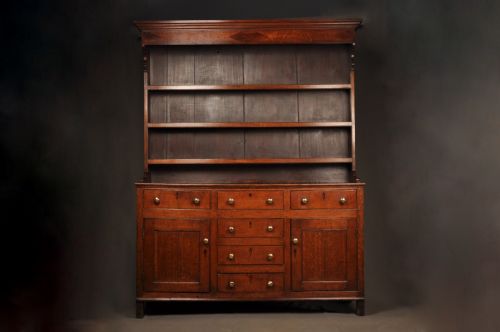
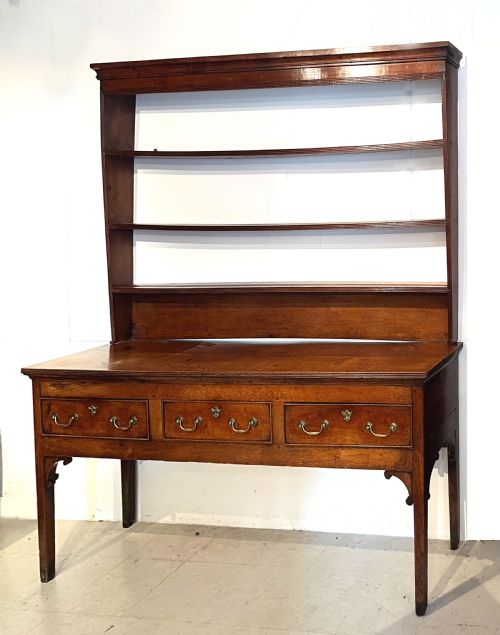


Georgian Oak Hutch
A georgian oak hutch brings robust vernacular craftsmanship and warm, time-worn timber directly into a modern dining room or kitchen.
Georgian Oak Hutch
When you search for a georgian oak hutch, you are looking at substantial country furniture primarily built as kitchen dressers and storage units with open plate racks. These pieces span the eighteenth century and the nineteenth century, reflecting regional vernacular traditions from Wales, Snowdonia, and English farmhouses.
The version you are most likely to meet on this page is a two-part Welsh dresser or a country cottage dresser featuring open shelving above base cupboards and drawers. They range from small, simple farmhouse pieces to monumental country house dressers fitted with breakfront drawers or pot-boards.
Makers working within these regional traditions utilised solid native timber to create practical domestic furniture designed for daily utility. The survival of original racks alongside the base units remains a defining characteristic for pieces originating from this period.
Distinctions in quality
Quality in these vernacular pieces rests upon the integrity of the timber, the balance of proportions between the base cabinet and the upper rack, and the degree of original surface patination. Examples that retain their original pot-boards, brass pulls, and unaltered plate racks command greater appreciation.
Regional variations also influence standing, with specific provenance such as Snowdonia or South Wales indicating distinctive local cabinet-making traits. Pieces showing crisper geometric carvings or sophisticated inlaid detail demonstrate a higher standard of workmanship from regional joiners.
Some dressers preserve small secret drawers tucked behind plate racks, originally designed for hiding household ledgers and silver spoons.
The Georgian Oak Hutch Glossary
- Pot-board
- An open lower shelf beneath a dresser base traditionally used for storing pots and heavy kitchen utensils. It forms a sturdy lower platform supported by upright legs.
- Plate rack
- The upper open shelving superstructure attached to a dresser base designed for displaying ceramic plates and platters. It often incorporates smaller spice drawers or shaped friezes.
- Vernacular
- Architecture and furniture built by local craftsmen using traditional regional methods and native materials rather than adhering to high London fashion. It prioritises utility and local style.
- Breakfront
- A piece of furniture where the central section projects forward from the flanking outer sections. This architectural arrangement adds visual depth and varied storage capacity to the base drawers.
- Patina
- The deep, warm surface sheen developed on wood over centuries through handling, waxing, and ageing. It represents the physical history and continuous use of the furniture.
Georgian Oak Hutch: Frequently Asked Questions
What is a Welsh dresser?
A Welsh dresser is a traditional combination of a lower storage cabinet with drawers or cupboards and an upper open rack for displaying plates. They were essential pieces of farmhouse furniture used for both food preparation and tableware storage.
Over the centuries, these pieces evolved with regional variations in proportions and ornamentation, particularly across Wales and rural England.
How do I date an oak dresser?
Dating relies on examining construction techniques, timber characteristics, hardware, and overall style. Hand-cut peg joints, board thickness, and timber shrinkage patterns provide clear indicators of eighteenth-century or nineteenth-century origins.
Changes in drawer construction, such as the transition from hand-cut dovetails to machine-cut equivalents, also help narrow down the period of manufacture.
Where were these dressers made?
These pieces were produced by regional cabinet-makers and country joiners working in rural workshops across England and Wales. Specific regions like Snowdonia and South Wales developed distinct stylistic traits in their joinery and carving.
Local timber availability dictated the choice of oak, elm, and subsidiary woods used in their construction.
How do I care for antique oak?
Antique oak benefits from consistent indoor humidity levels away from direct heat sources and strong sunlight, which can dry out the timber. Regular dusting with a soft cloth and occasional application of traditional beeswax help preserve the natural patina.
Avoiding modern silicone-based polishes ensures the wood surface can continue to breathe and age gracefully.
Are the plate racks original?
Many surviving pieces retain their original plate racks, though some upper sections were separated or reunited over the course of their long history. Examining the construction methods and timber ageing on both the base and rack helps determine if they started life together.
Both married sets and matching pairs remain common finds within country furniture.