
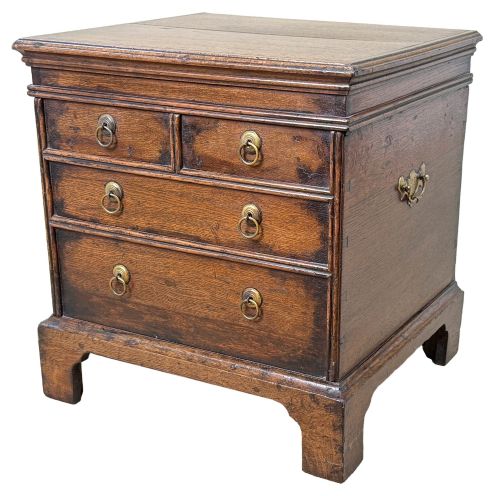
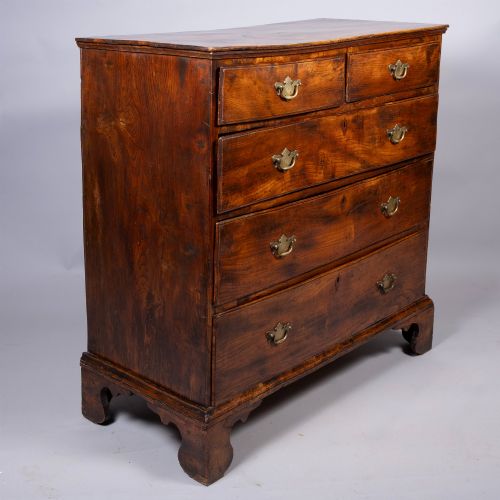

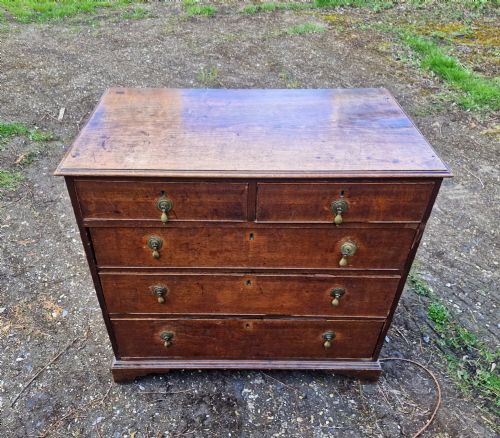


Georgian Oak Commode Cabinet
These georgian oak commode cabinet examples combine robust timber with functional forms, offering practical storage and period character for any interior.
Georgian Oak Commode Cabinet
A georgian oak commode cabinet brings together sturdy domestic storage and compact period design. The selection on this page centres primarily on practical chests of drawers, close stools, and bedside cabinets made in oak.
Makers shaped these forms across the eighteenth and nineteenth centuries, spanning George II, George III, and Regency periods. Buyers encounter pieces ranging from miniature furniture to straight front and bow front chests.
Alongside standard timber construction, variations include figured elm, yew wood, burr walnut, and painted finishes. Close stools disguise sanitation beneath hinged tops, mimicking small bedside chests of drawers.
How they were made
Cabinet makers utilised solid timber, primarily oak alongside elm and yew wood, building carcases designed to withstand daily domestic use. Surfaces display natural grain patterns, sometimes enhanced with banding or painted finishes.
Hardware such as brass handles and hinges secures operational doors and drawers. Joinery traditions of the eighteenth and nineteenth centuries dictate the internal construction of each chest and close stool.
Several pieces are actually indoor toilets in disguise, proving that Georgian privacy had a sense of humour.
What varies in quality
Superior examples display careful selection of timber figures, such as burr walnut or figured elm, matched across drawer fronts. Construction depth and the finesse of brass fittings distinguish standard utility pieces from finer items.
Proportion and scale dictate the visual success of smaller forms, including miniature furniture and bedside cabinets. The integration of banding and the preservation of original painted surfaces separate basic utilitarian objects from more ambitious workshop output.
The Georgian Oak Commode Cabinet Glossary
- Commode cabinet
- A piece of furniture designed for storage or to enclose a chamber pot, often disguised as a small chest. Eighteenth-century versions frequently took the form of close stools.
- Close stool
- A box-like cabinet enclosing a commode pan, fitted with a lid to resemble a small bedside chest. These items served a discreet sanitation purpose in bedrooms.
- Bow front
- A cabinet front curved outward in a convex sweep. This style appeared on later pieces, softening the rigid angles of standard chests.
- Banding
- A narrow strip of contrasting timber inlaid around drawer edges or top surfaces. This decorative technique frames the primary wood grain.
- Figured elm
- Timber harvested from the elm tree exhibiting swirling, interlocking grain patterns. Cabinet makers utilised this material to add visual texture to drawer fronts.
Georgian Oak Commode Cabinet: Frequently Asked Questions
How do I date a chest of drawers?
Dating relies on observing construction methods, timber choices, and stylistic markers such as hardware and bracket feet. Pieces from the George II and George III eras display distinct proportions and joinery compared to later nineteenth-century examples.
Examining the secondary woods inside drawers and the presence of banding helps establish the period of manufacture.
What woods were used?
Oak serves as the primary material across these listings, supplemented by elm, yew wood, pine, and burr walnut. Cabinet makers selected these timbers for durability and decorative grain.
Some pieces also feature painted finishes or simulated wood effects applied over the base material.
Are miniature chests functional?
Miniature chests of drawers were constructed as scaled-down versions of full-size furniture. Makers often produced them as apprentice pieces to demonstrate skill or as salesman samples.
Despite their reduced scale, they feature working drawers and standard joinery techniques suited to smaller storage tasks.