


Oak Commode Stool
These oak commode stool examples combine domestic function with robust regional craftsmanship, offering sturdy seating that conceals historical sanitary provisions.
Oak Commode Stool
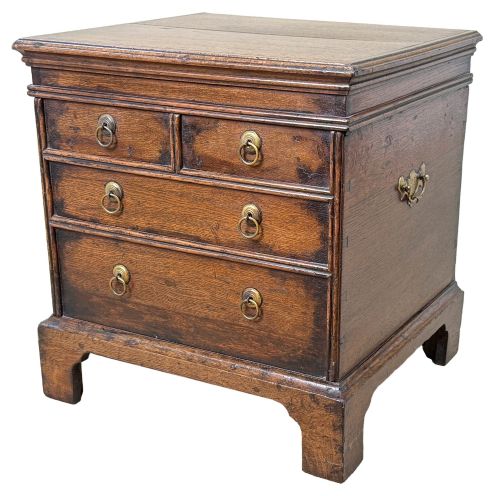
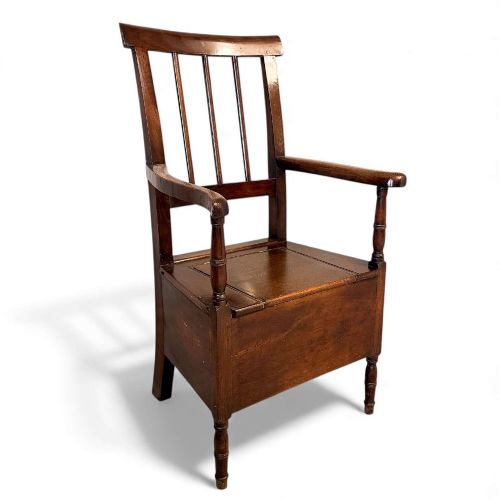
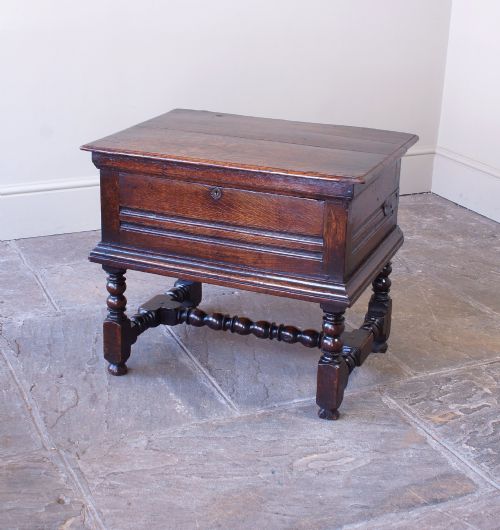
When you search for an oak commode stool, you encounter specialised timber seating designed to conceal a chamber pot beneath a lift-up lid or enclosed compartment. These practical items bridge the gap between ordinary domestic seating and hidden sanitation, frequently taking the form of armchairs, box stools, or small bedside chests.
The examples available here predominantly span the 17th century, the 18th century, and the broader Georgian period. You are most likely to meet pieces constructed from solid English or Welsh timber, sometimes exhibiting walnut accents or brass and iron hardware.
The forms vary from simple box constructions to refined armchair formats resembling conventional household seating. Each variant reflects the domestic requirements of its era, housing internal arrangements designed for discrete personal use.
Materials and construction methods
Makers relied principally on solid oak, utilising its strength to construct durable frames, panelled sides, and lift-up lids. Secondary woods such as walnut occasionally appear in accents or structural supports, reflecting regional availability and workshop preferences.
Joinery techniques relied on traditional pegged mortise and tenon joints to withstand daily use. Metalwork hardware, including brass and iron hinges, latches, or carrying handles, was integrated securely to support the functional demands of the piece.
One recorded piece includes a ceramic pot, proving history occasionally leaves the plumbing intact.
Distinguishing quality across examples
Quality separates pieces through the integrity of the timber framing and the sophistication of the carpentry. Superior examples display tightly fitted joinery, well-figured oak boards, and harmonious proportions that integrate the internal chamber provisions seamlessly.
The refinement of the silhouette distinguishes higher status pieces from utilitarian workshop output. Elaborate arm configurations, panelled detailing, and original brass or iron hardware elevate certain items beyond straightforward domestic utility.
The Oak Commode Stool Glossary
- Close stool
- An enclosed wooden seat featuring a removable lid or pan designed for sanitary use. This term frequently appears interchangeably with commode stool in historical records.
- Box stool
- A rigid container-like seat with a hinged top, providing storage space beneath the sitter. These pieces often incorporate internal divisions for chamber pots.
- Commode chair
- An armchair adapted to enclose a chamber pot beneath the seat frame, often disguised as standard parlour or bedroom seating. They frequently feature panelled fronts or skirts to conceal the interior.
- Mortise and tenon
- A traditional joint formed by inserting a shaped projection into a corresponding cavity, securing structural stability without modern adhesives. This method defines sturdy period furniture construction.
Oak Commode Stool: Frequently Asked Questions
What is an oak commode stool?
An oak commode stool is a piece of antique seating designed with a concealed interior compartment to hold a chamber pot. These items served private domestic needs before modern indoor plumbing became common.
Craftsmen built them to blend into bedrooms or dressing rooms by disguising the sanitary function beneath a solid timber lid or panelled front.
How do I date an oak commode stool?
Dating relies on examining the construction methods, timber patination, and stylistic markers consistent with periods like the 17th century or the Georgian era. Simple box forms often suggest earlier 17th-century origins, while armchair adaptations frequently align with 18th-century cabinetmaking.
Hardware details, such as the use of hand-forged iron or early brass hinges, also provide clues to the approximate decade of manufacture.
Were these used as regular chairs?
Many commode stools were designed to double as ordinary seating when not fulfilling their primary sanitary purpose. The top lid closed securely to present the appearance of a standard box stool or armchair.
Some refined Georgian examples incorporated upholstery or carved armrests specifically to maintain the illusion of standard parlour furniture.
How do I care for antique oak?
Antique oak benefits from stable indoor humidity and protection from direct sunlight, which can dry out the historic timber. Regular dusting with a dry, soft cloth preserves the natural surface patination.
Avoid modern liquid polishes or silicone sprays, as these can penetrate open wood pores and alter the aged finish over time.