
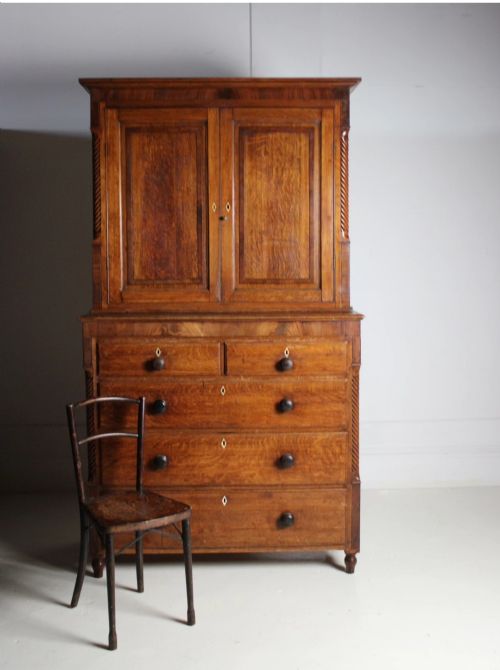
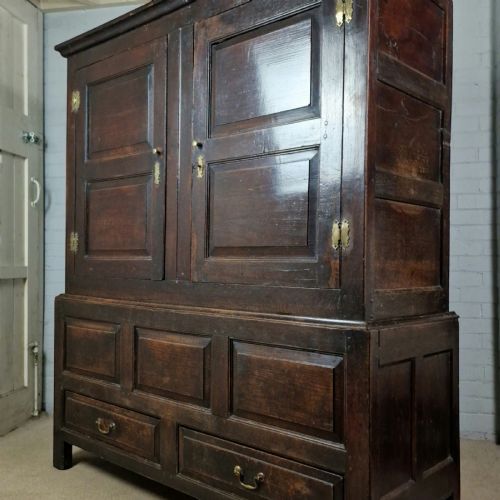
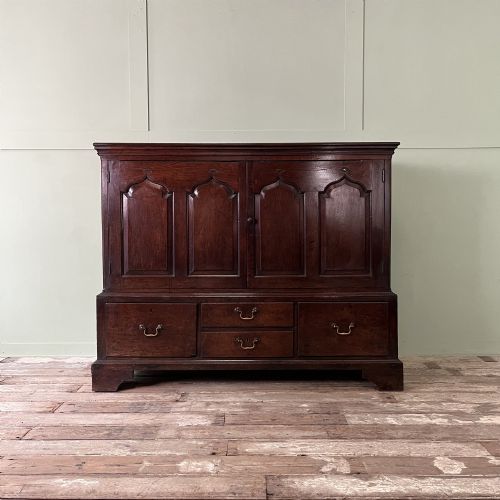
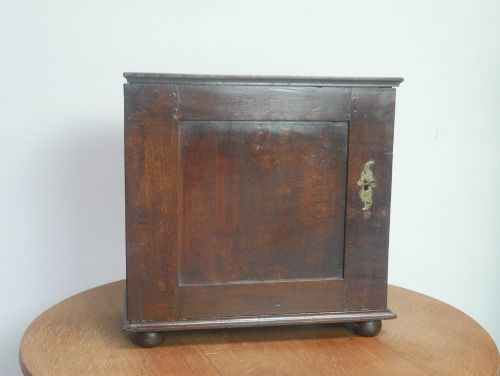
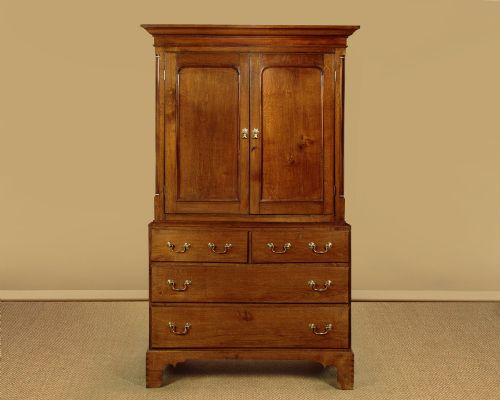
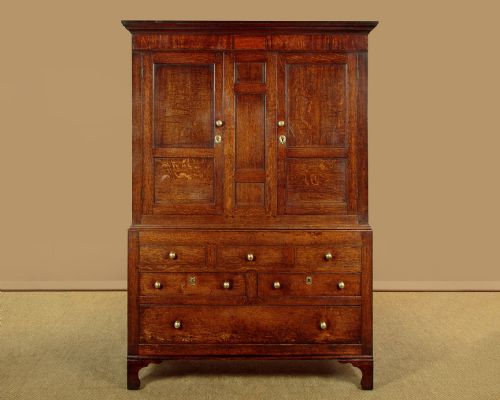
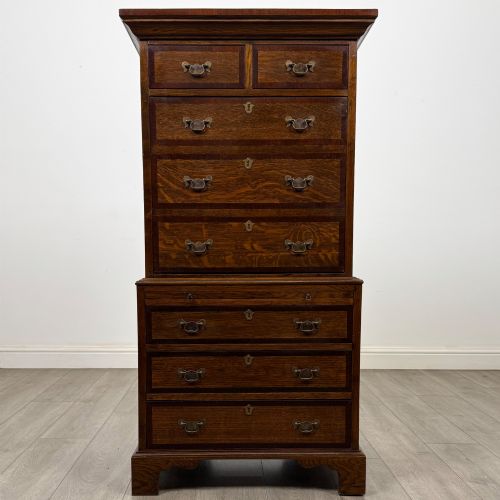
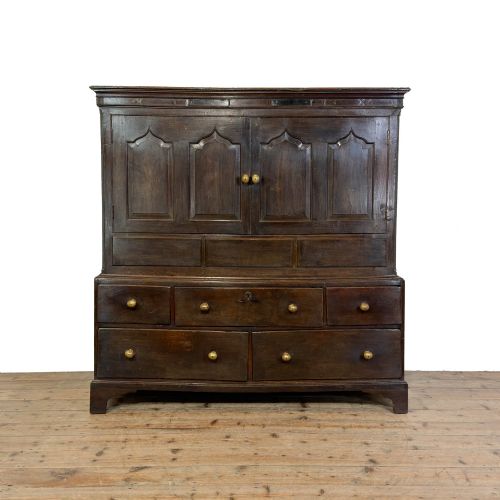
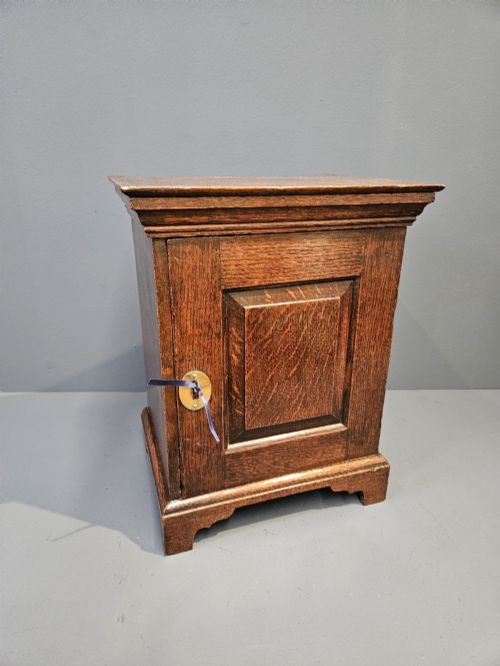
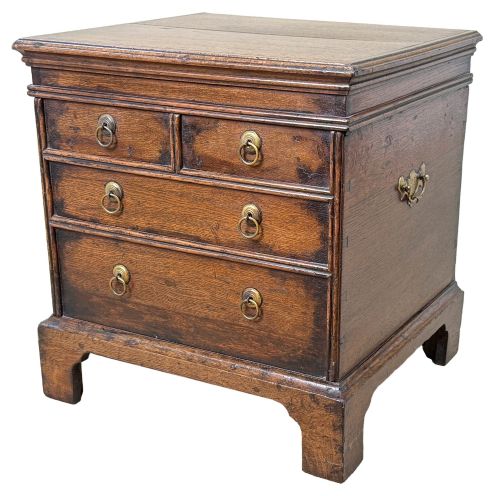


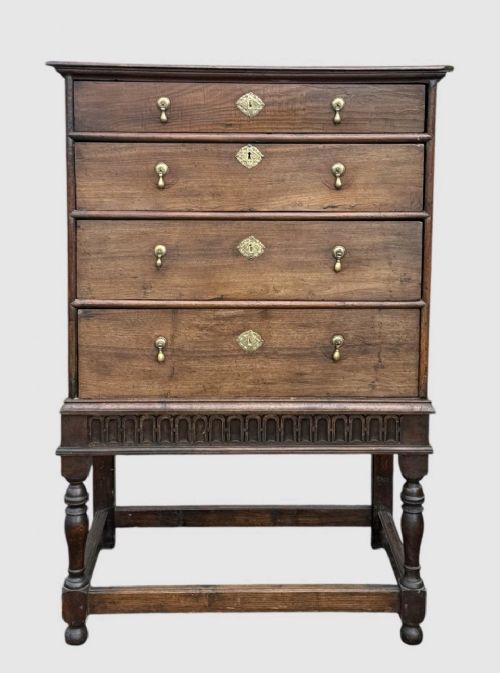
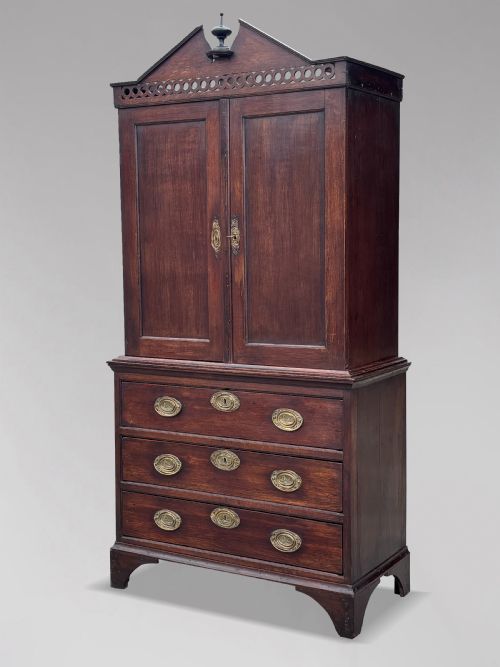

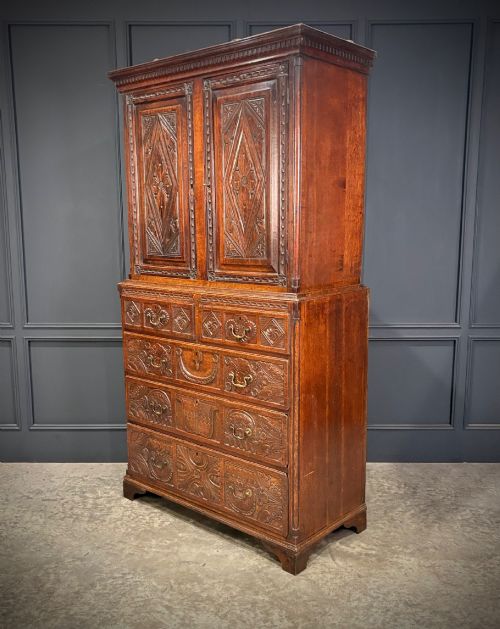
Georgian Oak Chest Cupboard
A georgian oak chest cupboard brings solid timber storage and provincial British character directly into a modern hallway or bedroom.
Georgian Oak Chest Cupboard
A georgian oak chest cupboard is a hybrid storage piece combining drawer space with enclosed shelving or hanging compartments, built mostly during the eighteenth and early nineteenth centuries. These pieces range from low press cupboards and compact spice cabinets to tall livery cupboards and linen presses originating from English and Welsh workshops.
Buyers browsing this selection frequently encounter regional vernacular forms, including Welsh oak cupboards and Lancashire dresser bases alongside classic George III designs. The majority date from the 1700s and 1800s, reflecting domestic storage needs before fitted wardrobes became standard in homes.
How They Were Made
Cabinet makers built these pieces using solid oak boards, frequently supplemented with secondary woods such as fruitwood, chestnut, and mahogany for internal elements or decorative banding. Iron strapwork, brass drop handles, and escutcheons secured doors and drawers, while panels were typically frame-and-panel construction to accommodate timber movement.
Surviving examples display regional hand-tool techniques, from pegged joints and dovetailing on drawer construction to carved detailing and inlaid wood accents. The finish relies on natural wax polish built up over centuries, highlighting the grain of the oak.
Materials recorded across the inventory include solid oak, burr oak, fruitwood, chestnut, brass, and inlay wood.
What Varies in Quality
Quality rests on the integrity of the timber selection and the restraint of the proportions, where pieces constructed from dense, figured oak command greater appreciation. Provincial examples vary from robust, utilitarian farm furniture to sophisticated urban pieces with refined mouldings and crossbanding.
The survival of original brass hardware, working locks, and unaltered internal configurations heavily influences the character of each cabinet. Pieces retaining their deep, warm surface patination without excessive modern restoration stand apart from heavily sanded or altered variants.
The Georgian Oak Chest Cupboard Glossary
- Livery cupboard
- A traditional enclosed cabinet originally used for storing provisions, later adapted for household linen and garments. These tall storage pieces often feature panelled doors and internal shelving.
- Press cupboard
- A dual-purpose storage item featuring upper cupboard doors above a lower section of drawers or a press mechanism. They were designed specifically for flattening and storing textiles.
- Vernacular furniture
- Domestic pieces built by local country craftsmen following regional traditions rather than metropolitan pattern books. These items utilise locally sourced timbers like oak and fruitwood.
- Spice cabinet
- A diminutive wall-hanging or table-top chest fitted with multiple small internal drawers. They served to secure precious spices, documents, or valuables.
- Crossbanding
- A decorative border technique where thin strips of veneer are laid perpendicular to the surrounding grain. This adds visual contrast to drawer fronts and door panels.
Georgian Oak Chest Cupboard: Frequently Asked Questions
What is a georgian oak chest cupboard?
A georgian oak chest cupboard is a traditional timber storage item combining drawers with enclosed shelving built during the eighteenth or early nineteenth century.
These versatile cabinets were designed for household textiles, clothing, or provisions, reflecting the domestic requirements of country houses and provincial homes.
How were these cupboards used historically?
Households used these large pieces for storing linens, garments, and dried goods in chambers and kitchens before fitted wardrobes existed.
Smaller variants, such as spice cupboards and wall-hanging cabinets, kept valuable commodities secure in the main living spaces.
How do I care for antique oak furniture?
Protect the timber by placing the cupboard away from direct heat sources, radiators, and prolonged direct sunlight to prevent splitting.
Apply a traditional beeswax polish occasionally to nourish the grain and maintain the natural lustre of the aged surface.
How can I tell the age of a cupboard?
Examine the construction methods, such as hand-cut dovetails on drawers, pegged tenon joints, and the type of secondary timbers used inside.
Tool marks, timber shrinkage, and the depth of the surface patination provide reliable physical indicators of eighteenth or nineteenth-century origin.
Are these pieces suitable for modern homes?
These robust cabinets offer practical, deep storage solutions that fit well into contemporary hallways, bedrooms, and living spaces.
Their restrained proportions and earthy oak tones complement both traditional interiors and modern minimalist rooms.