



Welsh Linen Press
These welsh linen press examples are substantial timber storage furniture pieces holding centuries of domestic textile history.
Welsh Linen Press
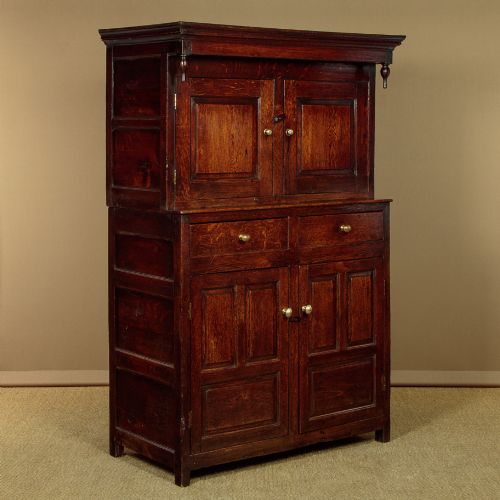
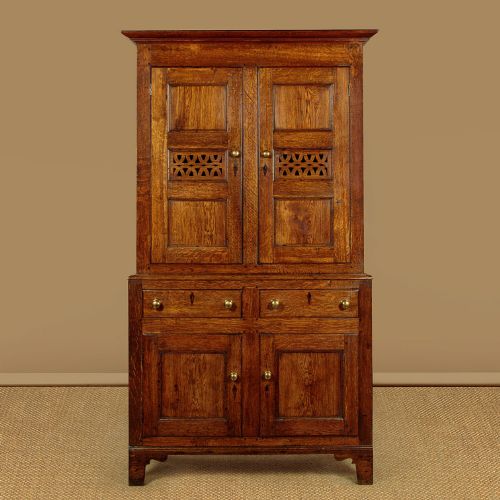
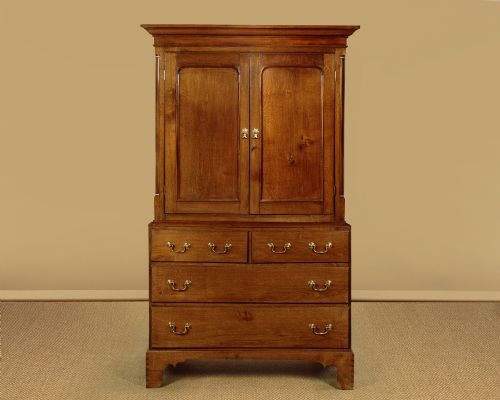
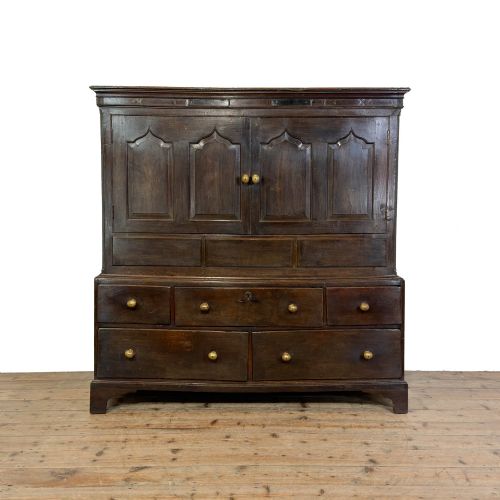
When you search for a welsh linen press, you encounter large timber storage furniture built to house household textiles and clothing. The pieces listed span the seventeenth, eighteenth, and nineteenth centuries, taking the form of press cupboards, livery cupboards, and regional deuddarn variants.
Regional variations include Carmarthenshire coffers and Cardiganshire designs alongside simpler kitchen and housekeepers cupboards. Buyers frequently select these items to anchor a room with period utility and deep timber grain.
Materials and construction
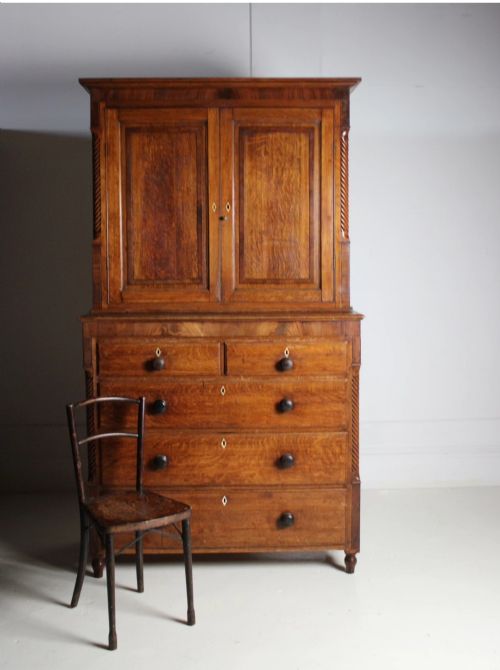
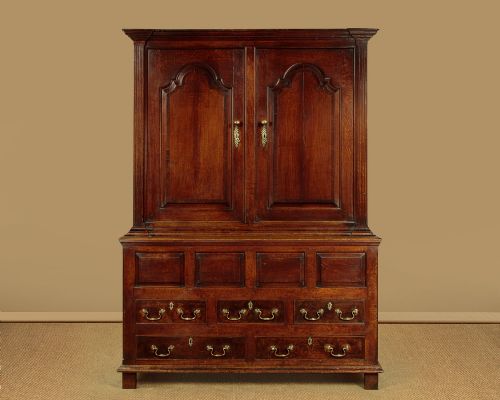
Cabinet makers relied primarily on solid oak, supplemented occasionally by pine internals and mahogany accents. Timber surfaces often display natural wood inlay, brass hardware, bone escutcheons, and historic painted finishes.
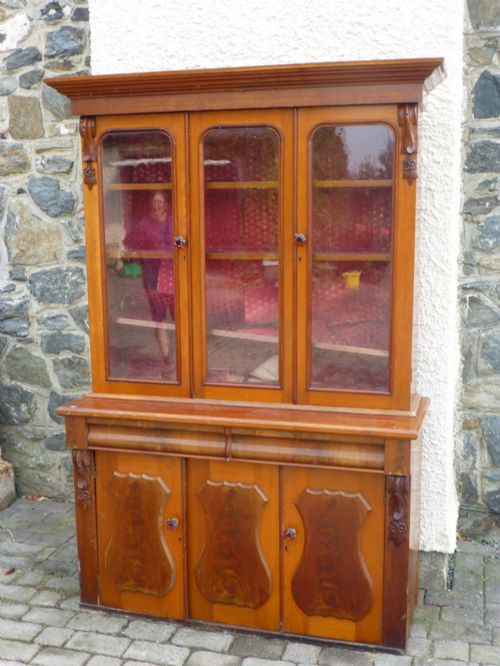
Construction techniques involve heavy timber framing, pegged joints, and panelled doors designed to endure generations of use. Glazed upper sections and drawers demonstrate the joinery skills typical of Georgian and Victorian rural workshops.
Welsh Linen Press Retail Price Guide 2026
Typical asking prices for welsh linen press among the pieces listed under this phrase on Sellingantiques today, from the lower quarter to the upper quarter. They describe what is for sale here now, not the wider market.
Several cupboards retain secret compartments designed to keep family valuables safely out of sight.
Distinctions in quality
Quality in these pieces rests on the integrity of the original timber and the restraint of subsequent alterations. Retaining surface patination, original brass fixtures, and untouched structural joinery elevates an example considerably.
Proportion and regional character distinguish simpler utilitarian boxes from sophisticated vernacular masterpieces. Finer specimens display thoughtful timber selection, balanced proportions, and vernacular details unique to specific Welsh counties.
The Welsh Linen Press Glossary
- Cwpwrdd Deuddarn
- A traditional Welsh two-tier cupboard featuring an enclosed upper section supported by posts above a larger base. This regional form evolved during the seventeenth and eighteenth centuries.
- Livery Cupboard
- A traditional storage cabinet originally utilised for food or clothing ventilation in large houses. These pieces often feature louvred or panelled doors to circulate air around stored items.
- Housekeepers Cupboard
- A large utility cabinet used in substantial country houses for storing household linen and provisions. They typically combine upper shelving with deep lower drawers.
- Press Cupboard
- A tall storage unit designed specifically to flatten and store table linens and garments before the widespread use of irons. They generally utilise internal sliding trays or shelves.
- Vernacular
- Architecture and furniture design rooted in local traditions, materials, and practical needs rather than academic architectural styles. These pieces reflect the pragmatic demands of Welsh rural life.
Welsh Linen Press: Frequently Asked Questions
What is a welsh linen press?
A welsh linen press is a large wooden cabinet designed for storing and pressing household textiles. These pieces combine upper cupboard storage with lower drawer arrangements.
Craftsmen built them primarily from oak during the eighteenth and nineteenth centuries. They serve today as commanding focal points in period interiors.
How are deuddarn cupboards different?
A deuddarn is a specific Welsh cupboard featuring two distinct stages with an open or enclosed middle section. They typically showcase vernacular joinery and regional stylistic traits.
These cabinets offer a distinct silhouette compared to standard Georgian press cupboards. Their construction reflects traditional Welsh rural craftsmanship.
Where were these cupboards placed?
Original owners positioned these large cabinets in farmhouses, country houses, and substantial estate utility rooms. They housed household linens, blankets, and dry provisions.
Today, they function effectively in large bedrooms, hallways, or dining rooms. Their deep storage capacity accommodates modern wardrobe needs.
How do I identify the period?
Dating relies on examining timber species, construction methods, hardware, and stylistic vernacular details. Seventeenth-century examples feature heavy framing and distinct panel configurations.
Georgian and nineteenth-century pieces introduce refined mouldings, mahogany accents, and alternative drawer arrangements. Comparing regional traits helps narrow down the decade of manufacture.