




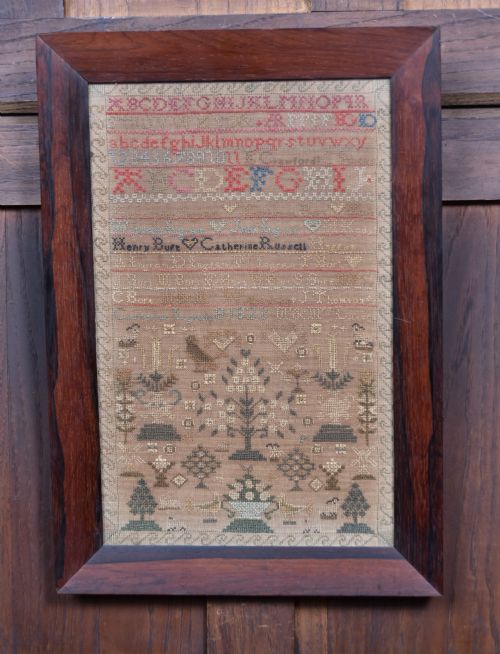


Georgian Needlepoint Panel
A georgian needlepoint panel brings hand-worked pastoral scenes and alphabets into modern rooms through framed textiles and fire screens.
Georgian Needlepoint Panel
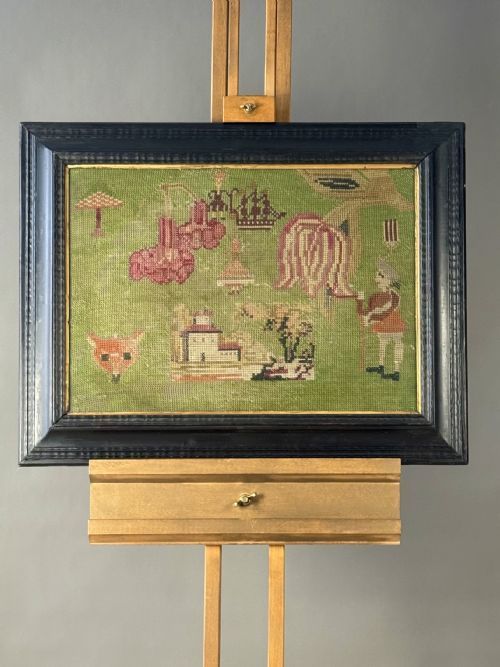
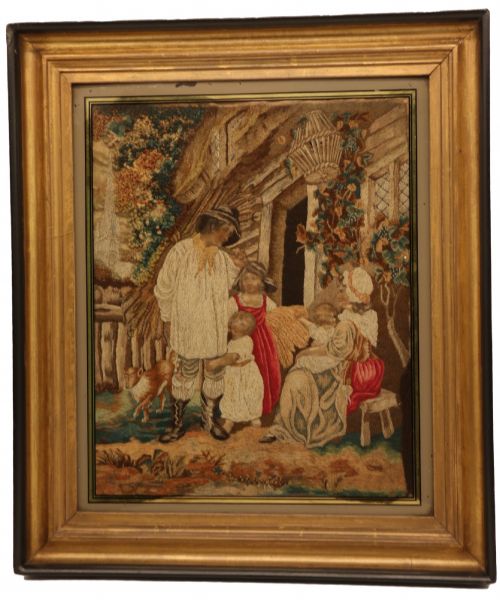
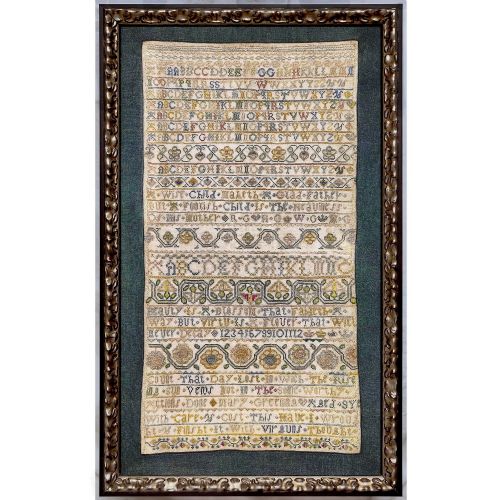
A georgian needlepoint panel typically appears as a framed textile art piece, a sampler, or mounted wall art dating from the eighteenth and nineteenth centuries. These works include pastoral farming pictures, biblical scenes like the commandments, and detailed genealogical records worked by young makers.
Buyers also encounter these textiles mounted in utilitarian forms such as pole screens, fire screens, and large multi-panel room dividers. The dominant aesthetic draws on Georgian, Regency, and George III styles, often paired with floral motifs or narrative subjects.
Originating largely from English workshops and schools, these panels span band samplers, silk embroidery, and crewel work. The selection leans heavily toward eighteenth-century framed pictures and nineteenth-century samplers bearing names and dates.
Materials and technique
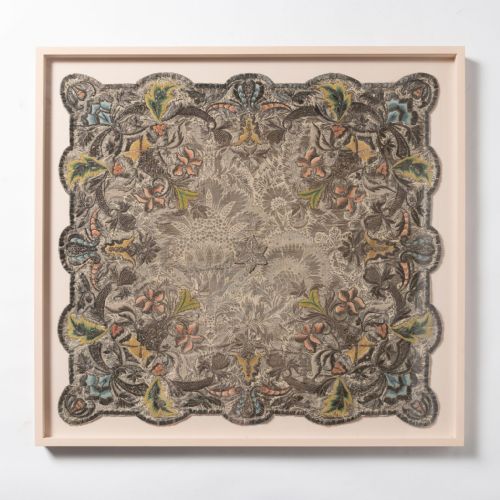
Needlework panels combine wool, silk floss, and hand-spun linen or canvas as a foundational base for embroidery. Makers employed varied stitches, incorporating silkwork and crewel techniques to build texture within pastoral and pictorial scenes.
Framed pieces utilise wood surrounds, including mahogany and water-gilded or giltwood frames, occasionally housing protective glass over the fragile textiles. Larger room dividers and pole screens incorporate solid timber frames of goncalo alves alongside textile panels.
Several panels preserve the careful spelling errors and youthful enthusiasm of makers as young as twelve years old.
Variations in quality
Quality rests upon the fineness of the stitch execution, the complexity of the pictorial composition, and the legibility of the needlework. Works demonstrating meticulous silk shading and sophisticated narrative design sit at the higher end of the range.
The survival of the original supporting frame, such as an octagonal giltwood surround or an authentic period pole screen, elevates the integrity of the piece. Ground fabrics showing minimal fibre loss and stable mounting further distinguish superior examples.
Mary Greening·Louiss Elkins·Elizabeth Horn·Mary Mason·Susan Mary Williams
The Georgian Needlepoint Panel Glossary
- Sampler
- A piece of needlework produced as a demonstration or test of skill, often displaying alphabets, numerals, and maker details.
- Pole screen
- A freestanding fireside screen with an adjustable vertical panel designed to deflect heat from a person's face.
- Crewel work
- Embroidery executed using wool yarn on a heavy linen or cotton twill fabric, producing textured floral and fauna designs.
- Giltwood
- Wood that has been treated with a thin layer of gold leaf or gesso, commonly found on eighteenth-century frames.
- Silkwork
- Needlework executed primarily in silk thread, frequently depicting pictorial scenes, memorials, or pastoral subjects.
Georgian Needlepoint Panel: Frequently Asked Questions
How were needlepoint panels displayed originally?
Historic interiors utilised these textiles mounted within wooden frames as wall art or set directly into furniture such as pole screens and room dividers.
Fire screens served a practical function in drawing rooms, protecting sitters from fireplace heat while displaying intricate needlework.
What subjects do these panels typically feature?
Common motifs include pastoral farming scenes, religious texts, birds, and decorative alphabets worked by young scholars.
Many pieces record the maker's name, age, and completion date directly within the textile design.
How do I distinguish eighteenth and nineteenth-century pieces?
Earlier eighteenth-century examples frequently take the form of pastoral silk pictures or band samplers within simple wooden frames. Nineteenth-century pieces lean toward detailed samplers with explicit genealogical data and Victorian framed panels.
Are these textiles cleaned or restored?
Historical textiles require careful preservation to maintain the integrity of silk floss and wool threads against environmental damage.
Original mounting beneath glass in period frames helps protect the fragile fibres from dust and handling.