

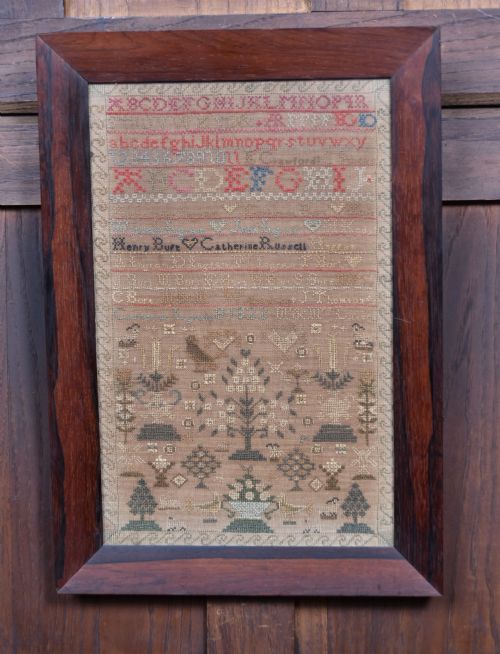


Early 19th Century Embroidery
Early 19th century embroidery brings domestic needlework into frames, offering surviving needlework pictures, samplers, and textile fragments from Georgian and Regency rooms.
Early 19th Century Embroidery
Early 19th century embroidery comprises framed needlework pictures, samplers, and textile art created during the Georgian and Regency periods. These pieces include educational schoolroom samplers alongside decorative silkwork pictures depicting figures, landscapes, and traditional stories.
How these embroideries were made
Many surviving examples retain their original wood, giltwood, or glass frames, protecting the delicate textiles from dust and handling. Backings typically consist of stretchers or wooden panels supporting the fabric ground.
Early 19th Century Embroidery Retail Price Guide 2026
Typical asking prices for early 19th century embroidery among the pieces listed under this phrase on Sellingantiques today, from the lower quarter to the upper quarter. They describe what is for sale here now, not the wider market.
What varies in quality
Quality separates elementary practice pieces from accomplished pictorial works by the precision of the stitchery and the complexity of the design. Samplers demonstrate technical control through alphabets and geometric motifs, while picture embroideries rely on tonal shading and perspective.
Condition and originality dictate desirability, particularly the survival of the original glass and frame alongside the vibrancy of the silk and wool threads. Pieces retaining documented makers or specific schoolhouse origins carry greater historical context.
Jane Wettmore·Susan Mary Williams
The Early 19th Century Embroidery Glossary
- Sampler
- A piece of needlework demonstrating various stitches and alphabets, traditionally worked by young women to evidence their skill. Surviving examples often record the maker name and date.
- Crewel work
- Embroidery executed in wool yarn upon a linen or cotton ground, producing textured surfaces and traditional decorative motifs.
- Silkwork
- Needlework utilising fine silk threads to create detailed pictorial scenes, frequently paired with watercolour painted facial elements in 19th century works.
- Giltwood
- Wood carved and coated with gold leaf, commonly utilised for the decorative frames enclosing period textile pictures.
Early 19th Century Embroidery: Frequently Asked Questions
How do I hang early embroidery safely?
Display framed textile art away from direct sunlight to prevent silk and wool threads from fading over time. Maintain stable room humidity to protect both the fabric ground and the antique wood frame.
Ensure hanging wires or brackets securely support the weight of the framed piece without placing stress on the antique backing boards or glass.
What is the difference between a sampler and an embroidered picture?
Samplers primarily record alphabets, numbers, and practice stitches, serving as educational exercises for young makers. They often include names, dates, and religious verses alongside formal motifs.
Embroidered pictures focus on pictorial storytelling, landscapes, and figural scenes designed specifically as decorative wall art. These works utilise varied stitch techniques to achieve painterly effects rather than demonstrating technical exercises.
How can I tell a Georgian piece from a later one?
Georgian and Regency embroideries typically employ specific colour palettes, stitch types, and subject matter distinct from later Victorian productions. Examination of the backing materials, framing methods, and any inscribed dates helps confirm the period.
Needlework executed around 1800 often reflects neoclassical design influences in its borders and figural compositions, contrasting with heavier Victorian aesthetic styles.
Should antique embroidery be cleaned?
Professional textile conservators should handle any cleaning or intervention required for fragile historical needlework. Amateur cleaning risks damaging delicate silk threads and destabilising the historic fabric ground.
Keeping pieces behind glass protects the textile surface from dust accumulation, removing the need for regular surface cleaning.