



Georgian Marble Top Console
A georgian marble top console brings heavy stone and warm timber together, offering a solid surface built to anchor a formal room.
Georgian Marble Top Console
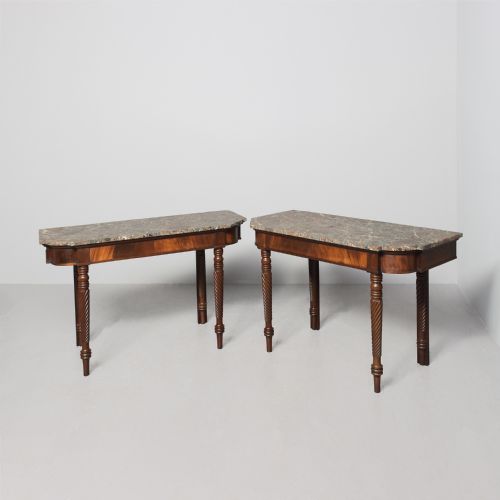
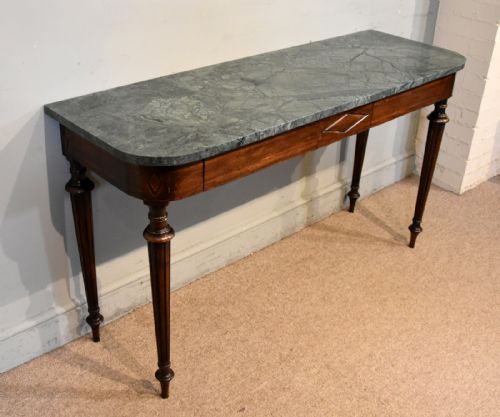
A georgian marble top console typically takes the form of a side table, console table, or side cabinet designed to stand against a wall in a hallway or principal room. The versions met most often on this page span the eighteenth and nineteenth centuries, alongside later revivals, displaying formats ranging from straight break-fronts to semi-circular demi-lune shapes.
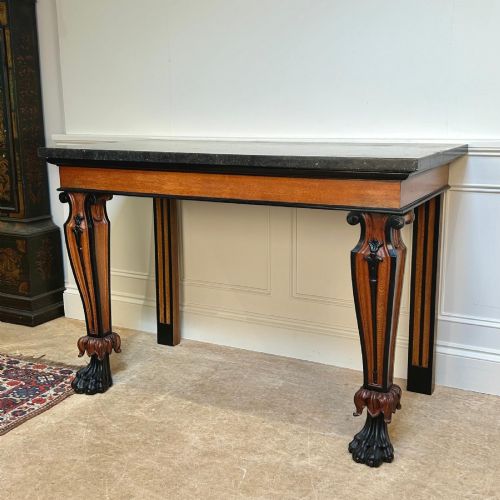
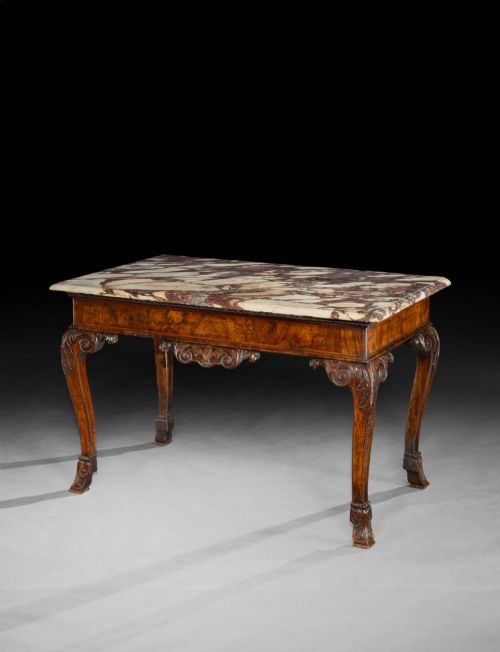
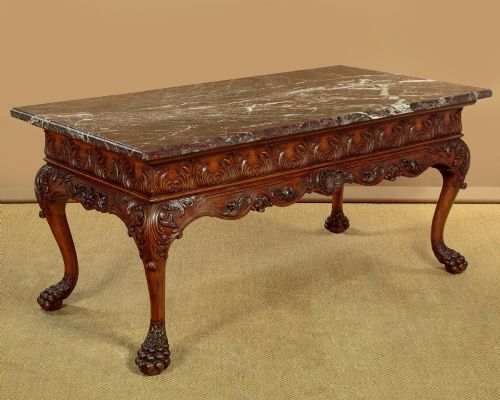
Makers and workshops of the period constructed these tables in diverse regional idioms, incorporating English mahogany, oak, and walnut, alongside Irish pieces featuring carved lion masks and paw feet. Italian and domestic giltwood examples appear frequently, often pairing intricate carved frames with contrasting veined marble slabs.
The functional intent of the georgian marble top console involves supporting heavy decorative objects on a cool, impermeable stone surface while filling a wall space beneath a mirror or painting. Surviving examples demonstrate how dining rooms, hallways, and drawing rooms accommodated these substantial architectural items.
Materials and construction
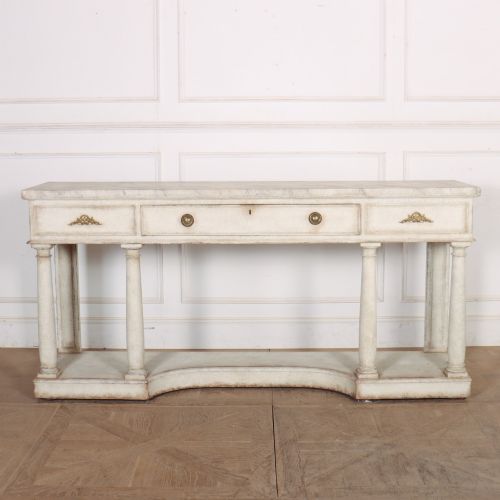
Cabinet makers worked primarily with dense hardwoods such as mahogany, oak, walnut, and rosewood for the structural frames and bases, applying carving, paint, or gilding to the visible wooden surfaces. Giltwood examples rely on layered gesso and gold leaf applied to carved timber carcasses, while painted versions utilise applied pigments over soft or hard wood foundations.
The defining stone surface consists of heavy marble, frequently shaped to follow straight, break-front, or demi-lune wooden rails and secured directly to the frame. Secondary timbers in drawer linings and internal blocks reflect regional workshop practices, distinguishing English joinery from Irish or continental European production.
One eighteenth-century walnut console leans heavily into avian drama by standing entirely upon the talons of a carved eagle.
Distinctions in quality
The standard of carving across the wooden frames and legs marks the primary division in quality, separating fluid, deep relief work from mechanical or shallow execution. High-grade pieces display crisp detailing on acanthus leaves, lion masks, or eagles, whereas lesser examples show softer, flatter lines.
The integration between the heavy marble slab and the supporting wooden base dictates structural integrity, as superior tables distribute weight evenly across solid rails and robust legs. The selection of the marble itself, including the depth of natural veining and the accuracy of the edge moulding, indicates the original ambition of the piece.
The Georgian Marble Top Console Glossary
- Demi-lune
- A half-moon shape used for table tops and frames designed to stand flush against a wall. This format became popular during the eighteenth century for console and side tables.
- Giltwood
- Timber coated with gold leaf applied over a prepared gesso ground. This finish appears frequently on formal console tables from the eighteenth and nineteenth centuries.
- Break-front
- A piece of furniture where the central section projects forward from the flanking wings. This architectural arrangement creates depth and shadow on console tables.
- Console table
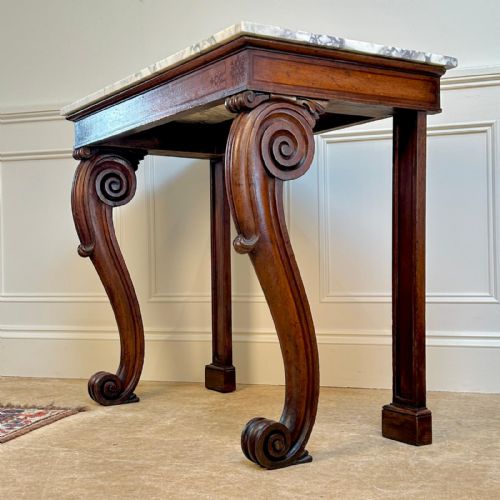
- A table supported by wall brackets or console legs rather than four independent vertical posts. These items are traditionally fixed or placed firmly against a wall.
- Rouge marble
- A deep red variety of limestone marble with white or grey veining. It appears frequently on antique console tables from the Georgian and revival periods.
Georgian Marble Top Console: Frequently Asked Questions
Where were console tables placed?
Console tables stood primarily against walls in formal reception rooms, entrance halls, and galleries. They occupied spaces beneath large mirrors or paintings where their stone surfaces provided stable display areas.
Because these tables relied on walls for visual balance or physical support, they seldom sat in the middle of a room. Their narrow footprints allowed them to furnish circulation spaces without blocking pathways.
How do I identify a revival piece?
Revival pieces built around nineteen-twenty or nineteen-thirty often combine older stylistic motifs, such as George II carving, with timber treatments and internal construction methods characteristic of the twentieth century. Examining the secondary woods and tool marks reveals the actual period of manufacture.
Makers working in revival styles copied eighteenth-century proportions closely, meaning visual inspection of the timber ageing and joinery provides the clearest guide to the true date.
Are marble tops fixed in place?
Marble tops on antique console tables generally rest loose upon the wooden frame under their own considerable weight. This heavy construction prevented warping and allowed the stone to be lifted separately during transport.
Some tables utilise wooden lips or framing pins to keep the marble slab from shifting, but traditional examples avoid permanent adhesives or fixings.
What is the difference between a side table and a console?
A traditional console table relies structurally or visually upon the wall it faces, often featuring brackets or scroll legs that anchor it to the vertical surface. A side table stands independently on four or more legs.
In historical listings, the terms frequently overlap because many console tables were modified with rear legs to function as independent side tables over time.