




Pedestal Base Console Table
A pedestal base console table anchors a hallway or drawing room with a sturdy central column, offering a surface for display while saving floor space.
Pedestal Base Console Table
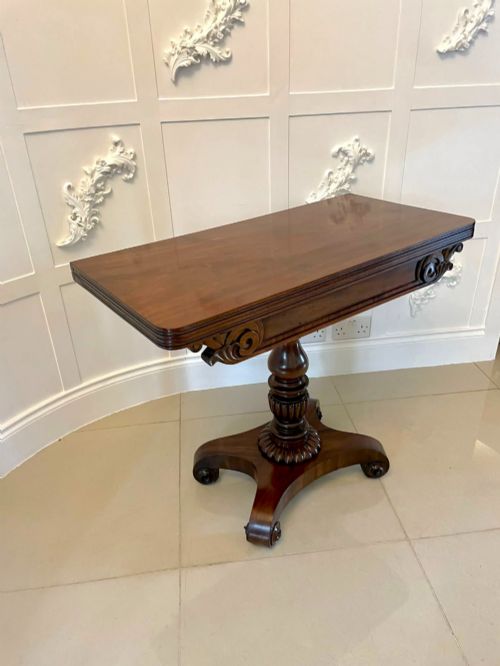
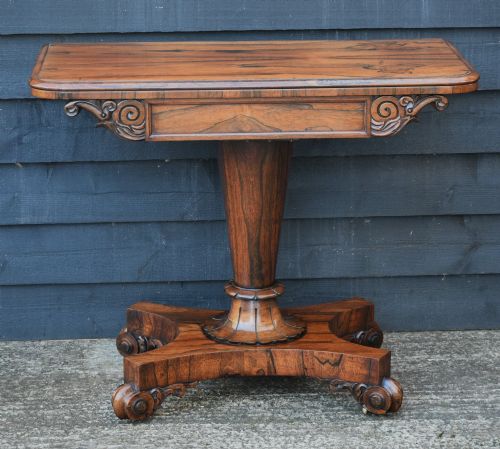
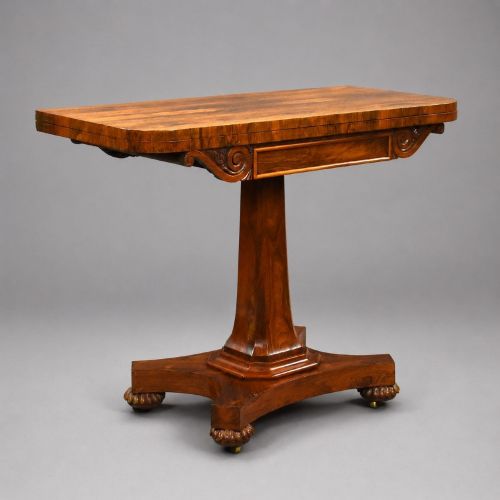
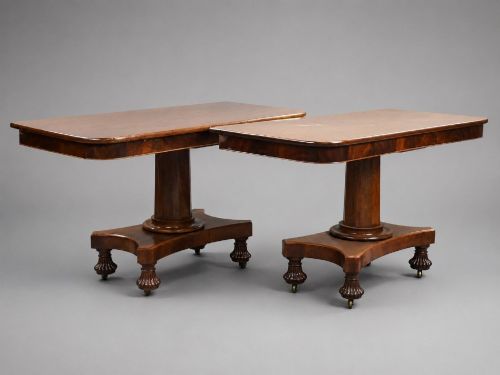
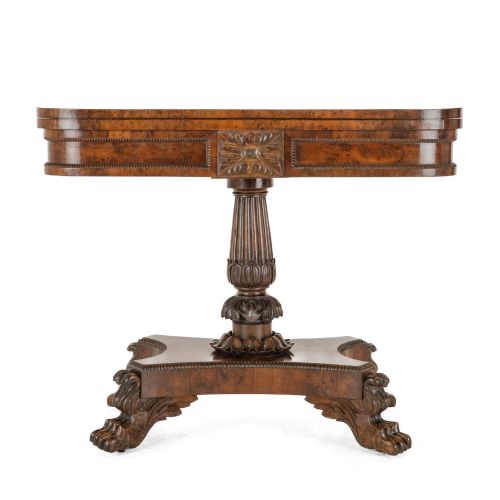
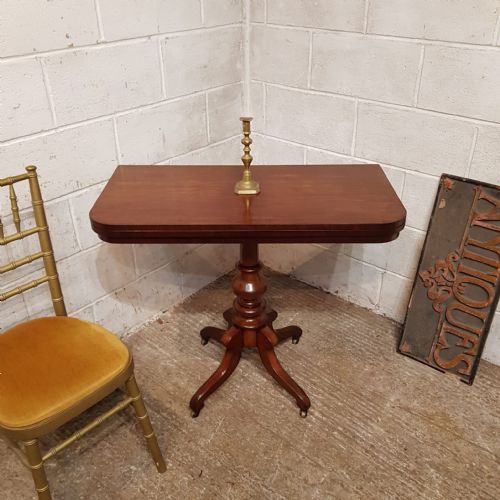
A pedestal base console table stands upon a central column or pillar rather than four corner legs, often supported by a platform base with scroll feet or carved paws. When you search for pedestal base console table, you find pieces that frequently double as fold-over card tables, tea tables, or library tables from the Georgian, Regency, and Victorian periods.
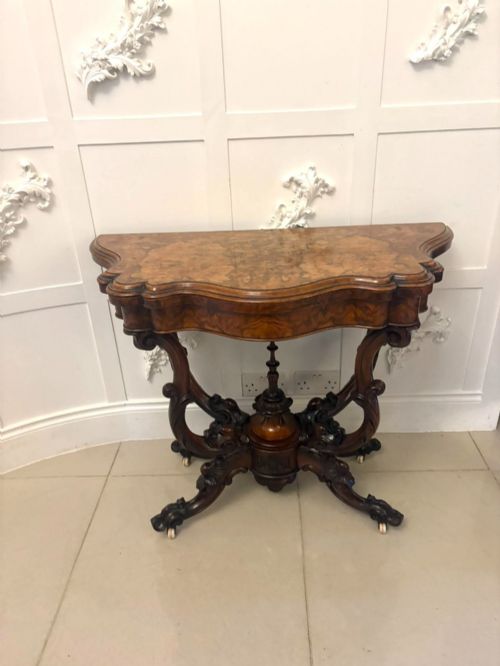
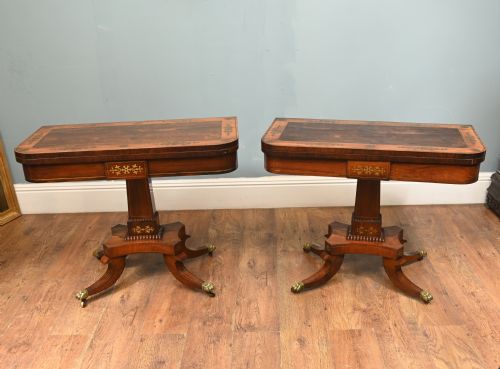
The versions most commonly met on this page span the early nineteenth century, featuring rich timbers such as mahogany, rosewood, and burr walnut. Many examples include clever folding tops designed to serve dual purposes for games or dining before standing flush against a wall.
How they were made
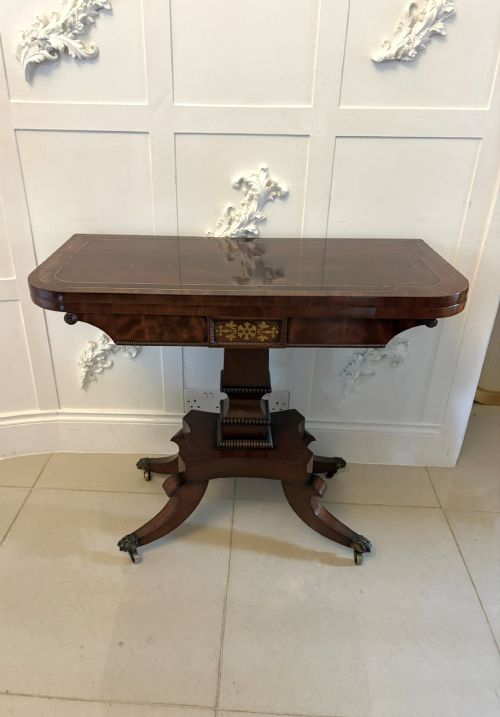
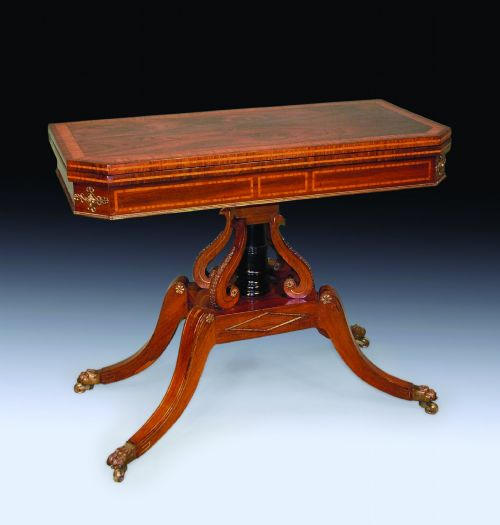
Cabinet makers utilised dense tropical timbers like mahogany and rosewood, often applying finely figured veneers over secondary woods to create rich surface patterns. Brass inlay, satinwood banding, and carved wooden details such as dolphins, baskets, or scrollwork ornament the central pillars and plinths.
Listings span the eighteenth to nineteenth centuries, dominated by rosewood and mahogany forms created during the Regency, William IV, and Victorian eras.
What varies in quality
The grade of the timber veneer dictates much of the visual merit, with highly figured burr walnut, flame mahogany, and matched rosewood marking out finer workshops. Crisp, deep carving on the central pedestal and scroll feet separates master-carved structural supports from simpler, machine-cut or shallow mouldings.
The engineering of the pivoting or folding top mechanism reveals the maker's care, operating smoothly without sagging or straining the central column. Original brass inlay and intact pedestals unaltered by later repairs preserve the structural integrity and historical value.
The Pedestal Base Console Table Glossary
- Console table
- A table designed to stand against a wall, traditionally fixed with brackets or supported by front legs and a pedestal base.
- Fold-over top
- A hinged table surface that opens out to double its area, commonly found on card and tea tables from the Regency period.
- Plinth
- The heavy flat block or base at the bottom of a pedestal column, frequently fitted with concealed castors.
- Satinwood
- A luminous yellowish timber native to India and Ceylon, utilised for contrasting stringing and inlay work.
- Burr walnut
- Timber taken from the wart-like growth of a walnut tree, yielding highly ornamental swirling grain patterns.
Pedestal Base Console Table: Frequently Asked Questions
What is a pedestal base console table?
A pedestal base console table is a freestanding or wall-abutting table supported by a single central column rather than four traditional corner legs. These tables often feature circular, triangular, or platform bases resting on carved feet.
Many examples from the Regency and Victorian eras include fold-over tops that transform the narrow console surface into a full-sized card or tea table.
How were these tables used originally?
These tables served multiple functions in grand homes, often placed against drawing room walls for decorative display when closed. When guests arrived, the hinged tops opened out to accommodate card games, tea service, or writing.
The central pedestal design allowed guests to sit around the perimeter of the open table without knocking their legs against corner posts.
How do I identify a Regency table?
Regency tables, dating from the early nineteenth century, typically feature dark exotic woods like rosewood and mahogany accented with brass inlay. Look for architectural classical motifs, scroll pedestals, and carved animal forms such as dolphins.
Cabinet makers of this period favoured strong geometric lines combined with elaborate pillar supports resting on heavy plinth bases.