
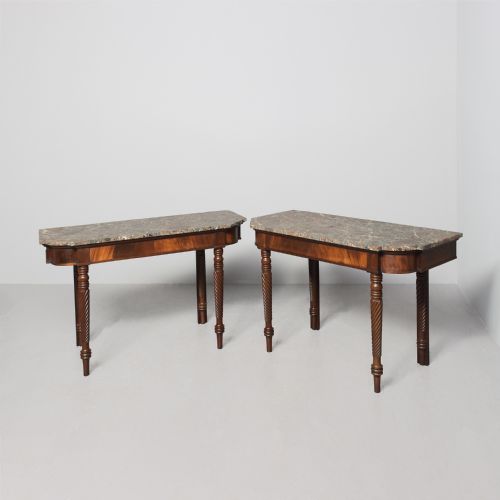
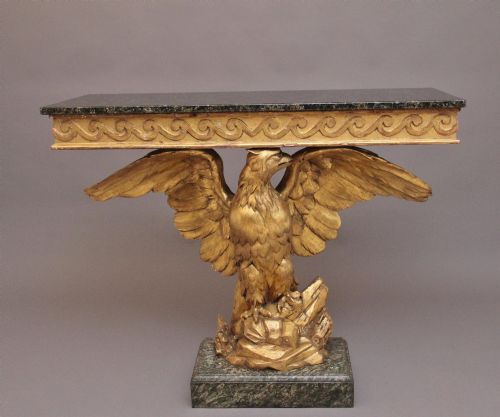
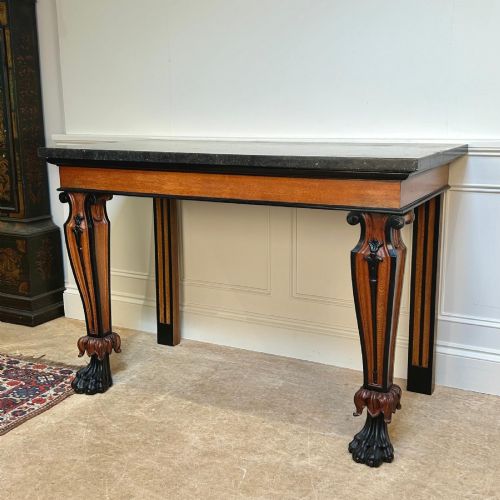
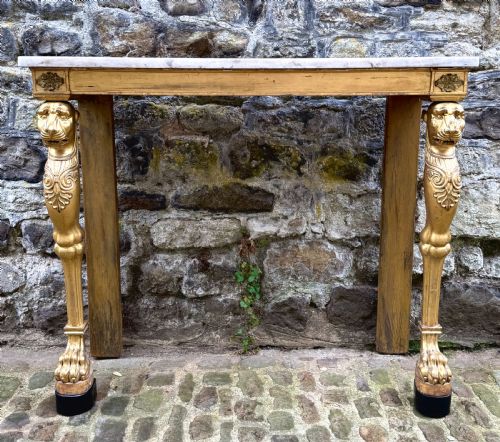
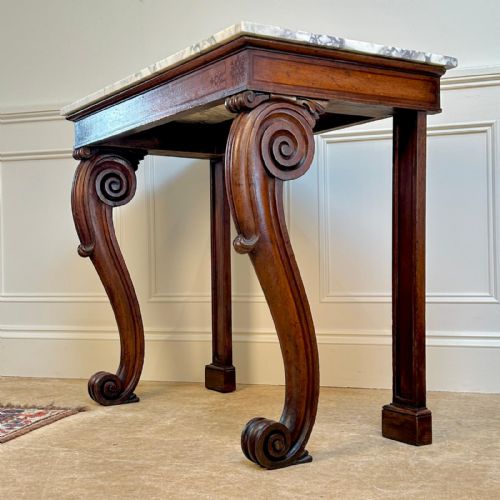
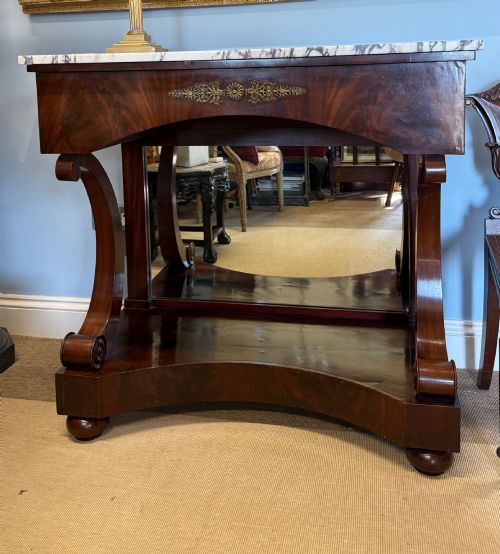
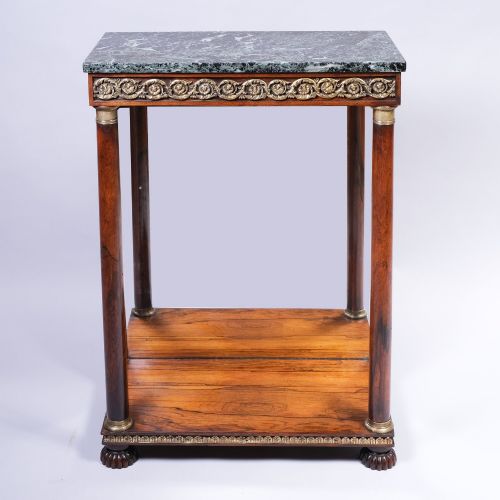
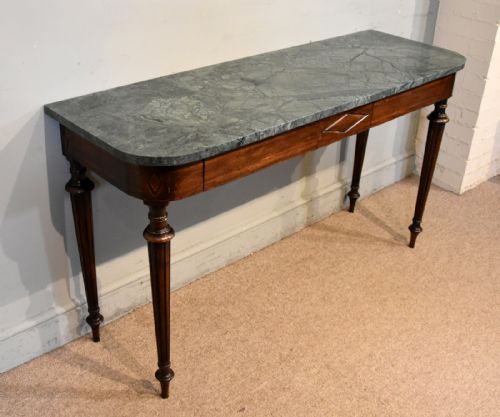
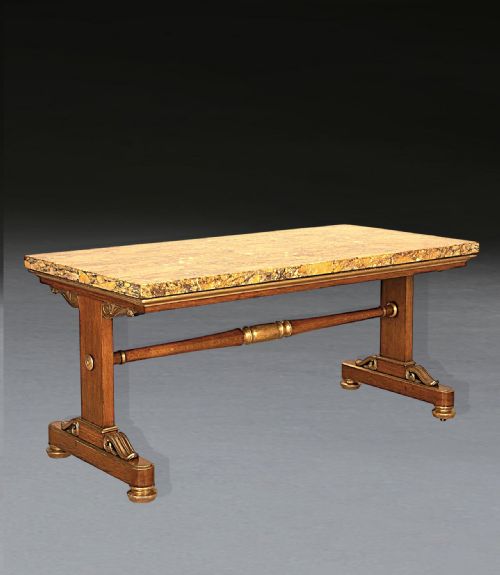

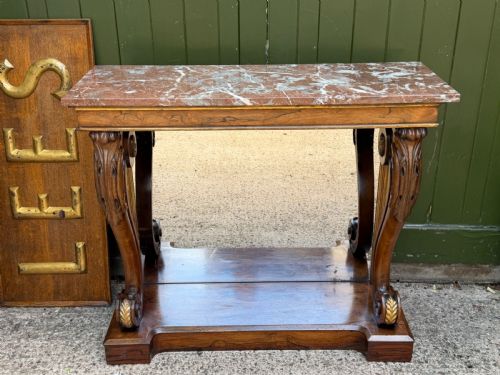
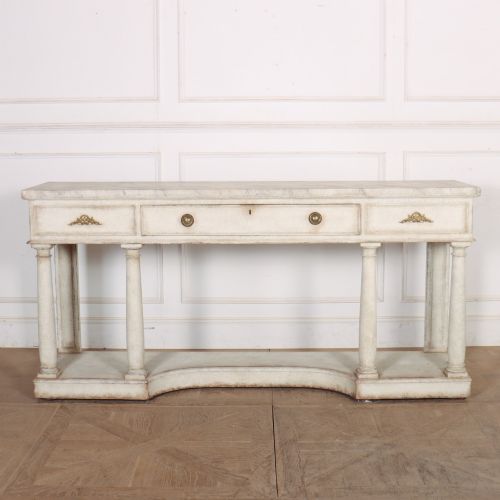


Regency Marble Console Table
A regency marble console table brings classical proportion and cool stone into a hallway or reception room.
Regency Marble Console Table
When searching for a regency marble console table, buyers encounter heavy timber frames paired with smooth stone surfaces designed to sit flush against a wall. The pieces appearing here span the primary Regency period alongside later Victorian revivals and early twentieth-century interpretations.
Most examples deploy rich timbers such as mahogany and rosewood, often elevated by giltwood, ormolu, or painted finishes. Alongside straightforward console tables, the listings include related forms like chiffoniers, washstands, and centre tables featuring similar stone tops.
Origins stretch from English workshops to French Empire designs, incorporating architectural mirror backs and breakfront formats. The predominant format remains the rectangular or serpentine wall table designed to anchor an entrance hall or drawing room.
How they were made
Cabinetmakers constructed the structural carcasses primarily from dense timbers like mahogany, oak, and rosewood, frequently applying veneers to achieve striking flame patterns. Giltwood and gesso elements received hand-carved detailing and gold leaf application.
Heavy marble slabs, including Siena varieties, were shaped to fit the frame tops precisely, resting unattached or secured by wooden moulding. Brass mounts, ormolu, and parcel-gilt accents were fixed carefully to the timber frames to complete the neoclassical aesthetic.
Listings feature woods spanning mahogany, rosewood, oak, and gesso alongside primary marble and glass materials.
What varies in quality
The degree of carving precision across the giltwood and timber elements marks the distance between standard production and top-tier workshop output. Crisp lines on acanthus leaves and well-defined reeded legs indicate skilled handwork rather than routine assembly.
The selection and figuring of the timber veneer, alongside the richness and depth of the marble slab, dictate visual presence. Tables retaining original parcel-gilding, unblemished stone, and integrated mirror backs command stronger attention from serious collectors.
The Regency Marble Console Table Glossary
- Breakfront
- A piece of furniture whose central section projects forward from the flanking sides. This architectural arrangement adds depth and shadow to large hallway tables.
- Giltwood
- Timber that has been coated with a thin layer of gold leaf or gesso and gold paint. It reflects light effectively in candlelit or dark reception rooms.
- Ormolu
- Gilded bronze mounts applied to furniture for decorative contrast against dark timbers like rosewood. French Empire and Regency pieces utilise these metal details extensively.
- Siena marble
- A distinctive yellow-gold Italian marble featuring dark grey or purple veining. High-end Regency tables frequently incorporated this specific stone.
- Console table
- A table supported by wall brackets or decorative legs, designed to stand flat against a vertical surface. They often anchor the space beneath large mirrors.
Regency Marble Console Table: Frequently Asked Questions
Where should I place a console table?
These tables suit narrow entrance halls, corridors, and reception rooms where floor space is limited. Their shallow depth allows them to sit neatly against walls without obstructing passageways.
Pairing a console with a matching mirror or painting above creates a balanced focal point upon entering a room.
How do I care for the marble top?
Marble requires gentle cleaning with a damp cloth and mild, pH-neutral soap to avoid damaging the polished surface. Acidic liquids like wine or citrus juice etch the stone quickly and demand immediate blotting.
Applying a specialist stone wax periodically helps protect the slab from everyday marks and preserves its sheen.
How do I spot a revival piece?
Revival pieces from the Victorian era or early twentieth century often display machine-cut timber joints and heavier, less refined secondary woods underneath. Examining the timber shrinkage, screw types, and construction methods helps distinguish them from actual Regency work.
Design proportions on later copies can also feel slightly bulkier compared to the crisp geometry of the original period.
Did these tables always have mirrors?
Many surviving examples include integrated mirror backs designed to bounce light around dimly lit nineteenth-century hallways. Tables without mirrors typically relied on wall-mounted looking glasses hung directly above them.
The inclusion of a mirror back often indicates a more ambitious commission intended for a prominent drawing room.