
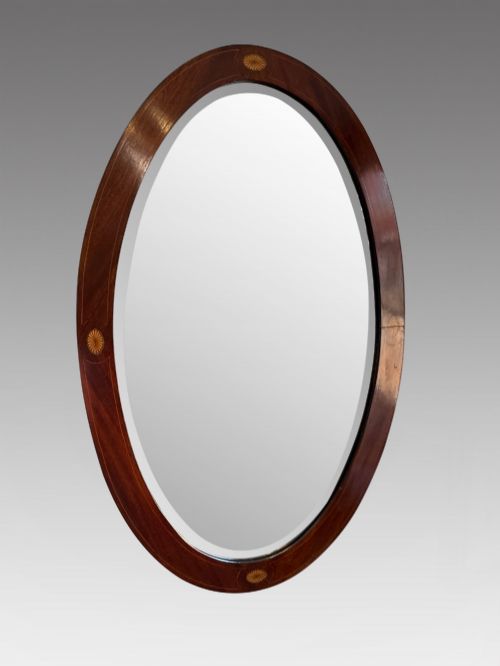

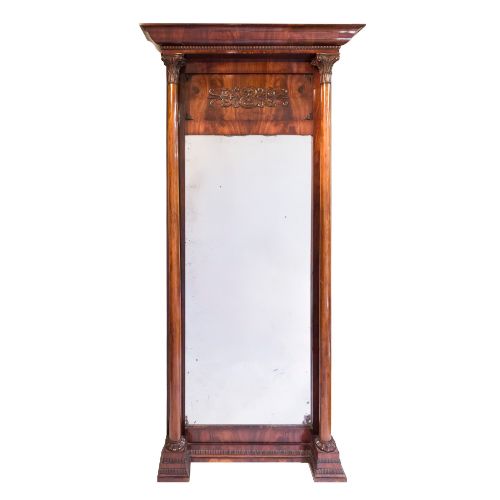
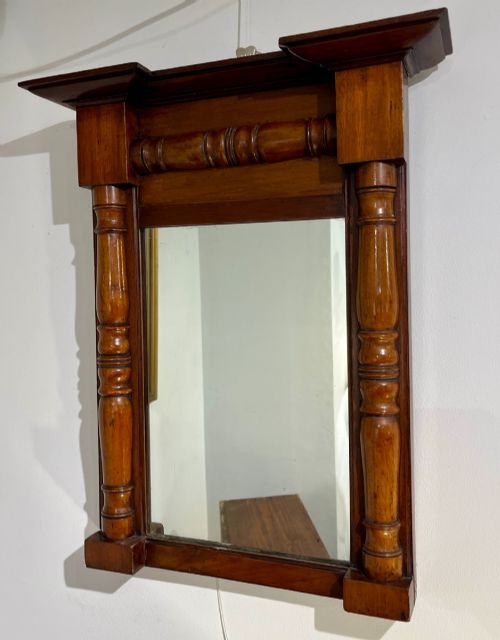
Georgian Mahogany Wall Mirror
A georgian mahogany wall mirror brings warmth and depth to a room through dark timber and clear glass.
What these mirrors are
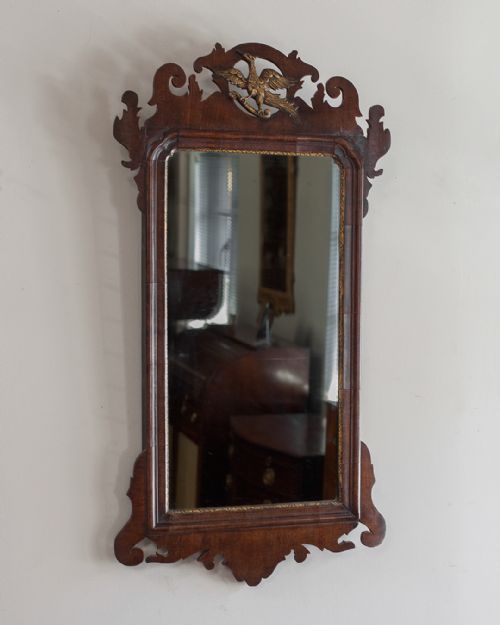
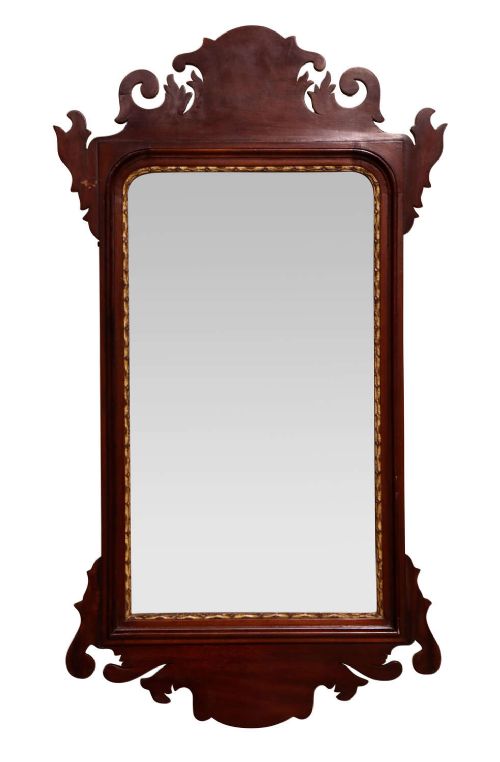
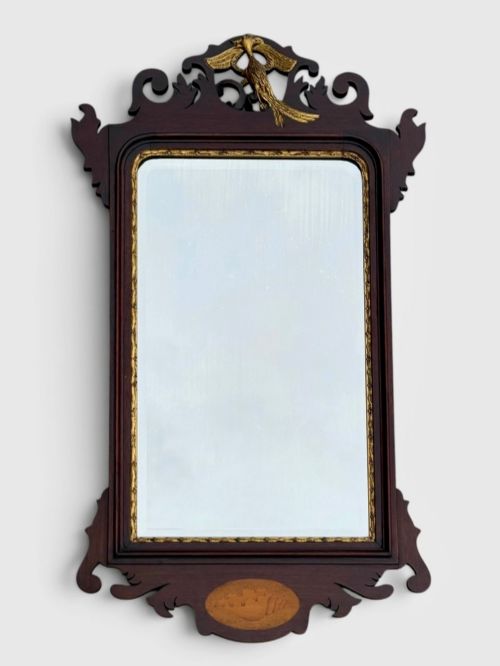
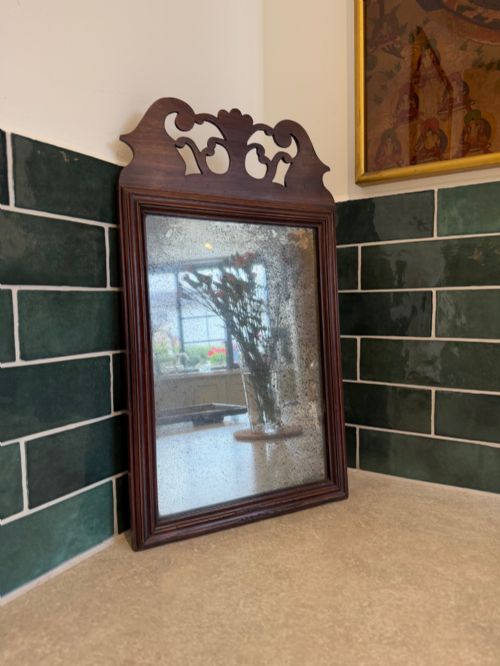
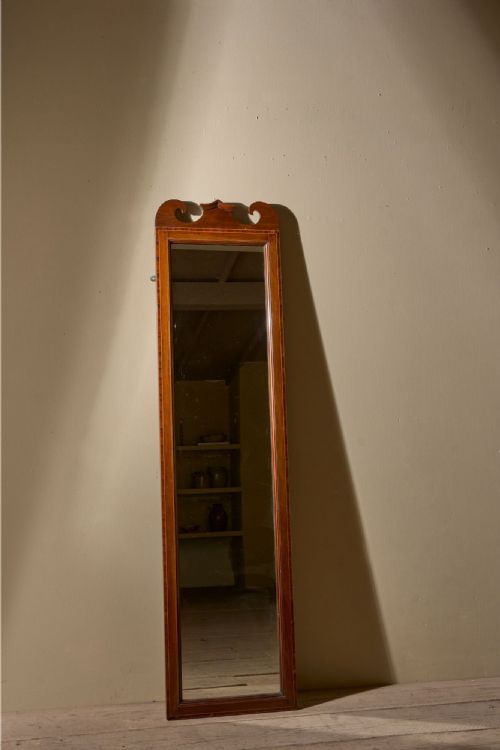
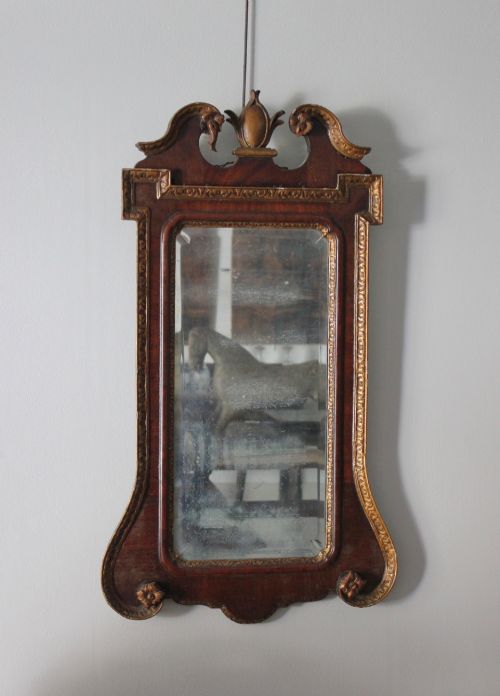
A georgian mahogany wall mirror is a timber-framed hanging glass piece dating from the eighteenth century into the regency period. The versions most commonly met on this page feature fretwork frames with scroll outlines.
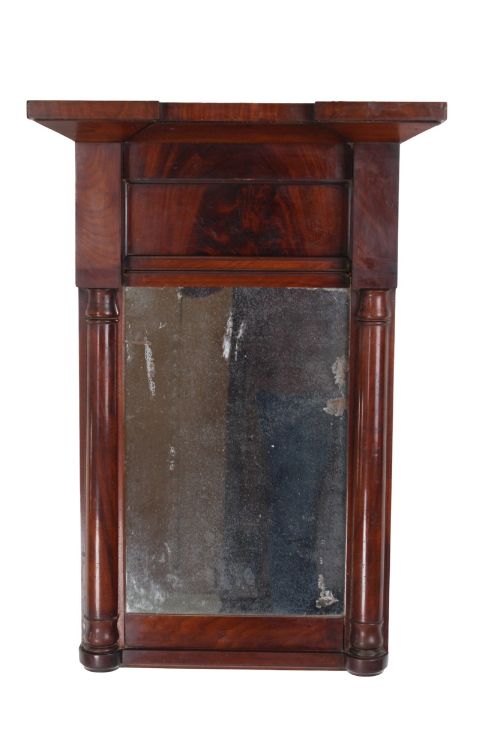
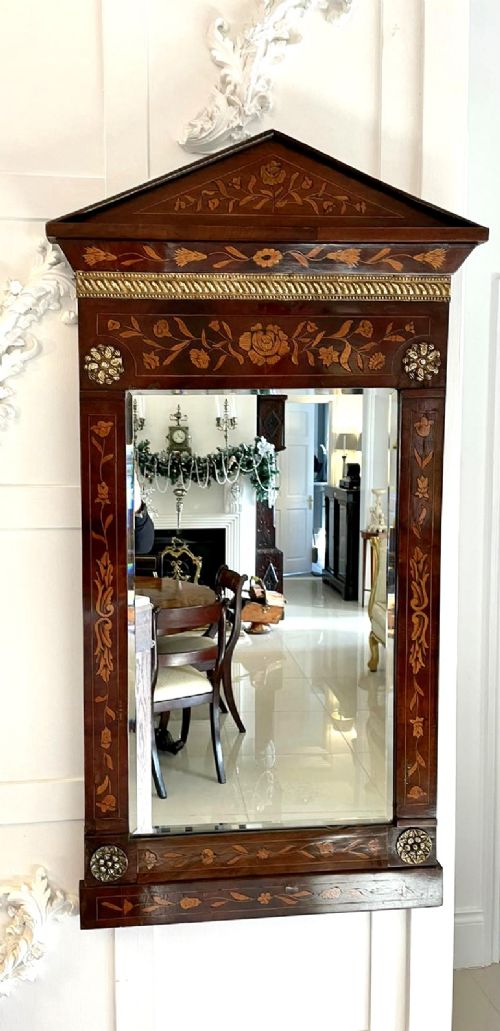
Makers produced pier glass, landscape, and overmantle formats designed to catch the light in domestic interiors. These pieces appear in both original eighteenth-century form and later nineteenth-century revival interpretations.
How they were made
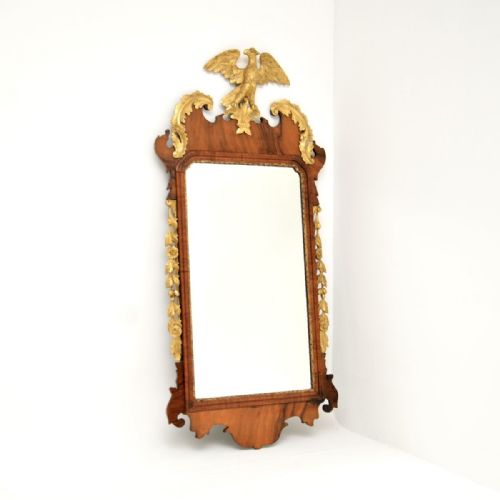
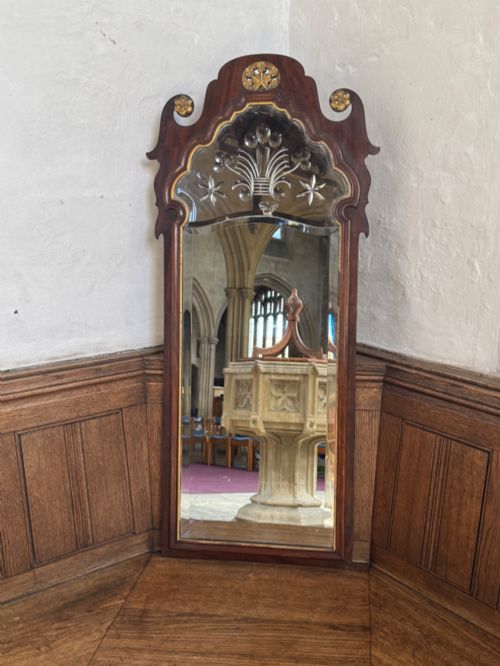
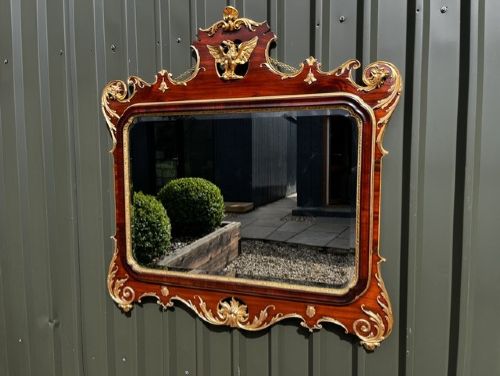
Craftsmen built these frames using solid mahogany and flame mahogany timber veneers over secondary woods, often adding parcel-gilt details and gilded swan neck pediments. They shaped the outlines using fret-cut and fretwork techniques to create intricate pierced borders.
The glass panes are set within wooden rabbets behind the timber frames, accompanied by original backing boards. Some examples include painted panels or inlaid elements incorporated directly into the wood.
Retail Price Guide 2026
Typical UK retail prices for georgian mahogany wall mirror, calculated from the Sellingantiques database of over a million retail prices indexed since 2003. This retail price guide relies exclusively on Sellingantiques data; no external sources or auction records are used, so the figures do not describe the wider market.
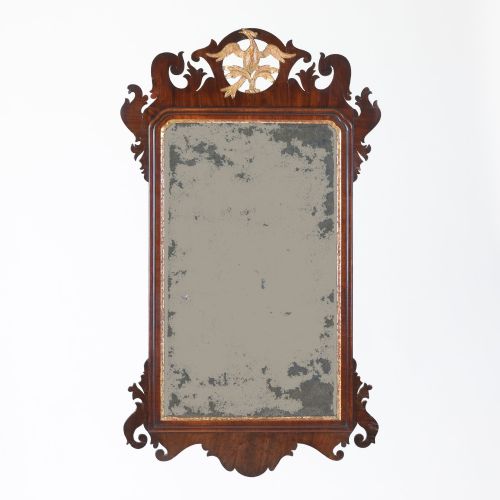
Several mirrors include a carved ho-ho bird perched at the top, keeping a watchful eye over the room.
What varies in quality
The precision of the fret-cut scrolling separates standard production from finer work, with sharper angles and cleaner pierced edges marking better examples. The choice of timber grain, particularly the use of figured flame mahogany, elevates the visual depth of the frame.
Surface treatment and the retention of original gilding and mirror glass influence the character of each piece. Finer examples maintain crisp carving details on decorative elements like ho-ho birds and pediments.
The Georgian Mahogany Wall Mirror Glossary
- Fretwork
- Openwork carving cut from thin timber boards to create geometric or scroll patterns. This technique defines the outer borders of many wall mirrors.
- Parcel-gilt
- Wood framing decorated with selective applications of gold leaf over specific carved details. It provides contrast against the dark mahogany surface.
- Pier glass
- A tall mirror designed to hang on the wall space between windows. These pieces often feature narrower proportions to fit specific architectural gaps.
- Swan neck pediment
- A broken scroll top moulding curving outward toward the centre. This architectural feature frequently tops the frame with a gilded centre ornament.
- Flame mahogany
- Timber veneer showing a distinctive flickering flame pattern derived from branch junctions. It appears on quality surfaces to create movement.
Frequently Asked Questions
How do I hang a heavy mahogany wall mirror?
These frames require secure wall fixings distributed across the structural wooden backing or original hanging loops to support the weight safely.
Ensure the fixings engage directly with wall studs or appropriate masonry anchors rather than plaster alone.
Are these mirrors original to the eighteenth century?
The selection includes both genuine eighteenth-century pieces and later nineteenth-century revival interpretations constructed in the same style.
Examination of the timber backing, mirror glass characteristics, and joinery helps determine the exact period of manufacture.
What is a ho-ho bird motif?
The ho-ho bird is a stylized Chinese phoenix figure carved into the crest or apron of decorative wall mirrors. It became a popular feature during the mid-eighteenth century.
This decorative element sits atop the fretwork scrollboard, often facing outward with trailing tail feathers.
How should I clean the antique glass?
Use a soft, dry cloth to remove dust from the timber frame without introducing moisture to aged veneers or gilt surfaces.
Apply a mild glass cleaner sparingly to a cloth rather than spraying directly onto the mirror plate to protect the antique edges.