


Dark Wood Fret Mirror
A dark wood fret mirror brings architectural proportion and deep timber tones to a wall, shaped by the scrollwork and pierced symmetry of eighteenth-century design.
Dark Wood Fret Mirror
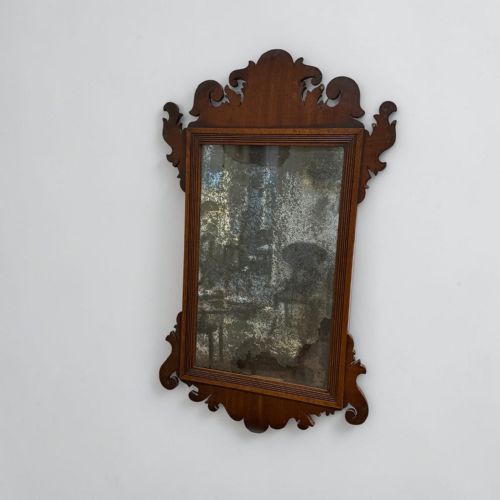
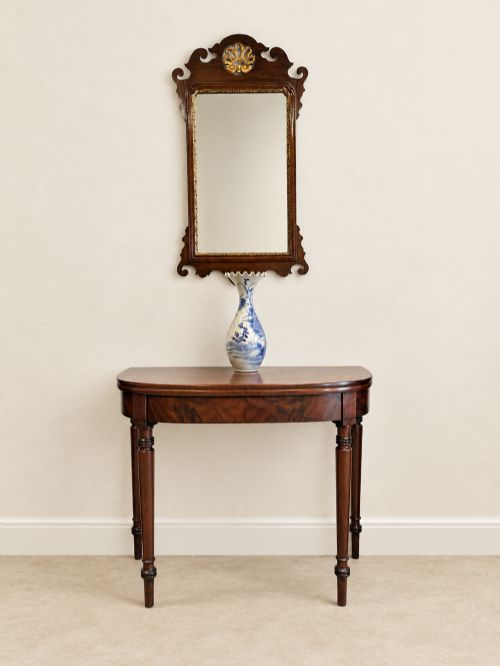
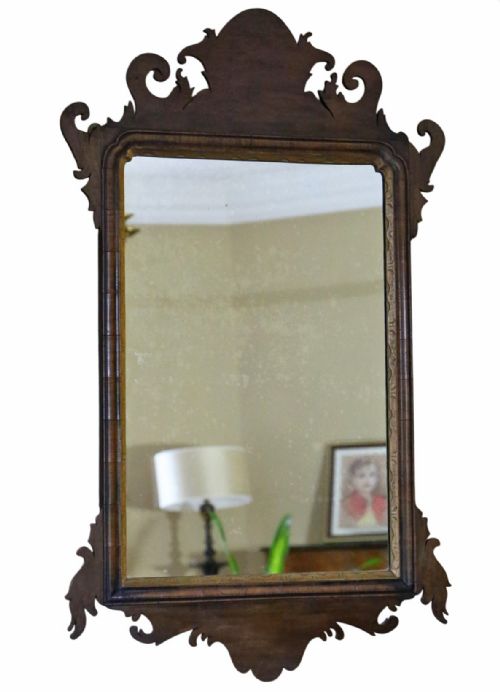
A dark wood fret mirror is a wall-hanging looking glass framed in mahogany or walnut, cut with intricate scrollwork edges and pierced silhouettes. These pieces originate from the Georgian era as well as later revivals from the Edwardian period and the early twentieth century.
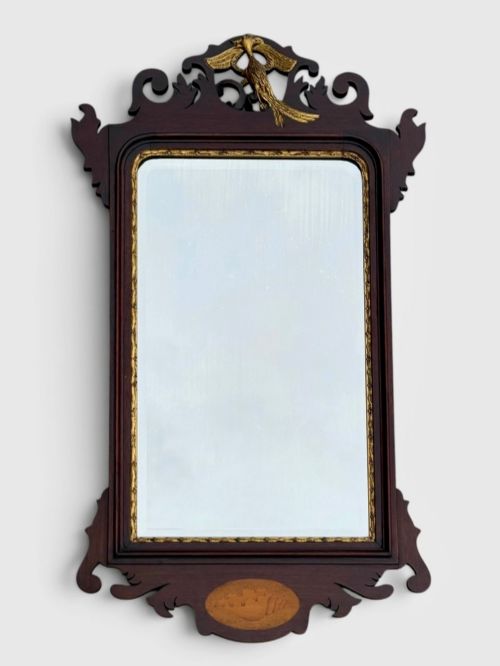
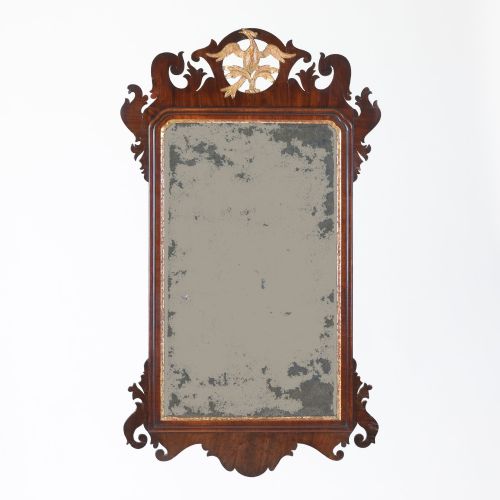
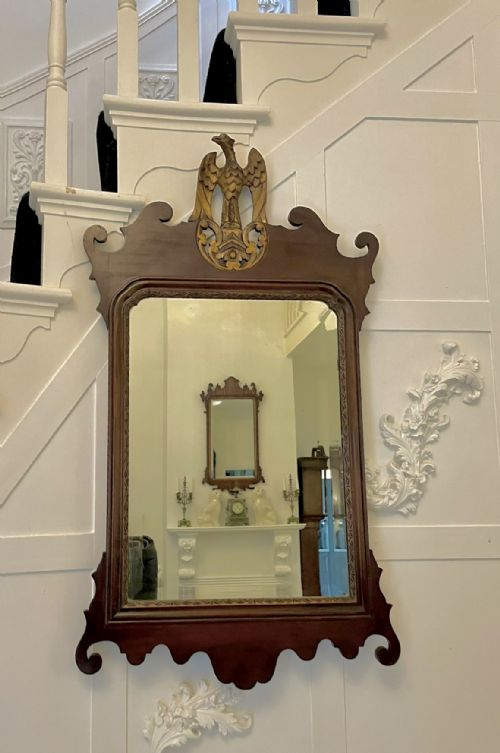
The versions most commonly met on this page are mahogany and walnut wall mirrors, often displaying the distinctive fret-cut outlines associated with Chippendale designs. Some examples incorporate giltwood details or contrasting inlay work in satinwood to accentuate the shaped borders.
Makers across different decades drew inspiration from eighteenth-century forms, producing both period originals and later Georgian Revival interpretations. The resulting wall mirrors range from simple pierced frames to large examples featuring carved crests such as the Ho-ho bird.
How they were made
Makers constructed these frames using dense hardwoods like mahogany and walnut, selected for their rich grain and ability to hold fine fret-cut details. Craftsmen pierced the timber using specialised saws to create the characteristic geometric and scrollwork silhouettes seen along the outer edges.
Selected pieces integrate reflective mirror glass set within layered mouldings, occasionally accompanied by applied giltwood accents or delicate satinwood inlay. The timber surfaces received traditional polishing finishes to bring out the natural depth of the dark grain.
A mythical Chinese phoenix occasionally perches atop the woodwork, keeping watch over centuries of reflected rooms.
What varies in quality
The standard of a dark wood fret mirror depends on the precision of the fret-cut silhouette and the crispness of any carved elements. Superior examples display balanced proportions and sharp, clean piercing along the wooden borders.
Choice of timber grain and the finesse of secondary materials such as giltwood or inlay also set finer pieces apart. The depth of colour in the polished mahogany or walnut contributes significantly to the visual presence of the frame.
The Dark Wood Fret Mirror Glossary
- Fret-cut
- A decorative technique where timber is pierced with intricate patterns using a fine saw. This method creates the characteristic openwork silhouettes found on the edges of these mirrors.
- Giltwood
- Timber that has been coated with a thin layer of gold leaf or metallic gilt. It frequently highlights carved crests and inner mouldings on period frames.
- Ho-ho bird
- A stylized Chinese phoenix motif commonly carved onto the crests of eighteenth-century and revival mirrors. This ornamental bird adds a distinctive decorative focal point to the top of the frame.
- Georgian Revival
- A design movement spanning the late nineteenth and early twentieth centuries that reinterprets eighteenth-century aesthetics. Pieces from this period replicate classic proportions using contemporary workshop methods.
Dark Wood Fret Mirror: Frequently Asked Questions
Where should I hang a dark wood fret mirror?
These wall mirrors suit formal living spaces, hallways, or above a mantelpiece where their vertical proportions command attention. Their dark timber tones complement traditional interiors and add contrast against lighter wall colours.
Ensure the wall fixings match the weight of the hardwood frame and mirror glass. Positioning the glass opposite a window helps maximise natural light in the room.
How do I distinguish an eighteenth-century mirror from a revival piece?
Examining the timber construction, board thickness, and the characteristics of the mirror glass provides clues to the period. Eighteenth-century pieces typically show age-related wear and hand-worked joinery specific to early workshop practices.
Revival pieces from the Edwardian era or the nineteen-twenties often utilise machinery-cut fretwork and display different backing methods. Comparing the style of the carving and the finishing techniques helps clarify the date of manufacture.
What maintenance do these wooden frames require?
Maintenance involves dusting the carved fretwork gently with a dry, soft cloth to prevent the accumulation of debris in the pierced recesses. Avoid using harsh chemical sprays or excessive moisture on the polished mahogany or walnut surfaces.
Keeping the mirror away from direct heat sources and strong sunlight protects the timber and finish over time. Checking the hanging wire and structural fixings periodically ensures the piece remains secure on the wall.
Why do some mirrors feature inlaid wood?
Inlay work introduces contrasting colours and decorative geometric patterns into the mahogany or walnut frame. Craftsmen utilised materials like satinwood to create lighter accents that stand out against the dark primary timber.
This technique became particularly popular during later revival periods to enhance the visual complexity of the design. The presence of inlay often indicates an Edwardian or twentieth-century interpretation rather than an original eighteenth-century piece.