



Vintage Mahogany Fret Mirror
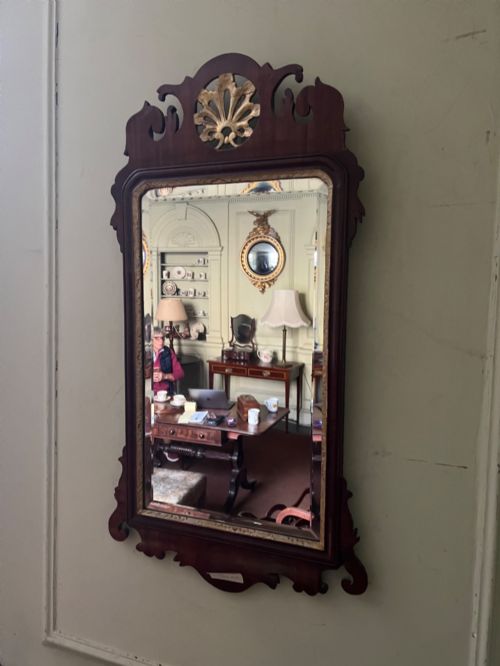
These vintage mahogany fret mirrors bring pierced woodwork and eighteenth-century lines to any hallway, most often appearing in Georgian revival or Chippendale style forms.
Vintage Mahogany Fret Mirror
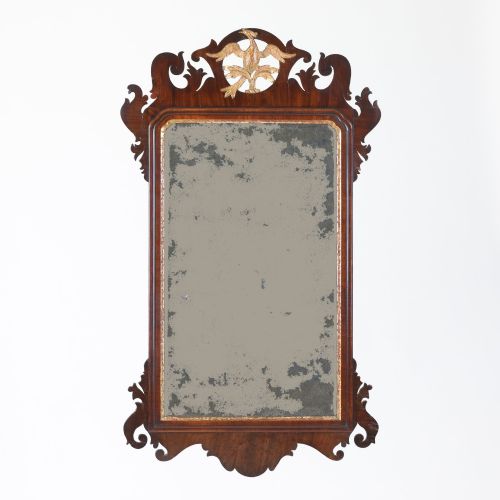
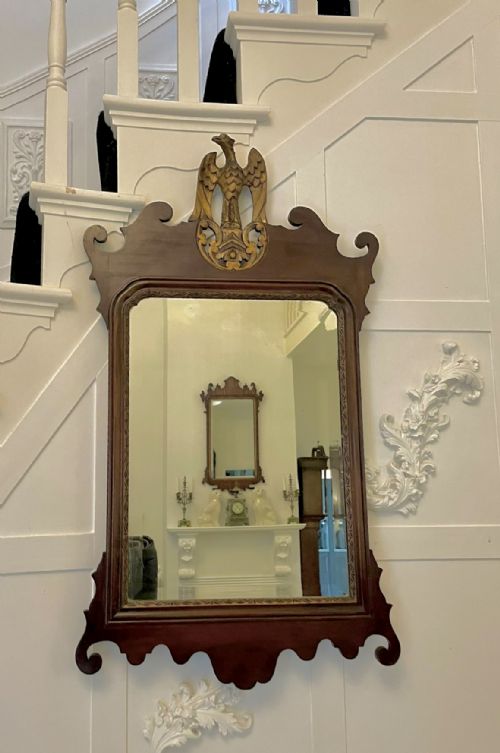
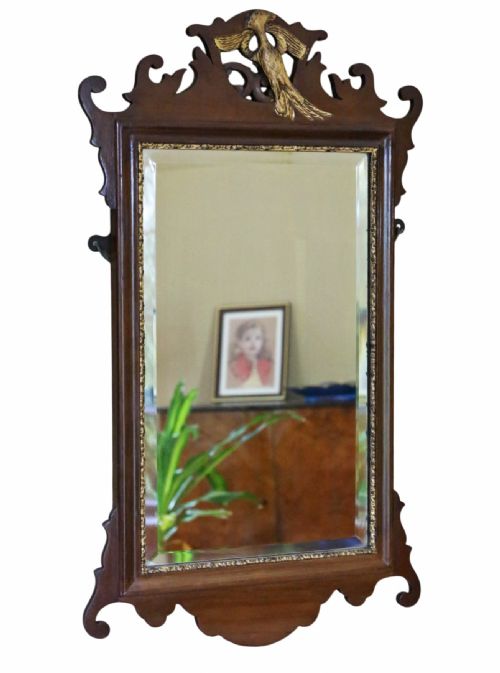
A vintage mahogany fret mirror is a wall-hanging glass plate framed in figured timber with pierced, scrolled outlines. You will frequently encounter revival pieces from the Victorian and Edwardian eras alongside genuine Georgian and eighteenth-century examples.
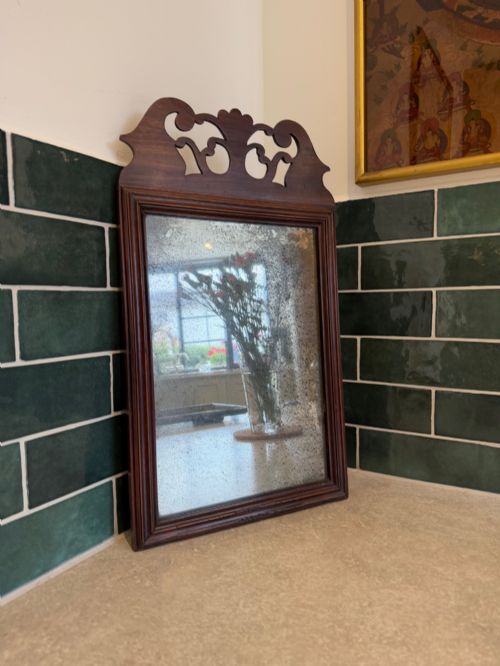
Most entries on this page take the form of vertical wall mirrors, though larger overmantel formats and walnut variants also appear. The fret-cut silhouette defines the group, drawing directly upon Chippendale design vocabulary.
Origins span the Georgian period, the nineteenth century, and nineteen-hundreds production. Buyers seeking traditional proportions will find both authentic early specimens and later revivals sharing similar cabinetmaking roots.
Materials and construction
Makers shaped the distinct pierced outlines using scroll saws on dense mahogany planks, frequently applying giltwood accents or gilded wood highlights to the inner mouldings. Boxwood stringing and inlay occasionally enhance Edwardian interpretations.
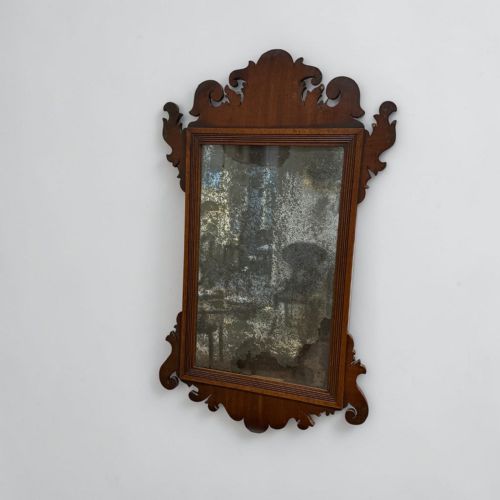
Mirror plates range from early hand-silvered glass to later bevel-edged glass held within rebated timber frames. Secondary woods and backing boards provide structural support behind the main mahogany face.
Vintage Mahogany Fret Mirror Retail Price Guide 2026
Typical asking prices for vintage mahogany fret mirror among the pieces listed under this phrase on Sellingantiques today, from the lower quarter to the upper quarter. They describe what is for sale here now, not the wider market.
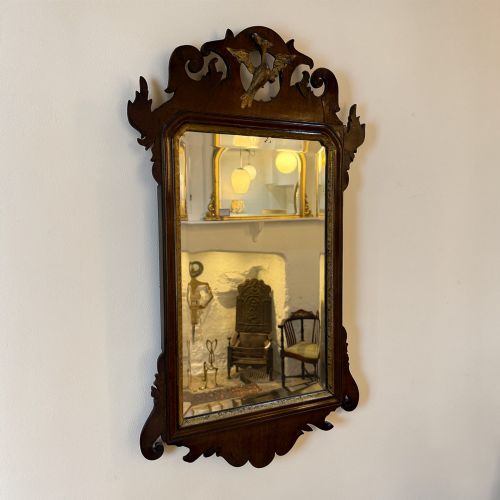
A watchful gilded phoenix peers down from the crest of several pieces, guarding your reflection from the top of the scrollwork.
Judging quality and craftsmanship
Quality rests in the crispness of the fret-cut scrolls and the depth of figure in the mahogany veneer or solid timber. Sharp, clean piercing demonstrates superior bench work compared to soft, rounded edges.
The integration of applied giltwood and the preservation of original mirror glass plates separate standard production from finer revival and period pieces.
The Vintage Mahogany Fret Mirror Glossary
- Fret-cut
- Woodworking technique involving pierced geometric or scroll patterns sawn through thin timber boards. This method creates the characteristic openwork silhouette of the frame.
- Giltwood
- Timber coated with gold leaf or metallic paint to highlight specific mouldings. It frequently accents the inner sight-edge of these frames.
- Overmantel mirror
- A wide horizontal looking glass designed to hang specifically above a fireplace mantel. The listings include Victorian examples in this grander format.
- Stringing
- Thin inlay lines of contrasting timber, such as boxwood, inserted into grooves on the frame face. This decorative technique appears on later Edwardian pieces.
Vintage Mahogany Fret Mirror: Frequently Asked Questions
Are these mirrors genuine eighteenth century?
The inventory includes both original Georgian pieces and later revival interpretations from the Victorian and Edwardian periods. Examining timber ageing, backboards, and plate construction helps clarify the true age.
Revival pieces often utilise machine-sawn backing and bevel-edged glass, whereas eighteenth-century originals display hand-worked joinery and earlier glass characteristics.
Why do some mirrors feature a bird motif?
The ho-ho bird or mythical Chinese phoenix frequently appears carved or gilt-painted within the scrolled crest of Chippendale style frames. This decorative touch reflects the mid-eighteenth-century enthusiasm for chinoiserie.
Cabinetmakers incorporated these crests to add height and classical symmetry to the top of the mirror silhouette.
How should I clean the frame and glass?
Dust mahogany frames gently with a dry, soft cloth to protect the polished surface and any fragile fretwork tips. Avoid commercial silicon sprays that can damage historic finishes.
Apply glass cleaner sparingly to a cloth rather than directly onto the mirror plate to prevent moisture seeping behind the silvering.