



Pierced Frame Mirror
When you handle a pierced frame mirror, you hold a piece where the openwork border transforms flat timber or metal into active shape and shadow.
Pierced Frame Mirror
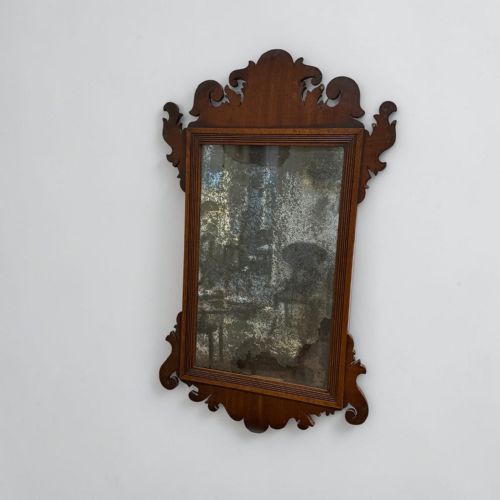
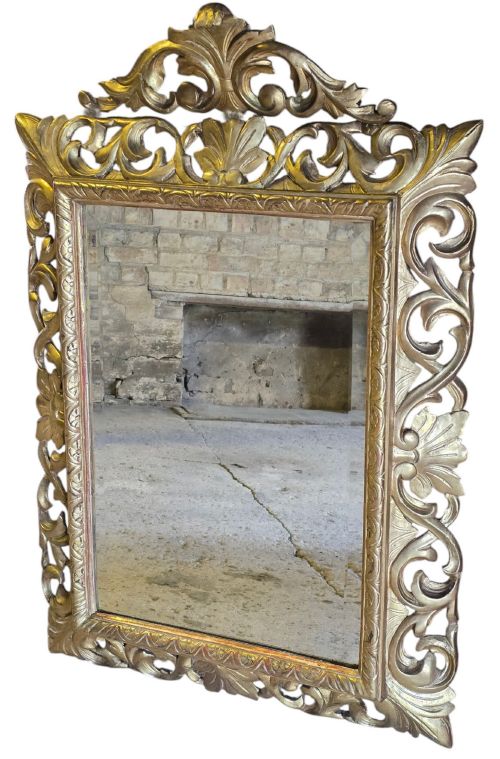
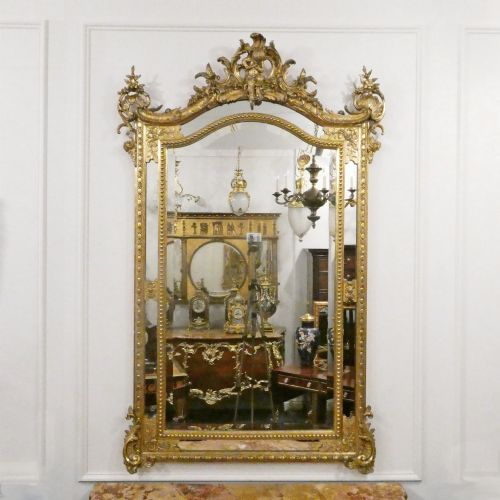
A pierced frame mirror relies on cutout and openwork borders, ranging from the fret-cut timber of the Georgian period to the cast brass and carved giltwood of the Victorian era. When you search for a pierced frame mirror, you encounter wall mirrors, table mirrors, and vanity glasses created across the eighteenth, nineteenth, and early twentieth centuries.
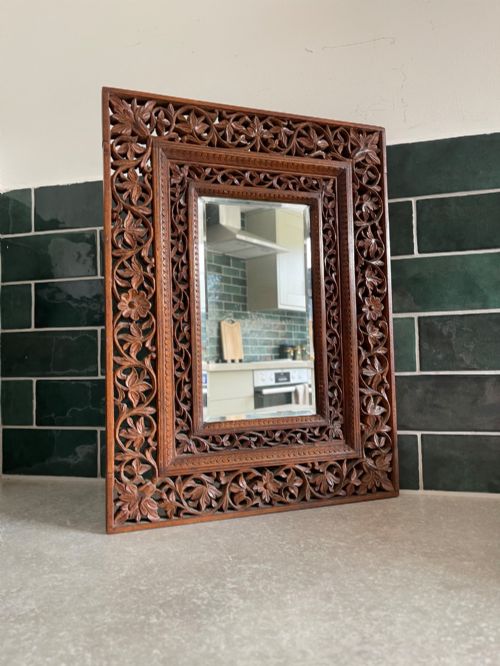
The examples on this page span several distinct regional idioms, including intricate Anglo-Indian and Hoshiarpur woodwork alongside European Rococo, Louis XVI, and Florentine styles. Giltwood, mahogany, brass, and sterling silver form the primary structural frameworks that surround the central glass plates.
How they were made
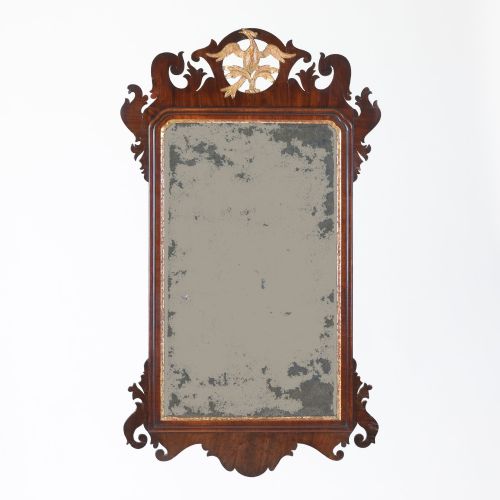
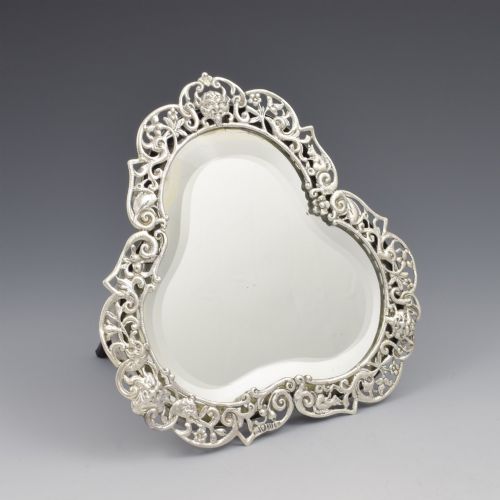
Makers constructed wooden pierced frame mirrors using fret-cut mahogany, carved giltwood, and gesso over timber bases, often applying delicate openwork foliage, birds, or scrolls. Brass and silver examples utilised casting and hand-piercing techniques, sometimes incorporating inlaid elements or applied cherubs and masks.
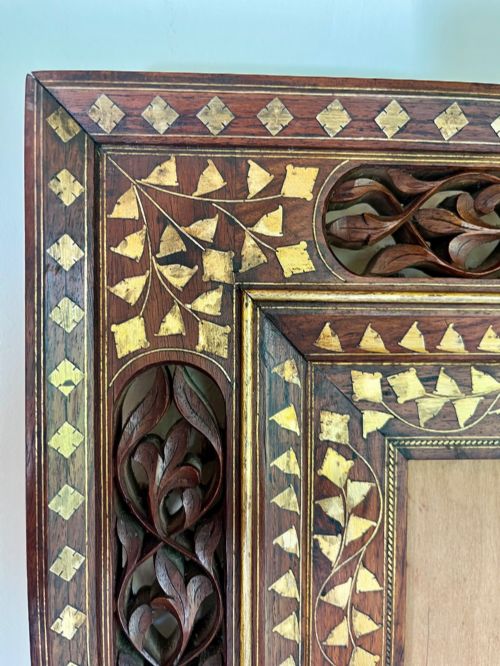
Craftsmen in regions such as Hoshiarpur and Kashmir shaped hardwood and inlaid metals to create dense geometric and botanical pierced borders, while European workshops favoured the sweeping asymmetric curves of the Rococo and Louis XVI styles.
The documented forms range from small vanity and table easel mirrors to substantial wall-hanging overmantle pieces and panel mirrors.
What varies in quality
The crispness of the openwork carving or casting dictates the visual impact of the frame, separating finely detailed fretwork and crisp foliate gesso from softer, shallower execution. The retention of original gilding, silver mounts, and silvered glass plates preserves the integrity of the piece.
Makers achieved superior balance in proportions where the pierced border complements rather than overpowers the mirror plate, maintaining structural strength across complex fret-cut sections in mahogany, silver, and giltwood.
Henry Matthews
The Pierced Frame Mirror Glossary
- Fret-cut
- Woodwork shaped by cutting patterns through the thickness of the board with a fine saw. This technique produced the light, geometric, and ornamental borders seen on Georgian mirrors.
- Giltwood
- Timber coated with gold leaf over a prepared gesso ground. This finish catches light within the openwork cavities of Rococo and Florentine frames.
- Gesso
- A plaster-like mixture applied to wood frames to provide a smooth surface for gilding and low-relief moulding. It allowed artisans to sharpen delicate details before applying gold leaf.
- Easel mirror
- A portable table or dressing mirror supported by a hinged leg at the back. These often feature silver or brass mounts designed for bedrooms and reception rooms.
- Overmantle wall mirror
- A large horizontal mirror intended to hang above a fireplace mantel. These pieces frequently utilised heavy giltwood and elaborate pierced crestings.
Pierced Frame Mirror: Frequently Asked Questions
Where should I hang a pierced frame mirror?
These mirrors suit spaces with strong natural light that can play through the openwork borders and cast shadows against the wall. Hallways, reception rooms, and bedrooms accommodate both wall-hanging formats and easel table mirrors.
Ensure the wall fixings match the weight of dense materials like cast brass, giltwood, or mahogany to protect the open frame from undue stress.
How do I distinguish Georgian from Victorian examples?
Georgian pierced frame mirrors often rely on fret-cut mahogany or carved giltwood featuring architectural symmetry, Ho-ho birds, or early Rococo flourishes. Victorian pieces frequently introduce cast brass, silver mounts, or heavier gesso and gilt finishes with foliate or mask motifs.
Examining the construction of the timber backing and the characteristics of the glass plate helps confirm the period of manufacture.
What is Anglo-Indian woodwork?
Anglo-Indian woodwork refers to items produced in India during the British period, often combining traditional local carving techniques with European furniture forms. Hoshiarpur and Kashmiri pieces frequently exhibit intricate pierced designs and inlaid details.
These mirrors utilise dense hardwoods that support exceptionally fine, perforated geometric patterns.
Are the mirror plates usually original?
Many nineteenth and eighteenth-century mirrors retain their original plates, which often display subtle foxing, minor speckling, or distortion characteristic of early silvering methods. Replacement plates do occur when older glass has deteriorated beyond utility.
Examining the depth and edge bevelling of the glass provides clues regarding its age relative to the frame.