
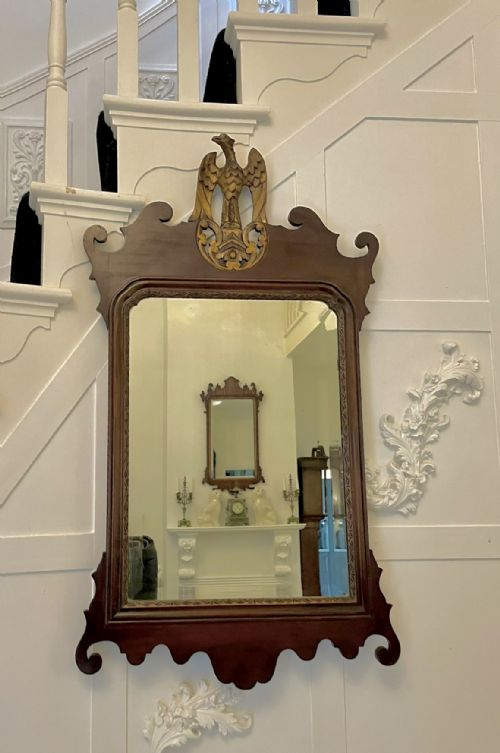
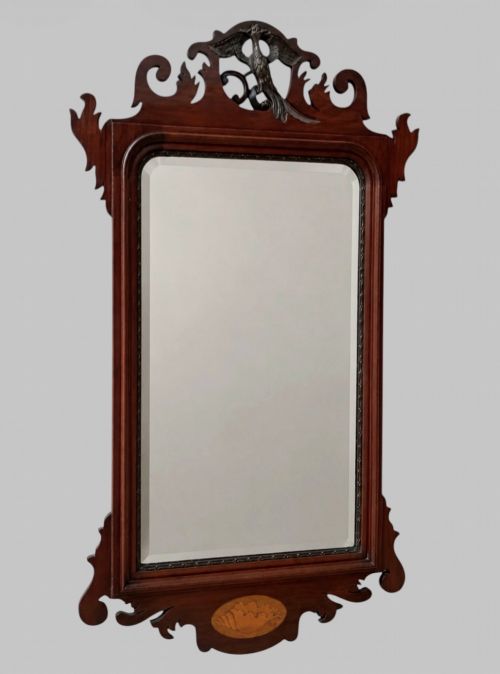


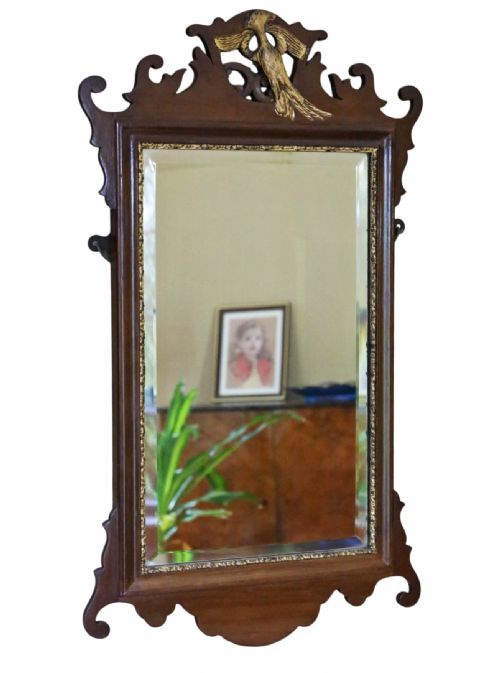

Fretwork Cresting Mirror
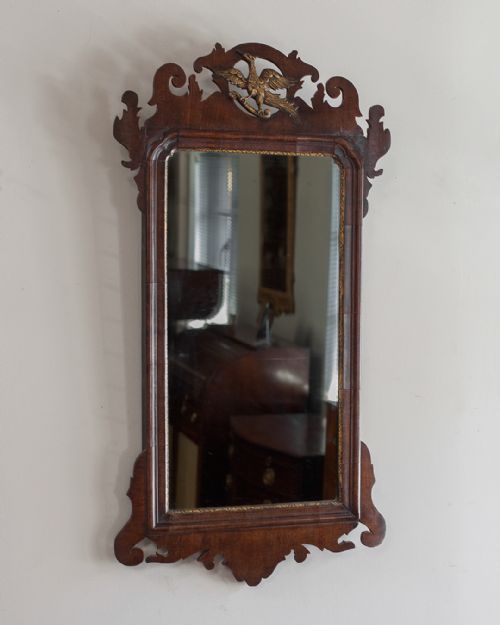
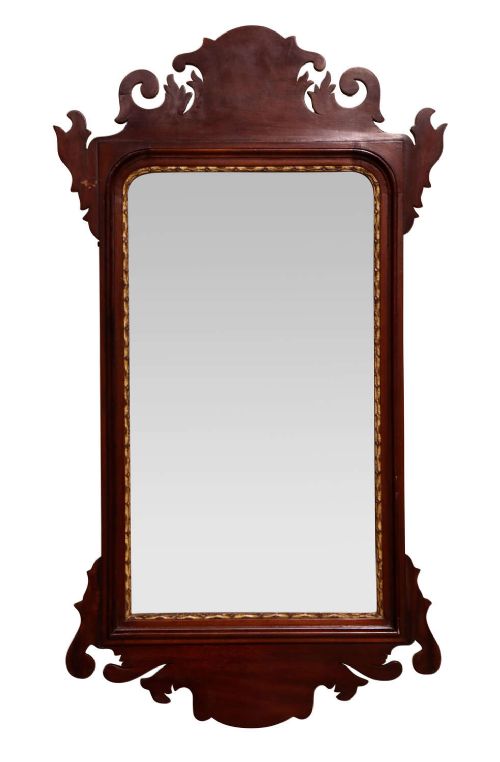
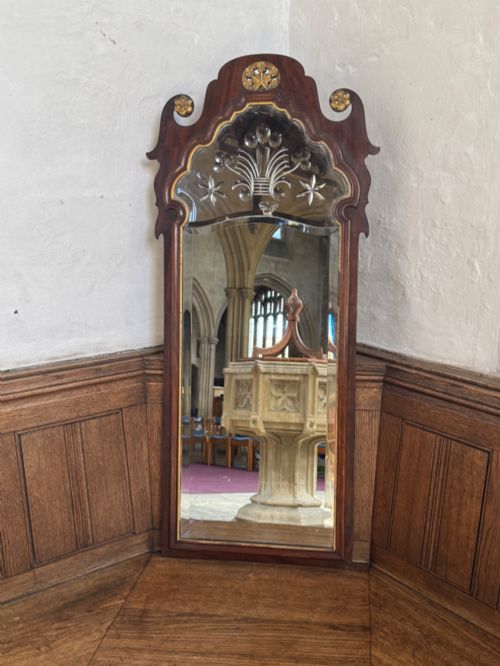
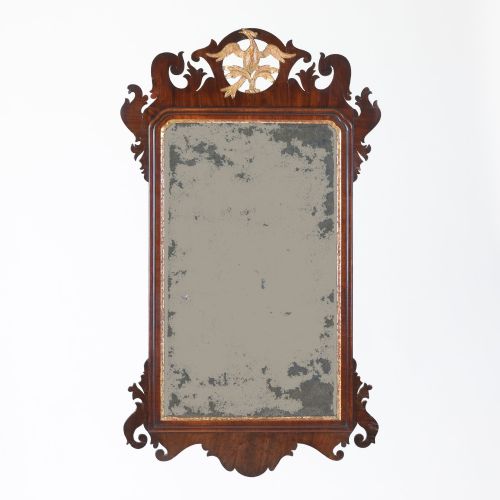
A fretwork cresting mirror brings architectural rhythm to a wall, relying on pierced scrollwork and timber grain to catch the light.
Fretwork Cresting Mirror
When you examine a fretwork cresting mirror, you encounter pieces spanning the 18th century through to the Edwardian era and the early 1900s. The selection on this page centres heavily on Georgian originals alongside later revivals from the Victorian and Edwardian periods.
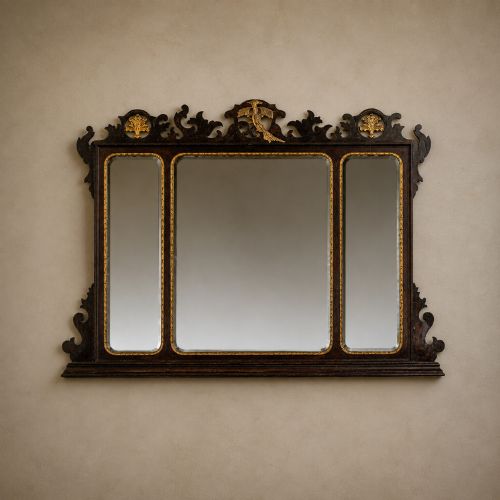
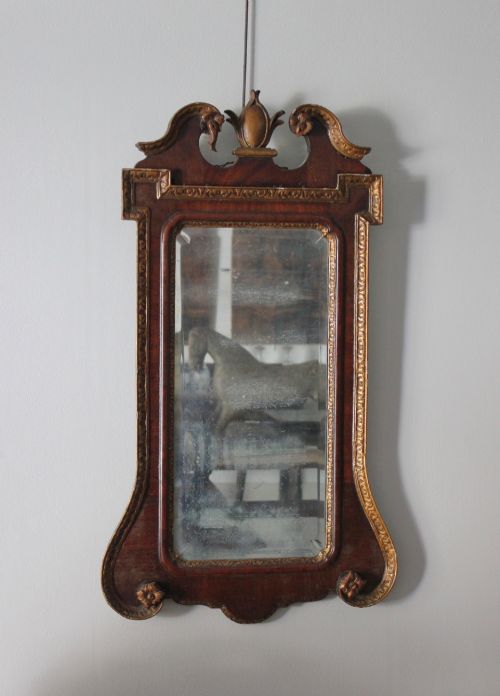
The dominant forms are wall mirrors and pier mirrors, alongside occasional larger triptych overmantels. Mahogany and walnut provide the primary timber bodies, frequently accented with giltwood or parcel gilt details.
Buyers most commonly meet examples in the Chippendale and George II or George III styles. These pieces range from compact hanging wall mirrors to large, architectural formats designed to anchor a room.
What varies in quality
The crispness of the fret-cut piercing separates superior examples from softer, more mechanically produced revivals. Sharp internal corners and clean scrollwork demand immense skill from the maker.
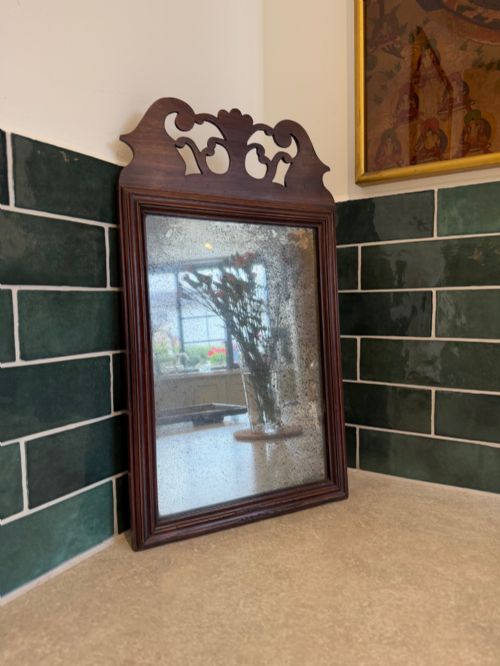
The choice of timber grain alters the visual weight significantly, with highly figured burr walnut or rich mahogany commanding greater presence. Original mercury plates or early mirror glass with subtle imperfections display a depth absent in modern replacements.
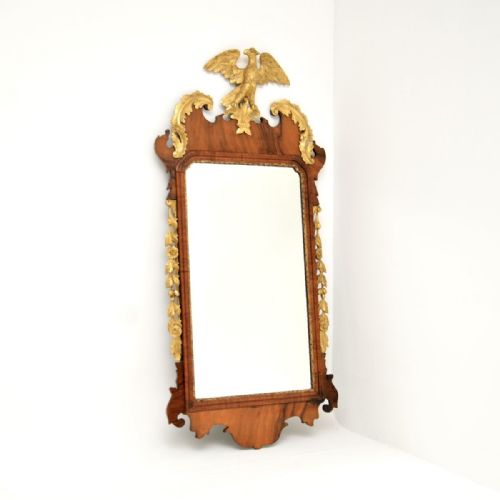
The survival of original parcel gilt decoration and untouched surface patination distinguishes an authentic period piece from later alterations.
Listings span the 18th century to the 1920s, showcasing Georgian, Victorian, and Edwardian periods alongside Chippendale and George II styles.
The Fretwork Cresting Mirror Glossary
- Fretwork
- Pierced decorative woodworking created by sawing patterns through a thin board. It defines the characteristic scrolled crests and ears of these mirrors.
- Parcel Gilt
- Partially gilded, where gold leaf is applied only to specific carved details such as mouldings or crest motifs while leaving the surrounding wood exposed.
- Pier Mirror
- A tall mirror specifically designed to hang on the narrow pier of wall space between two windows. They often feature elaborate fret-cut crests.
- Vauxhall Plate
- Early mirror glass characterised by a bevelled edge ground by hand, produced at the famous 17th and 18th-century English glassworks. It exhibits subtle waviness and microscopic bubbles.
- Ho-Ho Bird
- A stylized Chinese phoenix motif popular in mid-18th-century Chippendale design, frequently perched at the apex of the cresting.
Fretwork Cresting Mirror: Frequently Asked Questions
Where should I hang a fretwork mirror?
These pieces suit principal reception rooms, hallways, or above a mantelpiece where their vertical proportions draw the eye upward. Hang them at eye level to ensure the reflective glass functions effectively.
Ensure the wall fixings bear the weight securely, as mahogany and walnut frames with glass plates are heavier than modern alternatives.
How do I distinguish an 18th-century original from a revival?
Examine the timber behind the fretwork for tool marks, oxidation, and construction methods appropriate to the period. Revivals from the Victorian and Edwardian eras often utilise machine-sawn backing or later assembly techniques.
The glass itself also offers clues, as older plates show subtle distortions and age foxing.
What is parcel gilding?
Parcel gilding is a decorative technique where gold leaf is applied selectively to carved highlights, such as leaves, birds, or beaded inner edges. This leaves the polished mahogany or walnut grain visible underneath.
It creates a sophisticated contrast between the warm timber and the bright metallic accents.
How do I care for the antique wood and gilt?
Dust the frame gently with a dry, soft brush and avoid commercial polishes that can degrade old finishes or loosen fragile gilt layers. Keep the mirror away from direct sunlight and damp environments to protect the wood and silvering.
Glass can be cleaned sparingly with a cloth dampened slightly with water, taking care not to let moisture seep behind the frame edges.