
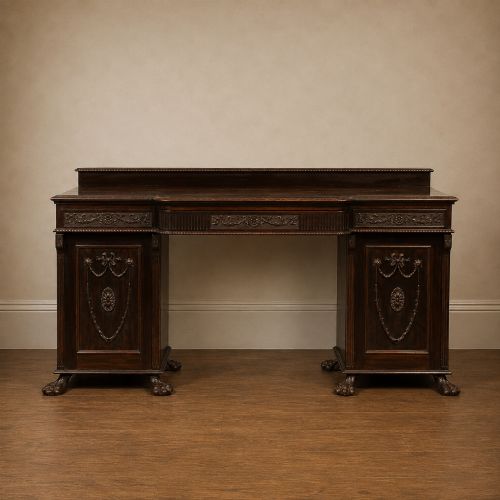
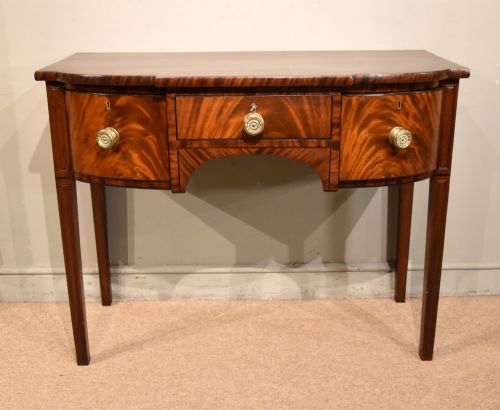
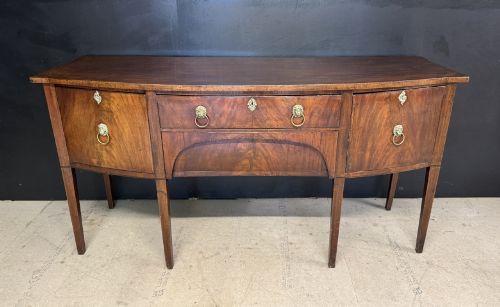
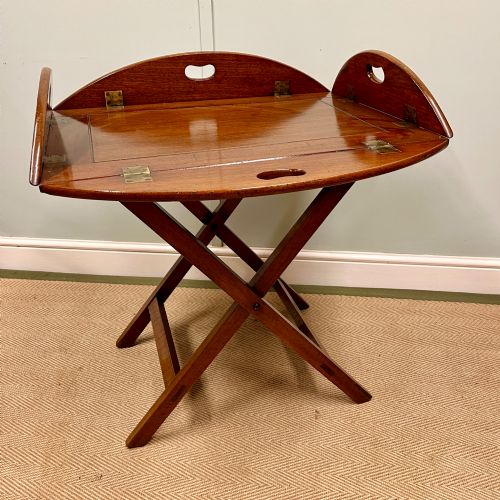
Georgian Mahogany Serving Table
A georgian mahogany serving table brings weight and steady architecture to a dining room, designed for service and display.
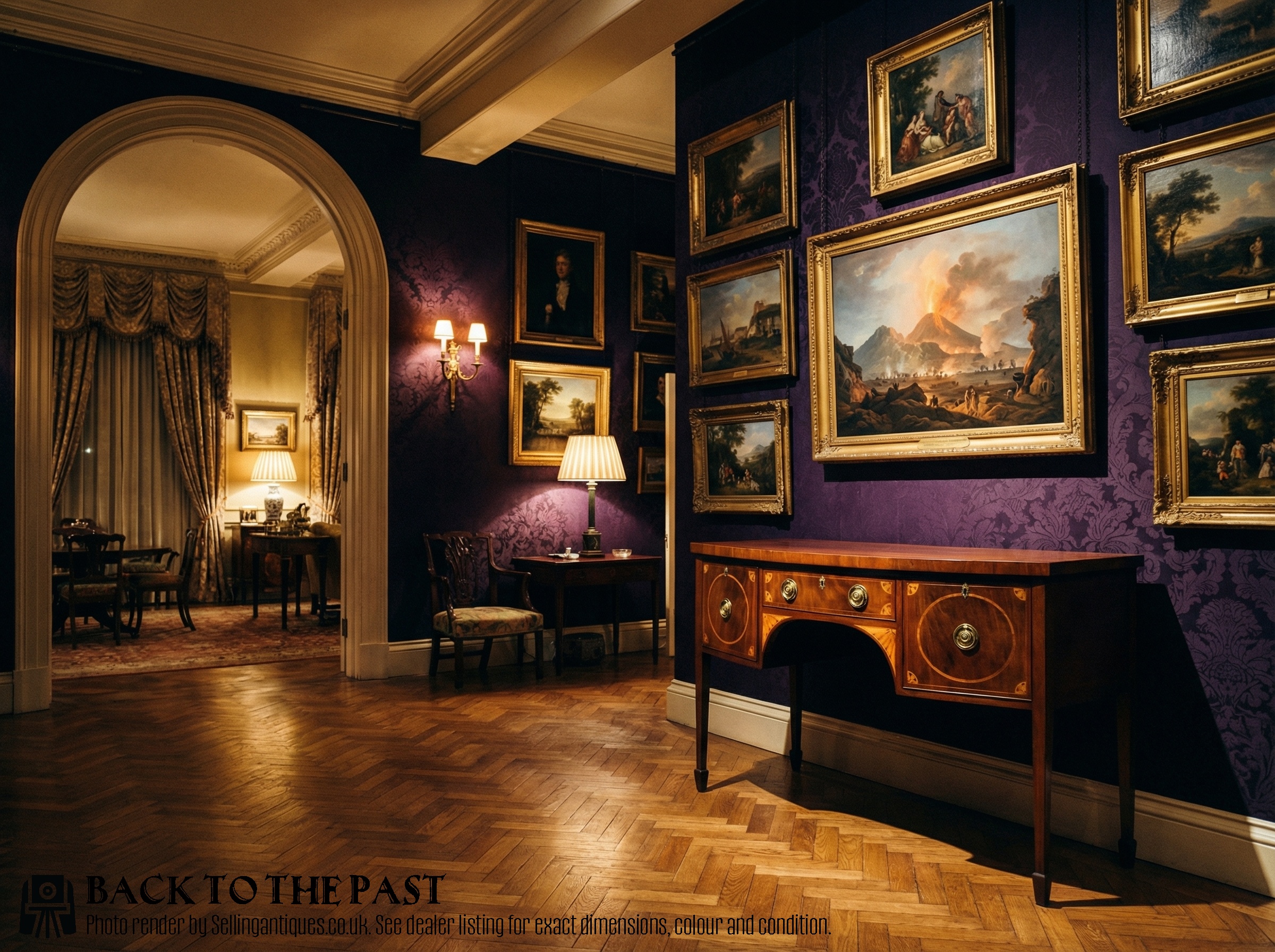
Georgian Mahogany Serving Table
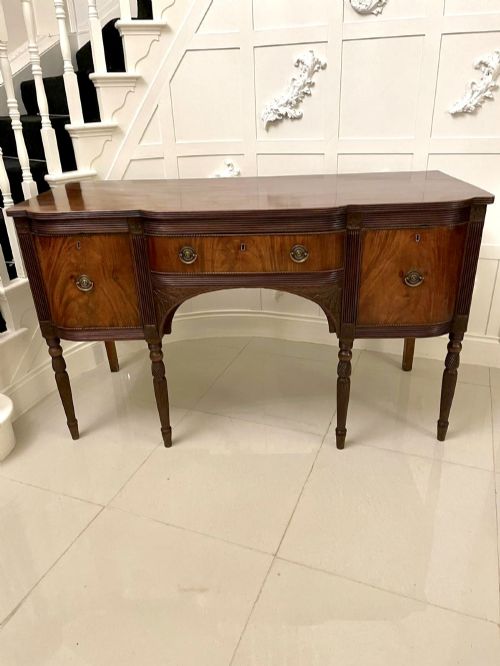
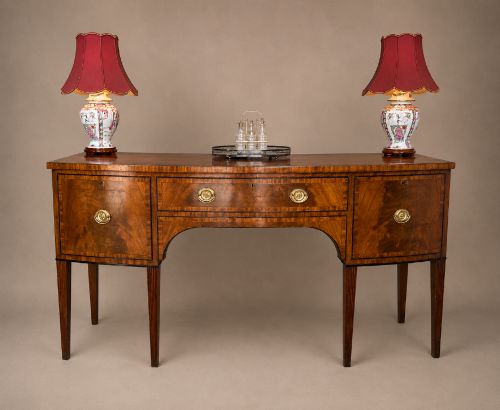
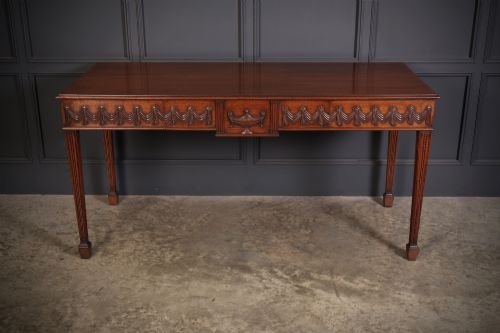
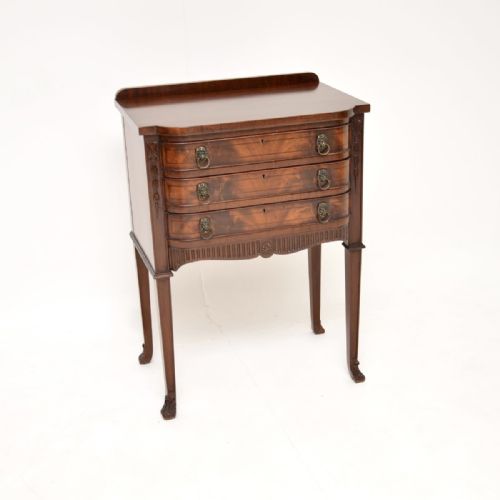
When you search for a georgian mahogany serving table, you encounter substantial dining furniture built to hold heavy platters, silver, and ceramics during large meals. These pieces span the eighteenth century and the regency period, taking the form of long rectangular console tables, side tables, and serpentine servers.
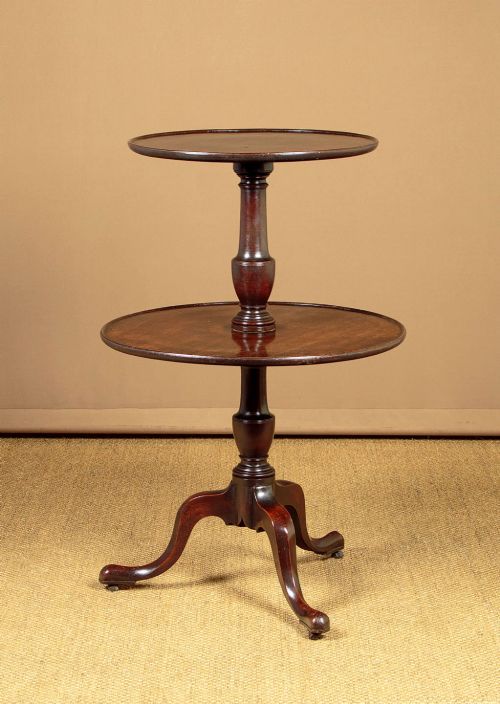
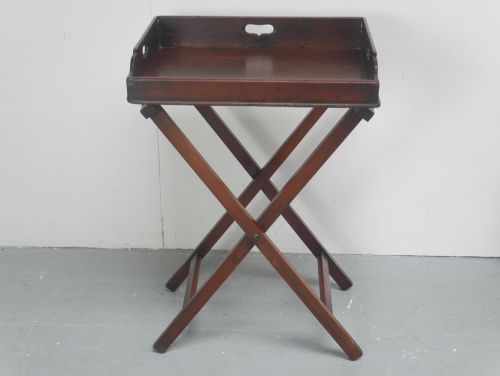
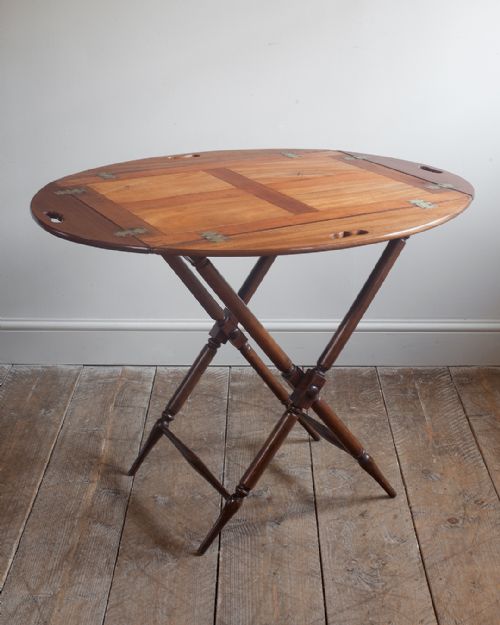
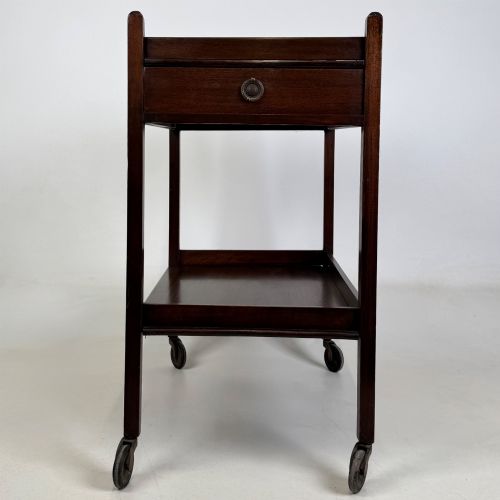
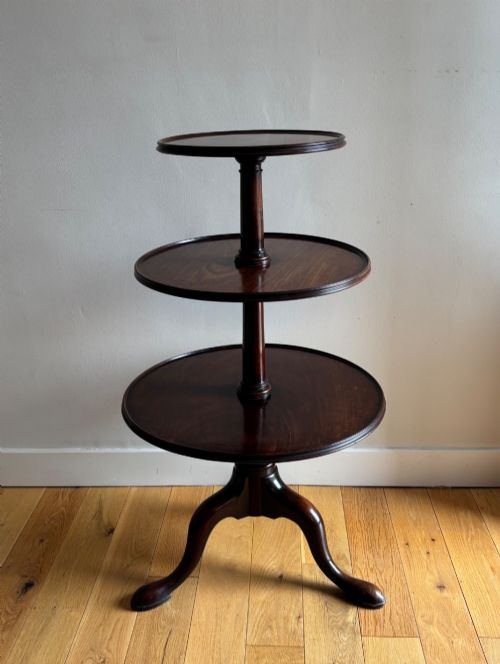
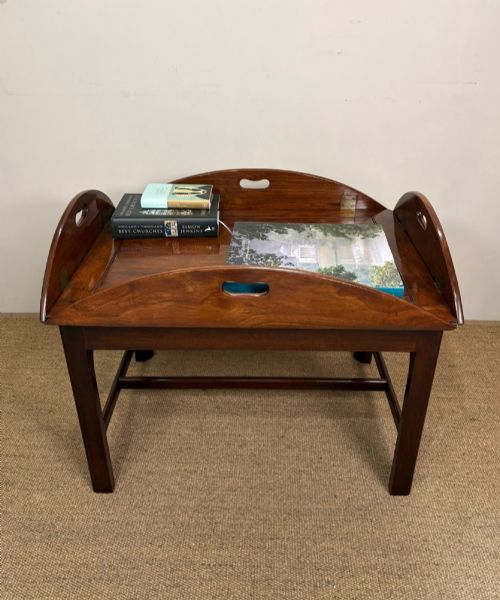
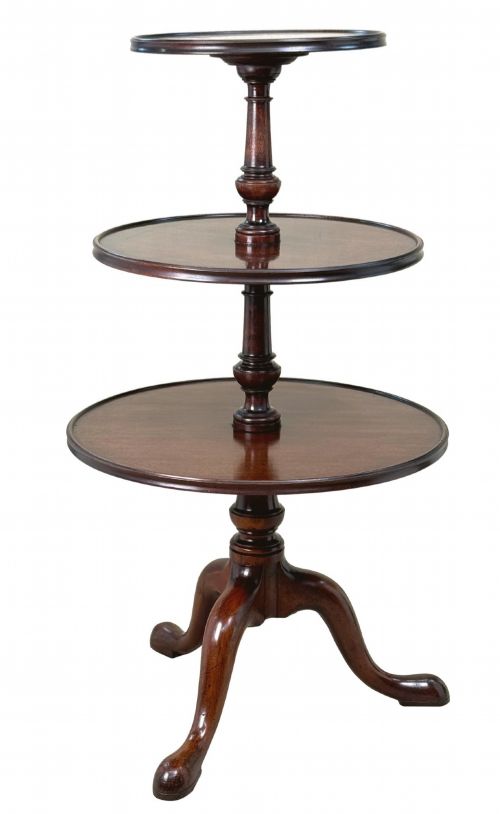
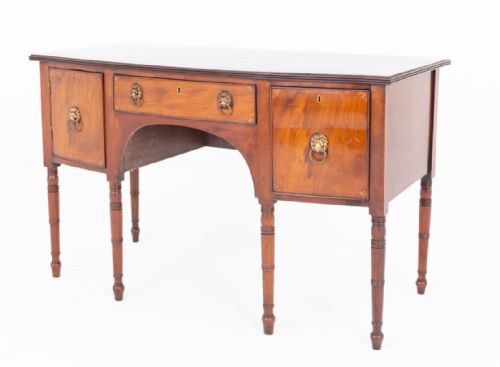
The versions most common on this page date from the georgian and regency eras, alongside later revival pieces produced in the nineteenth and twentieth centuries. Alongside direct serving tables, the evidence includes related dining forms such as sideboards, dumb waiters, and butlers trays on stands.
How They Were Made
Cabinetmakers constructed these pieces primarily in solid mahogany, frequently selecting flame mahogany veneer for drawer fronts and table tops to create deep figured grain patterns. Timbers were chosen for density and strength to support heavy loads without warping.
Decoration relied on contrasting timbers rather than heavy carving, incorporating satinwood inlay and boxwood inlay for geometric borders and fan motifs. Brass hardware, including handles and castors, added functional detail to drawers and table legs.
Georgian Mahogany Serving Table Retail Price Guide 2026
Typical asking prices for georgian mahogany serving table among the pieces listed under this phrase on Sellingantiques today, from the lower quarter to the upper quarter. They describe what is for sale here now, not the wider market.
Tiered dumb waiters were once nicknamed silent friends because they allowed guests to gossip freely without servants overhearing.
What Varies in Quality
The distinction between standard utility furniture and top-tier pieces lies in the choice of timber and the restraint of design. Master workshops selected highly figured flame veneers and integrated subtle serpentine or bowfront shapes that required advanced carpentry.
Secondary woods used for drawer linings and internal framing indicate the standard of construction, with oak and pine appearing in differing grades. Details such as hand-cut dovetails and precise stringing define the upper end of the range.
Gillows·George Hepplewhite·George Oakley·W.Williamson & Sons
The Georgian Mahogany Serving Table Glossary
- Serpentine
- A furniture front or table edge curved in a wave shape, convex at the centre and concave at the ends. This profile required skilled hand-shaping of solid timber or veneer.
- Dumb waiter
- A tiered stand with revolving circular trays used to hold food and glassware beside a dining table. They allowed diners to serve themselves without domestic staff present.
- Inlay
- A technique where pieces of contrasting wood, such as boxwood or satinwood, are inserted into recesses cut into the mahogany surface. It creates decorative borders and panels.
- Breakfront
- A piece of furniture where the central section projects forward from the flanking cabinet or table sections. It adds architectural depth to large sideboards and serving tables.
- Cross-banded
- A border treatment where veneer is laid with the grain running perpendicular to the surrounding surface. This frames the primary wood of a table top or drawer front.
Georgian Mahogany Serving Table: Frequently Asked Questions
How were serving tables used in dining rooms?
These tables stood against dining room walls to hold heavy dishes, silver platters, and wine coolers during large meals. Servants placed food upon them before transferring it to the main dining table.
They also functioned as side tables for carving joints or holding spare plates and glassware. Their sturdy construction allowed them to bear the substantial weight of metal and ceramic tableware.
What is the difference between a serving table and a sideboard?
A traditional serving table is an open-frame table with legs and occasionally drawers beneath the top, designed primarily for surface display. Sideboards, which evolved later in the eighteenth century, incorporate built-in cupboards and deeper cellaret drawers.
While serving tables rely on console or side table proportions, sideboards provide enclosed storage for bottles and linens. Both forms share mahogany construction and matching stylistic details.
How do I identify a george iii piece?
George III pieces date from the reign of that king between seventeen sixty మరియు eighteen twenty, displaying classic proportions and restrained classical ornamentation. Look for straight tapered legs, spade feet, and subtle boxwood stringing.
Cabinetmakers of this period favored structural integrity balanced with refined surface grain, avoiding the heavier proportions seen in later Victorian revivals. Construction methods utilise hand-cut dovetails and native secondary timbers.
Where should I place a serving table in a modern home?
A serving table fits naturally in a dining room or large hallway, functioning as a surface for lamps, books, or decorative objects. Its shallow depth prevents it from blocking walkways while offering significant surface area.
In living spaces, a mahogany server works well behind a sofa or against an empty wall to anchor artwork. The rich grain of the mahogany complements both traditional and contemporary interiors.