



Georgian Mahogany Mirror Base
A georgian mahogany mirror base forms the foundation of a period dressing glass, offering a stable and handsome platform for daily grooming.
Georgian Mahogany Mirror Base
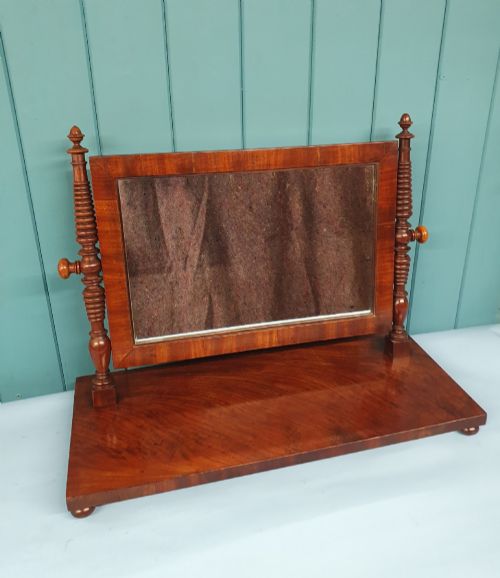
When you search for georgian mahogany mirror base, you are looking at the supportive lower section of a dressing glass or toilet mirror designed to sit upon a table or chest. These forms appear primarily in Georgian, Regency, and nineteenth-century iterations, constructed to hold the pivoting mirror frame steady between upright arms.
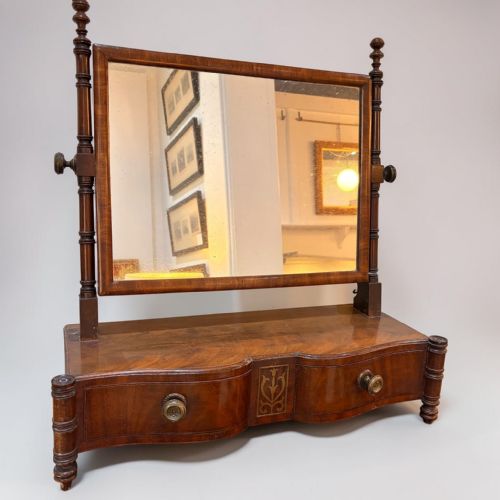
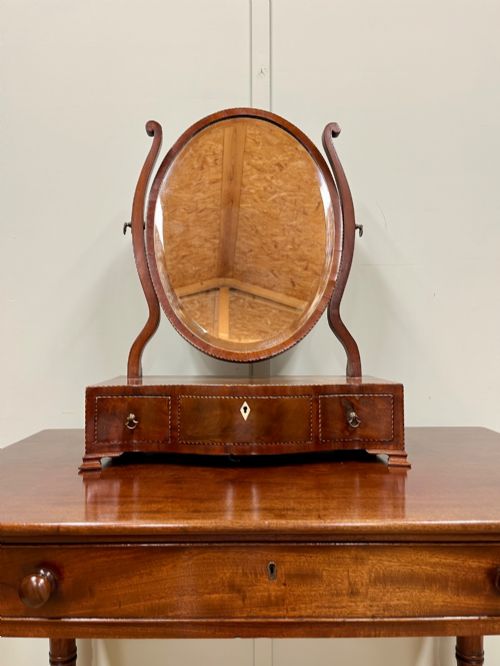
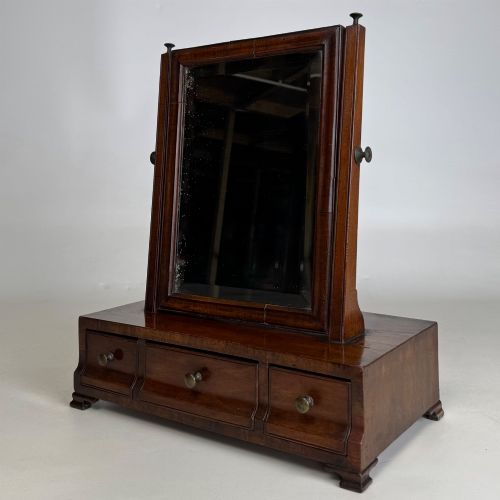
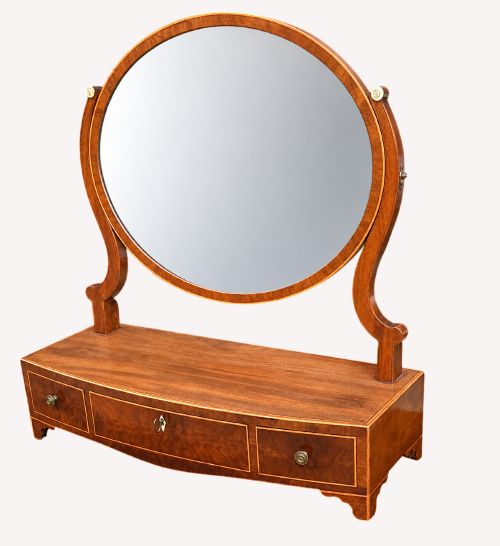
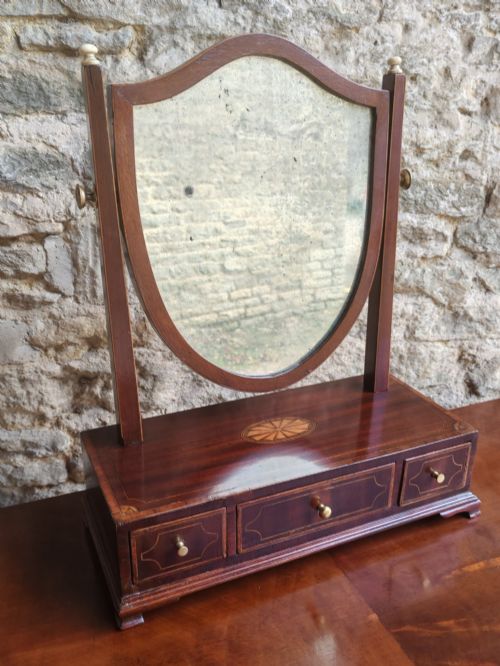
The objects on this page span several specific variants, most commonly taking the form of compact drawer bases fitted below oval, shield-shaped, or rectangular mirror plates. You will encounter simple rectangular boxes alongside serpentine fronts and three-drawer layouts, all built to accommodate small personal items.
Originating predominantly from the eighteenth and nineteenth centuries, these pieces draw on periods such as the reigns of George II, George III, and George IV. They serve as functional dressing table accessories that combine cabinetry with reflective glass.
How they were made
Makers constructed these bases using solid mahogany, frequently pairing the rich timber with contrasting boxwood inlay or secondary woods like walnut. Brass fittings such as finials, hinges, and bracket feet provide structural reinforcement and mechanical movement for the pivoting frame.
Cabinetmakers shaped the timber into straight, bow, and serpentine outlines, housing small storage compartments and drawers within the base. Surface finishes relied on traditional polish to bring out the deep grain of the mahogany.
Georgian Mahogany Mirror Base Retail Price Guide 2026
Typical asking prices for georgian mahogany mirror base among the pieces listed under this phrase on Sellingantiques today, from the lower quarter to the upper quarter. They describe what is for sale here now, not the wider market.
Materials recorded across the inventory include solid mahogany, walnut, boxwood inlay, brass, bone, marble, and gilded wood.
What varies in quality
The calibre of a georgian mahogany mirror base depends significantly on the sophistication of its joinery and the shaping of its timber. Superior examples feature subtle serpentine fronts, well-figured mahogany veneers or solids, and precise boxwood stringing rather than plain, unadorned box construction.
The integration of the drawer units and the retention of original brass hardware elevate certain pieces above standard utilitarian boxes. Finer pieces demonstrate careful proportion between the lower storage base and the upright mirror supports.
John Franklin London
The Georgian Mahogany Mirror Base Glossary
- Toilet mirror
- A small movable mirror designed to stand on a dressing table or chest of drawers. It typically incorporates small storage drawers in its base.
- Serpentine
- A curved furniture front characterised by a convex centre flanked by two concave curves. This shaping demands advanced cabinetmaking skill.
- Boxwood inlay
- Narrow strips of pale yellowish boxwood embedded into the mahogany surface for decorative contrast. It often outlines drawer fronts and borders.
- Shield-shaped
- A mirror plate cut into the outline of a heraldic shield. This silhouette gained popularity during the latter half of the eighteenth century.
- Cheval mirror
- A full-length dressing glass suspended in a standing frame. Unlike table variants, it stands independently on the floor.
Georgian Mahogany Mirror Base: Frequently Asked Questions
What is a mirror base used for?
These bases serve to anchor a pivoting dressing glass securely upon a tabletop while providing concealed storage within small fitted drawers. They hold personal items and keep the mirror elevated to a usable angle.
Historically, they sat upon larger chests of drawers or dedicated dressing tables in bedrooms and dressing rooms. Their dual purpose combined practical reflection with compact cabinetry.
How do I tell an 18th century mirror base apart?
Eighteenth-century examples often exhibit finer proportions, softer patination on the mahogany, and delicate boxwood inlay or bracket feet. They rely on period construction methods within the drawer linings.
Later nineteenth-century pieces tend to show heavier frames, different secondary timbers, and variations in the brass hardware or turnings used on the upright supports.
Are mirror bases and dressing mirrors the same?
A mirror base refers specifically to the lower cabinet portion, though the terms often describe the complete assembly of base, upright arms, and mirror plate together. Many historical listings describe the entire dressing mirror object by its primary base components.
When browsing, you will find descriptions that focus on the drawer configuration of the base alongside the shape of the glass above it.
Where should I place a mirror base at home?
These pieces fit comfortably atop a period chest of drawers, a side table, or a dedicated dressing console. Their compact footprint requires minimal surface depth while adding traditional cabinetwork to a room.
Ensure the placement surface is level and stable to support the weight of the mahogany frame and glass safely.