

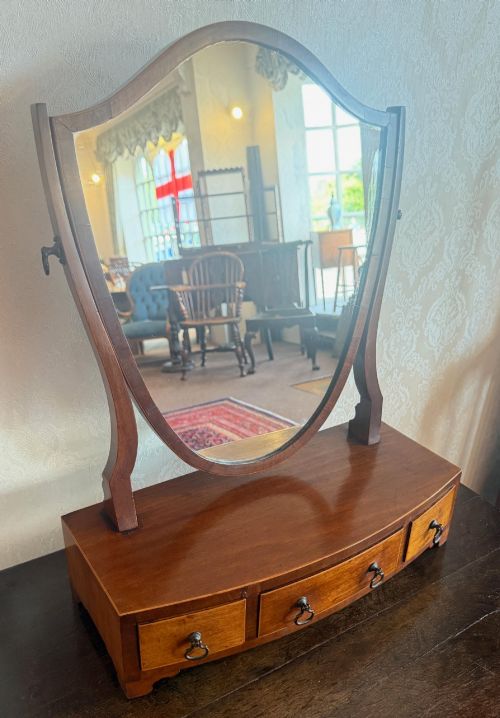
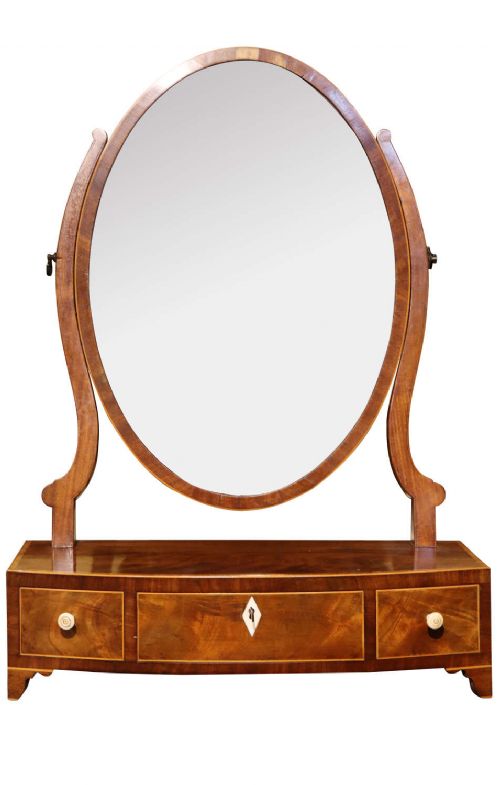

Georgian Toilet Glass Mirror
A georgian toilet glass mirror sits upon the dressing table to catch the morning light, offering both practical reflection and quiet proportion.
Georgian Toilet Glass Mirror
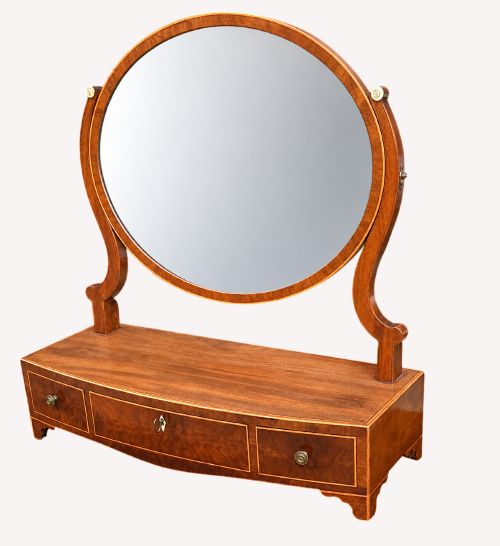
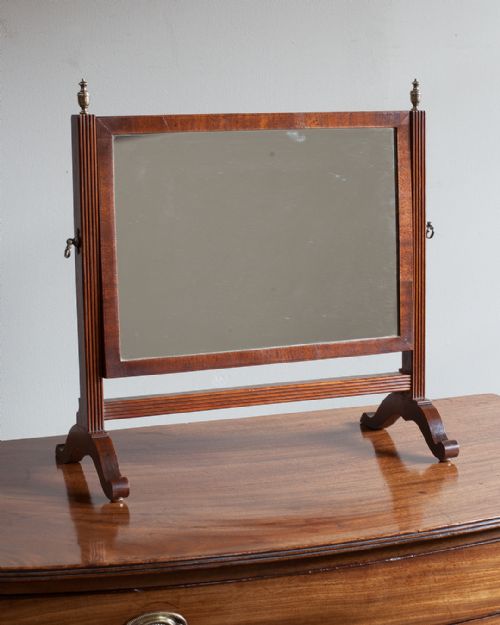
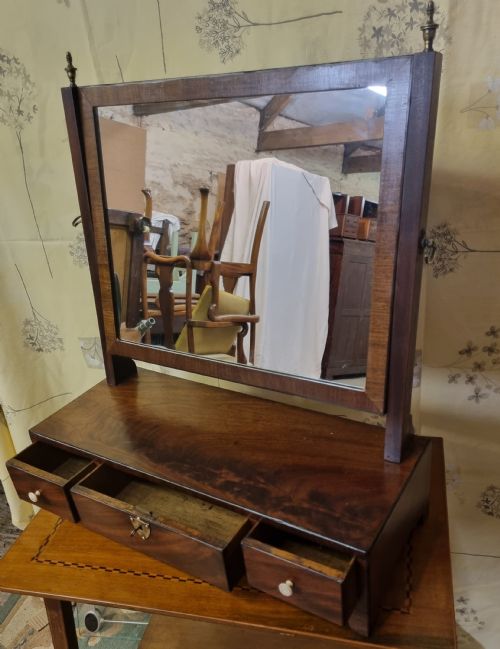
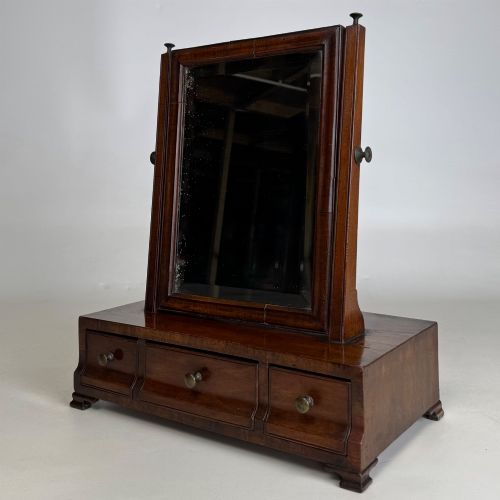
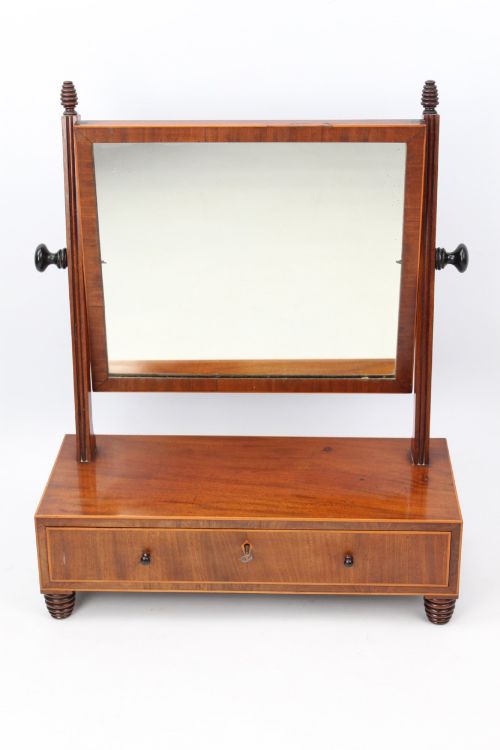
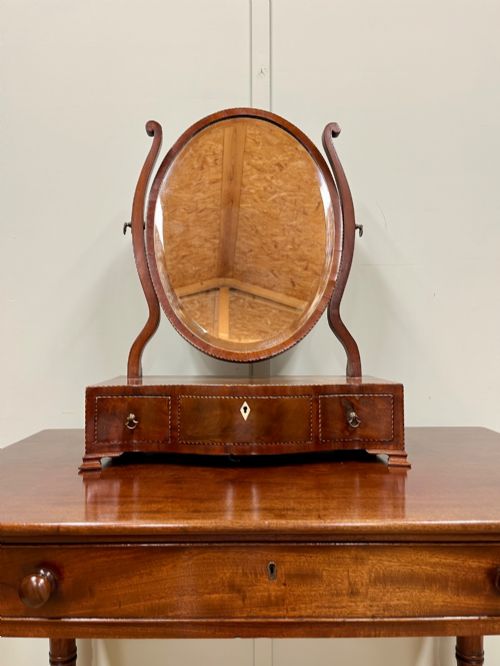
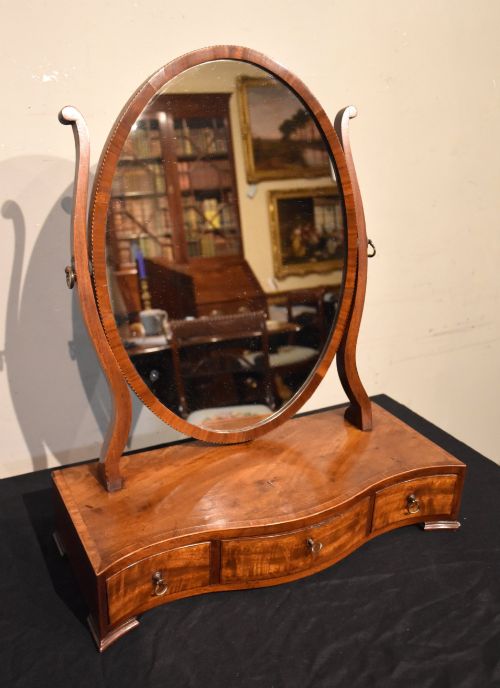
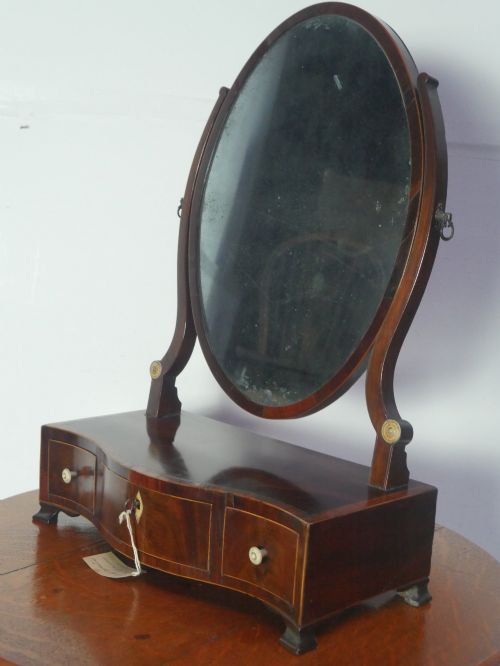
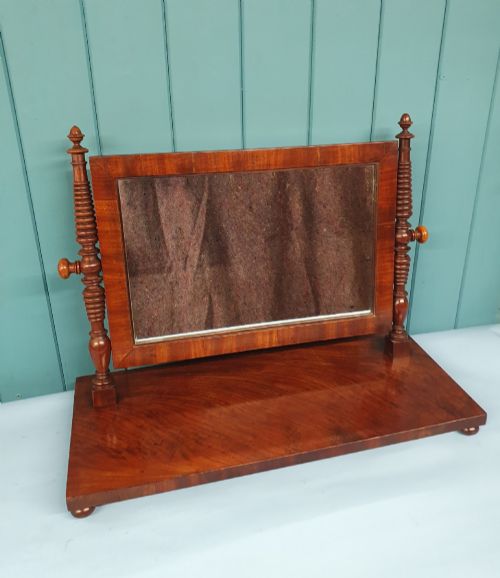
A georgian toilet glass mirror is a small, table-standing glass designed for grooming, typically fitted with a pivoting frame mounted on a box base containing small drawers. You will most frequently meet mahogany examples from the eighteenth and nineteenth centuries, often featuring rectangular or oval plates.
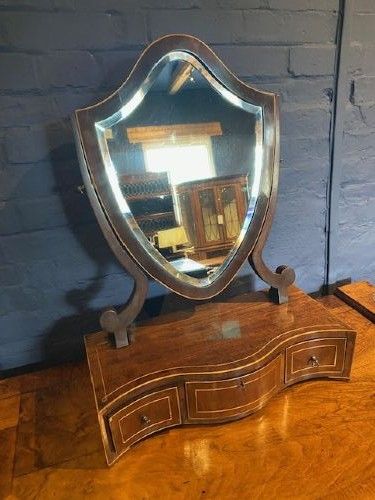
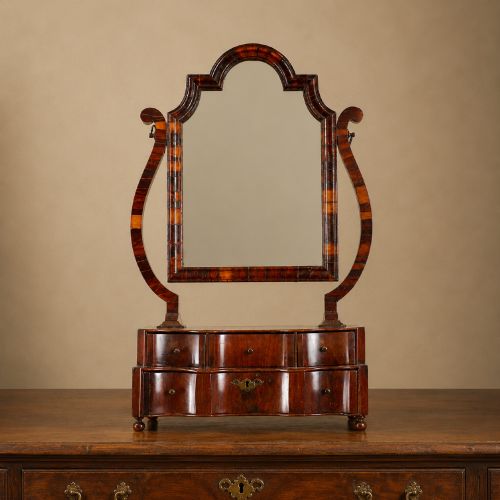
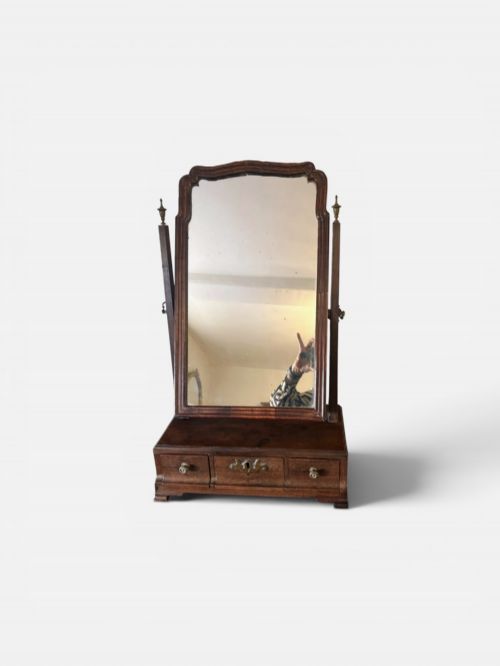
The form spans various regional interpretations and stylistic shifts, including George II walnut pieces, serpentine fronts, and later Regency or Victorian iterations. These mirrors served as essential bedroom furnishings before full-length cheval glasses became common.
Makers produced these pieces to sit securely on chests or dedicated dressing tables, combining cabinet work with adjustable glass frames. The surviving pieces demonstrate the evolution of domestic dressing habits across the Georgian and Regency periods.
How they were made
Cabinet makers utilised dense timber stocks, predominantly mahogany and walnut, often enhanced with crossbanding, satinwood, or Dutch marquetry inlay to enrich the surface. Brass fixtures such as adjustable screw knobs and small escutcheons secured the swing frame and decorated the drawer fronts.
The mirror glass itself rested within a rebated wooden frame, occasionally supported by bone or giltwood details depending on the decorative ambitions of the workshop.
Listings demonstrate a strong predominance of mahogany across eighteenth and nineteenth-century pieces, alongside walnut examples from earlier decades.
What varies in quality
The refinement of the timber and the subtlety of the proportions separate the standard examples from the exceptional ones. Subtle details such as serpentine drawer fronts, well-figured veneers, and harmonious box dimensions distinguish finer pieces from simpler utilitarian versions.
The integrity of the original mirror plate and the crispness of the cabinet joinery dictate the overall standing of an individual dressing glass.
The Georgian Toilet Glass Mirror Glossary
- Swing mirror
- A glass plate mounted on pivots between upright arms, allowing the user to tilt the reflection angle. This mechanism is central to the function of a toilet mirror.
- Toilet glass
- A traditional term for a small dressing mirror placed upon a table or chest. It refers to the historical meaning of toilet, denoting the process of grooming and dressing.
- Serpentine
- A curved shape featuring a convex centre flanked by concave curves. This contour frequently appears on the drawer bases of finer Georgian dressing mirrors.
- Crossbanding
- A border of veneer laid with the grain running perpendicular to the main surface. It provides a neat framing edge to table tops and drawer fronts.
- Cheval mirror
- A full-length swing glass supported on four freestanding legs rather than a table base. This larger format developed alongside smaller table mirrors.
Georgian Toilet Glass Mirror: Frequently Asked Questions
Where did people place these mirrors?
These mirrors rested on dressing tables, chests of drawers, or dedicated washstands within bedrooms and dressing rooms.
Their compact scale allowed them to be positioned near windows to catch optimal light for shaving and hair arrangement.
How do I date a toilet mirror?
Dating relies on observing timber choices, hardware styles, and structural proportions associated with specific reigns and periods.
Walnut points towards earlier eighteenth-century pieces, while mahogany and satinwood frequently indicate George III, Regency, or later nineteenth-century manufacture.
What is the difference between a toilet mirror and a dressing mirror?
The terms are largely interchangeable in historical records, both describing table-standing mirrors used during personal grooming.
Some listings distinguish smaller box-base forms as toilet mirrors while calling taller or cheval formats dressing mirrors.
Are the mirror plates original?
Many surviving pieces retain older or replaced glass plates due to the fragile nature of silvered mirror glass over centuries.
Original plates often exhibit slight foxing or uneven silvering, whilst clearer plates frequently indicate later replacement.