
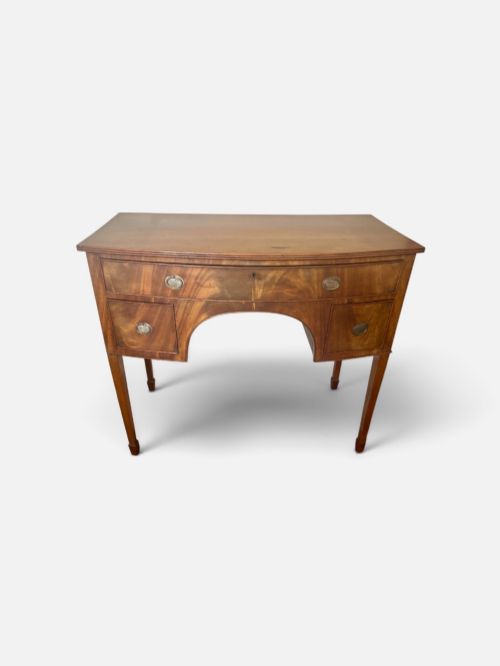
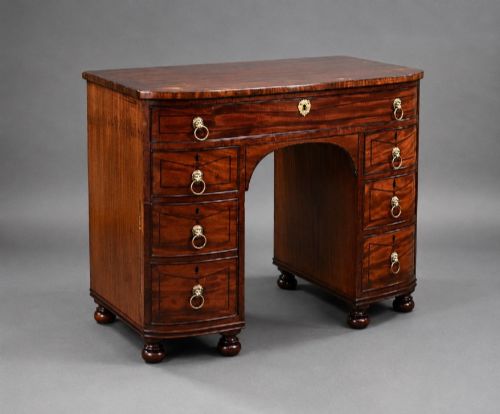
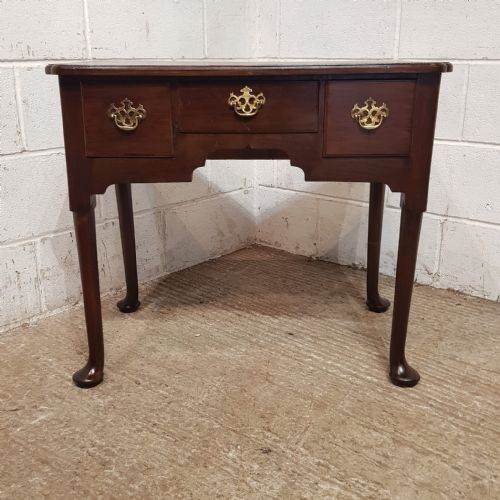

Georgian Mahogany Kneehole Table
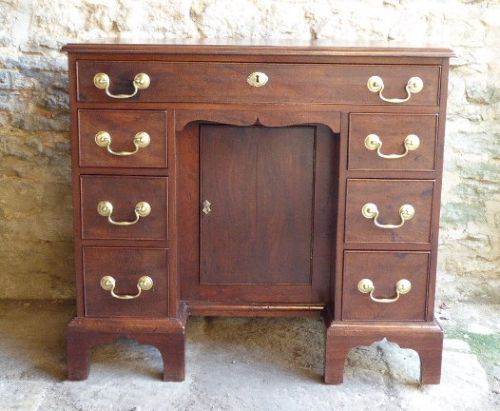
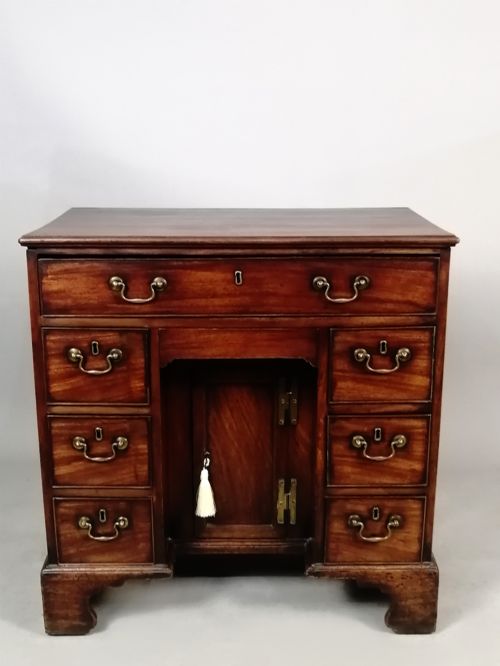
A georgian mahogany kneehole table offers a compact writing or dressing surface with pedestals of small drawers flanking a central recess.
Georgian Mahogany Kneehole Table
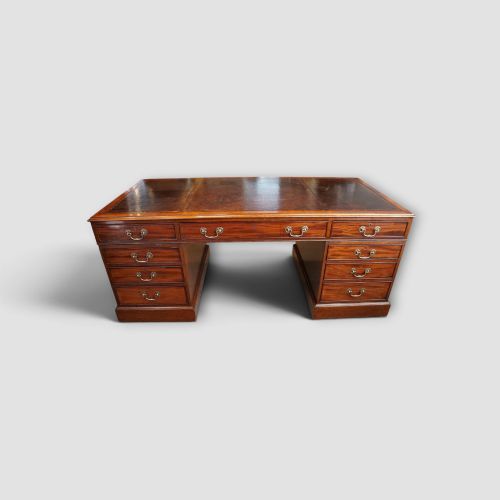
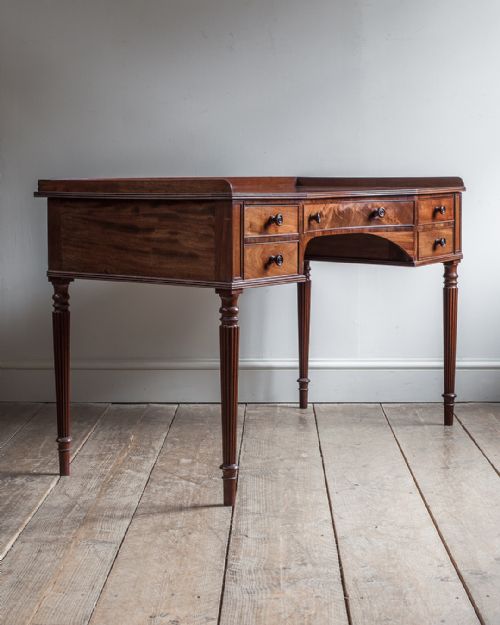
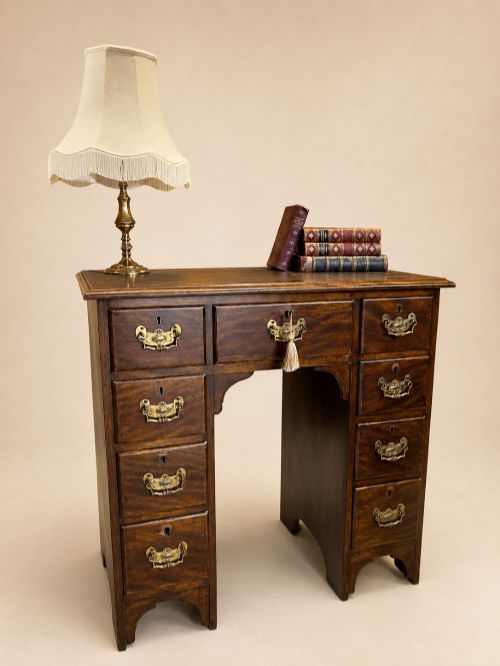
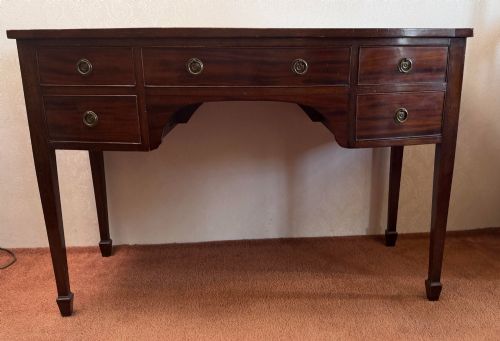
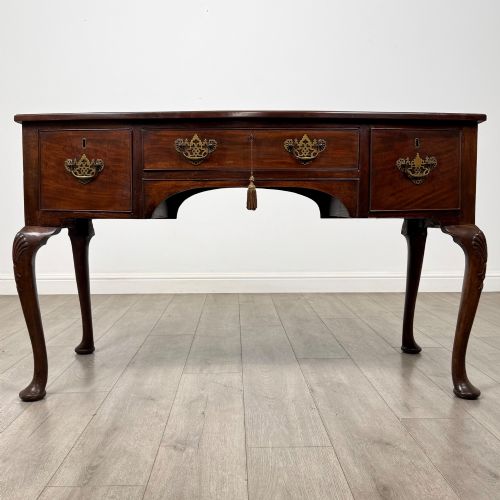
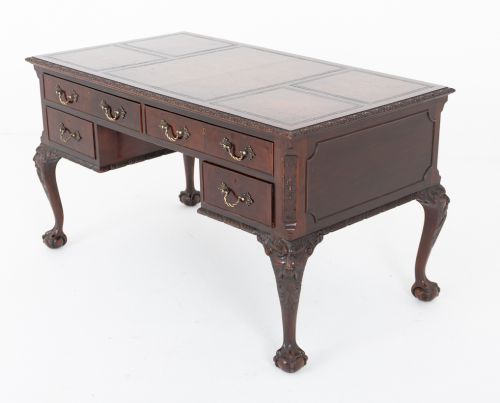
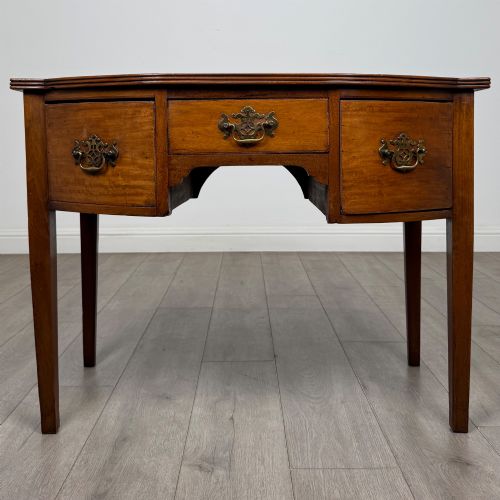
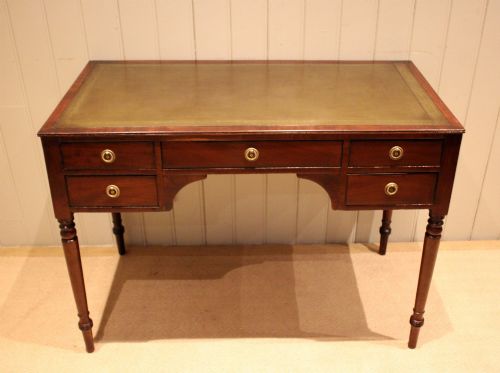
A georgian mahogany kneehole table stands as a versatile piece of case furniture, functioning historically as a writing desk, dressing table or lowboy. The pieces appearing on this page span the eighteenth and nineteenth centuries, alongside later revival interpretations in the Chippendale and Regency styles.
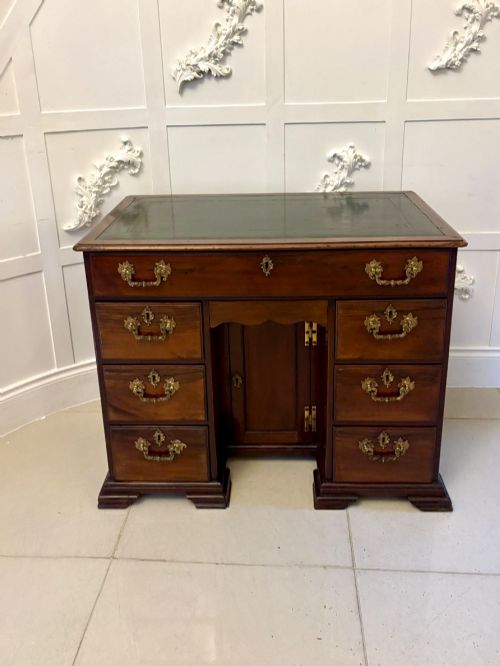
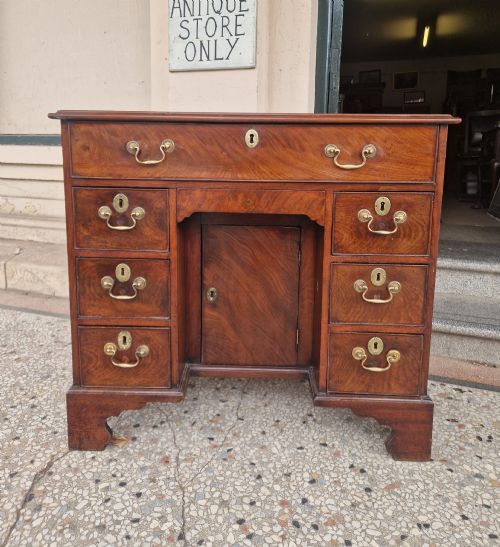
The typical layout incorporates a central kneehole recess, often housing a concealed small drawer or cupboard door, flanked by banks of multiple drawers. Surviving examples reflect periods from authentic Georgian manufacture through to Edwardian and later twentieth-century copies.
Beyond standard desks, related forms in the record include dressing chests, writing tables, sideboards, and washstands sharing the characteristic timber and pedestal arrangement.
Materials and Construction
Makers utilised solid mahogany and flame mahogany veneers, frequently supported by secondary timbers such as oak for drawer linings. Decorative highlights rely on contrasting elements like boxwood and purpleheart wood inlay.
Hardware consists of brass handles and escutcheons fitted to drawer fronts, while finer examples incorporate shaped aprons, bracket feet, or bow-front contours.
Listings feature mahogany, oak, brass, and boxwood across Georgian, Regency, Victorian, and Edwardian periods.
Evaluating Construction and Materials
Quality rests upon the selection of timber figures, where rich flame mahogany veneer and crisp wood inlay distinguish finer pieces from plain surfaces. The depth of hand-cut dovetailing in the drawer construction further separates standard workshop production from superior cabinet work.
Proportion and intact original brass hardware dictate desirability, as alterations to feet or replacement handles diminish the integrity of an antique piece.
The Georgian Mahogany Kneehole Table Glossary
- Kneehole
- A recessed space beneath the central section of a desk or dressing table designed to accommodate the user's legs. This arrangement allows drawers to flank the sitter on both sides.
- Flame mahogany
- A veneer cut from the fork of a mahogany tree where the branches join the trunk. This method produces a distinctive, fiery feather pattern across the wood grain.
- Lowboy
- A small table with one or more rows of drawers, standing on relatively tall legs. They served variously as dressing tables, side tables or writing surfaces in eighteenth-century homes.
- Dovetail
- A traditional interlocking joint used in drawer construction, prized for its mechanical strength. Fine antique examples feature narrow, precise pins cut by hand.
- Escutcheon
- A protective plate surrounding the keyhole of a drawer or cabinet door. They are commonly cast in brass and shaped to complement the style of the furniture.
Georgian Mahogany Kneehole Table: Frequently Asked Questions
What is a kneehole table used for?
These pieces function primarily as compact writing desks, dressing tables, or small side tables in domestic settings. The central recess allows a chair to be pulled up comfortably while the surrounding drawers store papers or cosmetics.
Historically, they served private chambers and parlours where space was at a premium, providing surface area without the bulk of a large partner desk.
How do I date a mahogany table?
Dating relies on observing construction methods, timber choice, and stylistic details such as bracket feet, handles, and inlay patterns. Eighteenth-century pieces typically show hand-sawn oak drawer linings and subtle patination.
Later nineteenth-century and Edwardian revivals often adopt machine-cut joints and heavier proportions, reflecting the manufacturing standards of their respective eras.
Are these tables suitable for modern writing?
Many antique examples accommodate modern writing tasks, though kneehole clearance varies significantly on smaller eighteenth-century pieces. Buyers should check internal height dimensions before pairing a table with a contemporary chair.
Their compact footprints make them practical for smaller studies, bedrooms, or entrance halls where full-sized desks overwhelm the room.
What is the difference between a desk and a lowboy?
A lowboy is generally lower and lighter in form, featuring a single row of drawers beneath the surface and taller legs. Desks incorporate deeper pedestals with multiple stacked drawers flanking the central recess.
While both share the mahogany construction typical of the period, their internal storage layouts and overall proportions serve different functional needs.