
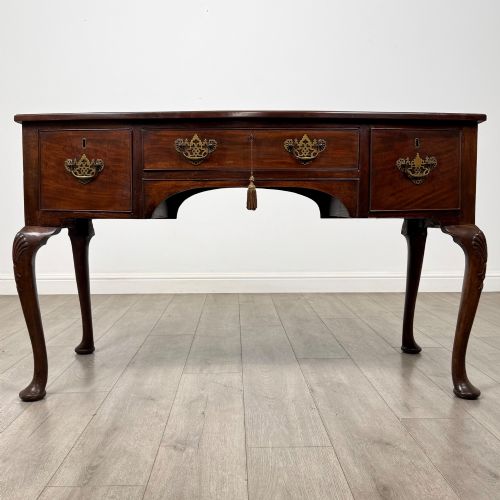
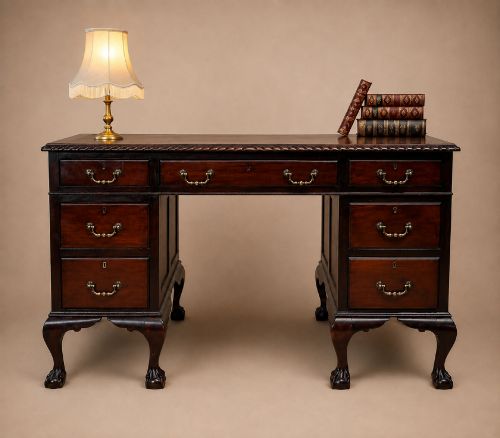
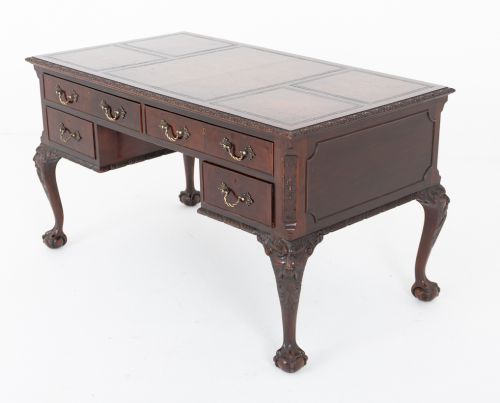
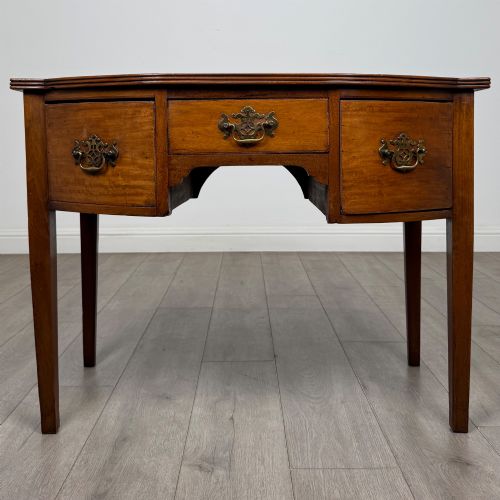
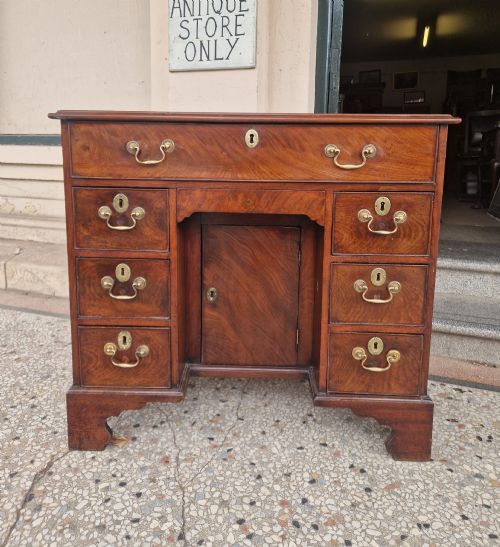
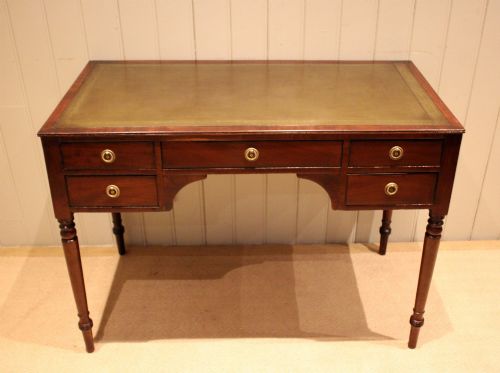
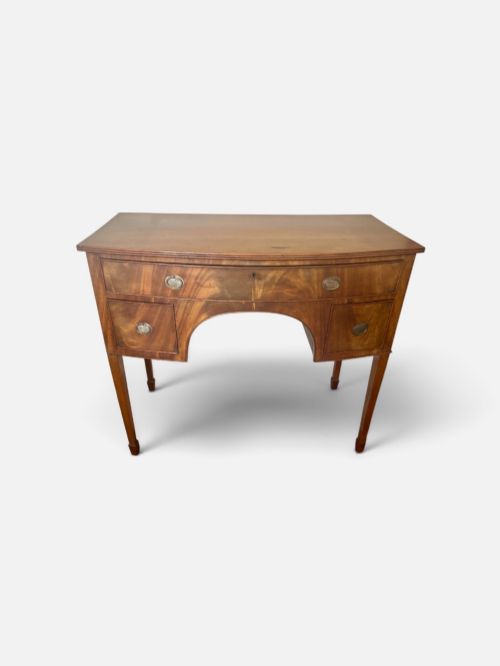
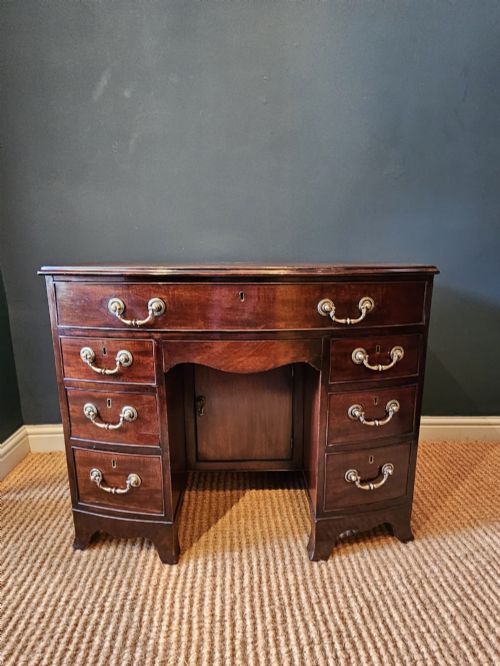
Georgian Mahogany Kneehole Desk
A georgian mahogany kneehole desk offers compact proportion and hidden drawers, combining practical writing space with enduring cabinet-making skill.
Georgian Mahogany Kneehole Desk
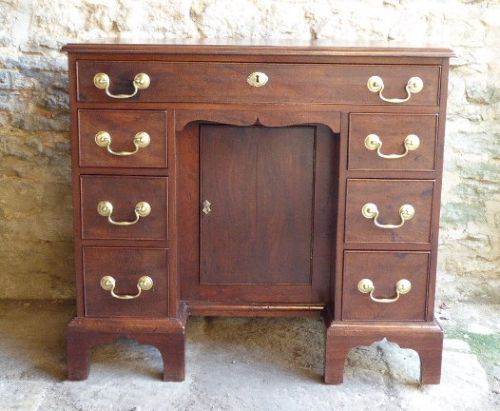
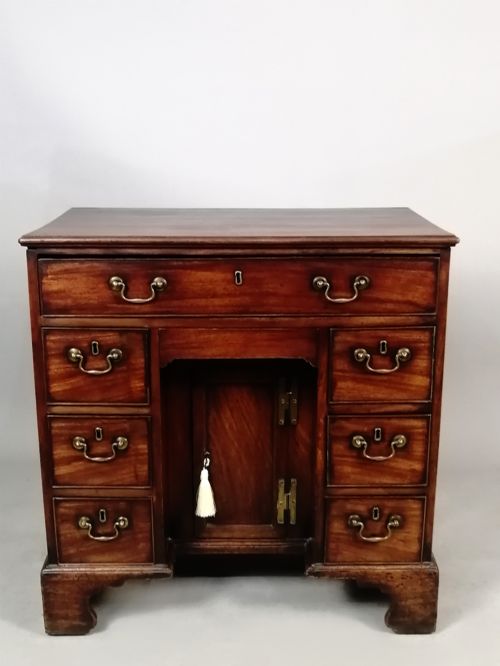
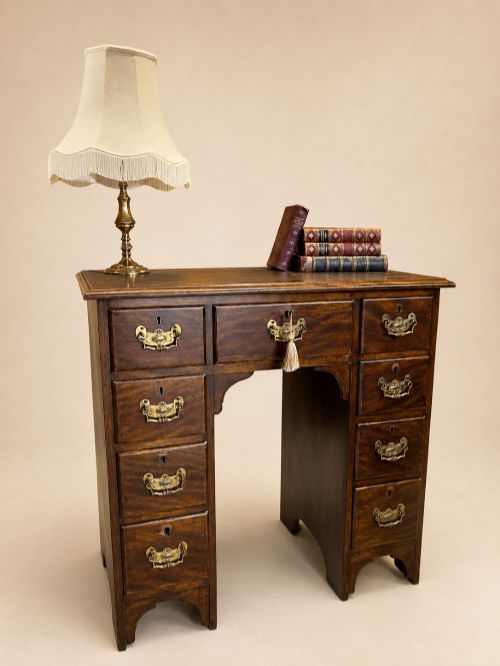
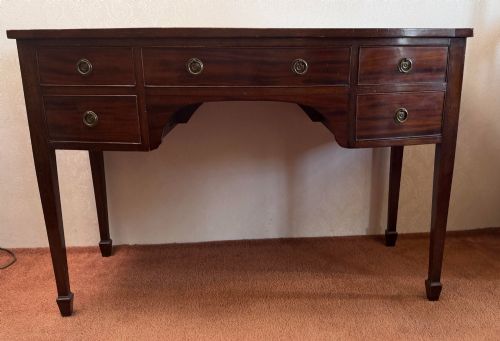
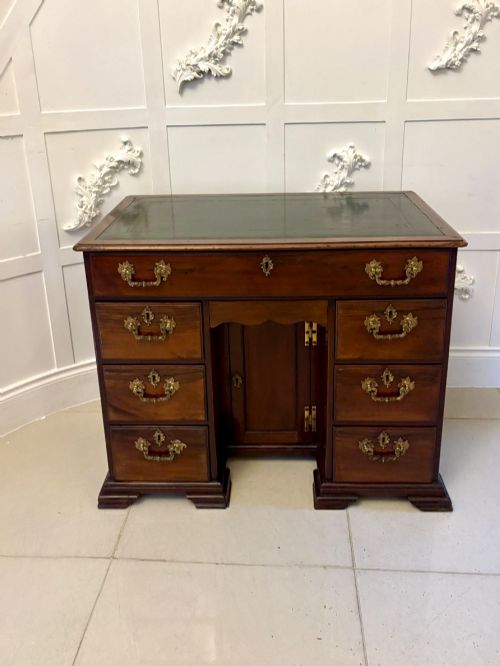
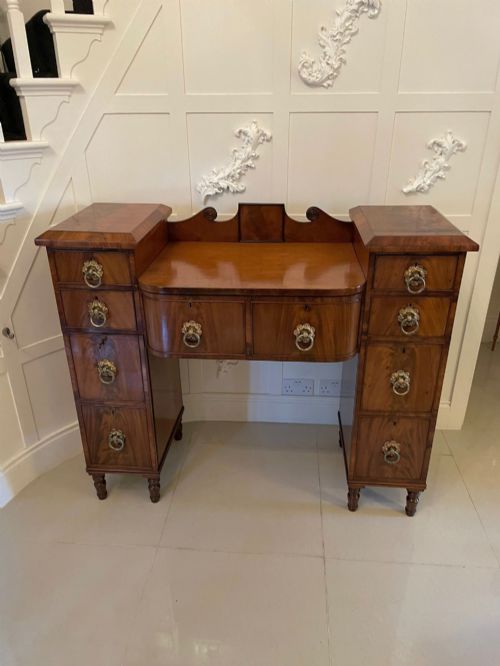
A georgian mahogany kneehole desk is a compact pedestal writing table designed with a central recessed cupboard flanked by banks of small drawers. The form appears primarily across 18th-century Georgian and George III periods, alongside later Victorian and Edwardian revivals.
Makers constructed these pieces as efficient writing stations or dressing tables for smaller private rooms, integrating pull-out slides above the kneehole opening. Surviving examples range from small provincial pieces to finer urban desks outfitted with brass hardware and leather inserts.
How They Were Made
Cabinet-makers relied upon solid mahogany and flame mahogany veneers applied over robust oak secondary framing. They strengthened drawer linings with dovetailed joints and incorporated boxwood stringing or marquetry inlay for decorative contrast.
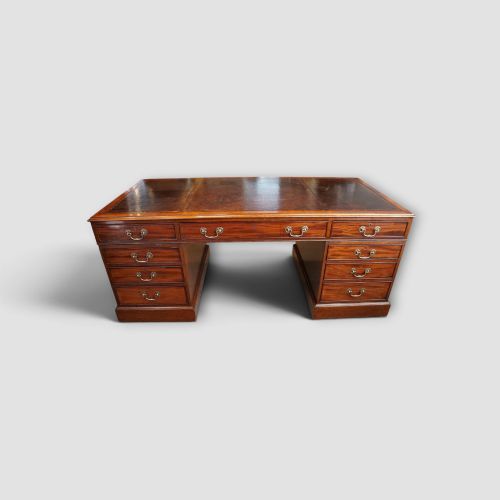
Hardware additions included cast brass drop handles and escutcheons secured to drawer fronts, while working surfaces frequently utilised inset leather panels surrounded by cross-banded borders.
Several kneehole desks conceal secret top drawers operated by hidden wooden latches known only to the original owner.
What Varies in Quality
Quality rests upon the selection of timber figures, where choice cuts of flame mahogany veneer display deep grain movement across the drawer fronts and top panels. Master workshops utilised dense Cuban mahogany, lending substantial weight and crisp edge definition to the mouldings.
Interior construction reveals the maker's hand through secondary timbers like oak used consistently for drawer sides, hand-cut dovetails, and tidy dustboards separating internal tiers. Lesser versions substitute softer woods and employ mechanical fastenings rather than traditional joinery.
The Georgian Mahogany Kneehole Desk Glossary
- Kneehole
- A recessed central space beneath a desk top, typically flanked by pedestals containing multiple small drawers.
- Flame mahogany
- A decorative veneer cut from timber where the branch junctions meet the main trunk, creating a distinctive flamy or plume-like grain pattern. Cabinet-makers reserved this figured wood for primary display surfaces.
- Writing slide
- A pull-out board located directly beneath the desk top that extends the usable writing surface without enlarging the main footprint. This feature slides back flush into the framing when not in use.
- Cross-banding
- A narrow border strip of veneer laid around the perimeter of a tabletop or drawer front with the grain running perpendicular to the central panel. This technique frames the primary wood figure.
- Pedestal
- A structural column containing a vertical stack of drawers that supports one side of the desk top.
Georgian Mahogany Kneehole Desk: Frequently Asked Questions
What is a kneehole desk?
A kneehole desk is a small pedestal writing table featuring a central recessed opening beneath the writing surface, flanked by stacked drawers on either side. This compact layout provides storage while allowing the user to sit close.
Most traditional examples date from the 18th century and incorporate a pull-out writing slide positioned above the central knee space.
How do I spot an 18th-century desk?
Eighteenth-century desks display hand-cut dovetails within the drawer construction and rely on solid oak secondary timbers behind the mahogany facades. The proportions tend to be smaller and more refined than later revival pieces.
Examine the backboards and drawer interiors for tool marks, uniform wood shrinkage, and period brass hardware attached with handmade screws.
Were these desks used for writing?
These desks served primarily for private correspondence, record keeping, and estate management within domestic chambers. The numerous small drawers accommodated writing instruments, wax seals, and personal papers.
Many examples doubled as dressing tables, incorporating internal compartments and mirrors suited for morning grooming routines.
How do I care for mahogany surfaces?
Maintain mahogany furniture by dusting with a dry cloth and applying natural beeswax sparingly to nourish the timber grain. Avoid placing antique pieces near direct heat sources or strong sunlight to prevent veneer cracking.
Treat leather writing surfaces with specialised conditioning balms to keep the hide supple and prevent splitting along the borders.