

Georgian Mahogany Hanging Cupboard
A georgian mahogany hanging cupboard provides a practical wall-mounted storage solution that utilises idle corner space.
Georgian Mahogany Hanging Cupboard
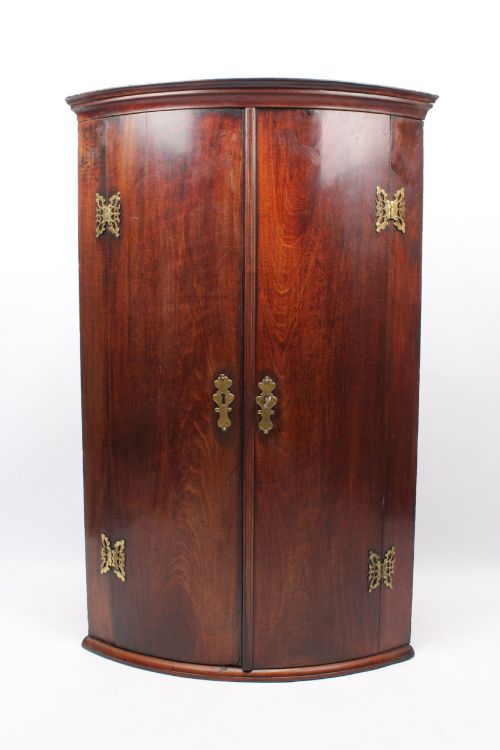
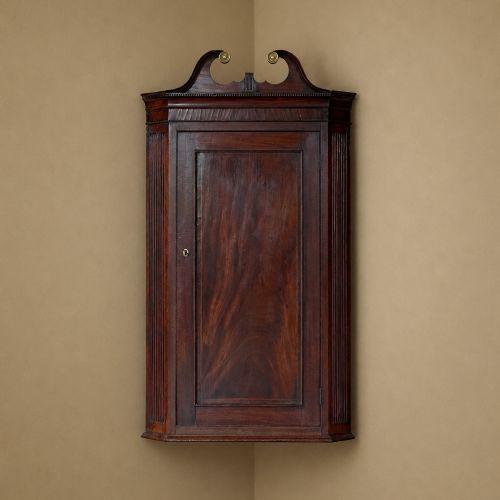
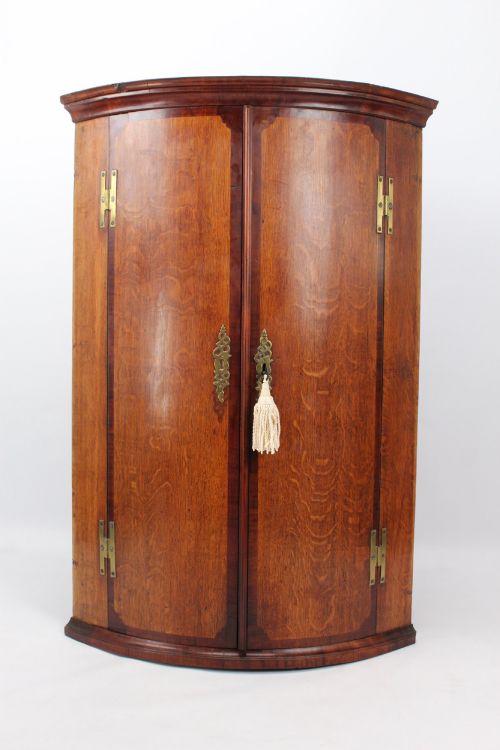
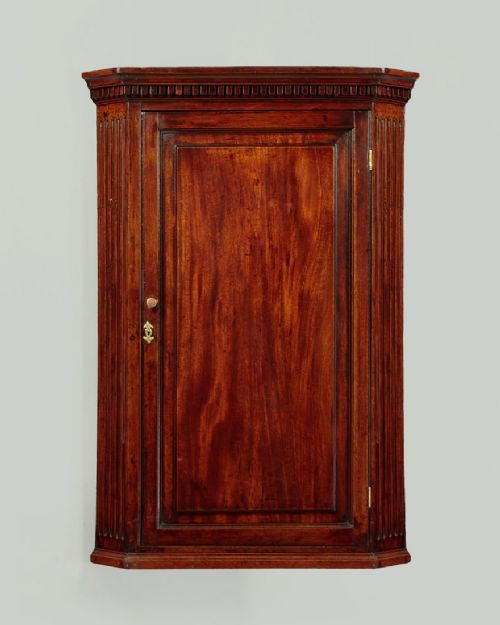
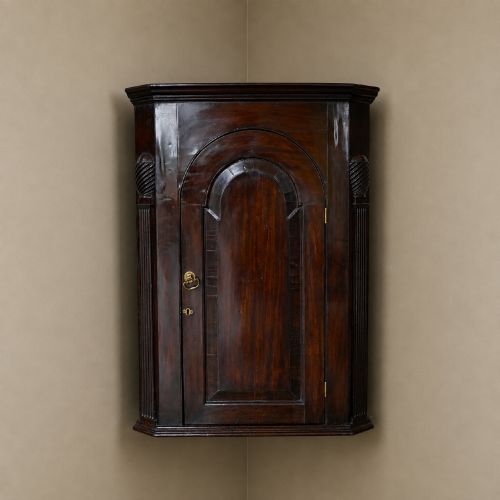
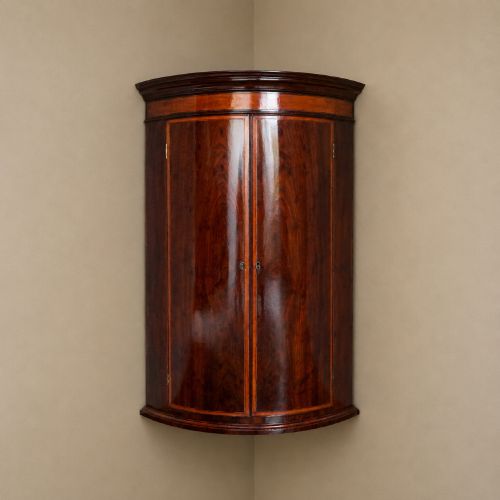
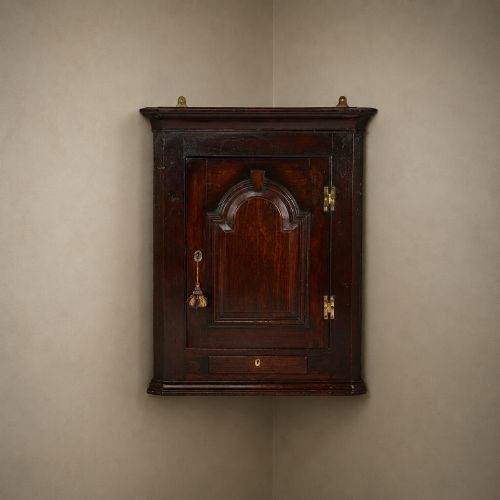
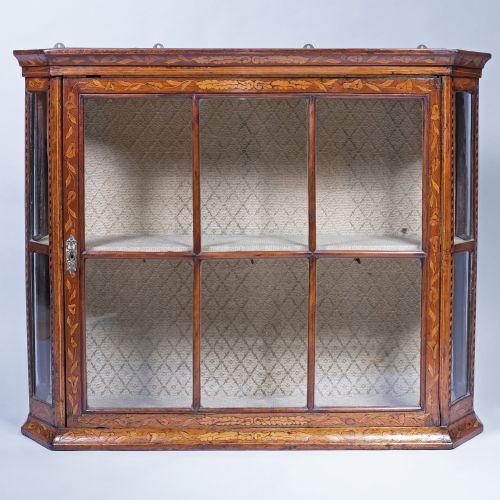
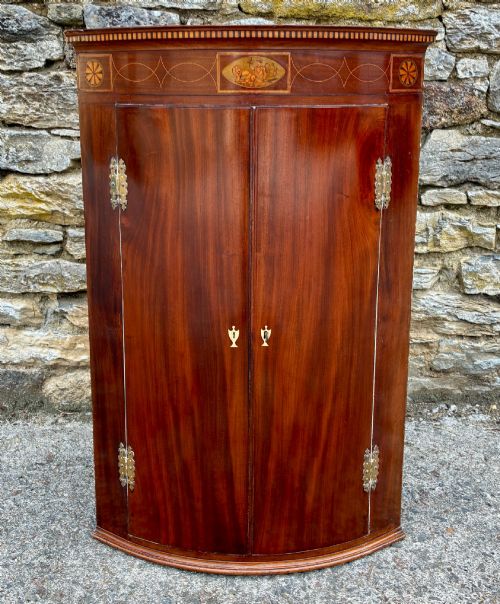
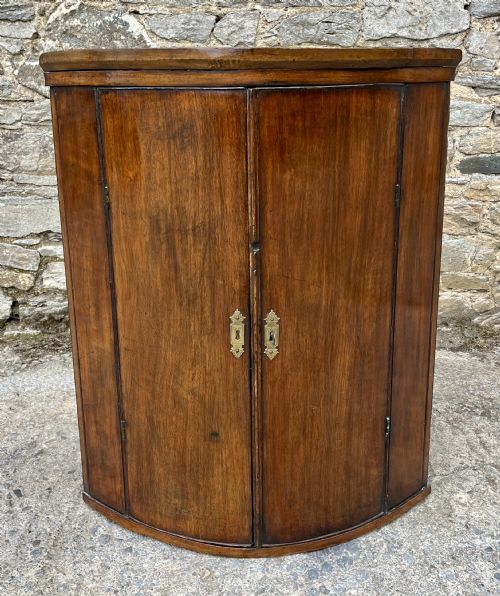
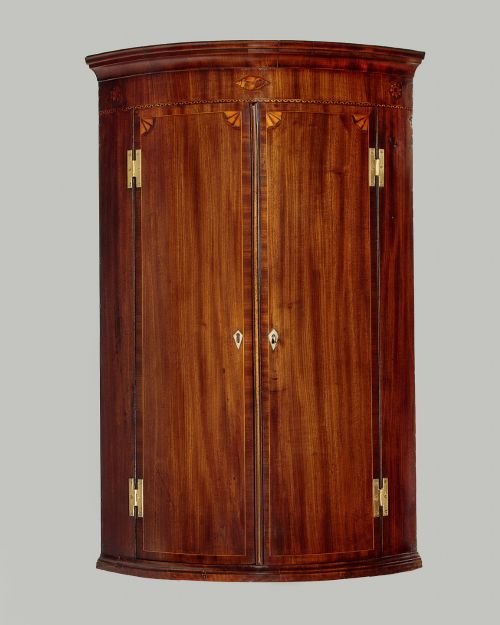
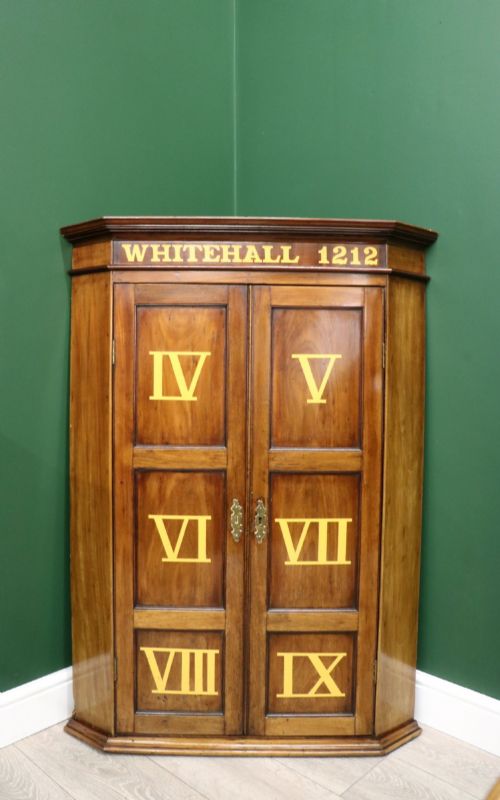
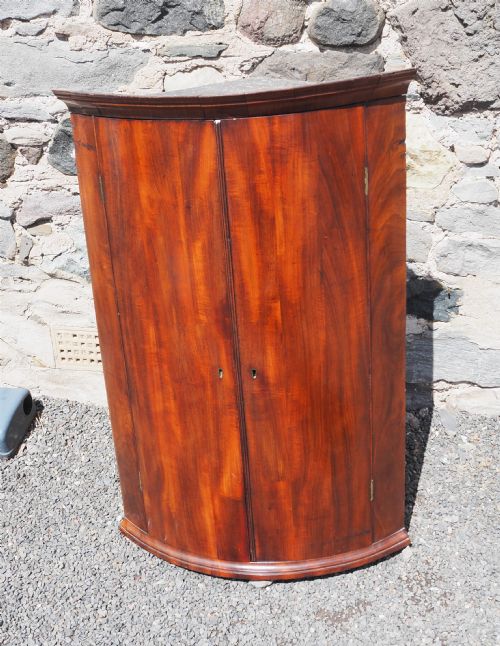
A georgian mahogany hanging cupboard is a wall-mounted storage piece designed to fit neatly into domestic corners, saving floor space while keeping contents secure behind a timber door. The selection on this page centres heavily on corner formats, ranging from straightforward flat-fronted boxes to curved bow-front and barrel-front variants.
Most examples originate in the Georgian and 18th century periods, though later Edwardian interpretations and mid-century revivals also appear. Alongside dedicated cupboards, the evidence records related hanging forms such as wall cabinets, wardrobes, and sets of shelves.
How they were made
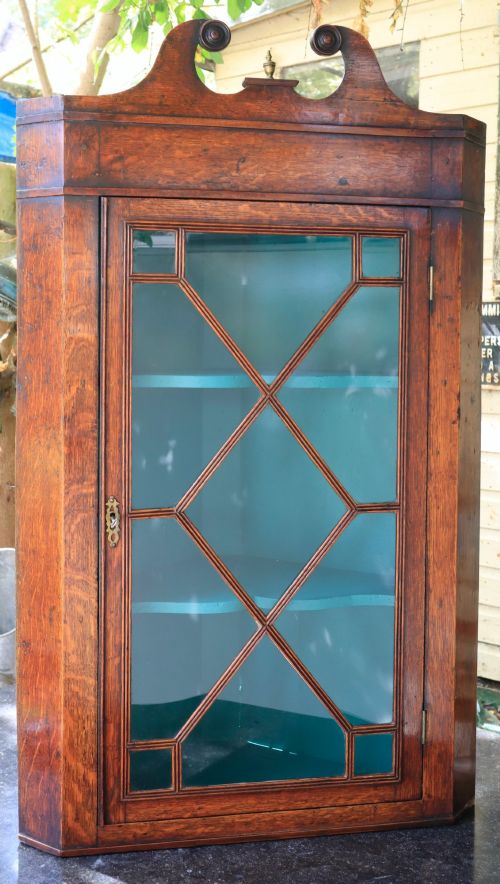
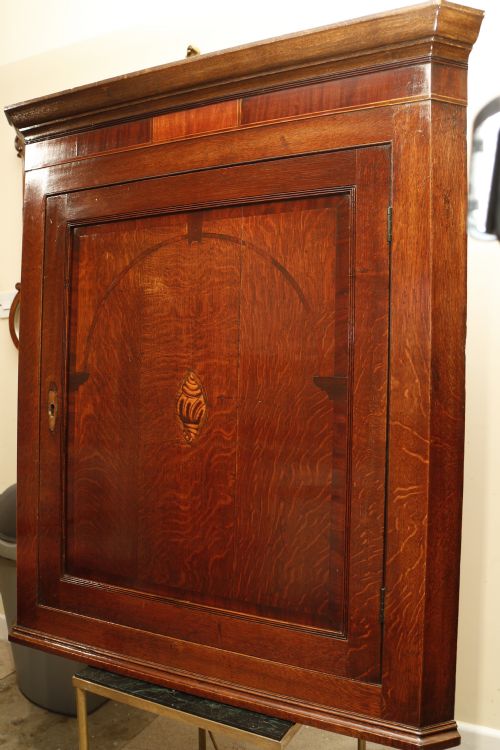
Cabinet makers constructed these cupboards primarily using solid mahogany and oak, often incorporating secondary timbers like satinwood and boxwood for decorative contrast. Surfaces frequently display sophisticated techniques including marquetry inlay, crossbanding, and figured veneer selections like plum pudding and flame mahogany.
Hardware played a functional and decorative role, with brass hinges and escutcheons securing doors that occasionally included internal drawers, glass panels, or locking mechanisms with keys.
Several cupboards are specifically noted as holding drinks, proving that clever indoor refreshment storage is centuries old.
What varies in quality
The distinction between standard and superior pieces rests on the choice of timber and the ambition of the joinery. Highly figured grain patterns, such as plum pudding or flame mahogany, elevate a cupboard alongside intricate crossbanding and delicate inlay work.
Structural details also differentiate the range, with architectural flourishes like broken arch pediments marking out finer workshops from simpler utility pieces designed for more modest domestic settings.
The Georgian Mahogany Hanging Cupboard Glossary
- Bow front
- A convex, curved cabinet front that projects outward from the corners. This rounded profile requires precise joinery to shape the doors and frame.
- Crossbanding
- A strip of veneer applied to the borders of a panel with the grain running perpendicular to the centre. This decorative framing technique highlights the edges of doors and drawers.
- Pediment
- The triangular or curved architectural crown mounted above the top cornice of a cabinet. Elaborate versions include broken arch designs.
- Escutcheon
- A protective brass plate surrounding a keyhole. It prevents the surrounding wood from wearing down with repeated use.
Georgian Mahogany Hanging Cupboard: Frequently Asked Questions
Where were hanging cupboards placed?
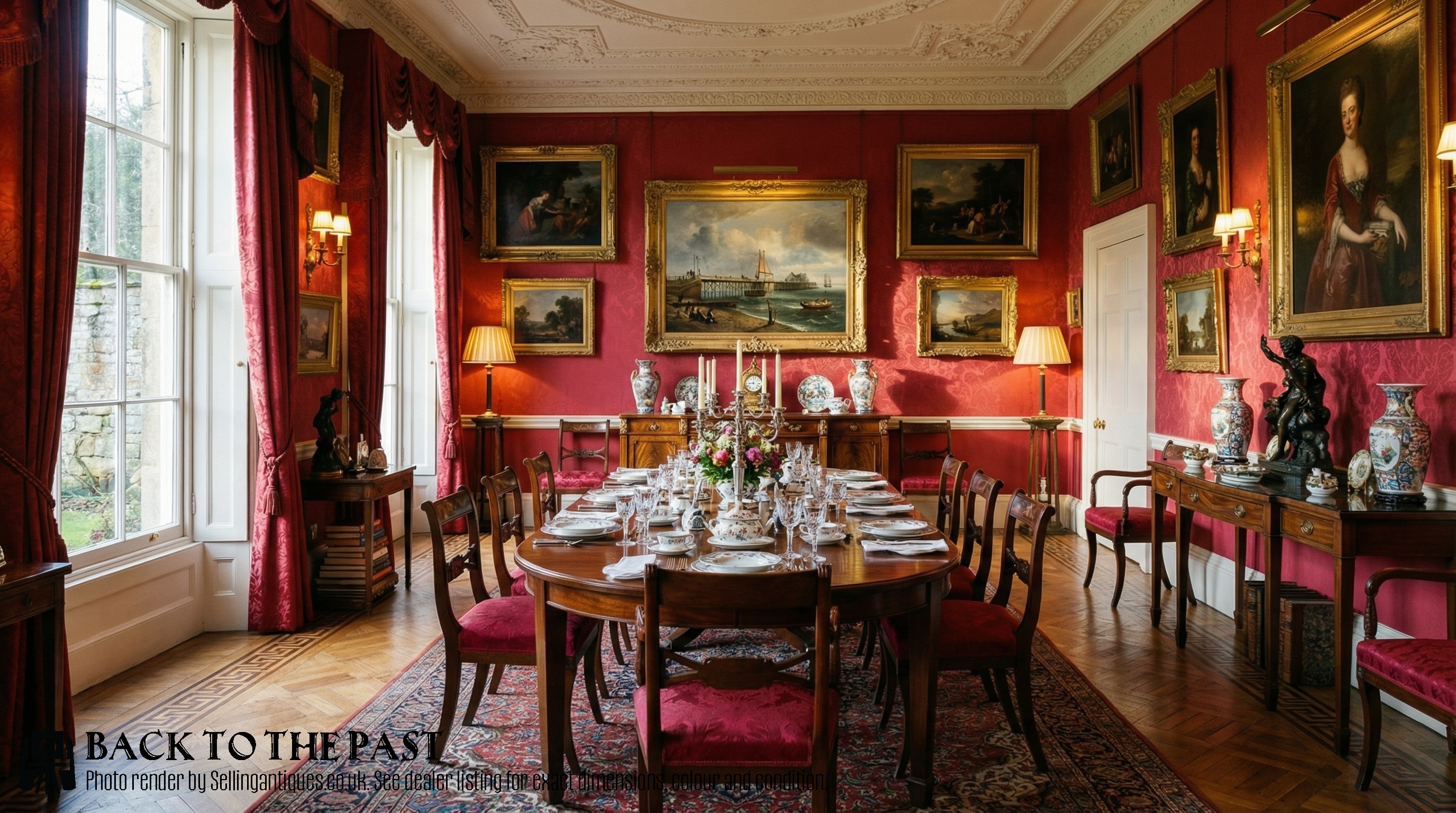
These pieces were typically hung in dining rooms, parlours, or bedrooms to hold glassware, china, or small valuables off the floor.
Because they utilised corner space, they kept rooms open while providing accessible closed storage at eye level.
How do I secure a wall cabinet?
Due to the weight of solid mahogany and internal timber shelving, these cupboards require sturdy fixings anchored directly into wall studs or masonry.
Many period pieces feature original internal hanging brackets or reinforced backboards designed for secure wall mounting.
What is a barrel front?
A barrel front describes a strongly curved, rounded cabinet shape that forms a half-cylinder profile within a corner.
This distinct geometry required skilled carpentry to bend and fit the timber doors flush against the frame.
Did these cupboards have locks?
Many surviving examples retain working brass locks and keys to protect stored contents such as bottles and glassware.
Cabinets utilised for drinks or valuables frequently incorporated locking doors and small internal drawers.