

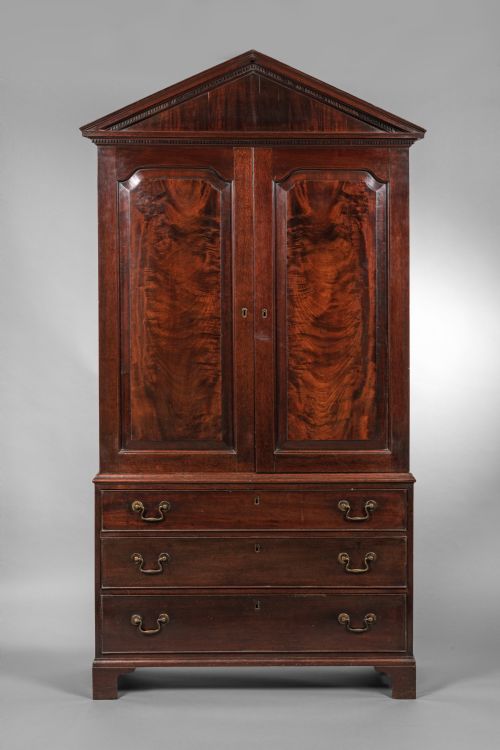
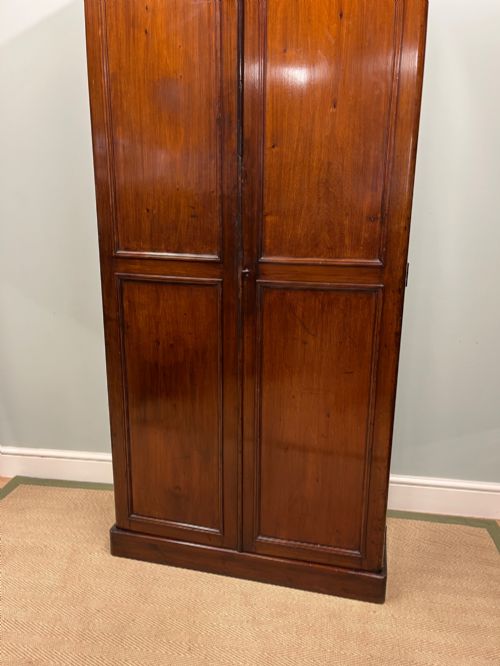


Panelled Mahogany Wardrobe
A panelled mahogany wardrobe brings solid Georgian and Victorian presence to a bedroom, offering deep storage within timber built to last.
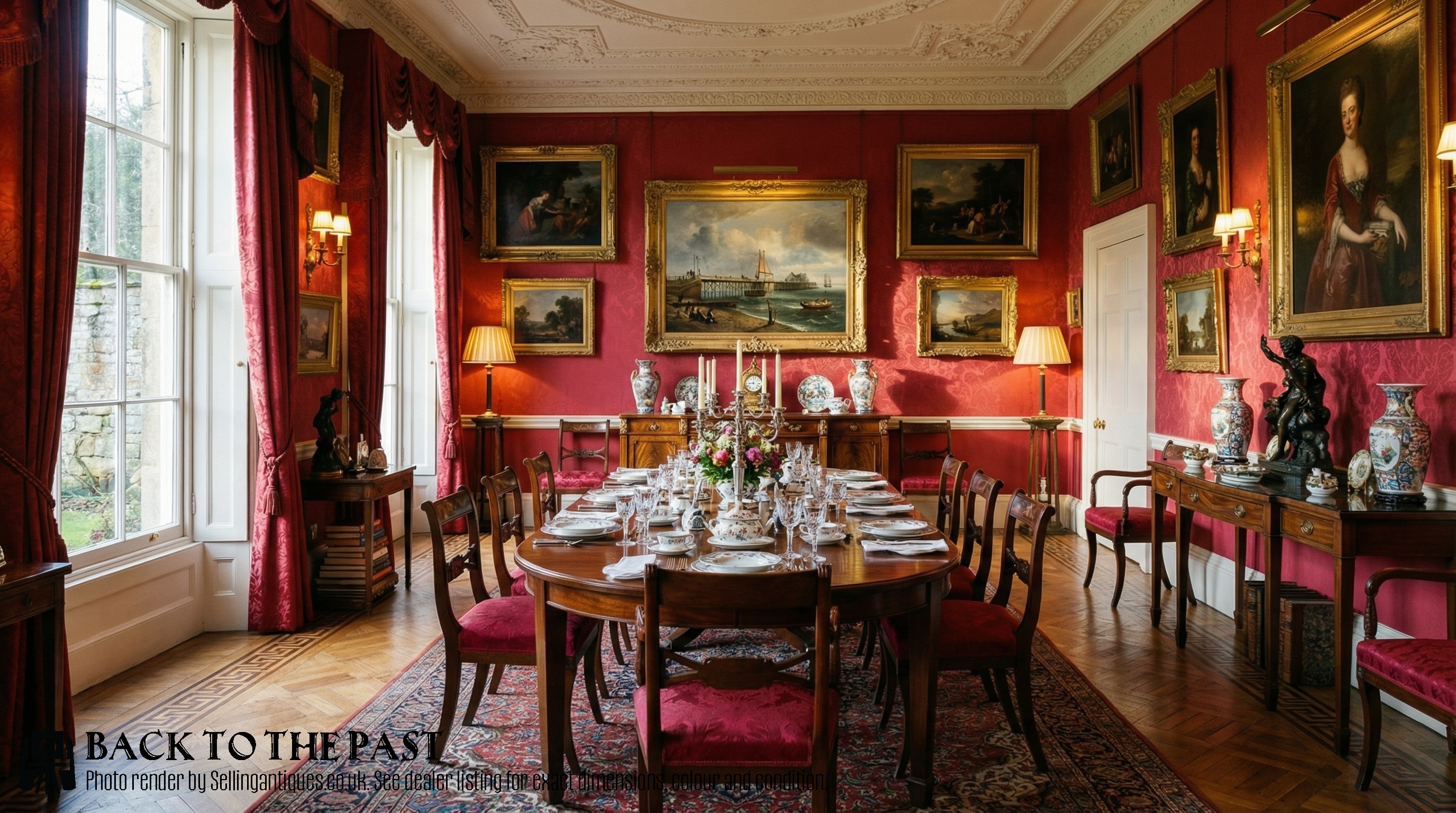
Panelled Mahogany Wardrobe
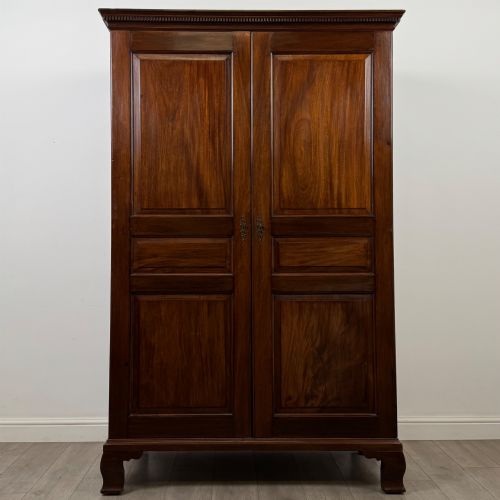
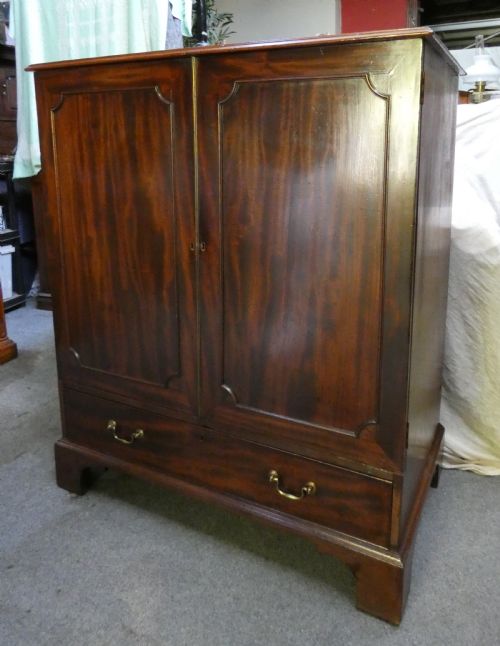
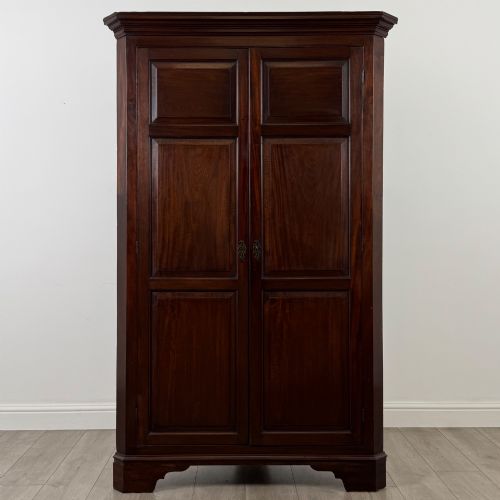
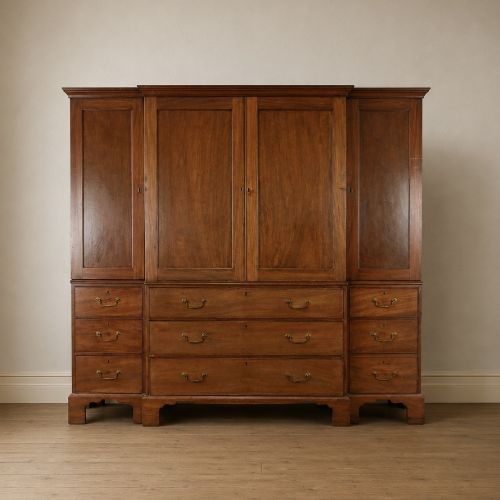
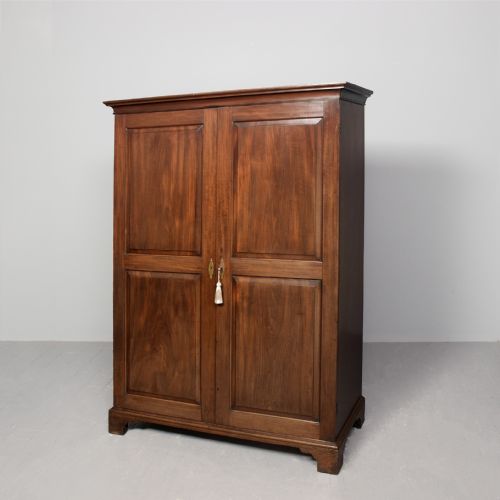
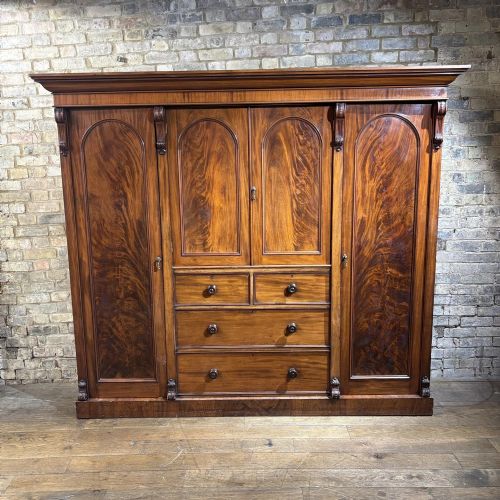
A panelled mahogany wardrobe provides substantial storage through tall cupboards, presses, and armoires built across the Georgian, Victorian, and Edwardian periods. These pieces range from substantial breakfront designs to neat, two-door bedroom cupboards and linen presses.
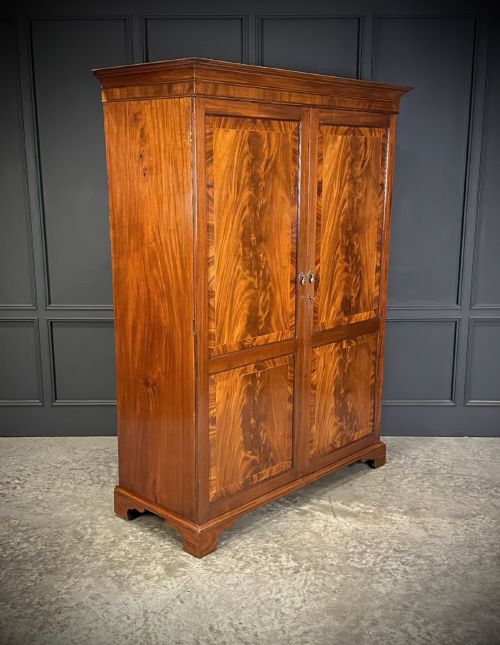
The most common examples on this page date from the eighteenth and nineteenth centuries, often showing classic Georgian proportions or later Victorian scale. Makers utilised solid mahogany alongside flame veneer and secondary timbers like pine and oak.
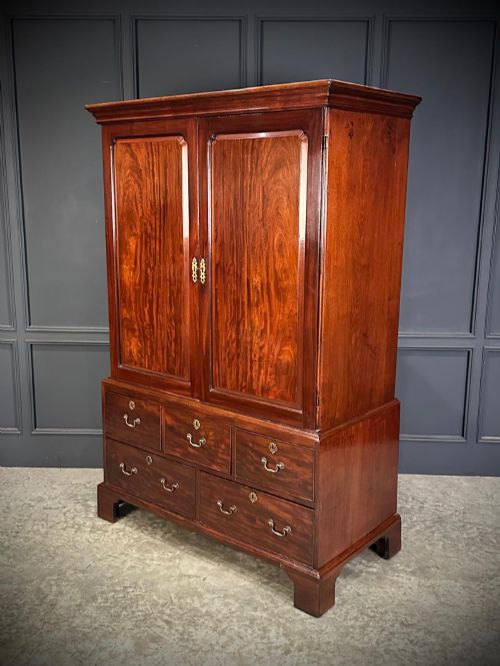
Alongside traditional hanging wardrobes, the selection includes related forms such as gentleman's cabinets, linen presses with sliding trays, and corner cabinets. Each variant shares the characteristic warm tones of mahogany panels and brass hardware.
Materials and construction methods
Makers constructed these cabinets using solid mahogany and flame mahogany veneer, often supported by secondary woods such as pine, oak, and occasionally satinwood or rosewood for crossbanding and inlay. Brass fittings, including key escutcheons and handles, provide functional contrast to the dark timber.
Cabinetmakers framed the doors and sides with raised or recessed panels, allowing the timber to expand and contract naturally with seasonal humidity changes. Breakfront facades and swan-neck pediments added architectural structure to larger George III and Victorian commissions.
Several Channel Islands wardrobes include subtle local design traits hidden within standard Georgian frameworks.
Assessing quality and craftsmanship
Quality rests primarily in the selection of the timber, where highly figured flame mahogany veneer or rich, dense solid mahogany elevates a piece above standard utility furniture. The crispness of carved details, such as swan-neck pediments and subtle crossbanding in satinwood or rosewood, indicates superior workshop execution.
Structural integrity and original internal configuration distinguish the finest examples, particularly where sliding linen trays, original brass hanging hooks, and working locks survive intact. The precision of the panel joinery and the harmonious grain matching across multiple doors reveal the skill invested by the cabinetmaker.
Gillows·Whytock and Reid
The Panelled Mahogany Wardrobe Glossary
- Flame mahogany
- A timber veneer displaying a distinct, fiery wave pattern created by slicing through boughs or fork joints in the mahogany tree. This figured grain was frequently utilised on the primary doors of high-status wardrobes.
- Linen press
- A tall piece of case furniture featuring upper cabinet doors enclosing sliding trays for folded textiles, placed above a chest of drawers base. Many served as precursors to modern hanging wardrobes.
- Breakfront
- A cabinet facade where the central section projects forward from the flanking wings. This architectural arrangement creates depth and visual balance on large Georgian and Victorian wardrobes.
- Crossbanding
- A narrow strip of veneer laid around the border of a panel so that its grain runs at right angles to the central wood. Cabinetmakers used rosewood and satinwood for this decorative framing effect.
- Swan-neck pediment
- A broken arch top terminating in outward-curving scrolls, often centred on an urn or finial. This classical feature crowns impressive eighteenth-century breakfront presses and wardrobes.
Panelled Mahogany Wardrobe: Frequently Asked Questions
How do I date a panelled mahogany wardrobe?
Dating relies on stylistic clues and construction methods, such as the architectural cornices and bracket feet typical of eighteenth-century Georgian pieces versus the heavier proportions and plinth bases of Victorian examples.
Secondary timbers inside drawers, such as oak for earlier pieces and pine for later ones, also help confirm the period of manufacture.
What is the difference between a linen press and a wardrobe?
A linen press traditionally contains internal sliding trays or shelves behind its upper doors for storing folded linens, often sitting above a chest of drawers.
A wardrobe is designed primarily for hanging garments vertically on rails or hooks, though many period pieces bridge both functions.
Will a antique mahogany wardrobe fit in a modern bedroom?
Period wardrobes were often built in large proportions to suit high-ceilinged historic rooms, so measuring ceiling clearance and doorway widths is essential before purchase.
Many larger examples, particularly breakfronts and linen presses, are modular or dismantle into sections to simplify transport and installation.
How should I care for mahogany panels?
Mahogany benefits from stable room temperatures and protection from direct sunlight, which can fade the rich red-brown tone of the timber.
Applying a traditional beeswax polish occasionally helps nourish the wood and maintain a soft, natural lustre on the panelled surfaces.