
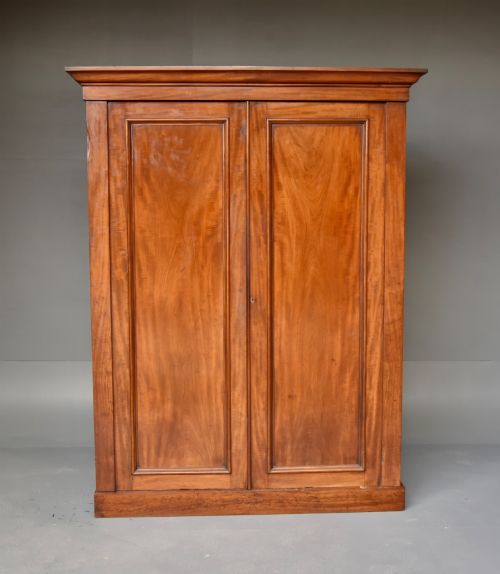
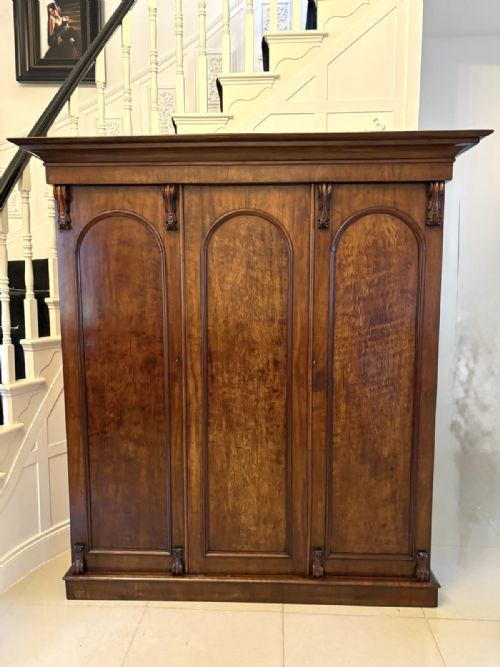
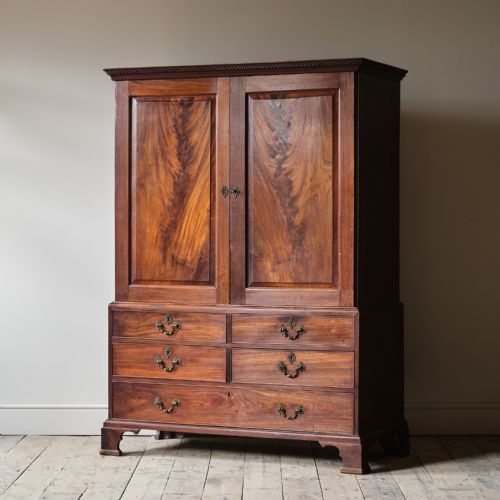
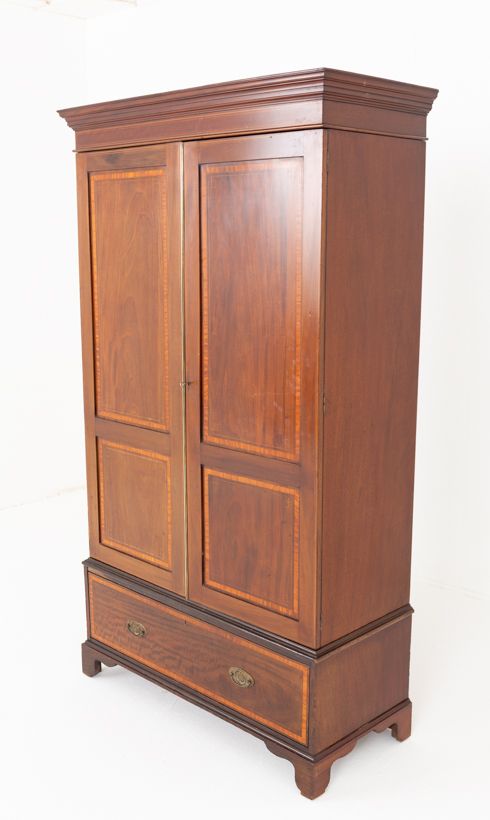


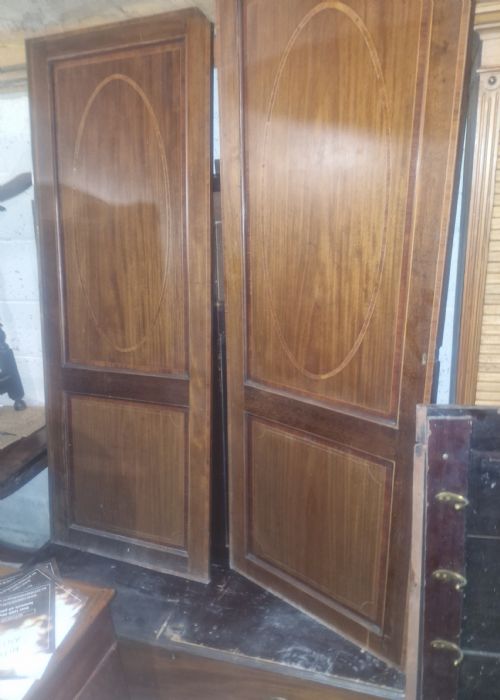
Brown Wood Clothes Press
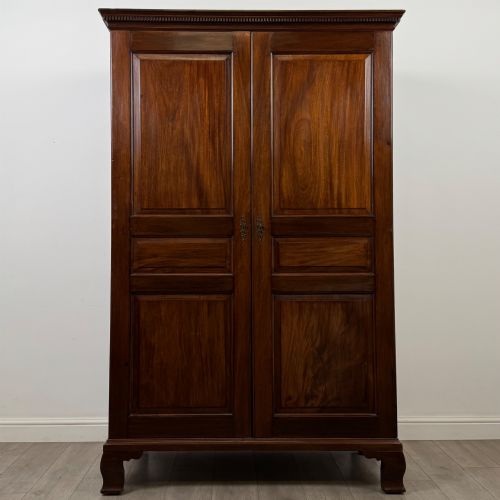
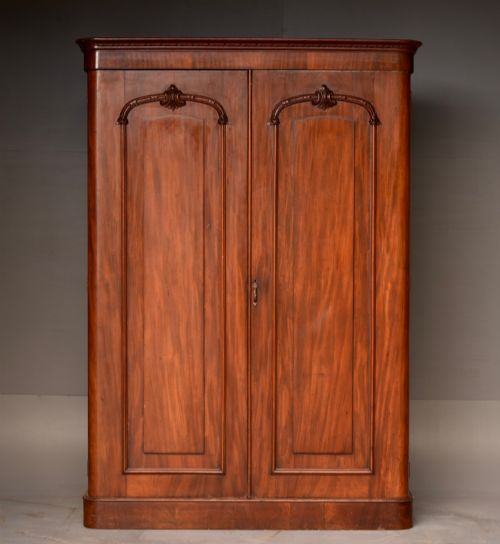
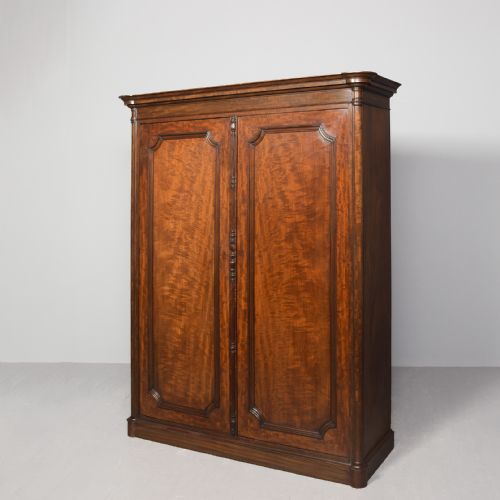
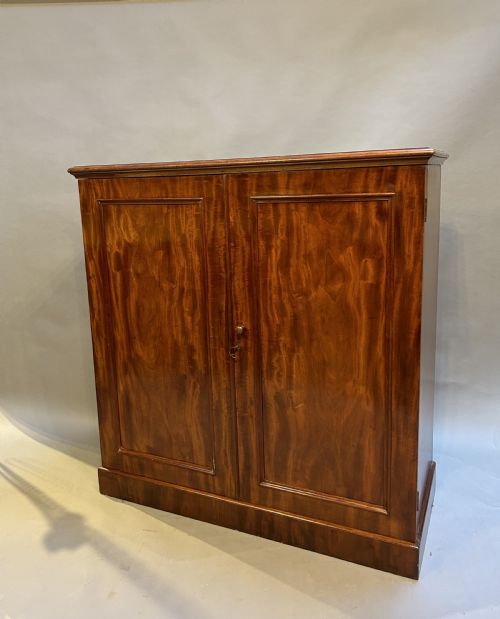
A brown wood clothes press brings substantial storage and deep timber figure to a bedroom, uniting Georgian proportion with Victorian scale.
Brown Wood Clothes Press
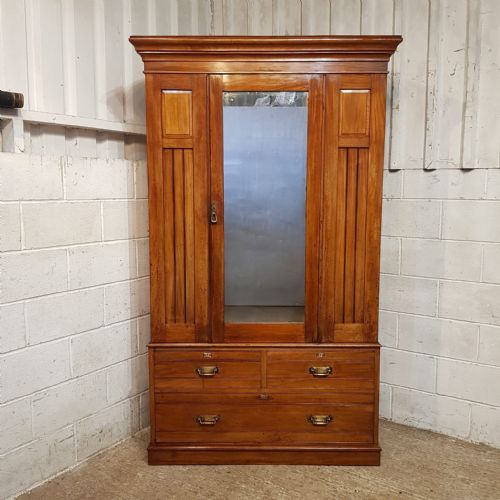
When you search for a brown wood clothes press, you encounter large bedroom pieces designed for storing garments and linens across the Georgian, Victorian, and Edwardian periods. The selection on this page centres primarily on mahogany, walnut, and oak wardrobes, linen presses, and compactum cabinets originating from the eighteenth and nineteenth centuries.
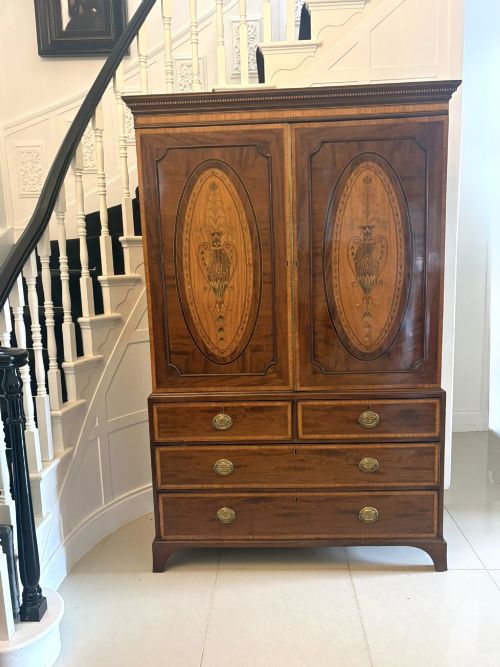
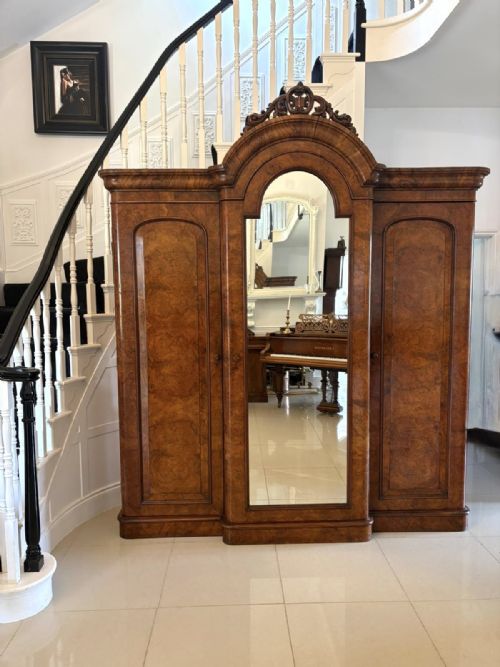
The most common forms you meet here combine upper hanging space or sliding linen trays with lower drawer sections, often standing as double or triple door wardrobes. These pieces reflect diverse stylistic revivals, ranging from Sheraton inlay and Chippendale carving to heavy Victorian breakfront proportions and Edwardian simplicity.
Materials and Construction
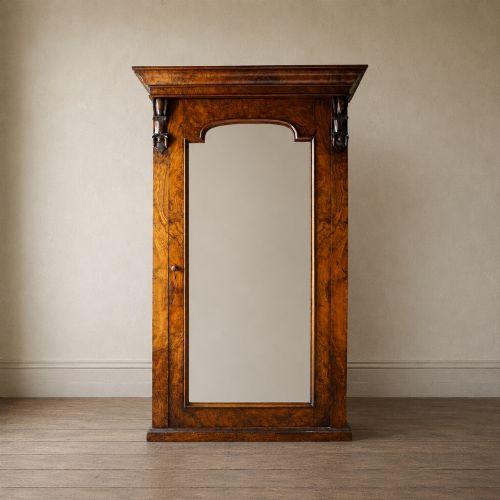
Cabinet makers utilised solid timbers alongside carefully sliced veneers, choosing figured mahogany, burr walnut, and flame mahogany to create striking grain patterns across large door panels. Secondary woods like oak and pine formed the internal carcases, drawer linings, and sliding trays necessary for domestic utility.
Joinery techniques relied on dovetailed drawer construction, framed panel doors, and brass hardware for hinges and locks. Inlaid details incorporated contrasting timbers such as satinwood, whilst glass mirrors and carved pediments appeared on later nineteenth-century examples.
Markers of Quality
Quality rests in the selection of the timber and the harmony of the proportions, where matched flame mahogany or burr walnut figure elevates a standard carcase into a piece of fine cabinet work. Maker attribution also sets certain examples apart, particularly stamped pieces or firm-labelled wardrobes that demonstrate superior internal fittings and refined carcase joinery.
The integrity of the internal fittings, such as original sliding linen trays, brass hanging rails, and functioning locks, distinguishes better-preserved examples. Attention to detail in the secondary woods and the precision of the satinwood stringing or marquetry further define the higher tier of these pieces.
S and H Jewell·Heals·Edwards and Roberts·Howard and Sons
The Brown Wood Clothes Press Glossary
- Linen press
- A tall cupboard featuring upper sliding shelves or trays originally intended for folded linen, above a chest base with drawers.
- Compactum
- A fitted wardrobe divided internally into multiple sections for hanging clothes, drawers, and shoe storage.
- Breakfront
- A cabinet design where the central section projects forward from the flanking wings.
- Satinwood
- A pale, lustrous exotic timber utilised for contrasting stringing and geometric inlay work.
- Pediment
- The decorative architectural crowning element situated at the very top of a tall wardrobe or press.
Brown Wood Clothes Press: Frequently Asked Questions
How do I clean a mahogany wardrobe?
Dust the timber regularly with a soft, dry cloth to prevent particulate build-up on the polished surface.
Apply a traditional beeswax sparingly once or twice a year to nourish the mahogany and maintain its deep lustre.
Can these wardrobes be dismantled for moving?
Many larger Victorian and Georgian wardrobes and presses were constructed to dismantle into sections for transport.
Check the internal corners and pelmets for concealing screws or peg joints before attempting to move the carcase.
How do I identify a Georgian piece?
Georgian pieces often display restrained classical proportions, bracket feet, and hand-cut dovetailing in the drawer linings.
They frequently utilise solid mahogany or finely figured veneers without the heavy breakfront mouldings common later in the Victorian era.