
Mahogany Clothes Wardrobe
A mahogany clothes wardrobe offers generous proportions and rich timber grain, serving as a practical storage piece for any bedroom.
Mahogany Clothes Wardrobe
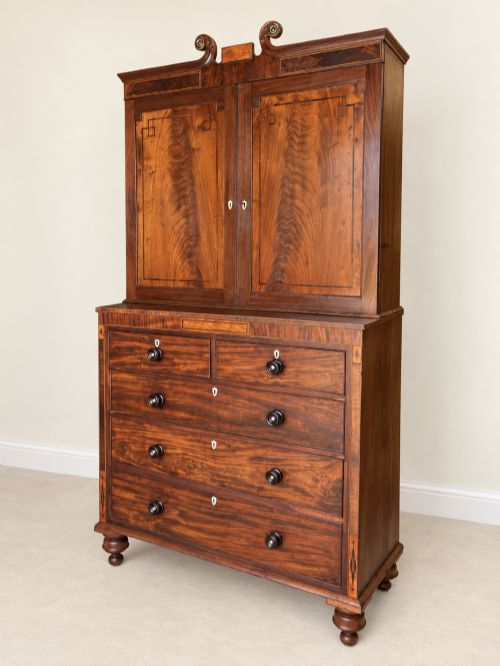
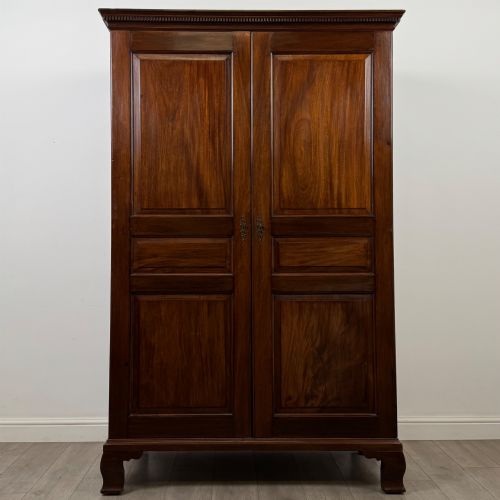
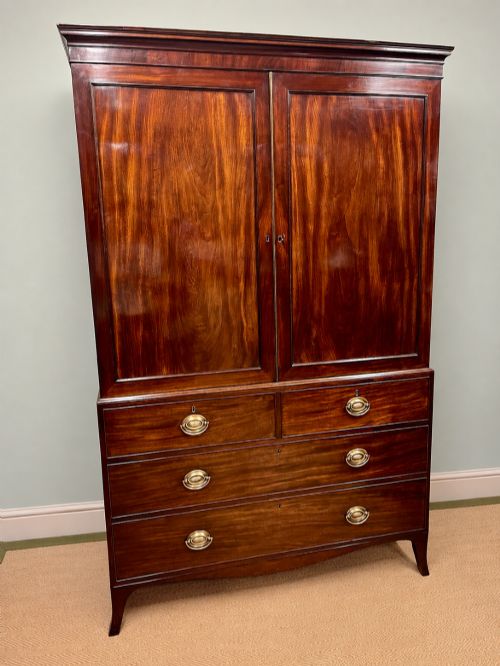
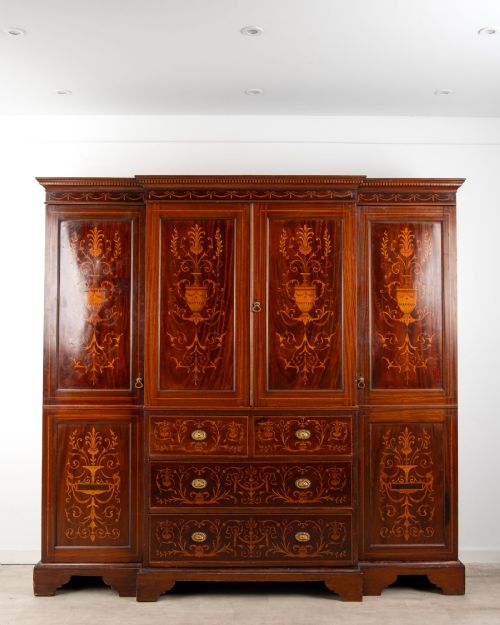
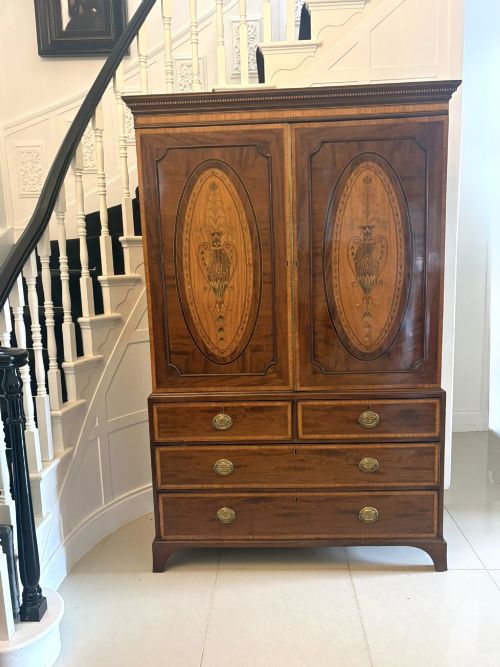
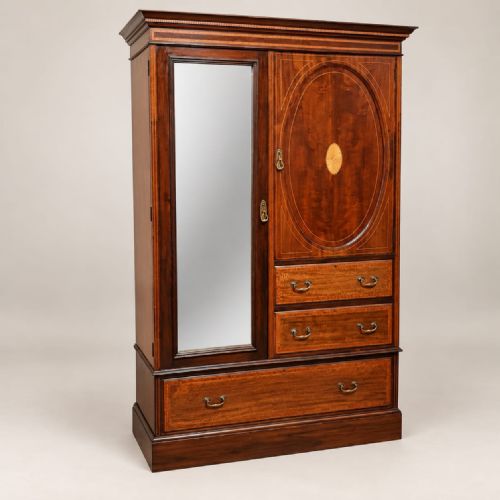
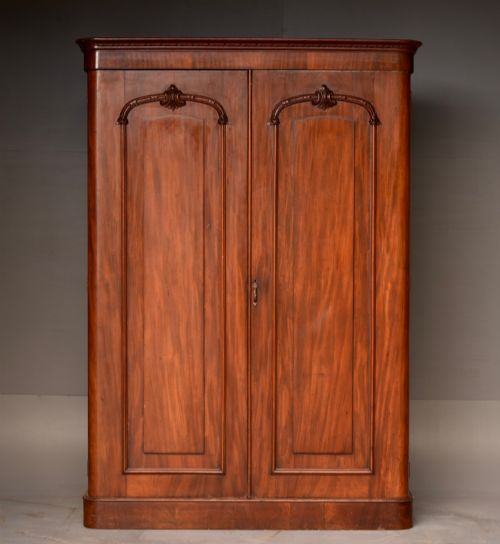
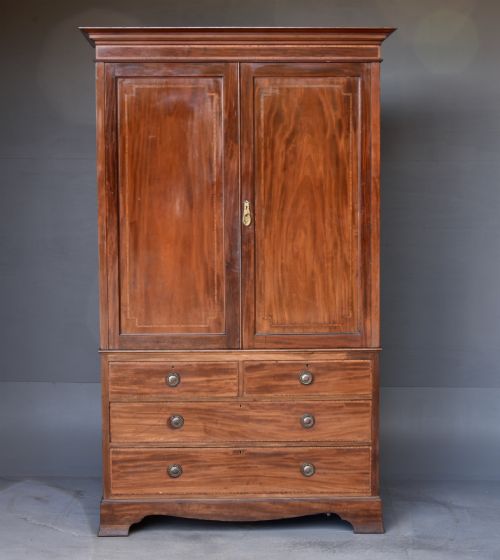
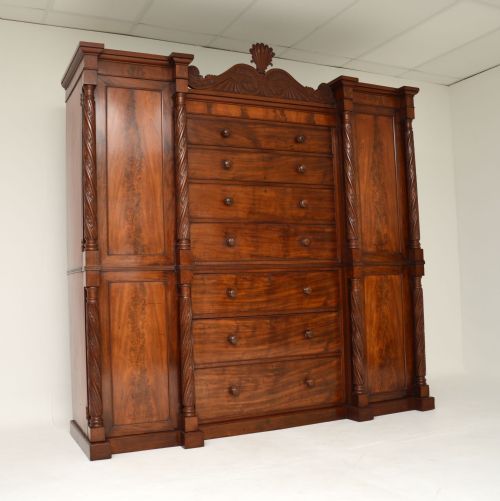
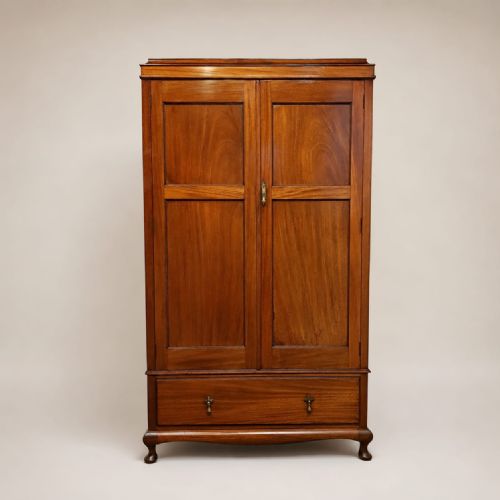
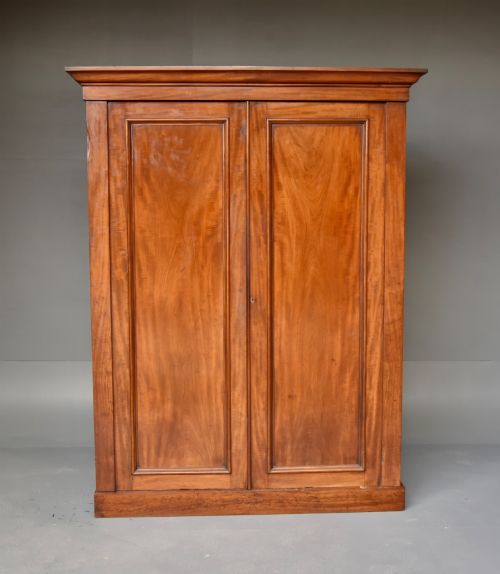
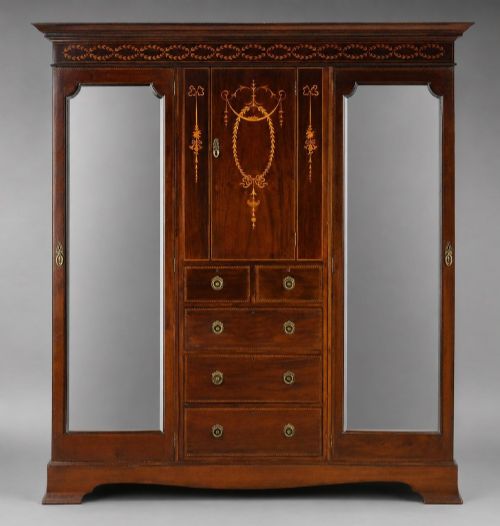
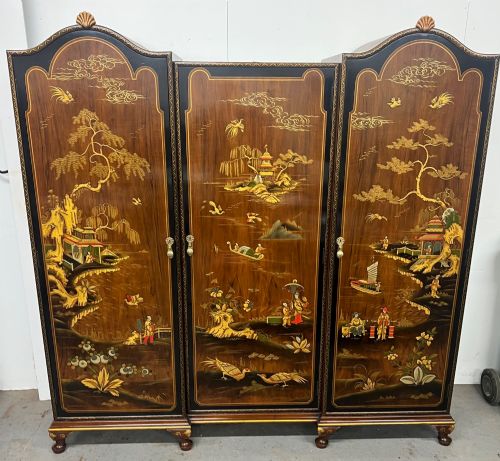
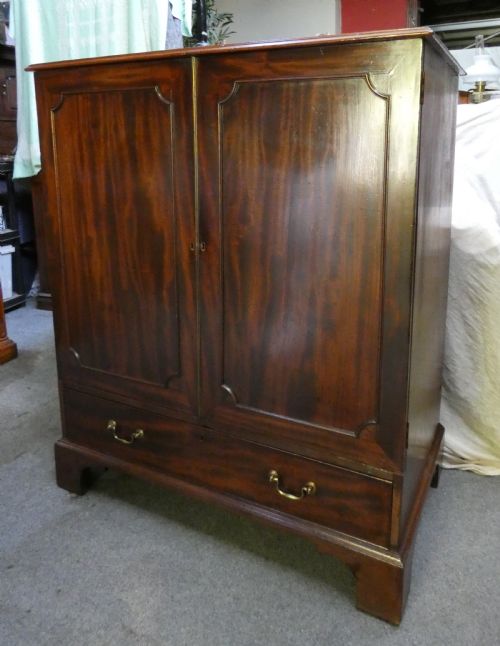
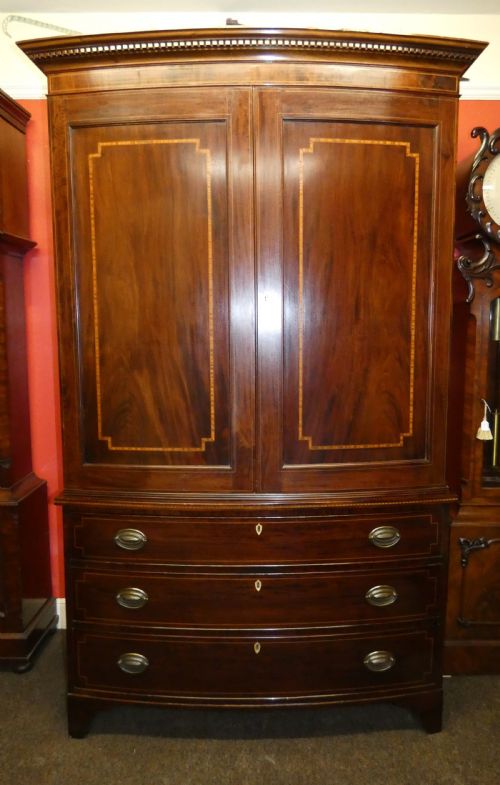
A mahogany clothes wardrobe encompasses large storage furniture designed for garments, frequently encountered in forms such as double and triple wardrobes, compactums, and linen presses. These pieces span centuries of cabinet making, appearing in Georgian, Victorian, and Edwardian iterations on this page.
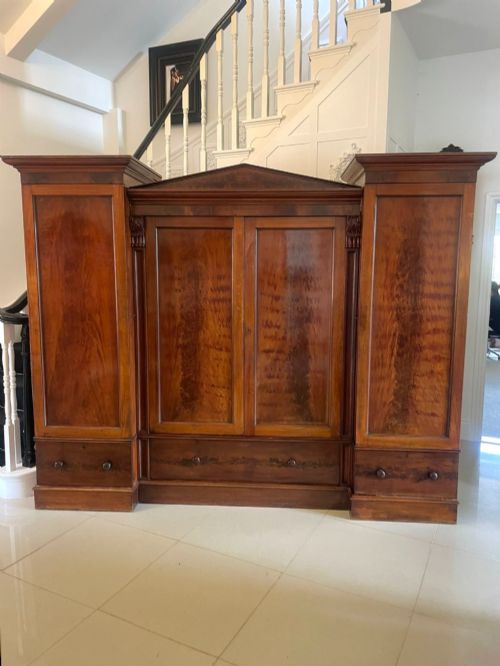
The selection ranges from early Georgian press cupboards with internal sliding trays to late Victorian and Edwardian combination wardrobes providing hanging space and drawers. Buyers will find both simple two-door bedroom pieces and expansive breakfront or four-door architectural wardrobes.
Originating from periods when fitted bedroom closets were uncommon, these freestanding timber items served as the primary storage solution for households. Their internal configurations evolved from linen shelving to dedicated clothes hanging sections.
How They Were Made
Cabinet makers utilised solid mahogany alongside flame mahogany veneer to create deep, figured surfaces on the primary facades. Secondary woods such as oak appeared internally for drawer linings and structural framing.
Decorative elements relied on contrasting satinwood inlay, brass hardware, and intricate carvings including blind fretwork cornices. Surface ornamentation depended on the prevailing style, from Georgian marquetry to Edwardian revival motifs.
Listings feature mahogany clothes wardrobes spanning the eighteenth, nineteenth, and early twentieth centuries, incorporating Georgian, Victorian, and Edwardian styles.
What Varies in Quality
The choice of timber grain dictates much of the visual appeal, with highly figured flame mahogany veneers representing superior cabinet work compared to plain stock. The depth and warmth of the timber finish depend upon careful polishing rather than surface treatments.
Construction methods reveal the standard of manufacture through disciplined dovetail joints on internal drawers and solid brass fittings rather than plated base metals. Proportion and architectural balance also distinguish grand breakfront presses from utilitarian cupboards.
maples & co·Gillows·S & H Jewell·Druce & Co.
The Mahogany Clothes Wardrobe Glossary
- Compactum
- A multi-functional wardrobe combining hanging space, drawers, and linen shelves within a single unit. It maximises storage efficiency by dividing the internal layout into specialised compartments.
- Linen Press
- A tall cabinet featuring upper sliding trays or shelves enclosed by doors, positioned above a chest of base drawers. Originally utilised for flat textiles before hanging space became standard.
- Breakfront
- A piece of furniture where the central section projects forward from the flanking wings. This architectural arrangement creates shadow lines and visual depth across the facade.
- Cornice
- The decorative moulded projection running along the top of the wardrobe structure. It crowns the piece and often incorporates dentil moulding or blind fretwork.
- Flame Mahogany
- A wood veneer cut from timber where the branch meets the trunk, producing a distinctive rippled flame pattern. It was highly prized for principal drawer fronts and door panels.
Mahogany Clothes Wardrobe: Frequently Asked Questions
How do I date a mahogany wardrobe?
Dating relies upon stylistic cues, construction methods, and hardware choices visible across different eras. Georgian pieces often display bracket feet and classical cornices, whereas Victorian and Edwardian examples utilise plinth bases and more expansive plate glass mirrors.
Internal configurations also signal the period of manufacture. Earlier pieces frequently incorporate linen slides, while later Victorian and Edwardian wardrobes provide dedicated hanging space for garments.
What is the difference between a press and a wardrobe?
A traditional press contains internal sliding trays or shelves behind its upper doors, designed for folded linens rather than long garments. A wardrobe is specifically built to hang clothes vertically.
Many surviving antique pieces are combination wardrobes or linen presses that were later converted to hanging space. Examining the interior reveals whether shelves were removed to accommodate modern clothes rails.
How should I care for antique mahogany timber?
Maintaining mahogany requires consistent indoor humidity and protection from direct sunlight to prevent the timber from drying out or fading. Regular dusting with a soft, dry cloth preserves the polished surface without the need for heavy silicones.
Applying a traditional beeswax polish occasionally helps nourish the grain and maintain the natural lustre of the wood. Avoiding placement near direct heat sources ensures the veneers remain stable over time.