
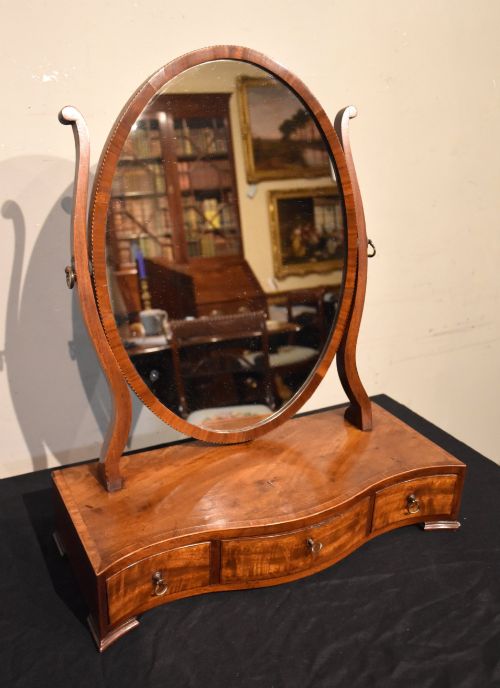
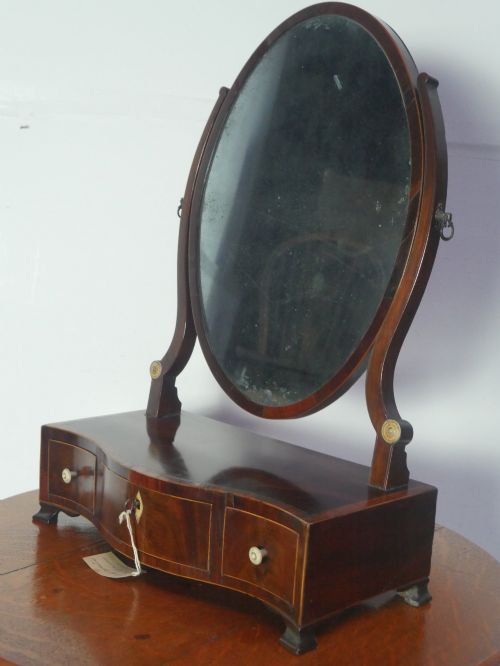
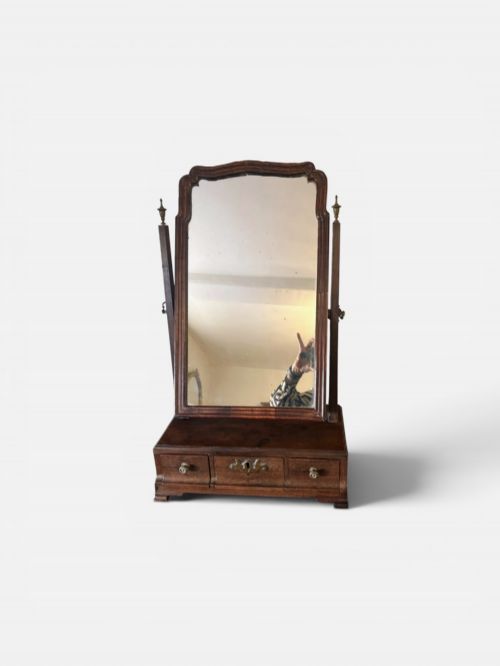
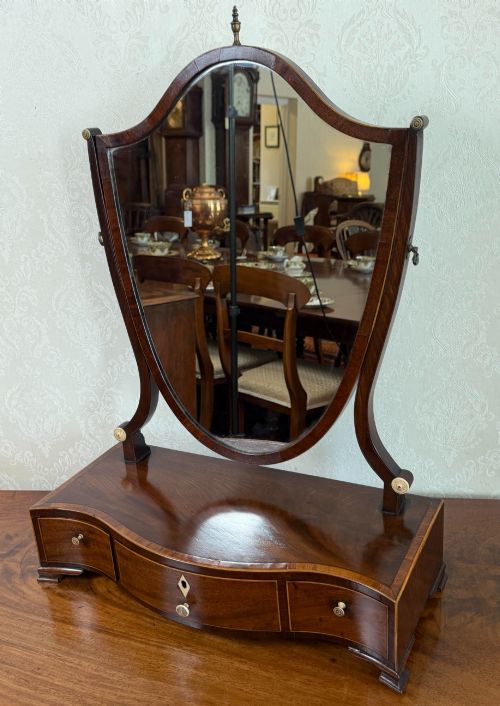
Georgian Mahogany Dressing Mirror
A Georgian mahogany dressing mirror brings tactile warmth and refined reflection to a room, offering adjustable glass held within neat pivoting frames.
Georgian Mahogany Dressing Mirror
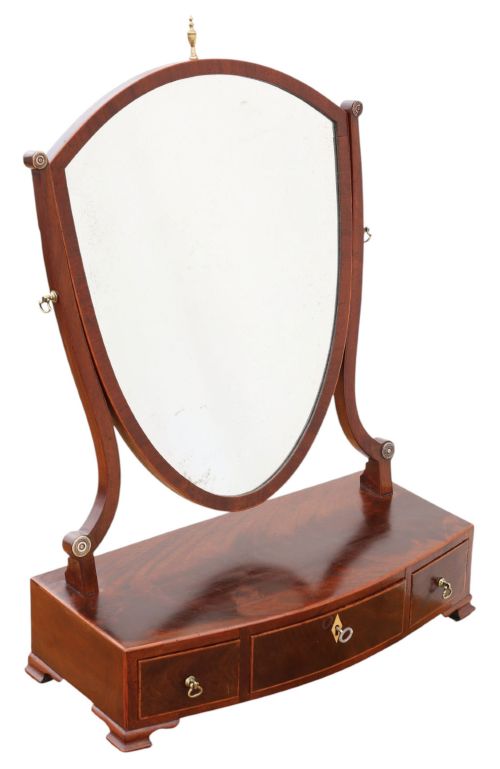
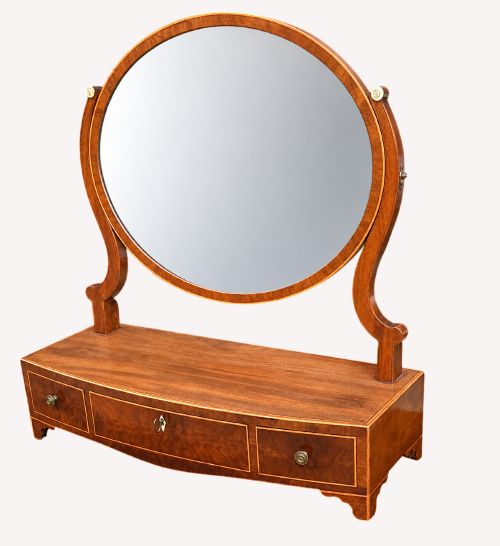
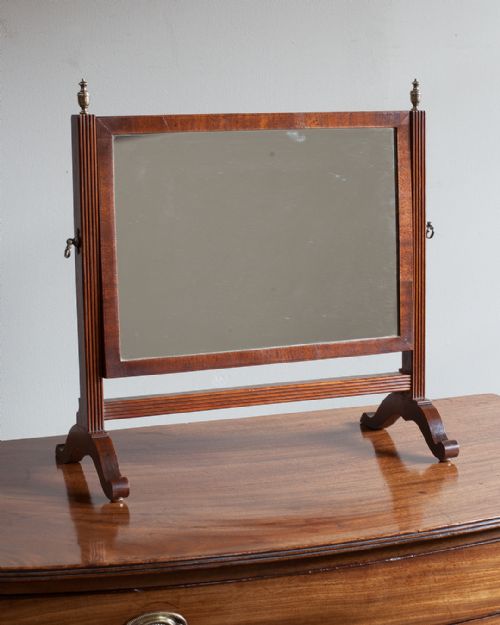
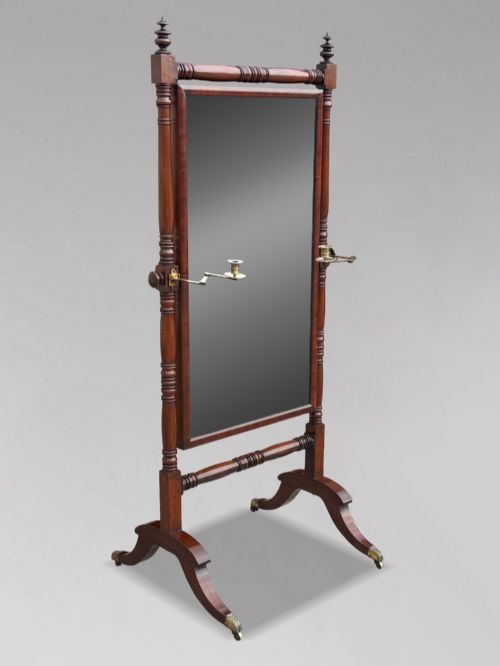
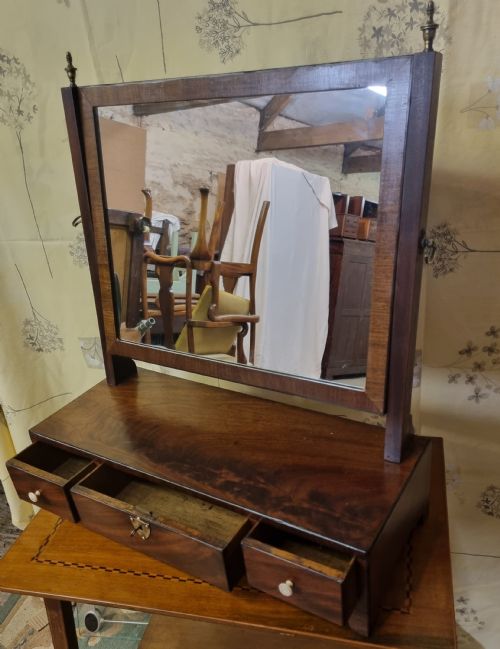
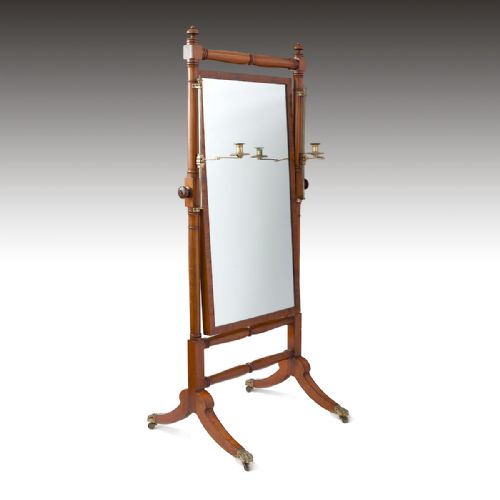
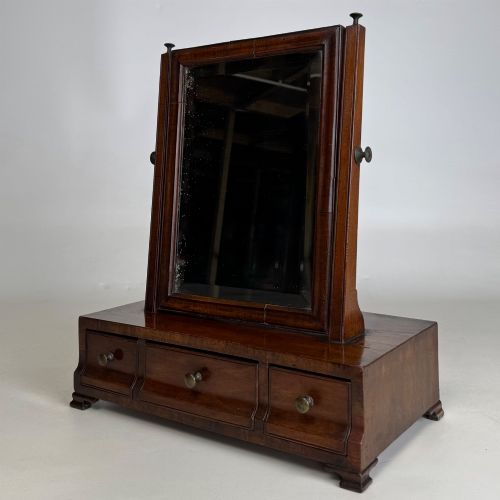
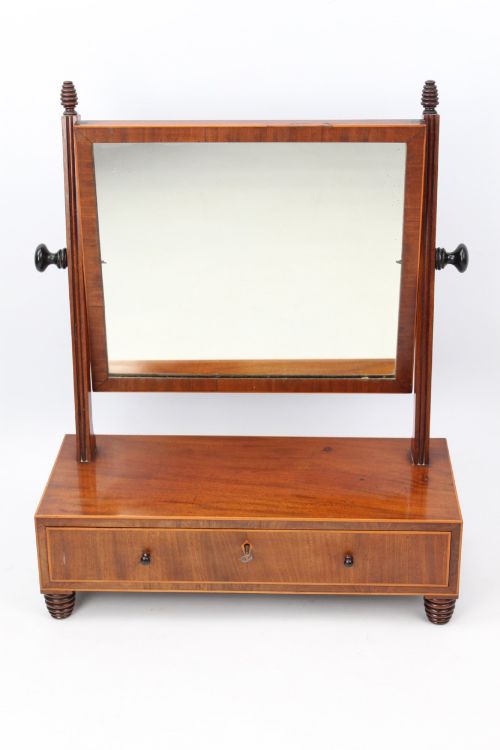
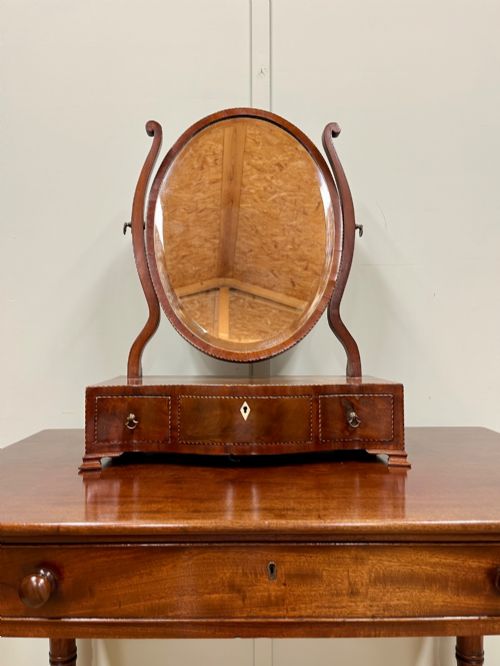
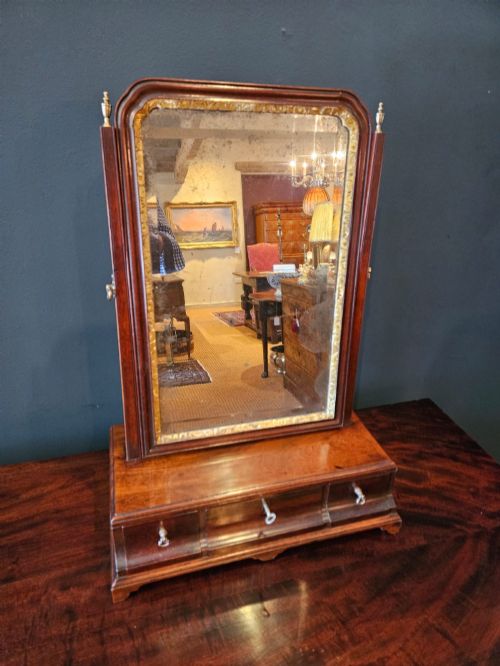
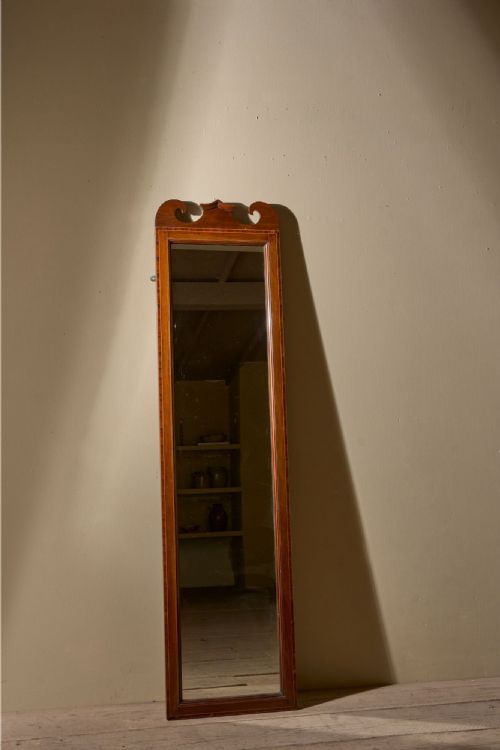
A georgian mahogany dressing mirror provides a practical surface reflection via a pivoting glass mounted on upright supports above a small base box. You encounter various formats, ranging from compact toilet mirrors designed for tabletops to larger cheval mirrors standing independently on the floor.
The material palette centres on rich mahogany, frequently complemented by subtle boxwood inlay, satinwood stringing, brass mounts, and occasionally giltwood details. These pieces span the eighteenth and nineteenth centuries, encompassing genuine Georgian periods, Regency variations, and later revivals.
Tabletop versions typically feature functional small drawers in the base for personal items, while larger standing cheval editions offer full-length tilt mechanisms. Survival rates demonstrate a strong preference for table-standing designs over taller floor-standing counterparts.
Construction and Materials
Cabinet makers utilised dense, durable mahogany timbers for the structural frames and base boxes, often selecting veneers with pronounced grain patterns for visual depth. Secondary woods like pine or oak frequently appear in the interior framing of the drawer boxes.
Decorative enhancements relied on contrasting stringing in boxwood or satinwood, alongside fine crossbanding to border the mirror frames and drawer fronts. Brass hardware, including drop handles, pivoting screw knobs, and small bracket feet, secured the moving parts and elevated the decorative scheme.
Glass plates were traditionally silvered by hand using mercury or tin amalgams before later chemical silvering processes became standard, resulting in characteristic subtle distortions in older surviving surfaces.
Portable campaign versions dismantled neatly into compact wooden cases so officers could maintain impeccable grooming standards while on military manoeuvres.
Judging Quality
The standard of execution reveals itself through the crispness of the joinery, particularly in the precision of the dovetail joints connecting the base drawers and the delicacy of the turned upright supports. Superior examples display thoughtful proportion between the mirror frame and the supporting base box, maintaining balance without feeling heavy.
Finer pieces incorporate carefully chosen timber veneers matched symmetrically across the principal surfaces, enhanced by tidy stringing rather than printed or painted imitations. The quality of the brass fittings and the smoothness of the tilting action further distinguish higher workshop output from standard production.
Gillow
The Georgian Mahogany Dressing Mirror Glossary
- Cheval mirror
- A large standing mirror supported in a frame that allows the glass to tilt fully. This floor-standing form became particularly popular during the Regency period.
- Toilet mirror
- A smaller tabletop dressing mirror equipped with a base containing small drawers. These pieces sat atop desks or chests of drawers in bedrooms.
- Swing mirror
- A mirror plate mounted on pivots between two upright posts enabling angle adjustment. The mechanism relies on threaded brass screw caps or wooden pegs.
- Shield-shaped plate
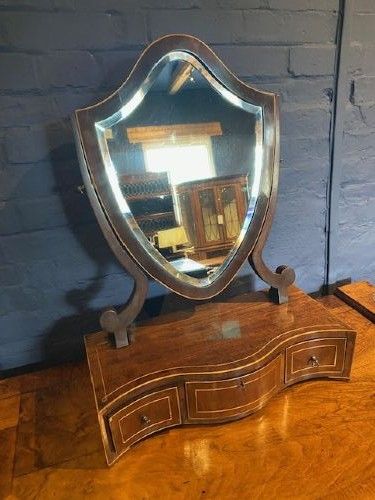
- A mirror glass cut into the curved outline of a heraldic shield. This silhouette frequently appears on table mirrors dating from the eighteenth century.
- Crossbanding
- A border of veneer laid with the grain running perpendicular to the main panel. This technique frames the primary mahogany surface on quality pieces.
Georgian Mahogany Dressing Mirror: Frequently Asked Questions
What is a georgian mahogany dressing mirror used for?
These mirrors provided a dedicated reflective surface for grooming, dressing, and applying cosmetics in domestic bedchambers during the eighteenth and nineteenth centuries.
The small drawers built into the base served as secure storage for personal valuables, jewellery, and shaving accessories.
How do I tell an 18th-century mirror from a 19th-century one?
Earlier eighteenth-century examples often feature slender proportions, hand-cut dovetails, and serpentine or shield-shaped glass outlines with subtle candlelit proportions.
Later nineteenth-century pieces tend to show heavier framing, machine-sawn internal timbers, and broader rectangular mirror plates.
Where should I place a dressing mirror at home?
They sit comfortably on top of chests of drawers, side tables, or dressing surfaces where the pivoting glass can be angled to capture natural light.
Floor-standing cheval versions function effectively as independent accent pieces in hallways, dressing rooms, or bedrooms.
Are the mirror plates original?
Many surviving pieces retain their original mercury glass plates, which frequently exhibit minor foxing, speckling, and gentle distortion.
Replacement mirror glass appears regularly due to the fragile nature of early silvered plates over centuries of use.