
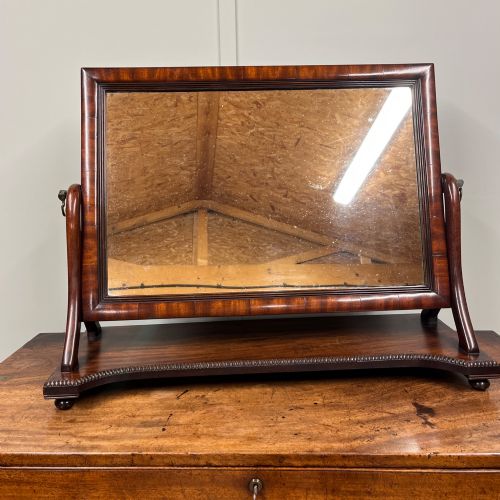
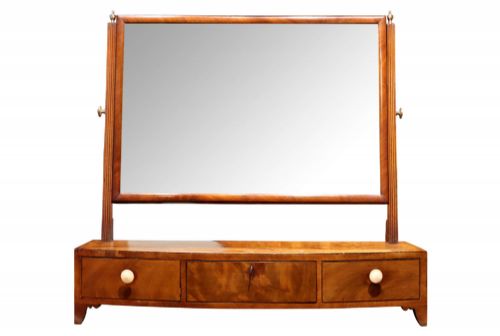


Regency Mahogany Swing Mirror
A regency mahogany swing mirror brings warmth and functional elegance to a dressing table.
Regency Mahogany Swing Mirror
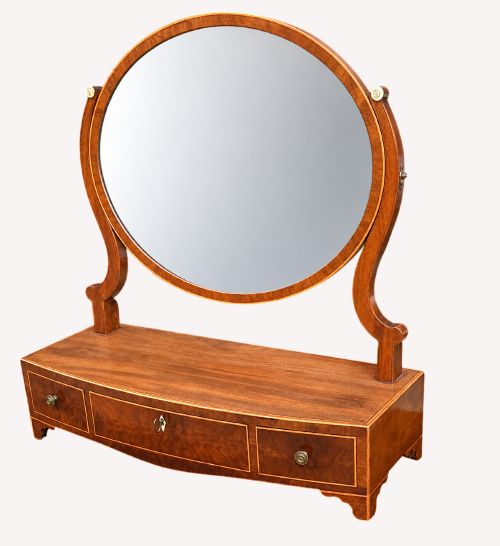
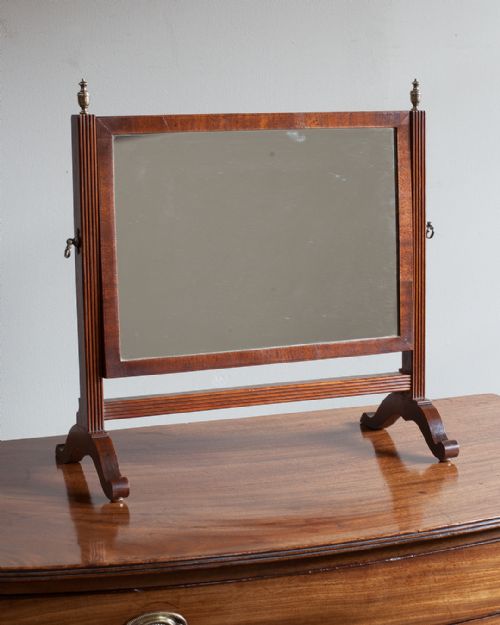
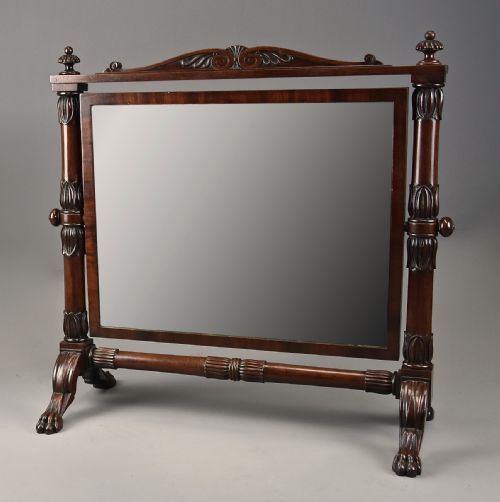
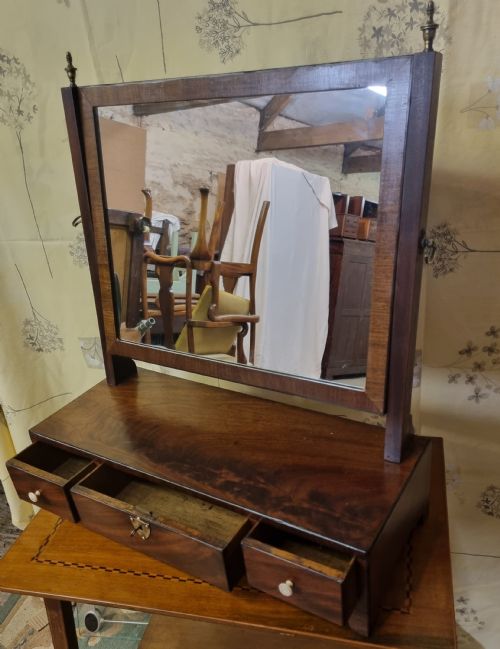
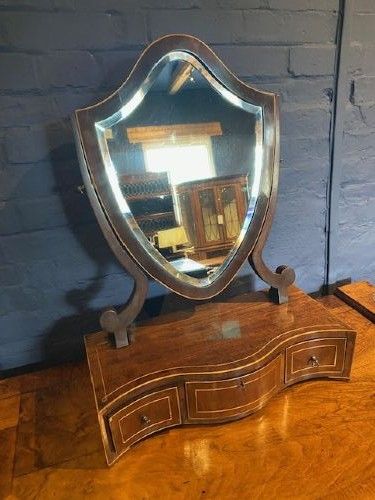
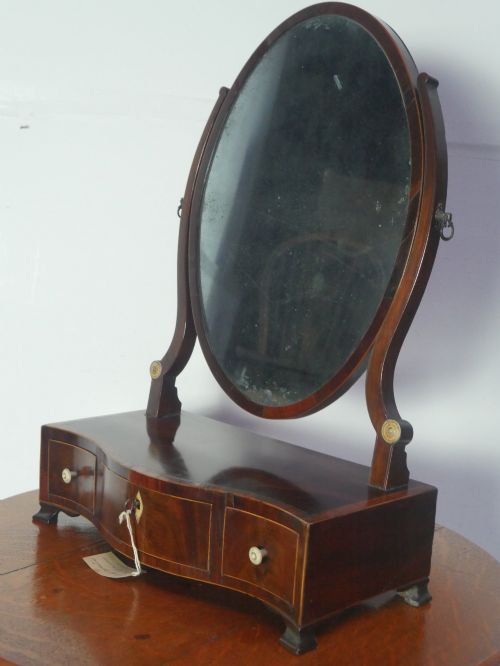
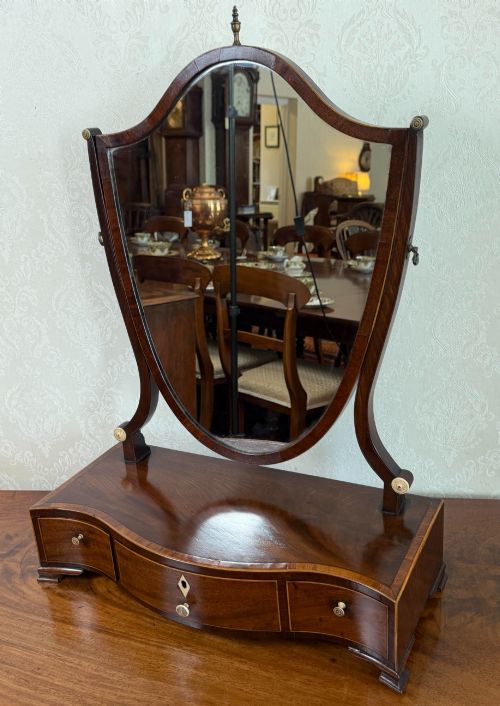
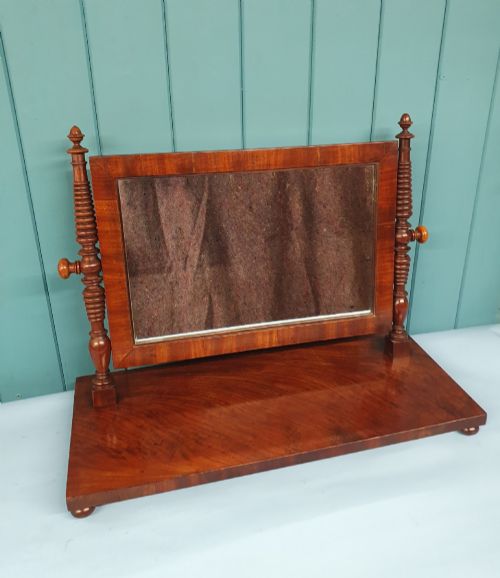
A regency mahogany swing mirror forms a portable or tabletop accessory designed to sit upon a chest of drawers or dressing table for grooming. These pieces originate primarily from the nineteenth century, encompassing Georgian, Regency, and William IV periods, alongside later Victorian examples.
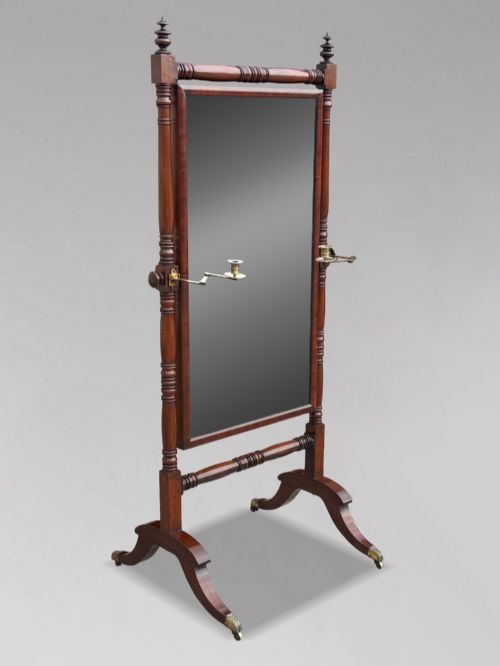
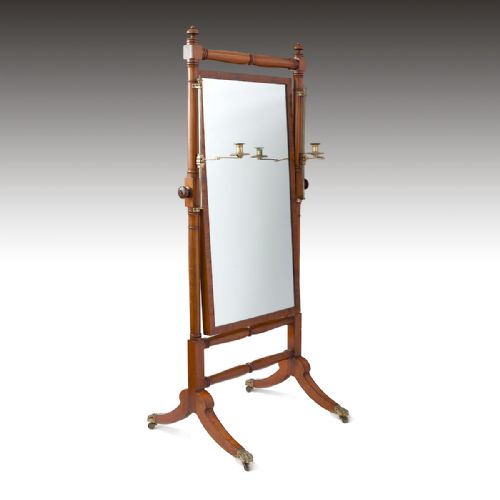
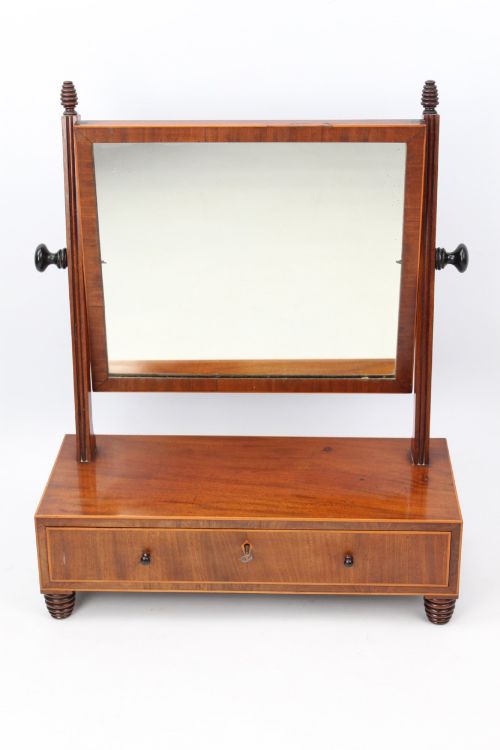
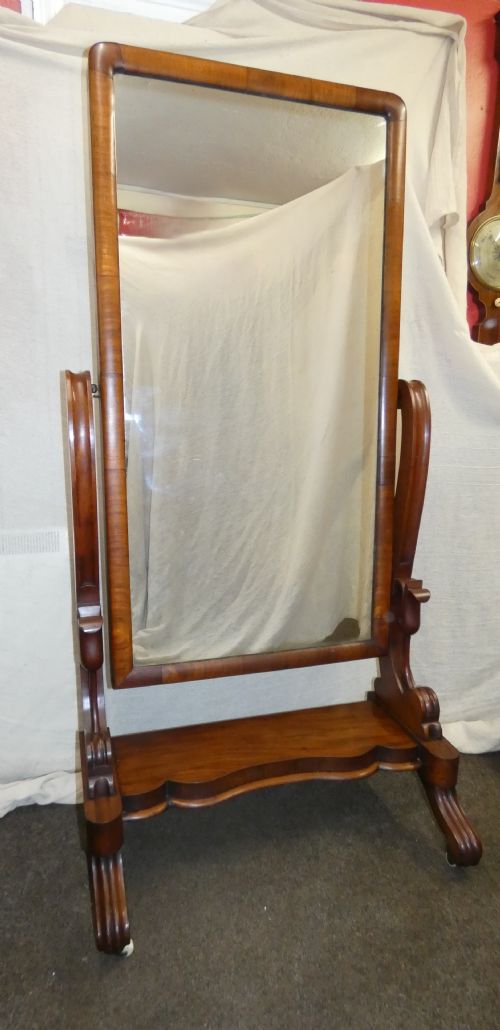
The form typically comprises a pivoting glass plate held within upright arms, mounted upon a shaped box base or platform base equipped with small drawers. Buyers encounter tabletop toilet mirrors and larger floor-standing cheval mirrors frequently among these listings.
What Varies in Quality
The refinement of the cabinetwork and the choice of timber determine the standing of each piece, distinguishing simple utility items from high-status furniture attributed to known workshops.
Proportion, the delicacy of the box base drawers, and the integration of fine brass or inlaid stringing separate standard examples from those of exceptional execution.
Object forms span dressing table mirrors, toilet mirrors, cheval mirrors, and tabletop mirrors.
Gillow·P & MA Nicholson
The Regency Mahogany Swing Mirror Glossary
- Cheval mirror
- A tall, freestanding mirror supported on a frame with four legs that allows the entire glass to pivot. This form stands upon the floor rather than resting on a table.
- Toilet mirror
- A smaller mirror designed to sit upon a dressing table or chest. These often incorporate a base fitted with small drawers for storing trinkets.
- Swing mirror
- A glass plate suspended on pivots between two vertical uprights, enabling the user to tilt the angle of reflection. The design forms the core mechanism of these dressing accessories.
- Box base
- The lower section of a table mirror constructed as a small chest or plinth. It frequently contains one, two, or three small drawers.
- Inlay
- A technique where contrasting woods such as boxwood, satinwood, or ebony are inserted into recessed cavities in the mahogany surface to create decorative patterns.
Regency Mahogany Swing Mirror: Frequently Asked Questions
Where should I place a regency mahogany swing mirror?
These mirrors sit comfortably on top of a heavy chest of drawers, a sideboard, or a dedicated dressing table. Their proportions allow them to anchor a bedroom or hallway surface effectively.
Ensure the supporting furniture is deep and sturdy enough to bear the weight of the box base. Positioning them near natural light enhances their reflective function.
How do I distinguish a Regency mirror from a Georgian one?
Regency pieces often display bolder architectural details, brass mounts, and crisper mahogany veneers than their earlier Georgian counterparts. Look for stylistic cues such as reeded uprights or brass candle arms.
Georgian examples tend to lean towards simpler, understated lines with subtle string inlay. Cabinet construction methods also shift slightly across the decades bridging the eighteenth and nineteenth centuries.
Can I adjust the tension on the swing mechanism?
Most mirrors utilise side screw pivots or threaded brass nuts set into the upright supports. Tightening or loosening these components alters the resistance of the pivoting frame.
Exercise care when handling antique brass hardware to avoid stripping original screws. Gentle adjustments allow the glass to hold its angle without straining the wood.
What maintenance do these mirrors require?
Keep the mahogany timber nourished with appropriate wax polishes applied sparingly. Avoid modern chemical sprays that can degrade historic French polish finishes.
Place the mirror away from direct sunlight and strong heat sources to prevent the wood from warping or the veneer from lifting. Clean the glass carefully with a soft cloth.