


Regency Tabletop Mirror
A regency tabletop mirror brings focus to a dressing surface, combining adjustable glass with compact drawers for daily use.
Regency Tabletop Mirror
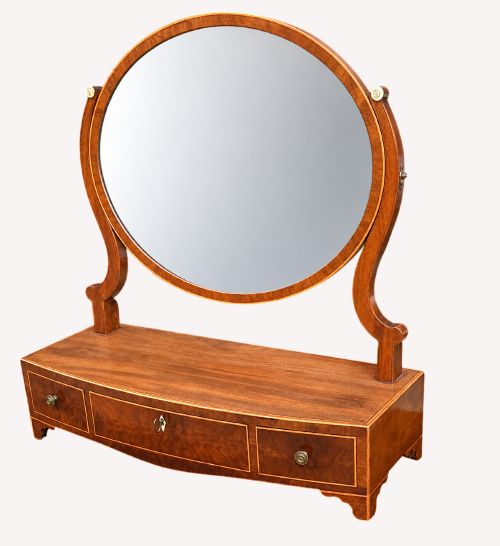
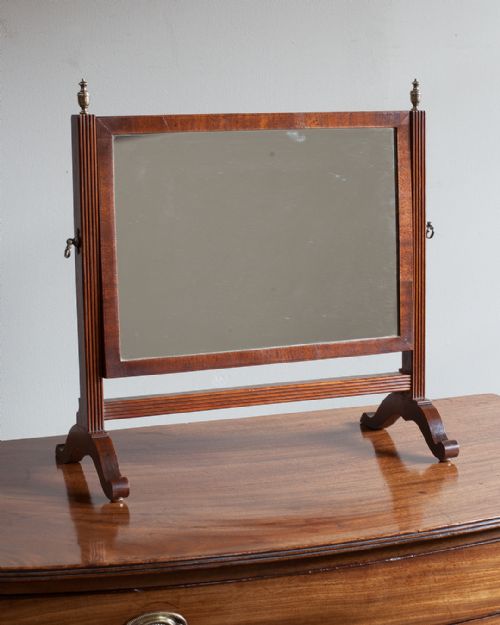
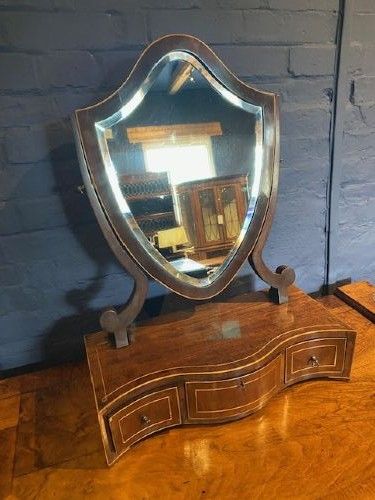
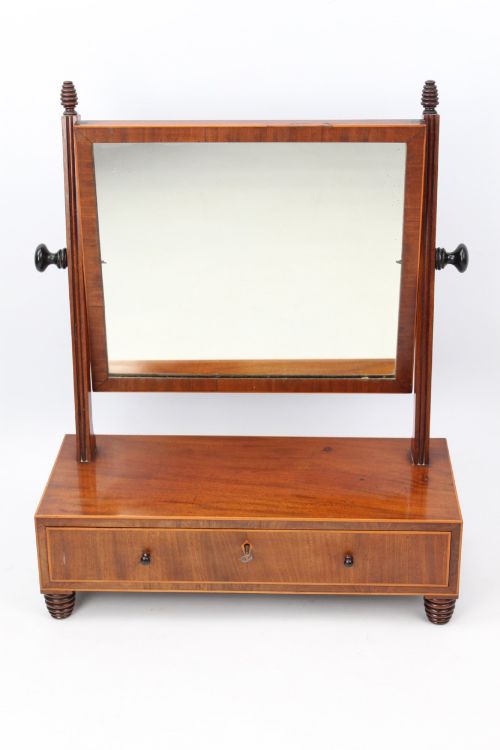
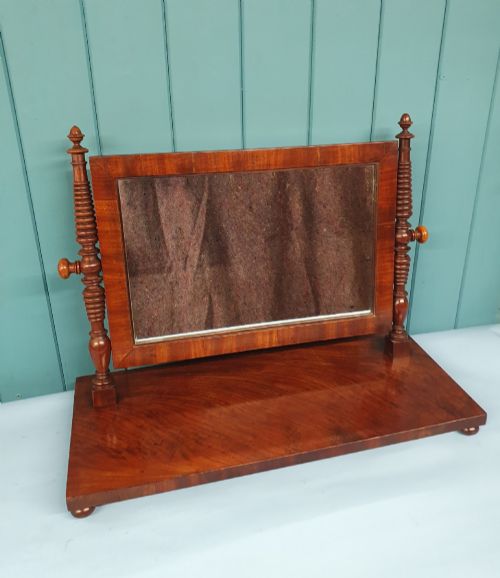
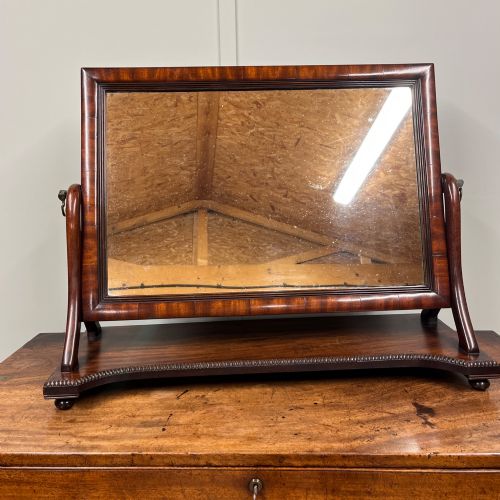
A regency tabletop mirror sits upon a chest, table, or sideboard, designed for personal grooming and to reflect light across a room. These pieces range from simple swing mirrors to elaborate swivelling plates mounted on shaped or box bases.
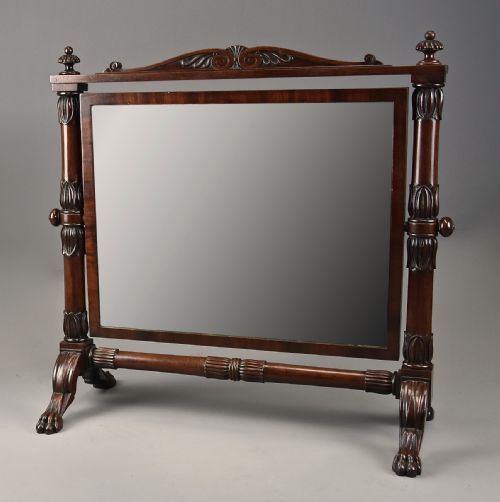
Most examples found here date from the nineteenth century, incorporating periods such as Georgian, Regency, and William IV. The forms include dressing table mirrors, toilet mirrors, and larger cheval variants intended to stand directly on the floor or a sturdy surface.
How they were made
Cabinetmakers constructed the frames and boxes using solid timbers and veneers, predominantly mahogany, supported by boxwood and ebony inlay for decorative contrast. Joints were hand-cut to ensure the upright arms could bear the weight of the swivelling mirror glass.
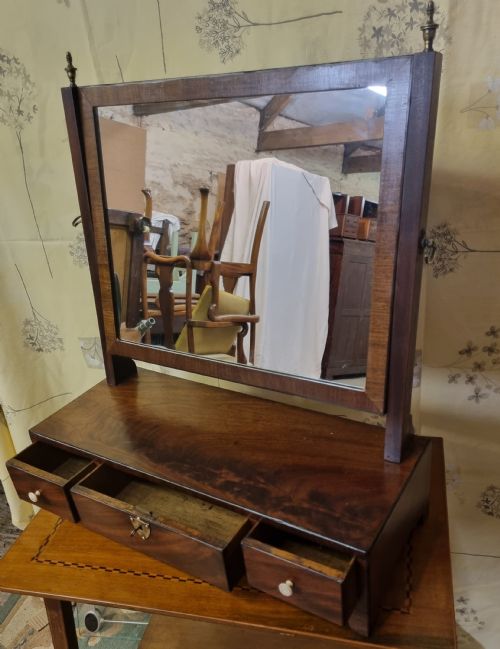
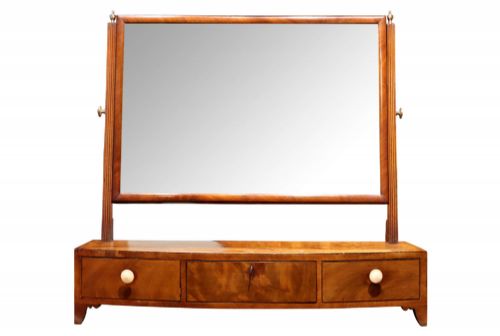
The glass plates were silvered by hand, held within moulded wooden frames that pivoted on brass screw knobs or pins. Bases incorporated small working drawers assembled with traditional dovetail joints, resting upon bracket feet, ogee feet, or turned supports.
Some larger tabletop models include secret compartments hidden behind the smallest drawers for storing personal correspondence.
What varies in quality
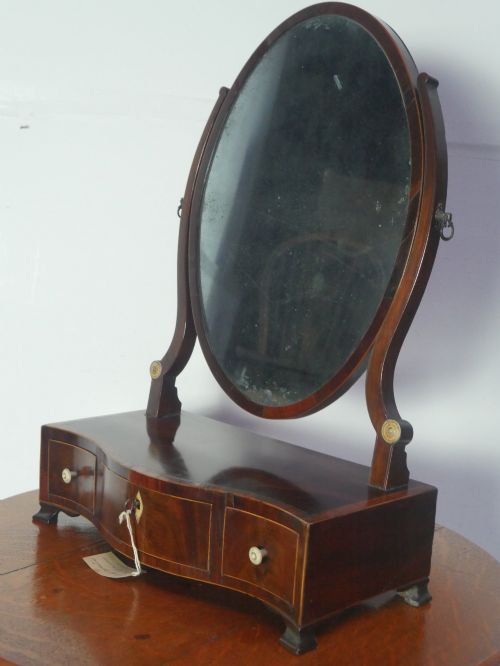
The refinement of the timber selection dictates the visual weight of the piece, with figured Cuban mahogany and dense satinwood sitting at the upper end of the scale. Subtle details like boxwood inlay, bone escutcheons, and well-proportioned serpentine fronts distinguish finer workshop output from standard production.
Proportion and stability determine the mechanical success of the design. A superior mirror plate moves smoothly on its brass pivots without sagging, and the base remains balanced even when the drawers are fully extended.
Gillows·P & MA Nicholson
The Regency Tabletop Mirror Glossary
- Cheval mirror
- A freestanding full-length dressing mirror supported on a vertical frame with four legs. This form allows the glass to tilt fully to various angles.
- Toilet mirror
- A smaller tabletop glass designed for placement on a dressing table or chest of drawers. These often feature a box base containing one or more small compartments.
- Swivel mirror
- A glass plate hung on pivots between two upright posts to allow tilting. The tension is usually controlled by brass thumbscrews at the sides.
- Escutcheon
- A small protective plate surrounding a keyhole, frequently fashioned from bone, ivory, or brass on these pieces. It prevents the wood surrounding the lock from wearing down.
- Serpentine front
- A furniture front curved in a wave shape, featuring a convex centre flanked by concave sides. This technique demands precise carpentry in smaller tabletop pieces.
Regency Tabletop Mirror: Frequently Asked Questions
Where should I place a regency tabletop mirror?
These mirrors suit dressing tables, low chests of drawers, and sideboards where their compact footprint allows them to sit securely without wall mounting.
Positioning them near a light source maximises their reflective quality, brightening darker corners of a bedroom or living space.
How do I adjust the mirror tension?
Most pieces utilise brass side screws or threaded pins that can be gently tightened by hand to hold the glass at the desired angle.
Avoid over-tightening the metal fittings against the wooden uprights to prevent splitting the surrounding grain over time.
What woods were commonly used?
Mahogany is the predominant timber found across these listings, often selected for its deep grain and durability in load-bearing upright supports.
Satinwood, rosewood, and padouk also appear alongside boxwood and ebony stringing used for decorative inlay work.
How do I distinguish between periods?
Georgian and Regency examples tend to feature clean architectural lines, bracket feet, and subtle mahogany veneers with occasional brass accents.
Later Victorian and 1900 variants often present heavier proportions, larger dimensions, and occasionally more robust framing structures.