



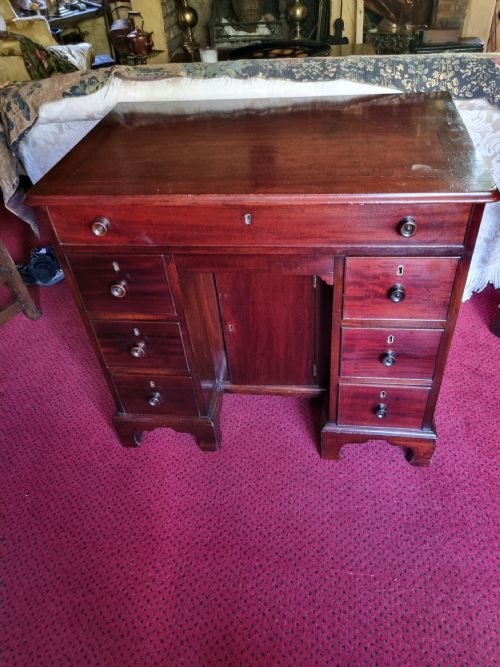


Georgian Mahogany Dressing Chest
A georgian mahogany dressing chest brings together practical storage and refined personal grooming within an elegant eighteenth-century form.
Georgian Mahogany Dressing Chest
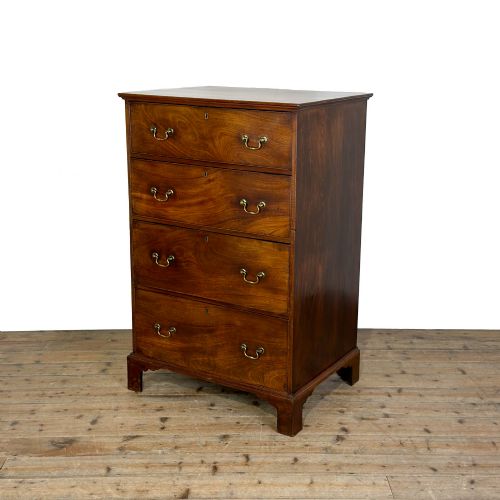
A georgian mahogany dressing chest combines the utility of a chest of drawers with fitted compartments designed for grooming and writing. The pieces seen here span the eighteenth century and the Regency period, alongside later revival interpretations.
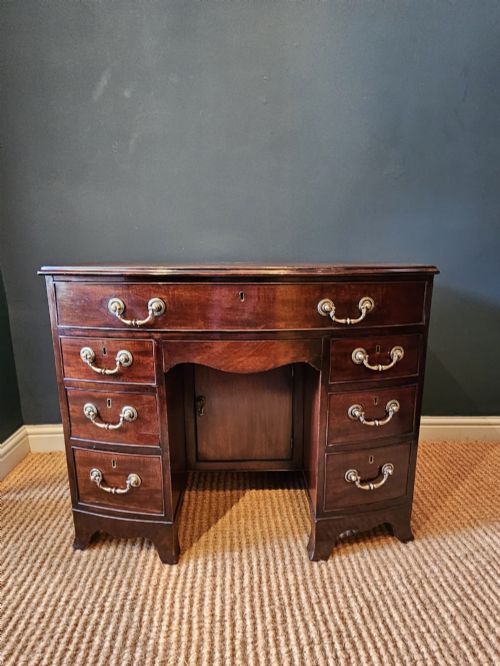
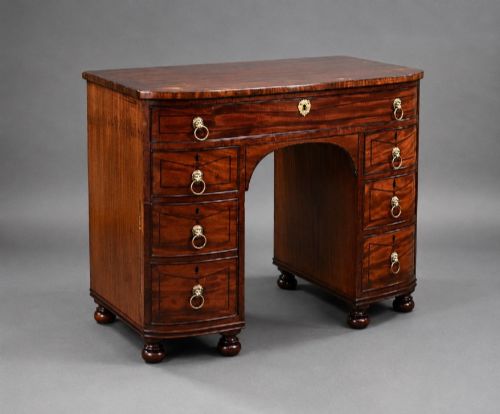
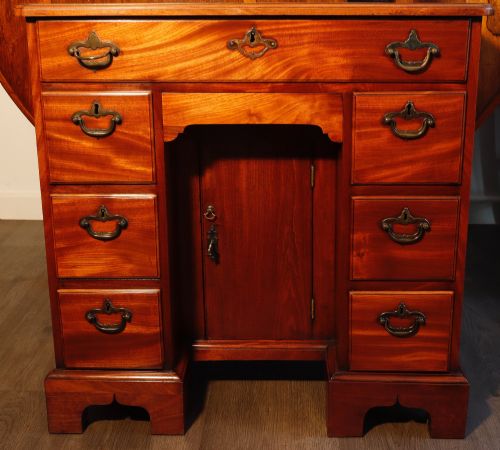
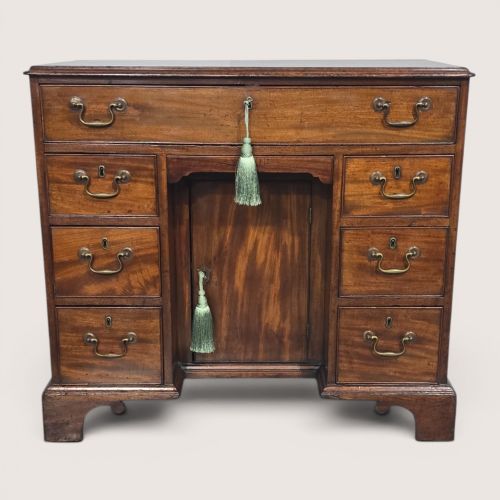
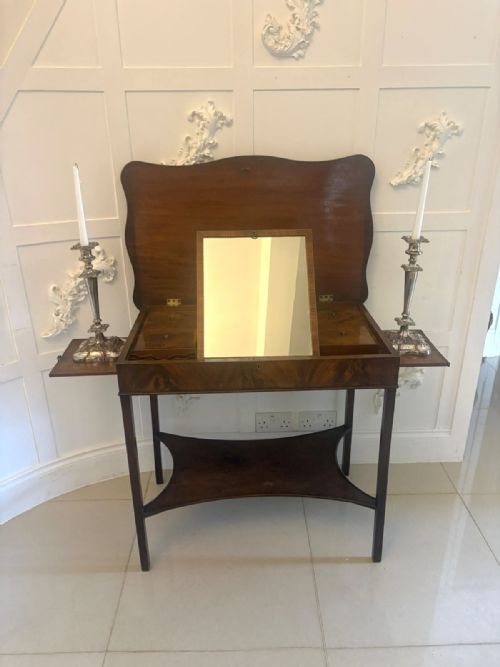
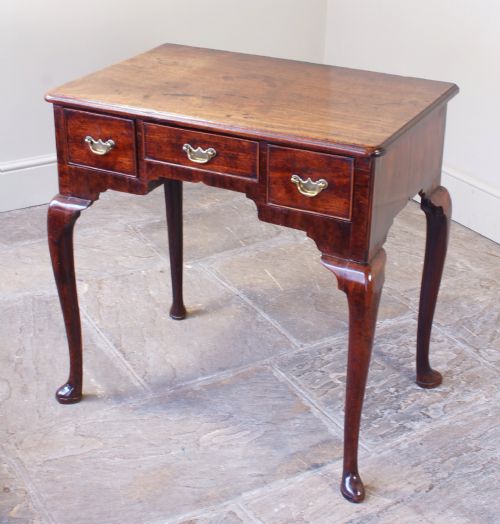
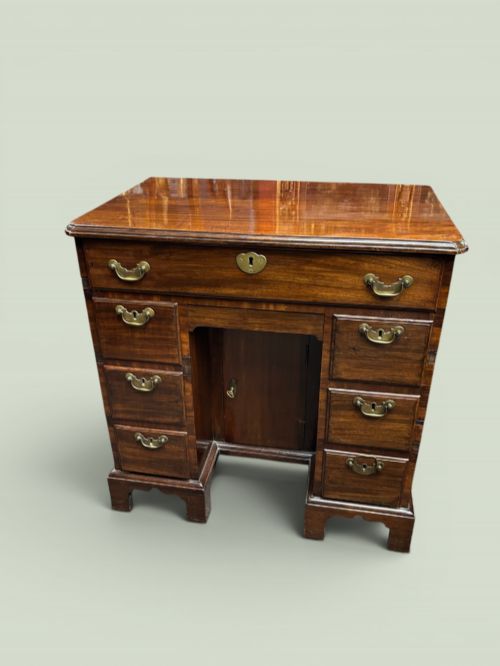
Forms range from compact kneehole desks and lowboys to gentleman's dressing chests featuring fitted interior drawers and sliding writing surfaces. These diverse configurations reflect the specific personal requirements of past owners.
Mahogany remains the principal material across these forms, often selected in dense Cuban varieties or highlighted with subtle boxwood inlay. The resulting furniture balances robust construction with domestic elegance.
Materials and construction
Cabinet makers utilised solid mahogany and carefully selected veneers over secondary timbers such as oak. Brass hardware, including drop handles and escutcheons, secures the structural integrity of drawers and doors.
Interiors often incorporate complex joinery to house small compartments, mirrors, and sliding trays. Boxwood stringing and inlay add linear definition to drawer fronts and tabletops without compromising the timber's natural grain.
The listings feature pieces spanning the Georgian period, the Regency era, and twentieth-century revival styles.
Distinctions in craftsmanship
Superior examples display precise dovetail joinery in the drawer construction and careful matching of mahogany grain across the primary surfaces. The integration of fully fitted internal compartments reveals the original maker's ambition.
The sophistication of secondary details, such as original brass fittings and refined inlay work, separates standard utility pieces from higher-tier commissions. Original surfaces and minimal timber replacement preserve the integrity of the piece.
William Gomm·Muirhead Moffat & Co·Whytock & Reid
The Georgian Mahogany Dressing Chest Glossary
- Kneehole desk
- A compact desk or dressing table featuring a central recessed space for the legs, flanked by banks of small drawers. This form allows the user to sit close while managing personal correspondence or grooming.
- Dressing slide
- A pull-out board integrated above the top drawer to provide an auxiliary surface for writing or holding small items. It conceals neatly when not in use.
- Lowboy
- A small side table with one or more rows of drawers, commonly used as a dressing table in eighteenth-century bedchambers. Its low stature distinguishes it from larger writing desks.
- Secretaire
- A cabinet or chest containing a hinged writing flap that drops down to reveal fitted pigeonholes and small drawers. It merges desk functionality with enclosed storage.
- Serpentine
- A curved furniture front characterised by a convex central section flanked by concave sweeps. This profile demands advanced woodworking skill to shape the solid timber or veneer.
Georgian Mahogany Dressing Chest: Frequently Asked Questions
What is a gentleman's dressing chest?
A gentleman's dressing chest is a specialised storage piece containing a top drawer fitted with compartments for grooming accessories, mirrors, and sometimes a sliding writing surface.
These pieces served elite households where personal preparation required dedicated, organised space within a private bedchamber.
How do I use one today?
These chests function effectively as dressing tables, hallway consoles, or compact bedroom storage units. The fitted interior compartments suit modern jewellery organisation or desk accessories.
Placing the chest away from direct heat sources protects the mahogany timber and prevents the drawer wood from warping over time.
How do I identify a George III piece?
George III pieces typically exhibit restrained classical proportions, premium mahogany selection, and precise dovetailing visible inside the drawers. Bracket feet or straight legs are characteristic of this mid to late eighteenth-century period.
Revival pieces from later eras often mimic these proportions but utilise machine-cut joinery or secondary timbers associated with twentieth-century workshops.
What is Cuban mahogany?
Cuban mahogany is a dense, dark timber imported from the Caribbean during the eighteenth and early nineteenth centuries. It is prized for its rich patina and heavy weight.
Cabinet makers favoured this timber for high-status commissions because it resisted splitting and accepted a high polish.