
Georgian Mahogany Desk Cabinet
A georgian mahogany desk cabinet brings together timber and fitted writing drawers, offering functional workspace and storage built to last.
Georgian Mahogany Desk Cabinet
When searching for a georgian mahogany desk cabinet, buyers encounter large bureau bookcases alongside compact writing pieces from the eighteenth and nineteenth centuries. These items combine a practical writing surface with upper shelving or lower drawer storage.
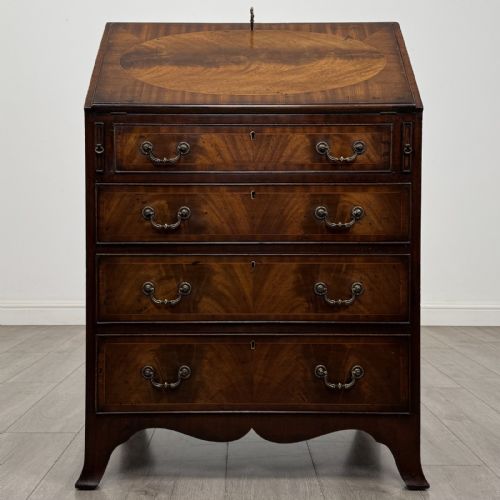
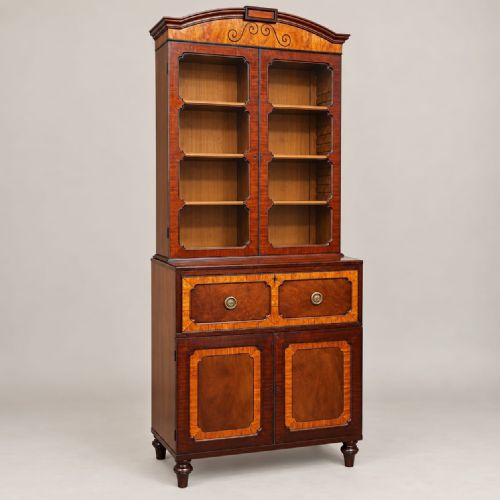
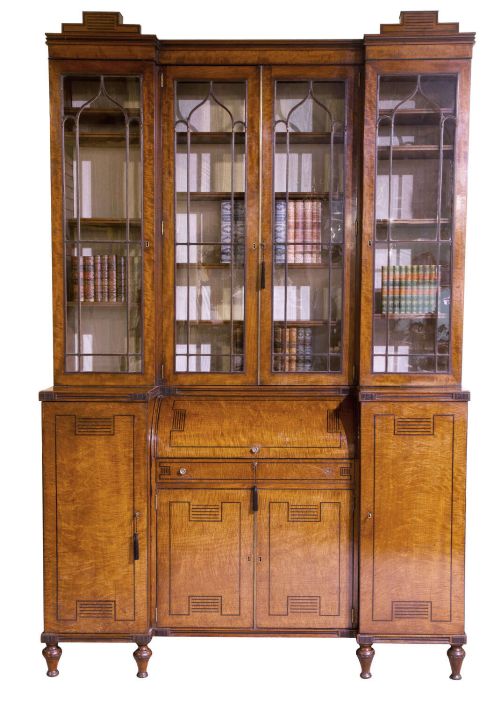
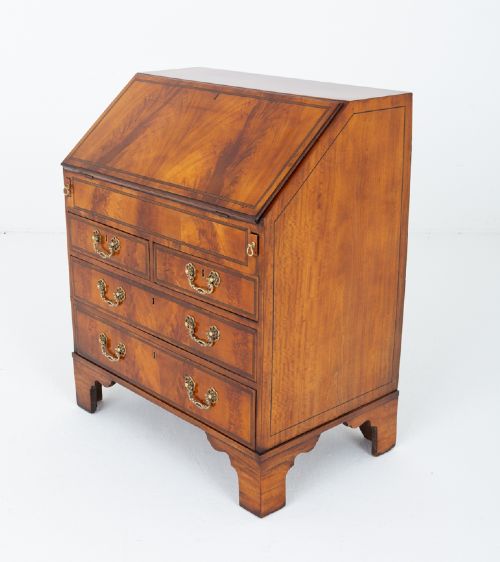
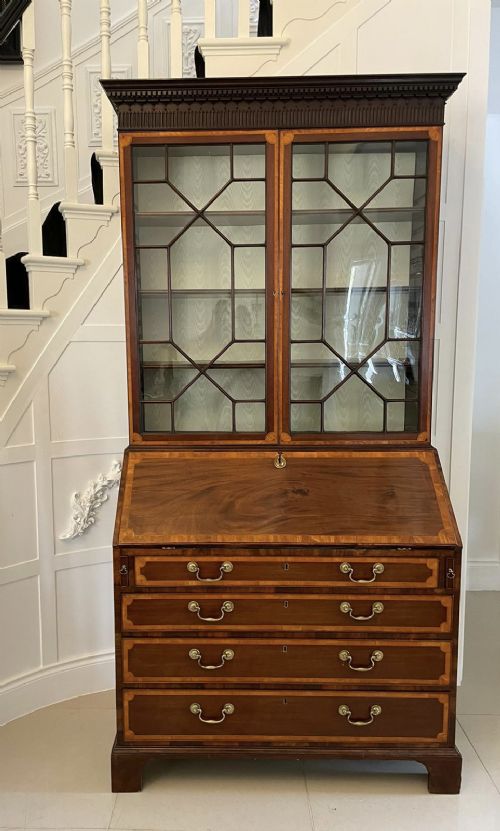
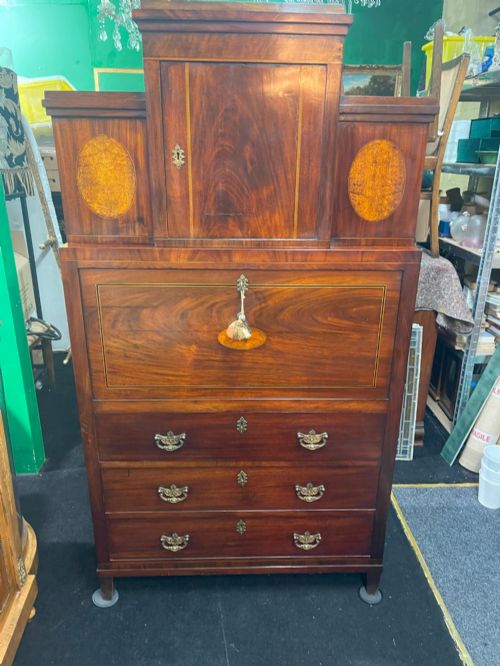
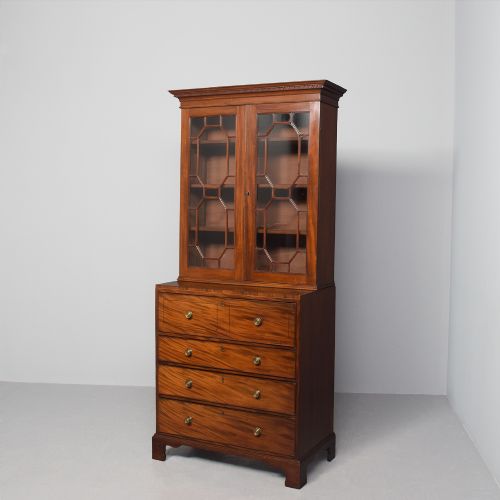
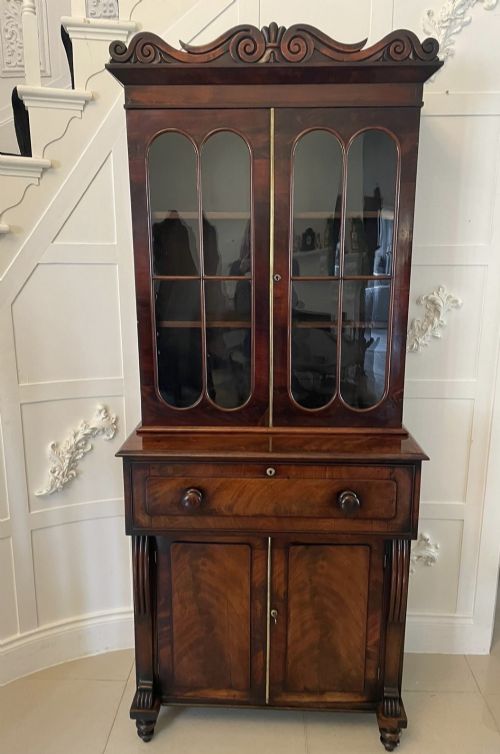
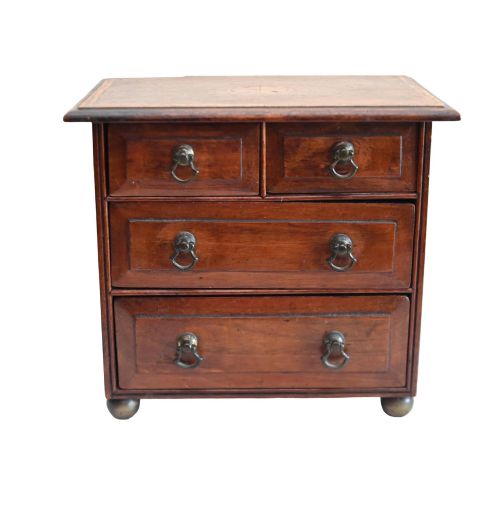
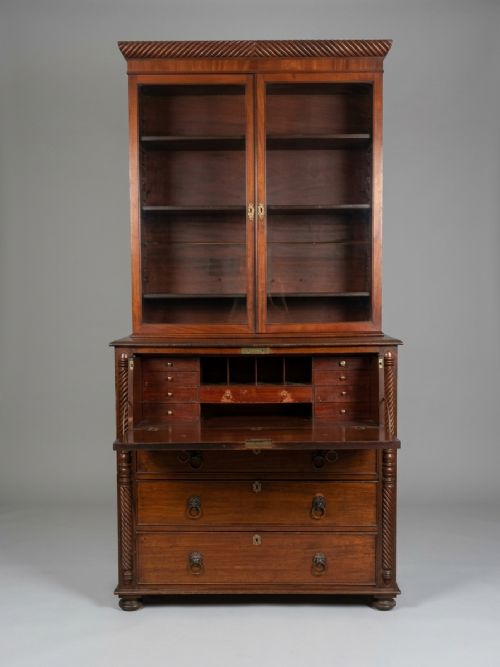
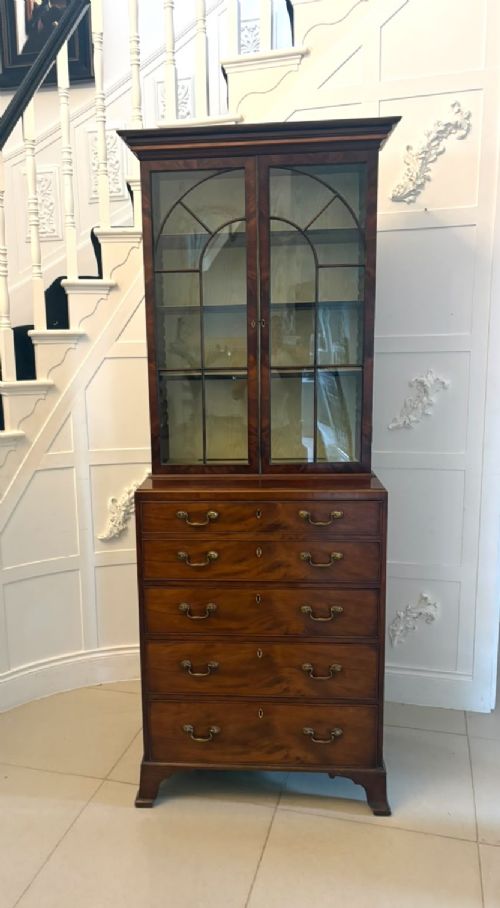
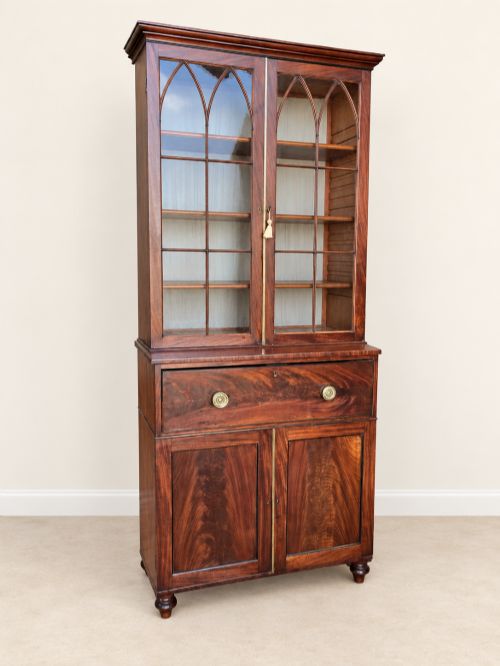
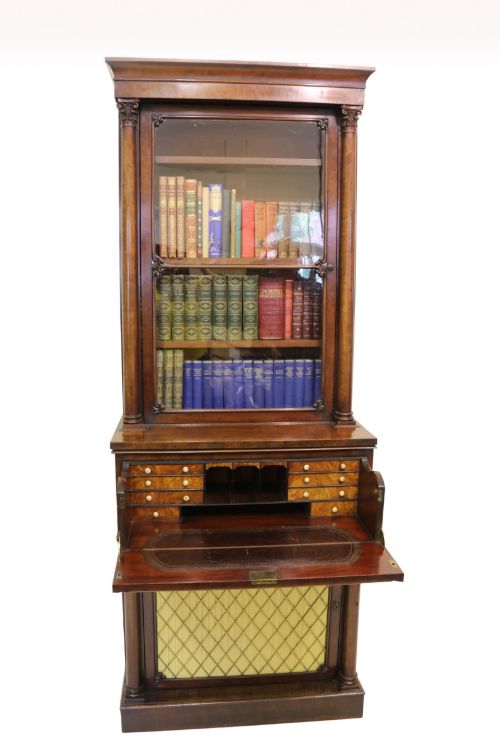
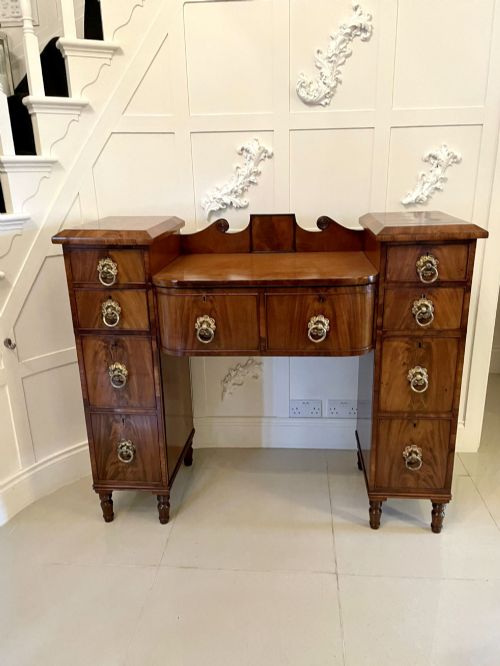
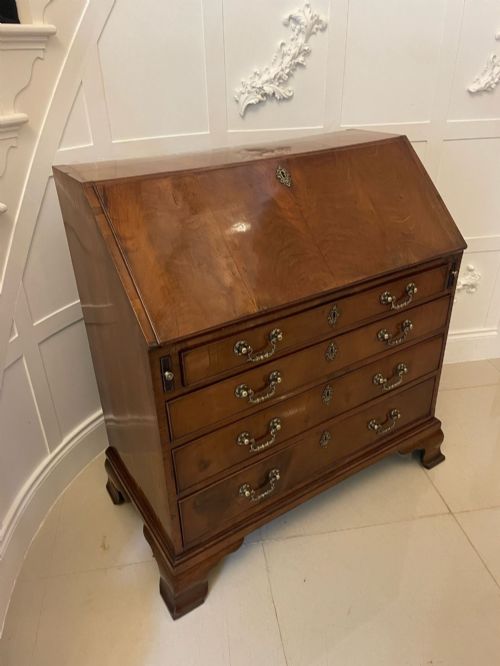
The pieces appearing here span George II, George III, and Regency periods, alongside later revivals. Common forms include secretaire bookcases featuring glazed doors, fall-front writing compartments, and occasional miniature or apprentice chests.
Makers such as Gillows and Tudor & Burrey appear in the records alongside unmarked pieces. The dominant configuration pairs a fitted interior desk drawer with shelving enclosed by glass panels above.
Materials and construction
Makers relied primarily on solid mahogany and figured veneers, often selecting flame mahogany for drawer fronts and cabinet doors. Secondary timbers such as oak appear in internal drawer construction.
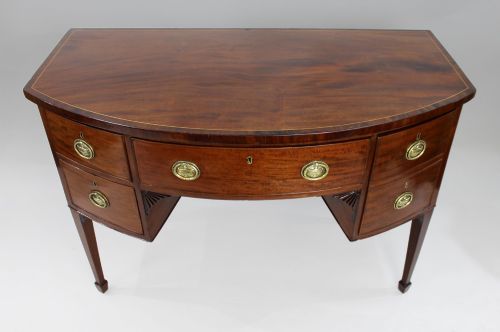
Inlay work incorporated boxwood and satinwood stringing to define panels and borders. Brass hardware, including drop handles and escutcheons, secured drawers and fall-front desks.
Glazing bars in upper cabinet doors formed geometric astragal patterns to display library collections. Leather inserts provided a durable writing surface inside fall-front and pull-out desk compartments.
Listings feature periods spanning from George II through to Edwardian revivals, utilising brass, glass, leather, and oak.
Assessing quality and execution
Figure choice and grain matching determine visual hierarchy, with book-matched flame mahogany representing higher ambition. Timber selection extends to internal drawer linings, where secondary woods remain tidy and uniform.
Joinery execution shows in the tightness of dovetails on drawer boxes and the precise fit of internal pigeonholes. Cabinetmakers demonstrated skill through smooth mechanics on fall-front hinges and sliding desk sections.
Proportion defines the successful cabinet, balancing the visual weight of upper bookcase sections against lower drawer bases. Crisp inlay work and original brassware elevate the standing of individual pieces.
Gillows of Lancaster·Tudor and Burrey Shrewsbury
The Georgian Mahogany Desk Cabinet Glossary
- Secretaire
- A desk or cabinet featuring a pull-down writing drawer that conceals smaller compartments and pigeonholes.
- Astragal
- A small moulding used in glass doors to divide panes into geometric patterns.
- Tambour
- Flexible sliding shutter formed of narrow vertical strips of wood glued to canvas.
- Dovetail
- A joint formed by interlocking wedge-shaped fingers used to construct drawer corners.
- Escutcheon
- A protective plate surrounding a keyhole, usually cast in brass.
Georgian Mahogany Desk Cabinet: Frequently Asked Questions
How do I use a secretaire desk?
The front drops down on hinges to reveal a writing surface and small fitted drawers for stationery.
Items stored inside remain concealed when the front is closed up and locked.
Are these cabinets difficult to move?
Many examples separate into upper bookcase and lower desk sections for transport.
Solid timber construction makes the individual parts heavy, requiring two people to lift.
How do I tell George III from Regency?
George III pieces often display restrained classical proportions with straight bracket feet and fine inlay.
Regency examples lean towards bolder mahogany grains, ebonised details, and sabre or turned feet.
Can I store books in the top?
Upper sections feature adjustable wooden shelves specifically designed for holding libraries.
Glass doors protect volumes from dust while keeping bindings visible.