
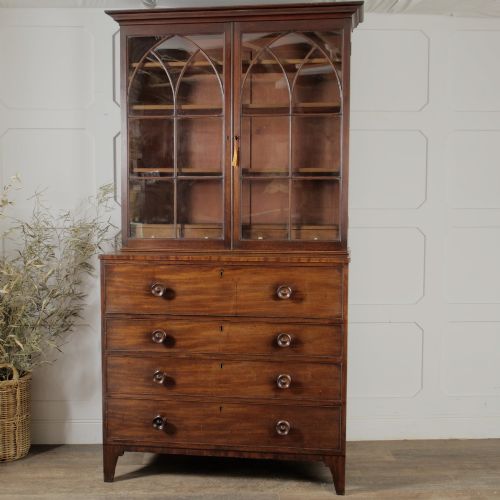
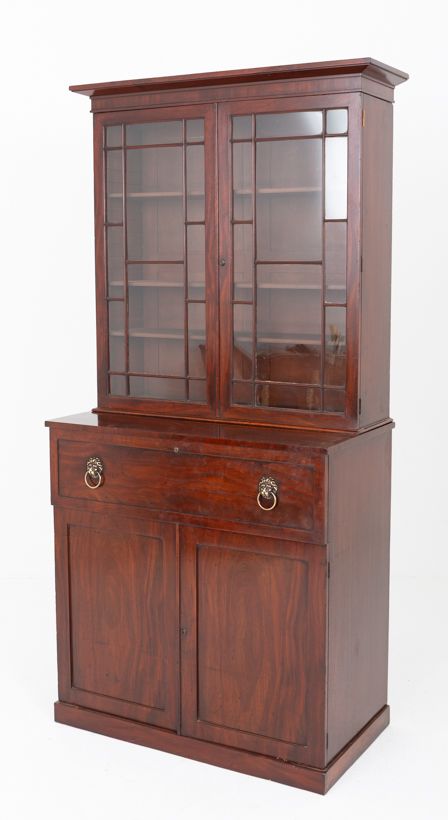
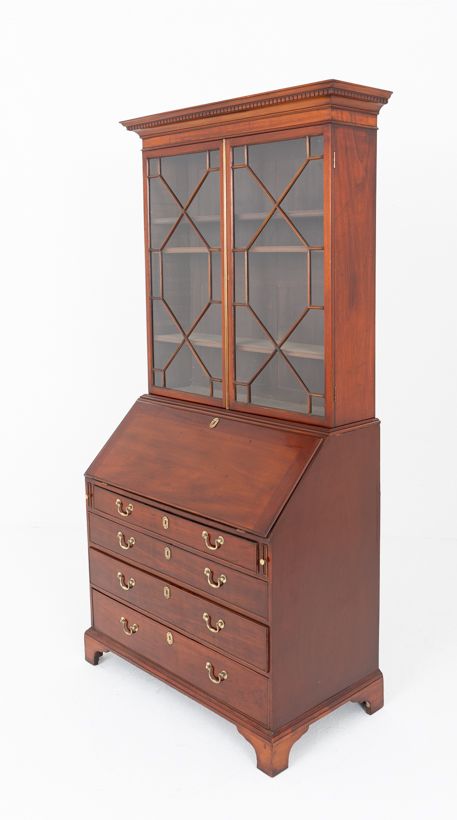
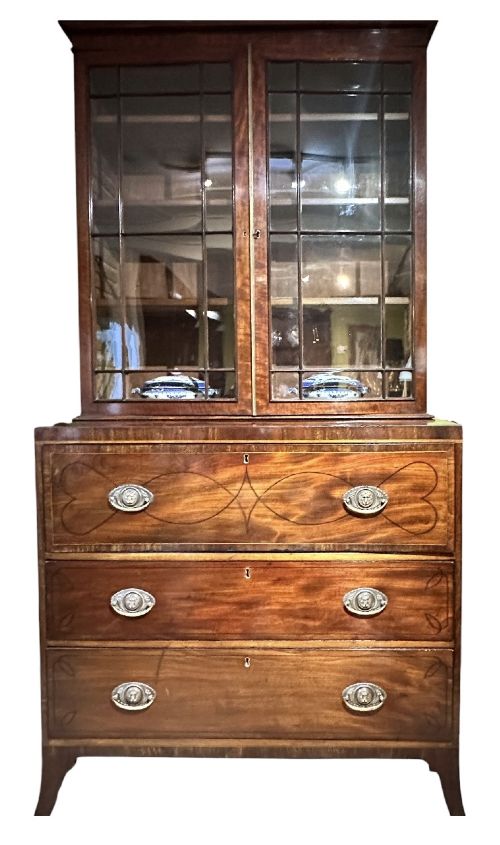
Georgian Mahogany Bureau Bookcase
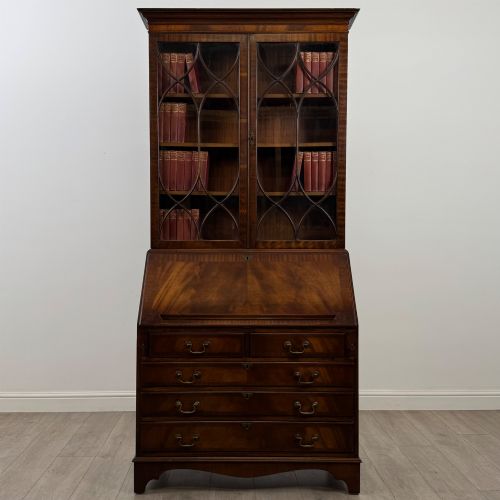
A georgian mahogany bureau bookcase combines a writing desk and a shelved library cabinet into one commanding architectural piece for the home.
Georgian Mahogany Bureau Bookcase
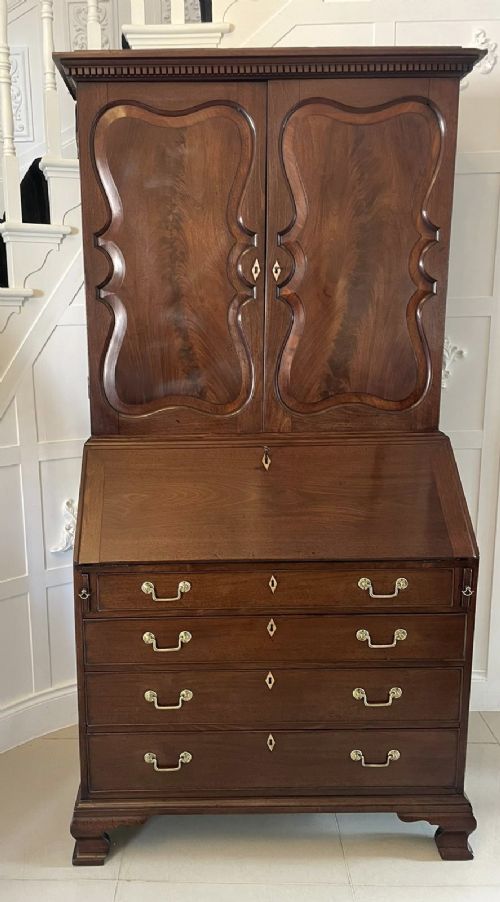
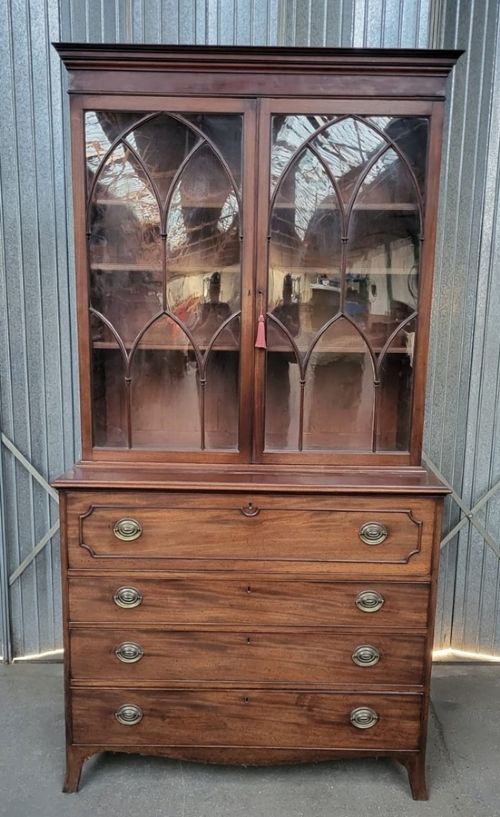
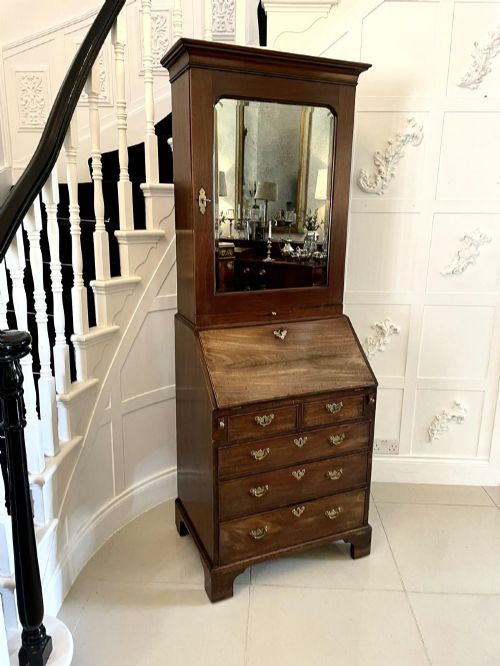
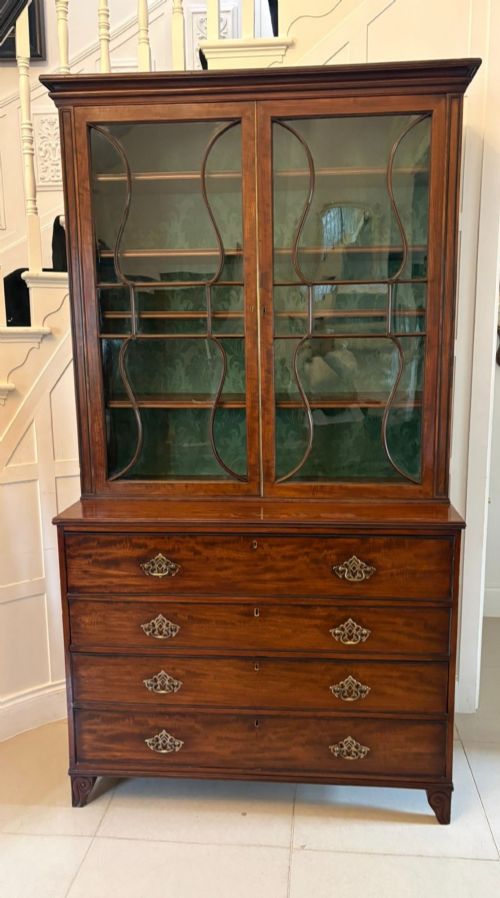
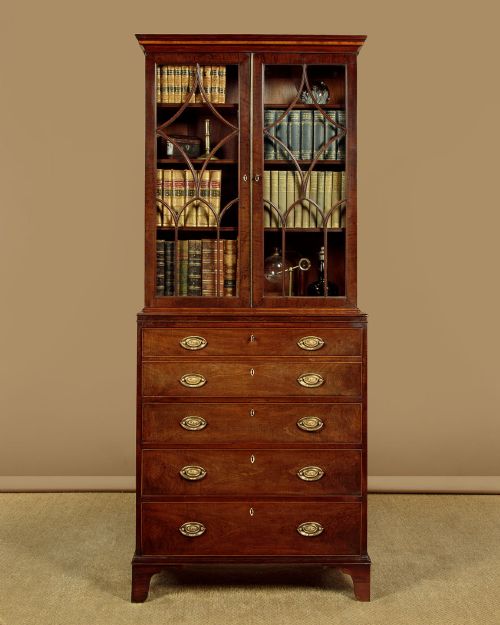
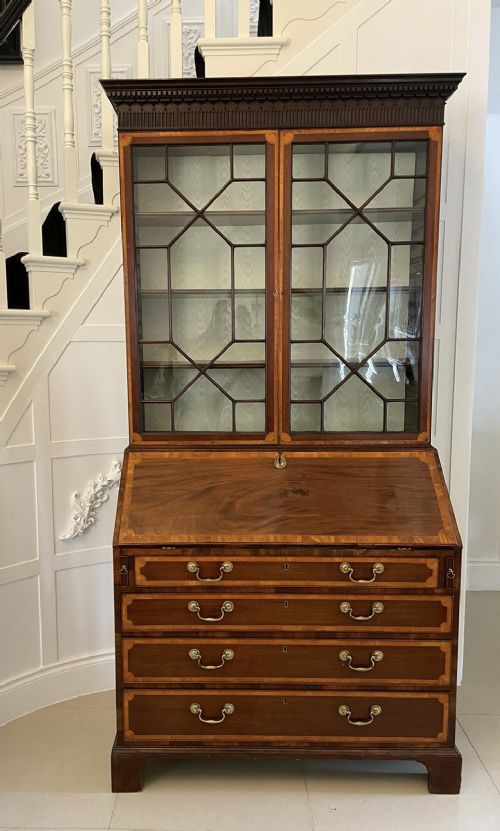
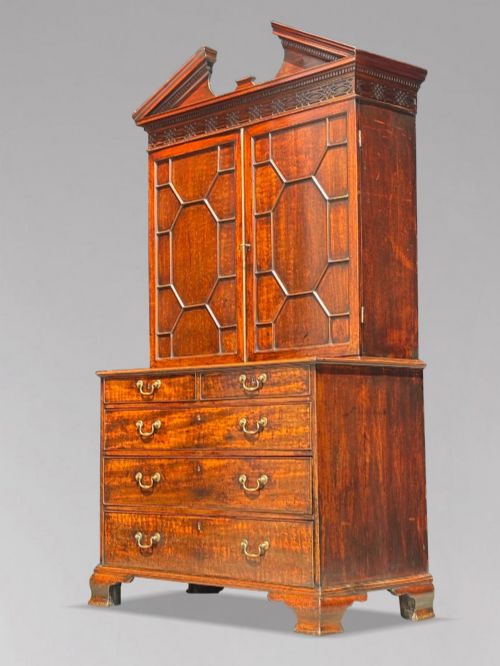
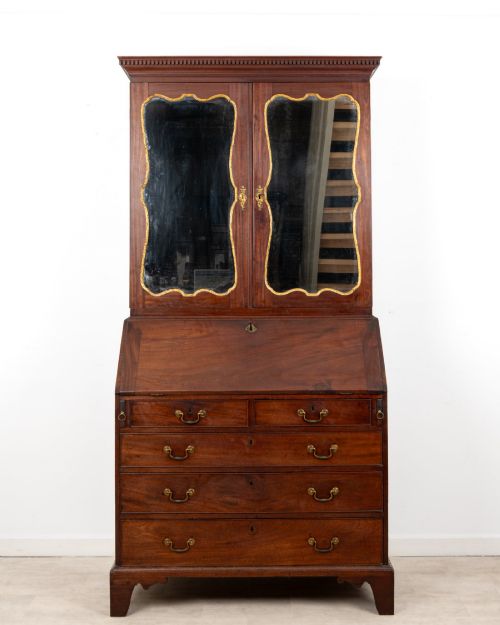
A georgian mahogany bureau bookcase consists of a lower writing desk section fitted with drawers and a fall front, topped by an enclosed bookcase cabinet with glazed doors. These pieces span the eighteenth and nineteenth centuries, emerging from George II and George III periods through the Regency and William IV eras.
The versions most commonly met on this page date from the Georgian period, often constructed with flame mahogany veneers and fitted interiors containing pigeonholes and small drawers. Examples range from tall, imposing library cabinets down to small proportions and occasional miniature furniture samples.
How They Were Made
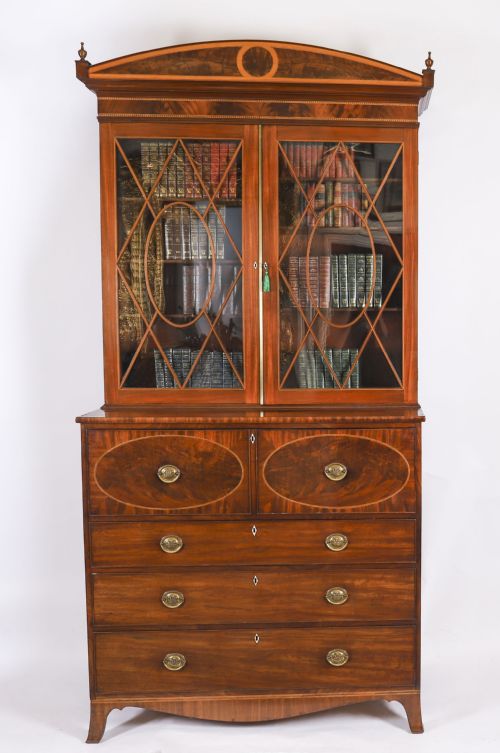
Cabinet makers utilised dense solid mahogany and figured mahogany veneers, frequently laid over secondary timbers such as oak, to construct the heavy carcase and drawers. Glass panes within the upper doors were held by wooden astragal bars, while brass hardware secured the doors, drop fronts, and internal compartments.
Fine linear contrast was added through satinwood inlay and stringing around drawer fronts and cornices. Surfaces received traditional finishes including french polish, which brought out the deep grain patterns of the timber.
Listings feature mahogany, oak, brass, glass, leather, and satinwood across eighteenth and nineteenth-century forms.
What Varies In Quality
The hierarchy of these cabinets rests upon the choice of timber and the precision of the cabinet work. Pieces featuring intensely figured flame mahogany and crisp, hand-cut astragal glazing bars sit clearly above plain utilitarian carcases.
Internal complexity dictates distinction. Elaborately fitted writing compartments with hidden secret drawers, pigeonholes, and miniature doors demonstrate superior workshop craftsmanship compared to simple shelved interiors.
Thomas Chippendale·Tudor And Burrey·Gillows Of Lancaster
The Georgian Mahogany Bureau Bookcase Glossary
- Bureau bookcase
- A combined furniture form featuring a sloping writing flap that drops down for correspondence, surmounted by a glazed shelving cabinet. This dual-purpose item served libraries and drawing rooms across the Georgian period.
- Secretaire
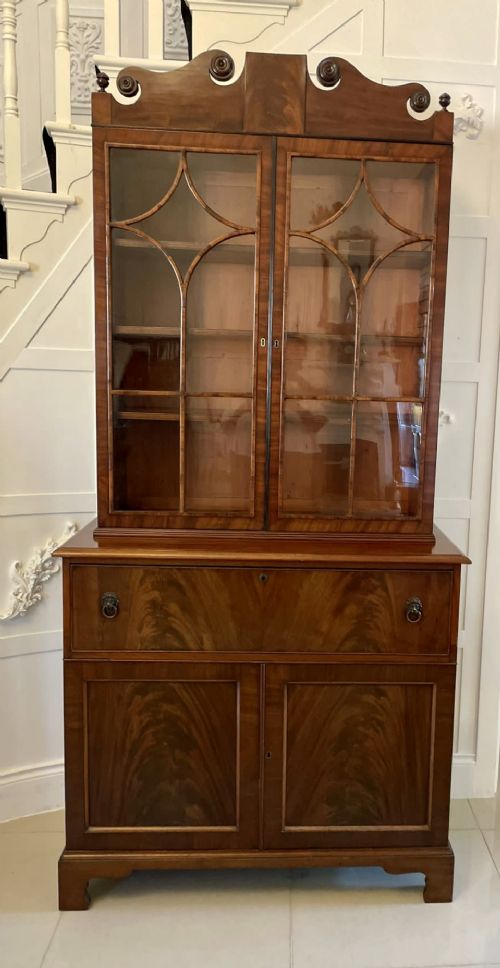
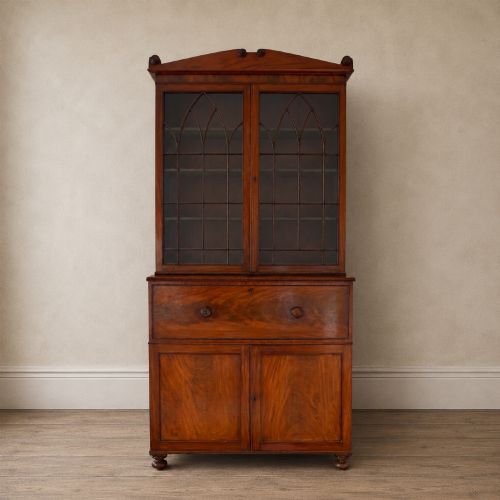
- A drawer containing a fitted writing desk with a drop-down front, which disguises the bureau function behind a single deep drawer facade. This mechanism allowed designers to maintain the appearance of a standard chest or cabinet.
- Astragal
- Moulding profiles used to hold panes of glass within the upper cabinet doors. Delicate wooden astragal bars created geometric or Gothic glazed patterns characteristic of the era.
- Flame mahogany
- A decorative veneer cut from timber where the branch meets the trunk, producing a rippling flame effect. Cabinet makers reserved this expensive material for primary visible surfaces like drawer fronts.
- Bracket feet
- Simple architectural feet supporting the base of the cabinet carcase at each corner. These supports evolved from plain curved profiles to more bracketed shapes over the course of the eighteenth century.
Georgian Mahogany Bureau Bookcase: Frequently Asked Questions
How do I use the bureau desk?
The sloping front of the bureau folds down to create a flat writing surface supported by wooden lopers that pull out from the carcase. This reveals an internal arrangement of small drawers and pigeonholes designed for stationery and letters.
When writing is finished, the desk flap lifts back up and locks in place to conceal the contents and maintain a neat exterior cabinet.
Where were these bookcases placed?
These tall cabinets traditionally stood in private libraries, studies, and formal drawing rooms of large townhouses and country residences. They provided secure storage for bound books behind glass doors while keeping writing materials close at hand.
Today, they function as focal storage and display furniture in living spaces, studies, and dining rooms.
How do I tell George III from Regency pieces?
George III examples often display restrained classical proportions, fine astragal glazing bars, and bracket feet, with construction dating through the late eighteenth and early nineteenth centuries. The wood choice frequently emphasises figured mahogany with subtle satinwood stringing.
Regency pieces tend toward bolder architectural motifs, sometimes incorporating brass inlay, heavier columns, or plinth bases reflecting changing nineteenth-century tastes.
What is a secretaire drawer?
A secretaire drawer is the top drawer of a chest or sideboard section that pulls out and drops forward to form a desk surface. This clever design provides the utility of a bureau without requiring a sloping front lid.
Inside, the drawer contains fitted compartments and small drawers for writing equipment while preserving the clean horizontal lines of the cabinet exterior.