


Georgian Magazine Holder
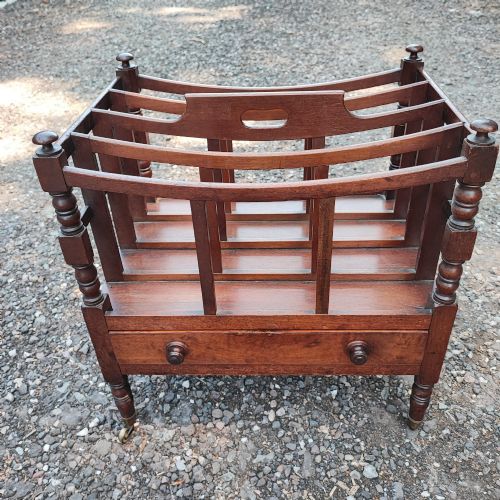
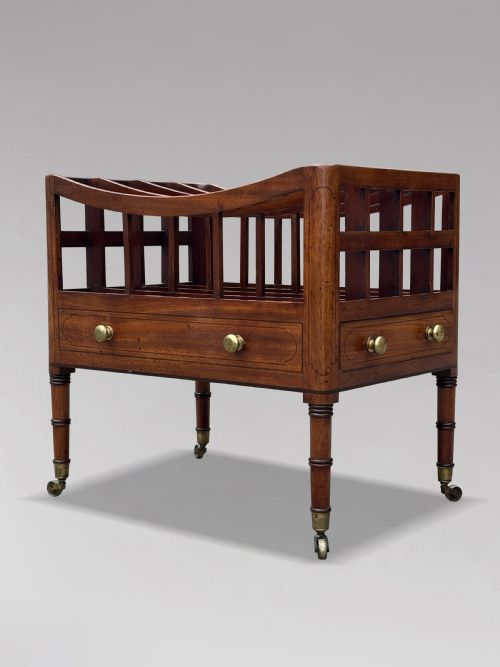
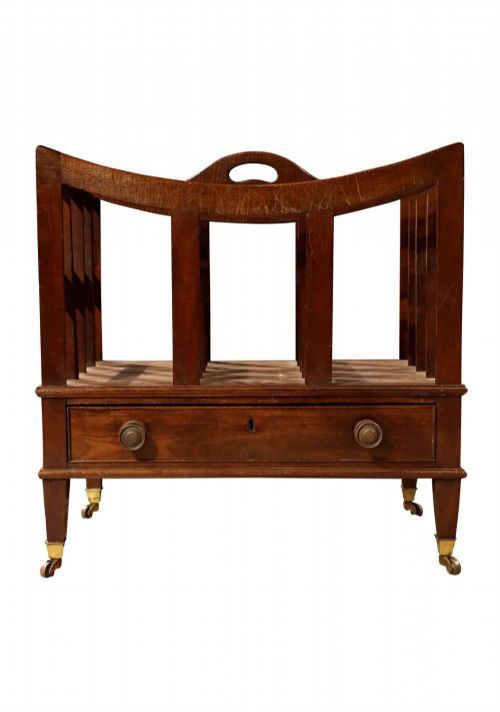
A georgian magazine holder, better known here as a Canterbury, keeps periodicals and folios orderly with distinct elegance.
Georgian Magazine Holder
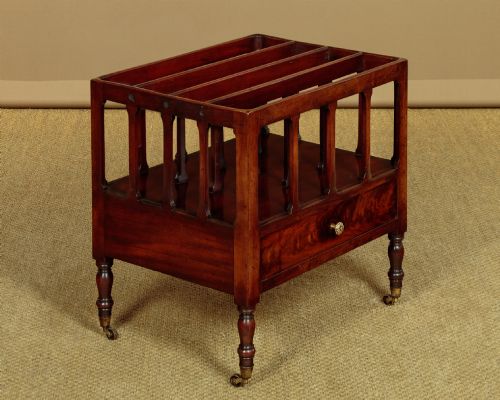
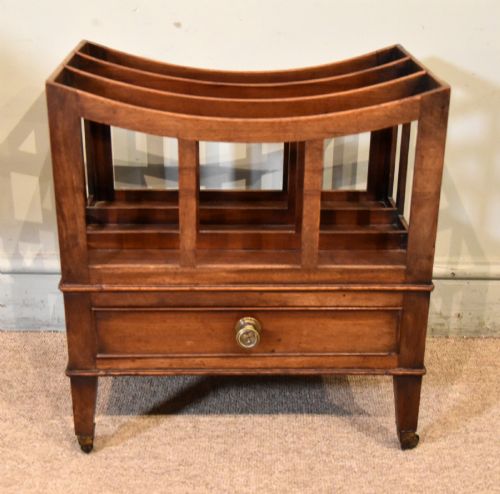
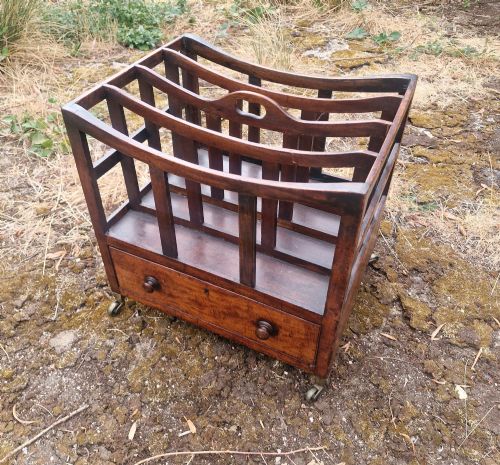
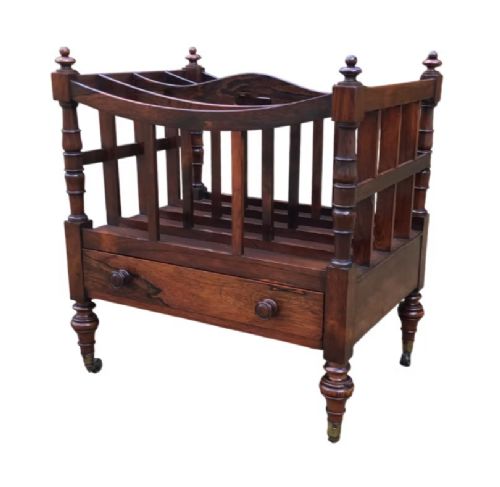
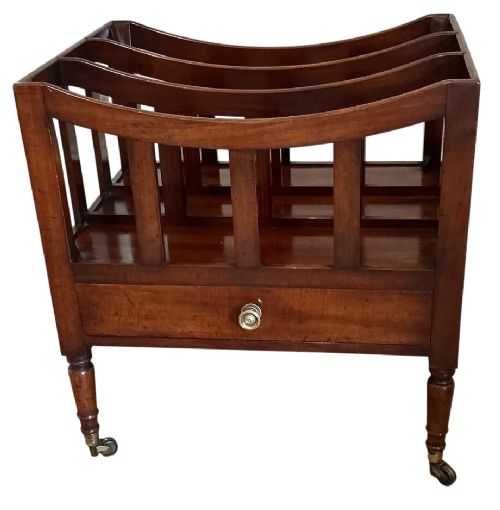
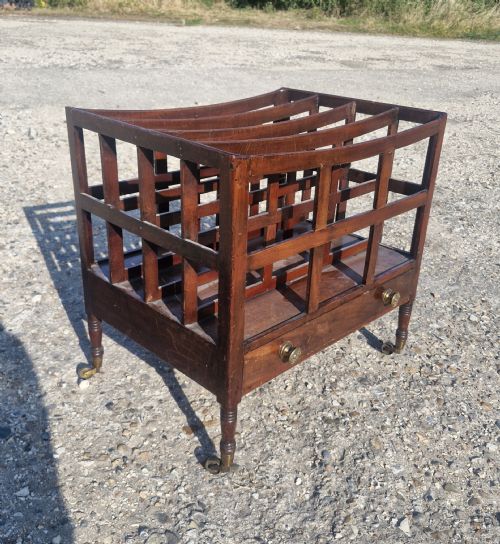
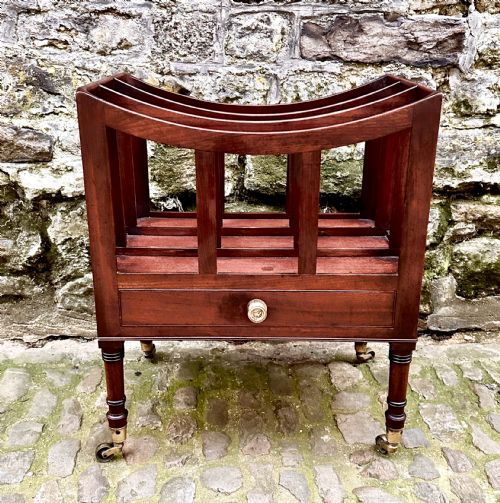
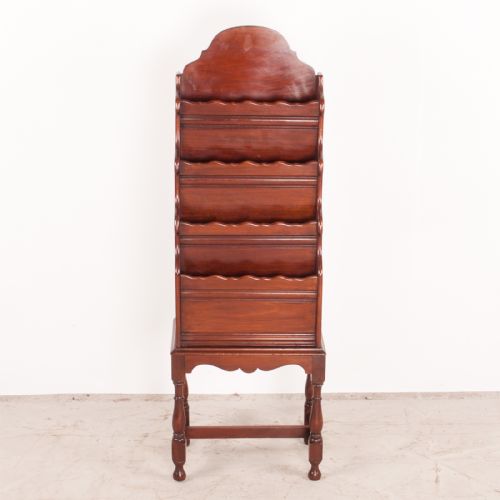
When you search for a georgian magazine holder, you encounter pieces designed to hold papers, music sheets and periodicals close to hand. The most common form on this page is the Canterbury, a low freestanding rack divided into vertical compartments with a carrying handle and frequently a drawer beneath.
These items originate across several decades, spanning the 18th century, the Regency period, and into later revivals. Makers constructed them primarily in mahogany and rosewood, sometimes incorporating ebony banding, inlay or painted wood to suit polite interiors.
How they were made
Craftsmen built these stands predominantly from solid timbers such as mahogany, Cuban mahogany, and rosewood, prized for their rich grain and deep colour. Decorative elements relied on contrasting materials, including ebony banding, fine inlay, and gilt accents.
Structural integrity depended on joinery suitable for portable furniture, often set upon turned legs fitted with castors for ease of movement around the library or drawing room. Finer examples integrated carved details such as Prince of Wales feathers or boat-shaped profiles.
Some Regency Canterburys were built with boat-shaped troughs, ready to sail through an evening of sheet music and newspapers.
What varies in quality
The choice of timber dictates the initial distinction, moving from standard mahogany to finely figured Cuban mahogany or rich rosewood. Greater depth of grain and superior natural figuring separate ordinary pieces from exceptional ones.
Refinement of detail elevates certain examples above standard utility items. Crisp carving on upright dividers, well-turned legs, original castors, and the presence of a properly fitted lower drawer mark the upper echelon of these pieces.
The Georgian Magazine Holder Glossary
- Canterbury
- A low stand with vertical partitions used for holding sheet music, newspapers and magazines. It typically incorporates a carrying handle and sometimes a drawer.
- Folio stand
- A piece designed to hold large loose sheets of paper, prints or maps rather than bound volumes. These often feature adjustable or A-frame supports.
- Cuban mahogany
- A dense, dark timber harvested in the Caribbean, valued for its exceptional weight and rich figuring in 18th and early 19th-century furniture.
- Inlay
- A technique where contrasting materials are inserted into recessed cavities on the wood surface to create decorative patterns or banding.
- Castor
- A small wheel mounted on a swivel attached to the base of the legs, allowing the stand to be moved easily across a floor.
Georgian Magazine Holder: Frequently Asked Questions
What is the difference between a Canterbury and a magazine rack?
A Canterbury is a specific historical form featuring vertical wooden divisions, a carry handle, and frequently a drawer below, originating in the Georgian and Regency periods. Magazine rack is a broader term used to describe these earlier stands alongside later 20th-century variations.
While both serve to organise unbound papers, the traditional Canterbury relies on fine cabinet-making techniques in timbers like mahogany or rosewood.
How were these stands used in a period home?
These pieces sat beside reading chairs or desks to hold daily newspapers, current periodicals, and sheet music for the piano. Their compartmented design kept papers upright and accessible.
Because many were fitted with castors, occupants could wheel them around the drawing room or library as needed throughout the day.
How do I distinguish Regency pieces from later revivals?
Regency and Georgian pieces display the timber selection, hand-cut joinery, and patination typical of the early 19th century, often utilising Cuban mahogany or rosewood. Later Georgian Revival and Edwardian examples from around 1900 show different machining marks and timber preparation.
Examining the construction of the interior drawer and the wear on the feet helps confirm the actual period of manufacture.
Did these stands always have drawers?
Not all examples feature a drawer beneath the main compartmented rack. Many standard Canterburys consist solely of the slatted divisions and a low base with legs.
When a drawer is present, it provides extra storage for smaller items like writing materials or additional sheets of music.