
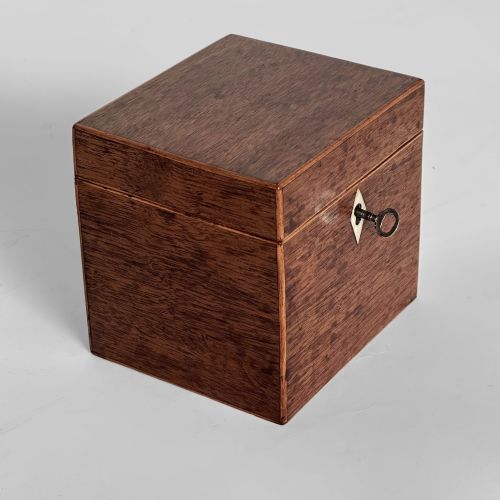
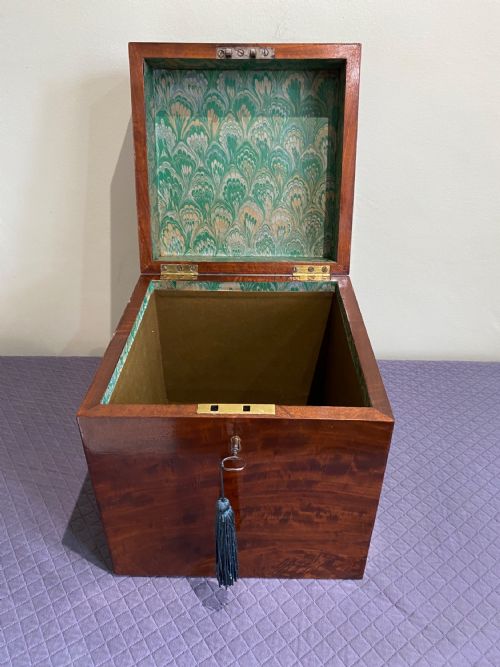
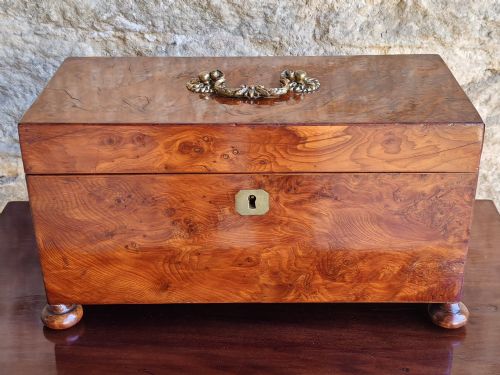

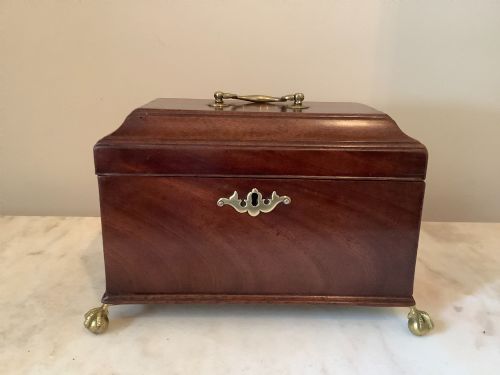
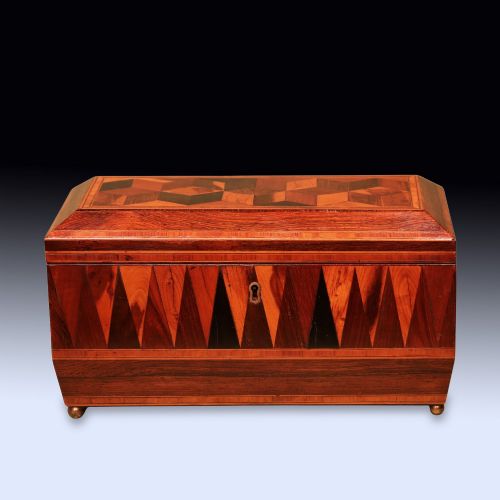
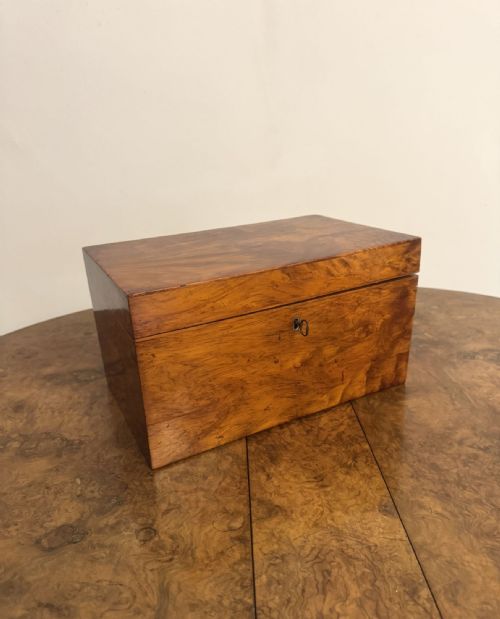


Georgian Lockable Tea Caddy
A georgian lockable tea caddy is a secure wooden box made to store precious loose leaves, combining fine cabinet-making with domestic utility.
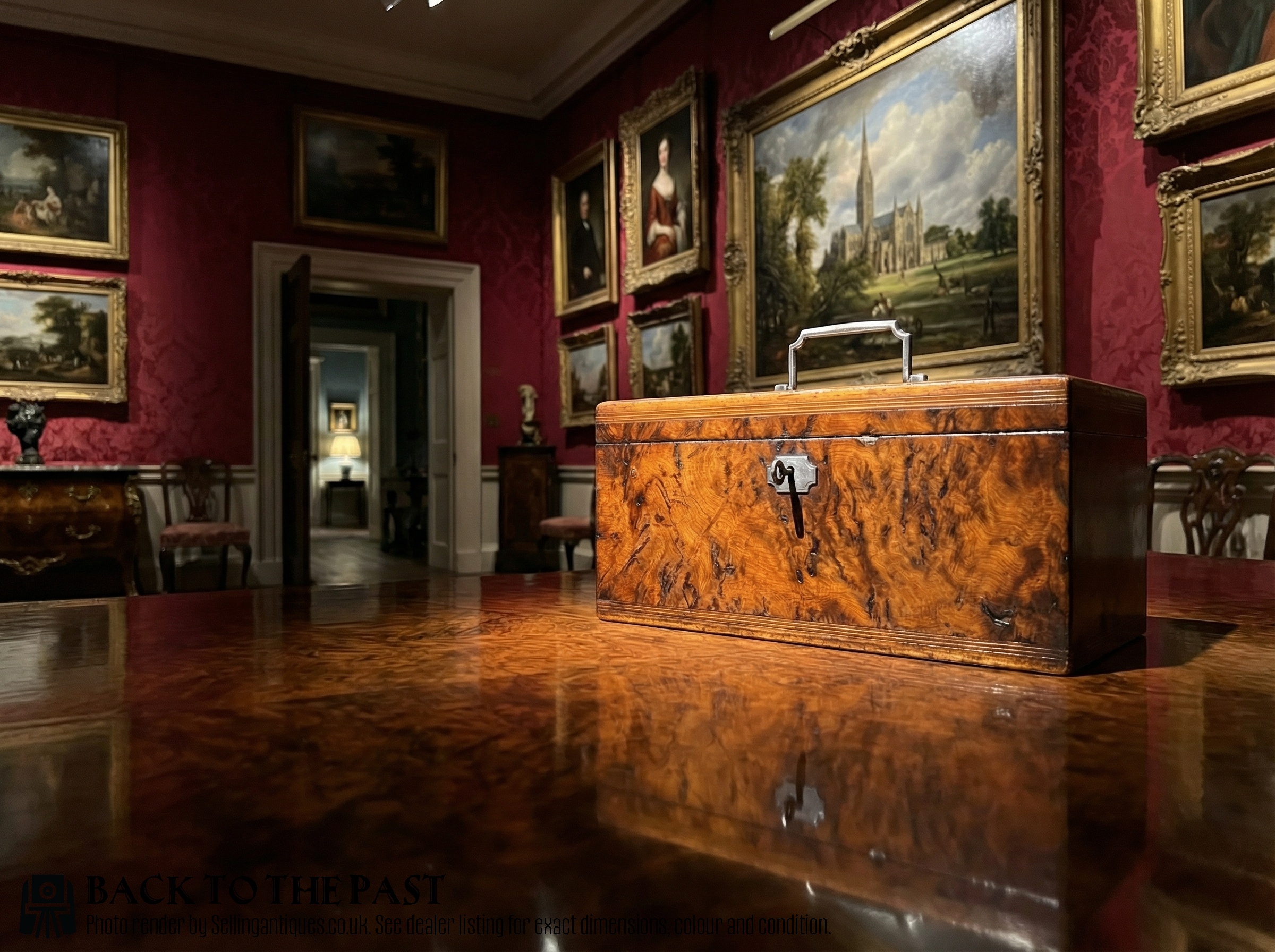
Georgian Lockable Tea Caddy
When you search for a georgian lockable tea caddy, you encounter timber boxes designed to keep expensive tea safe under lock and key. These containers date from the eighteenth and nineteenth centuries, spanning the Georgian, Regency, and early Victorian periods.
The pieces appear in various forms, including rectangular boxes, sarcophagus shapes, and oval caddies. Mahogany and rosewood serve as the primary timbers, often enhanced by decorative veneers and internal compartments.
Materials and Construction
Cabinet-makers constructed these caddies using solid timbers and fine veneers like mahogany, rosewood, satinwood, and walnut. Artisans applied decorative details such as boxwood stringing, brass inlay, shell marquetry, and painted surfaces to enrich the exterior appearance.
Internal arrangements involved fitted wooden compartments, metal canisters, and glass mixing bowls. Functional hardware included brass handles, escutcheons, and working locks with keys to secure the contents.
The listed pieces utilise timbers including mahogany, rosewood, satinwood, yew, walnut, boxwood, ebony, amboyna, gonçalo Alves, and partridge wood.
Assessing Quality
The choice of timber and veneer dictates much of the visual merit, with burr walnut, amboyna, and figured mahogany marking out superior examples. Finer pieces display meticulous parquetry, marquetry, and delicate stringing executed with precision.
Hardware execution and internal completeness separate ordinary boxes from exceptional survivals. Original brass lion mask handles, intact mixing glasses, and functioning locks with matching keys elevate a piece.
The Georgian Lockable Tea Caddy Glossary
- Caddy
- A small box or chest designed for storing tea leaves. The term derives from the Malay word kati, a unit of weight.
- Sarcophagus
- A box shape featuring a domed or peaked lid sloping on four sides, popular during the Regency period. This architectural form lent a monumental appearance to household containers.
- Marquetry
- Decorative veneer work forming pictorial or geometric patterns using various woods. Craftsmen cut contrasting timbers and fitted them flush into a prepared surface.
- Escutcheon
- A protective plate surrounding the keyhole of a lock. These fittings are frequently made of brass or bone to prevent wear on the surrounding wood.
Georgian Lockable Tea Caddy: Frequently Asked Questions
What is a georgian lockable tea caddy?
A georgian lockable tea caddy is a wooden storage box built during the eighteenth or early nineteenth century to protect valuable loose leaf tea. These boxes featured integrated locks because tea was a costly commodity kept under the direct control of the head of the household.
Inside, these containers often held separate compartments for different tea varieties, sometimes accompanied by a glass bowl for blending. The craftsmanship matched the finest furniture of the period, using dense hardwoods and decorative veneers.
How were tea caddies used?
These boxes functioned as secure storage units in the dining room or drawing room where tea was weighed and dispensed. The mistress of the house typically held the key, managing the daily distribution of black and green teas.
The inclusion of internal metal canisters or foil-lined compartments kept the leaves dry and preserved their aromas away from household dampness and strong food odours.
How do I date a tea caddy?
Dating relies on timber choices, construction methods, and prevailing decorative styles such as Chippendale, Sheraton, or Regency. Earlier eighteenth-century examples often utilise solid mahogany or walnut with simpler lines, while Regency pieces favour exotic veneers like rosewood and brass inlay.
Hardware styles, including feet, handles, and escutcheons, also shift across decades. Sarcophagus forms and paw feet point firmly toward the early nineteenth century.
How do I care for antique wood?
Preserving these wooden boxes requires stable room temperatures away from direct sunlight and heat sources. Sudden changes in humidity cause timbers to shrink, which splits delicate veneers and warps lids.
Cleaning should involve only a soft, dry cloth to remove dust. Modern polishes and silicones damage aged French polish and wax finishes.