
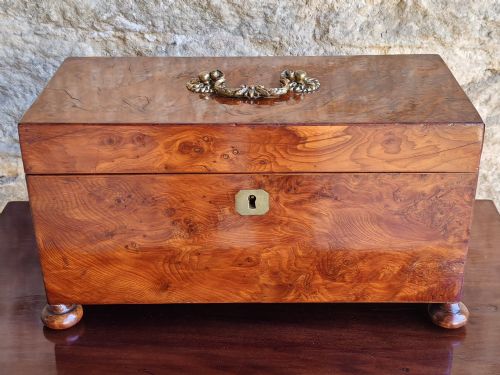
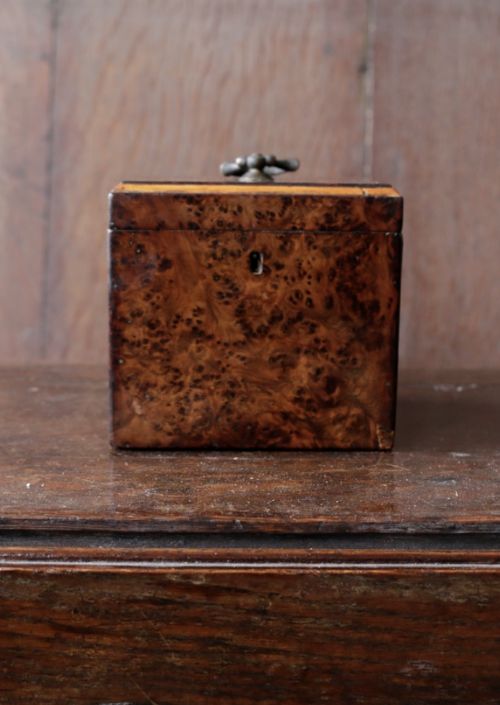


Yew Wood Box
A yew wood box offers a rich, swirling grain that turns simple desktop items into compelling studies in natural pattern.
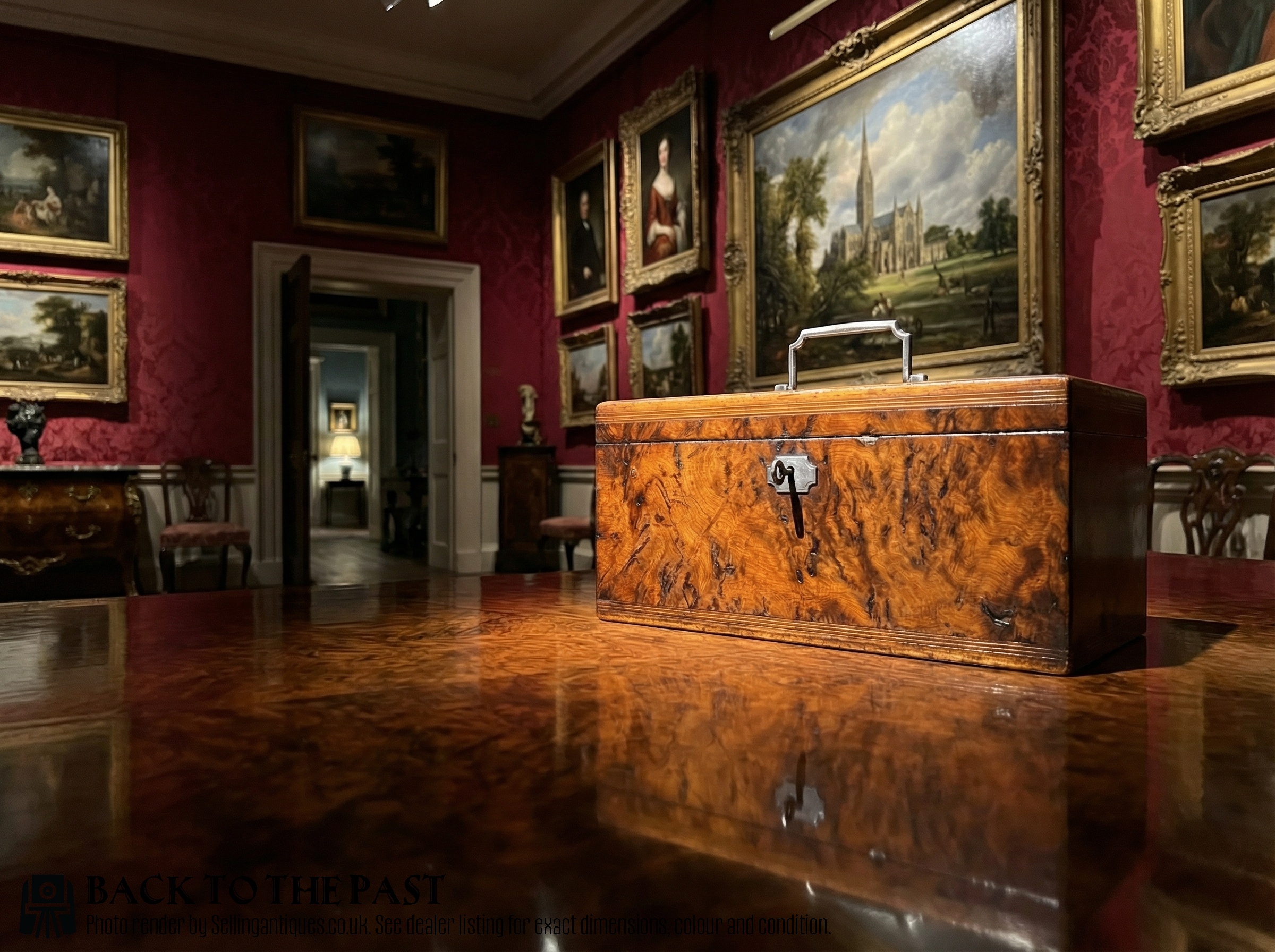
Yew Wood Box
A yew wood box encompasses a diverse array of small containers created primarily during the Georgian, Regency, and Victorian periods. Buyers seeking this phrase typically encounter tea caddies, writing slopes, jewellery boxes, and small desktop storage pieces.
The material ranges from straight-grained timber to highly figured burr yew, frequently enhanced with contrasting stringing or marquetry. Forms stretch from simple barrels and candle boxes to elaborate sarcophagus shapes and fitted workboxes.
Origins span English workshops alongside Irish Killarney examples, reflecting domestic utility and refined leisure across the eighteenth and nineteenth centuries.
How they were made
Cabinetmakers utilised solid timber and delicate veneers of burr yew, applying boxwood, ebony, and bone for stringing, inlay, and marquetry details. Brass hardware frequently secures corners, hinges, and locks on tea caddies and writing slopes.
Construction techniques include staved barrel building, dovetailing, and veneering over secondary woods, matching the structural demands of each specific object type.
Some Victorian yew boxes doubled as puzzle balls or secret-lidded containers designed to tease guests before revealing their contents.
What varies in quality
Quality rests primarily in the density and activity of the burr grain and the precision of the inlay work. Boxes featuring crisp boxwood stringing and intact, original interiors stand distinctly apart from simpler iterations.
The sophistication of the form, such as semi-circular, hexagonal, or sarcophagus silhouettes, dictates the level of craftsmanship invested by the original maker.
The Yew Wood Box Glossary
- Burr Yew
- The growth deformity in yew trees that produces swirling, eye-like patterns in the timber. This highly decorative wood is sliced into veneers for prominent display on lids and panels.
- Tea Caddy
- A container designed to store loose tea leaves, often featuring internal lidded compartments. Georgian and Regency examples in yew frequently take cube, hexagonal, or sarcophagus forms.
- Stringing
- Thin lines of contrasting wood, such as boxwood or ebony, inlaid into grooves on the surface. This technique outlines panels and geometric borders.
- Killarney Ware
- Decorative wooden items produced in Ireland, typically characterised by intricate marquetry depicting local flora and ruins. These pieces frequently utilise local yew and arbutus woods.
- Treen
- Small handmade wooden household objects and utilitarian items. Examples include snuff boxes, puzzle balls, and small turned containers.
Yew Wood Box: Frequently Asked Questions
What were yew wood boxes used for?
These boxes served practical domestic functions, holding valuable commodities like tea, writing implements, sewing tools, and jewellery. They kept daily necessities organised on desks and dressing tables.
Over time, many transitioned into decorative display pieces or specialised storage for collectibles such as stamps and gaming counters.
How do I date an antique yew box?
Dating relies on construction methods, hardware types, and stylistic cues associated with periods like Georgian and Regency. Dovetail joints, lining materials, and key escutcheons offer clear chronological markers.
Secondary woods and exterior decorative motifs, such as boxwood stringing or specific marquetry patterns, help narrow the decade of production.
How should I care for burr yew?
Keep wooden boxes away from direct sunlight and steady heat sources to prevent the burr veneer from drying and splitting. Maintaining stable room humidity protects the delicate timber and inlay.
Apply occasional appropriate wax polish sparingly to nourish the grain and preserve the surface sheen without building up residue.
What is the difference between a tea caddy and a workbox?
A tea caddy contains interior compartments designed specifically for storing dry tea leaves, often retaining mixing bowls or foil-lined foils. They typically feature secure locks to protect expensive tea.
A workbox contains fitted trays, pins, and spaces for threads and needles, serving sewing and crafting tasks rather than culinary ones.