


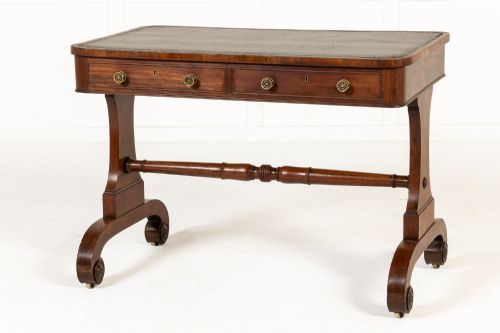


Georgian Leather Sofa
These georgian leather sofa pieces bring functional seating and writing surfaces into a room, offering period materials and classic forms.
Georgian Leather Sofa
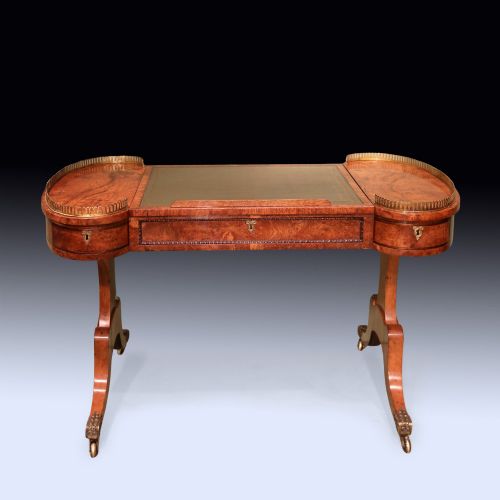
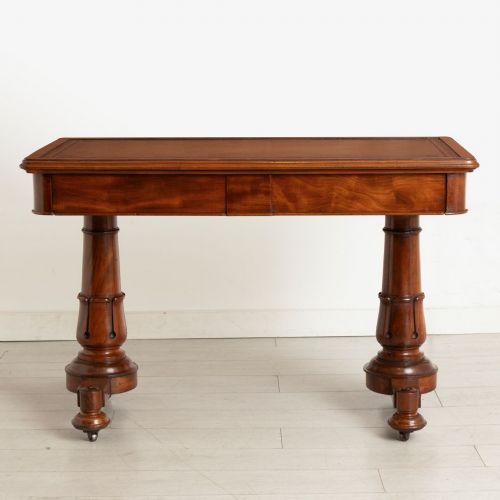
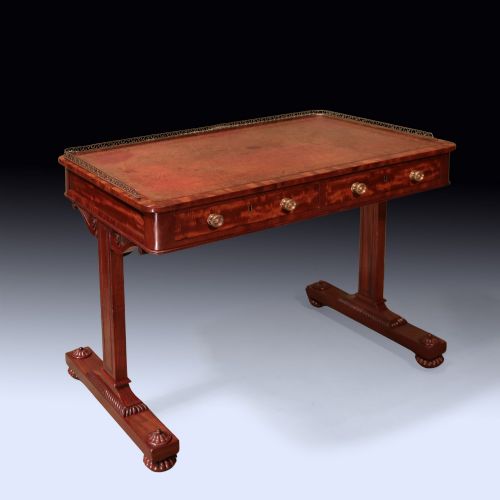
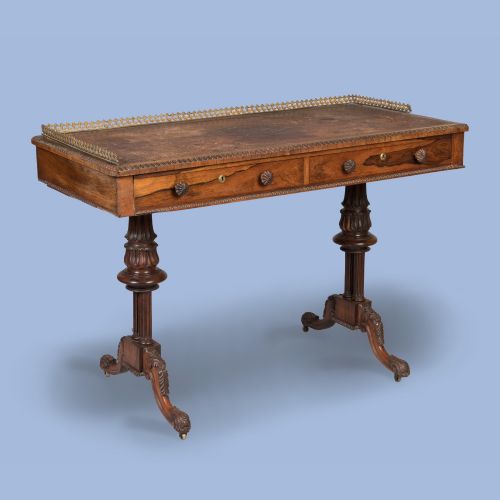
When searching for a georgian leather sofa, a buyer encounters a mix of library tables, writing tables, and upholstered settee forms originating from the Georgian, Regency, and Edwardian eras. The evidence shows that writing tables with inset leather surfaces dominate the selection, alongside library tables and upholstered leather sofas from the early nineteenth century.
These forms span late Georgian, Regency, and Edwardian periods, utilising timbers such as mahogany, rosewood, burr oak, and birdseye maple. Makers applied brass details and carved frames to library tables and settees, blending workspace utility with seating comfort in a single piece of furniture.
How they were made
Craftsmen built these pieces using solid hardwoods like mahogany and rosewood, frequently incorporating decorative veneers such as burr oak and birdseye maple on table surfaces. Frames relied on traditional joinery methods, supporting leather inserts and upholstered cushions.
Metalwork played a structural and decorative role, with brass hardware appearing alongside carved wooden frames and scroll ends. Leather was stretched across writing surfaces and sofa upholstery, bordered by timber framing or ebony inlay.
One dining companion discovered a hidden cigar stash beneath a library table drawer.
What varies in quality
Quality in these pieces rests upon the selection of timber veneers and the crispness of the carved wooden details. Finer examples display figured mahogany or rosewood, balanced proportions, and careful integration of leather tops with wooden frames.
The distinction between standard and superior pieces also lies in the execution of secondary woods and brass fittings. Pieces attributed to specific workshops or showing refined carving exhibit greater attention to decorative details.
Willmington and Cope·Marsh and Tatham
The Georgian Leather Sofa Glossary
- Library table
- A large freestanding table designed for the centre of a room, often fitted with a leather top and drawers for storage. These pieces served scholarly purposes in period homes.
- Regency
- An English design period spanning the early nineteenth century, characterised by classical revival motifs and darker woods. Furniture from this era often incorporates brass inlay and bold scrollwork.
- Settee
- A medium-length upholstered seat with a back and arms, designed to accommodate more than one person. Examples in the evidence feature carved wooden frames and leather upholstery.
- Sofa table
- A rectangular table designed to stand in front of a sofa or freestanding in a room, typically featuring drop leaves at either end. These pieces date primarily to the Regency and late Georgian eras.
- Burr oak
- A timber harvested from the gnarled growths on oak trees, yielding highly figured grain patterns. Cabinetmakers utilised this wood for decorative table surfaces.
Georgian Leather Sofa: Frequently Asked Questions
What is a georgian leather sofa?
A georgian leather sofa encompasses upholstered seating and leather-topped library tables from the Georgian and Regency periods. These items combine timber frames with leather upholstery or writing surfaces.
Buyers often find that the term covers both library tables with leather inserts and traditional upholstered settees. Each form reflects the domestic requirements of early nineteenth-century interiors.
How were library tables used?
Library tables served as central room fixtures for reading, writing, and holding books. Their finished backs allowed them to stand away from walls.
Many examples incorporate inset leather tops to provide a smooth writing surface alongside drawers for papers. They occupied studies and libraries in grand houses.
What woods appear on these pieces?
Cabinetmakers utilised mahogany and rosewood as primary structural and surface timbers. Exotic veneers such as burr oak and birdseye maple also appear.
Hardwoods provided the necessary strength for table frames and carved sofa structures. Lighter woods and ebony served as contrasting inlay elements.
How to identify a Regency piece?
Regency furniture displays classical architectural influences, scroll ends, and dark tropical hardwoods. Brass mounts and restrained carving are typical characteristics.
Pieces from this era date from the early nineteenth century and often feature polished leather inserts. The proportions remain balanced and structural lines stay clean.
Where did these pieces originate?
These items originated in English workshops and provincial cabinet-making centres during the Georgian and Regency eras. Regional variations occasionally appear in Cumbrian or other local pieces.
Craftsmen in London and the provinces produced these tables and settees for domestic use. Surviving examples retain the characteristics of their original manufacturing regions.