






Georgian Lead Glass Chalice
A georgian lead glass chalice is a heavy, resonant drinking vessel from the eighteenth or early nineteenth century that brings genuine period weight to a table.
Georgian Lead Glass Chalice
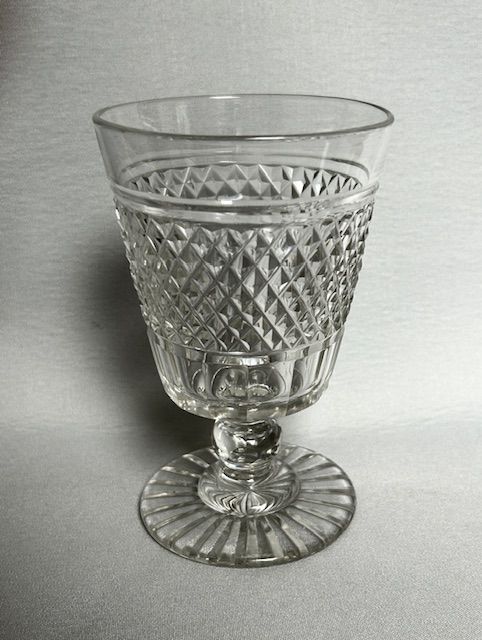
When you search for a georgian lead glass chalice, you encounter heavy drinking vessels, rummers, and large goblets spanning the eighteenth and nineteenth centuries. These pieces encompass various forms including bell bowls, ovoid bowls, and wide-bowled drinking glasses designed for wine, beer, or ceremonial toasts.
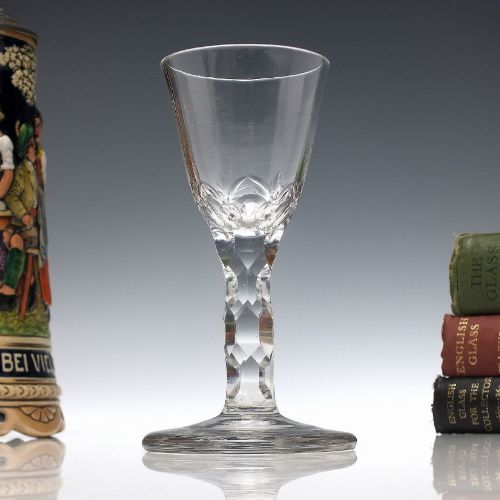
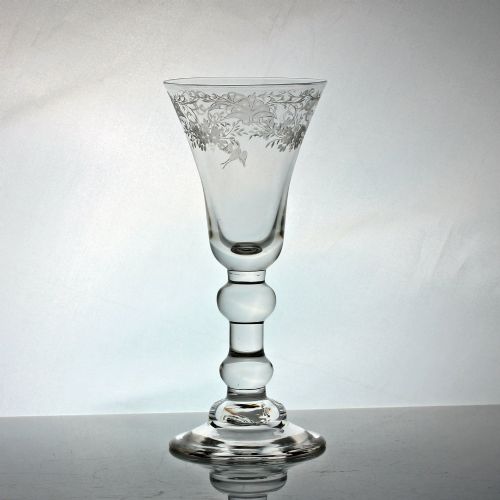
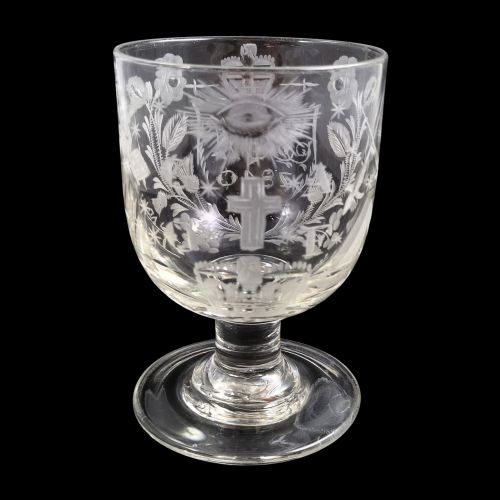
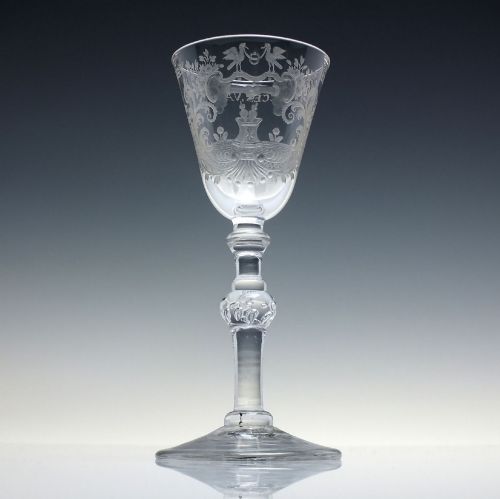
The most common examples on this page date from the Georgian and Regency periods, featuring clear lead glass, flint glass, or occasional coloured glass. Many examples exhibit engraved decoration showing hops, barley, ships, monograms, or commemorative initials from English and Irish workshops.
Materials and construction
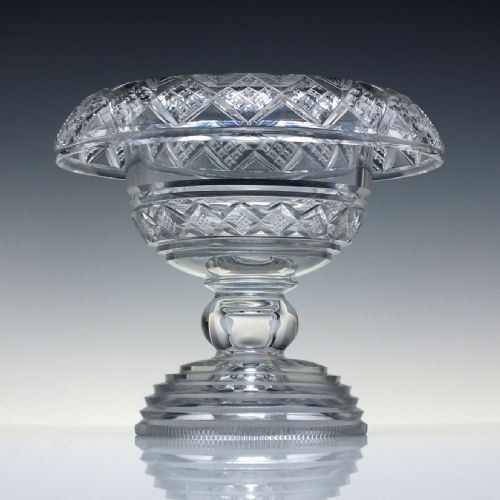
Makers utilised heavy lead glass and flint glass to achieve deep brilliance, thick walls, and a distinctive resonant ring when struck. This heavy composition allowed artisans to execute deep hobnail cutting and crisp wheel engraving without compromising structural integrity.
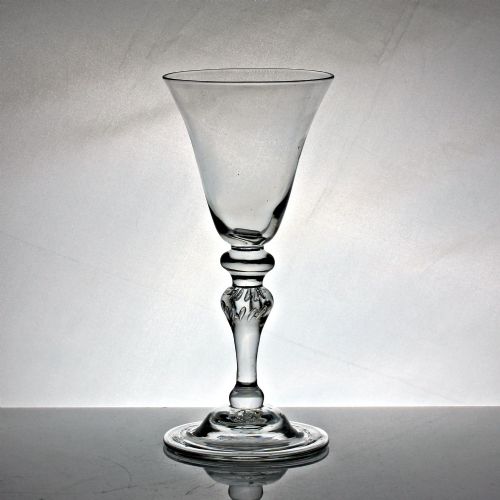
Stems were formed in several distinct configurations, including baluster, balustroid, plain stems, and corkscrew two-ply twist stems. Bases were finished with folded rims, domed feet, or heavy circular footprints to balance the substantial weight of the bowl.
Georgian Lead Glass Chalice Retail Price Guide 2026
Typical asking prices for georgian lead glass chalice among the pieces listed under this phrase on Sellingantiques today, from the lower quarter to the upper quarter. They describe what is for sale here now, not the wider market.
Several rummers proudly display detailed engravings of sailing ships alongside personal initials, ready for eighteenth-century toasts.
Assessing quality
The distinction between ordinary and superior examples lies in the clarity of the metal and the precision of the hand-cut or wheel-engraved details. Crisp execution of motifs like hops and barley or heraldic initials indicates skilled craftsmanship.
Proportion and foot form also dictate grade, with well-balanced domed feet and balanced baluster stems commanding greater attention than plain, heavy-footed utilitarian forms.
The Georgian Lead Glass Chalice Glossary
- Rummer
- A large, deep-bowled drinking glass popular for wine, beer, or punch during the Georgian and Regency eras. These vessels typically feature sturdy stems and substantial capacities.
- Baluster stem
- A thick, swelling stem form reminiscent of architectural balusters, often featuring internal air bubbles or knops. This heavy form provides stability for large eighteenth-century bowls.
- Hobnail cut
- A geometric surface pattern of intersecting triangular facets resembling the hobnails used in heavy boots. This technique creates a tactile, light-catching texture.
- Flint glass
- An early British term for heavy, high-refractive-index lead glass developed to imitate precious crystal. It provides the characteristic weight and brilliance found in these pieces.
Georgian Lead Glass Chalice: Frequently Asked Questions
What is a georgian lead glass chalice used for?
These large vessels served for drinking wine, ale, and punch during formal meals, toasts, and tavern gatherings. Their substantial weight and capacity made them central to social rituals of the eighteenth century.
Today, collectors utilise them as decorative objects, mantel displays, or occasionally for special toastings where the heavy metal can be appreciated in hand.
How do I identify a georgian piece?
Look for the characteristic greyish-blue or bright refractive quality of lead glass combined with hand-finished pontil marks on the underside of the foot. Eighteenth-century examples often display tool marks and slight irregularities inherent to period hand-blowing.
Stems and bowl forms provide further clues, with baluster, plain, and twist configurations aligning with specific decades between seventeen-forty and eighteen-thirty.
Can I use these glasses daily?
While durable due to their thick lead composition, these historic vessels require careful handling and hand washing rather than modern dishwasher cycles. Sudden temperature changes can stress old glass.
Many owners prefer to keep them displayed safely in cabinets or on sideboards to protect the engraved surfaces and eighteenth-century rims from accidental chips.
Why are some bowls engraved?
Engravings often recorded specific agricultural themes like hops and barley for ale drinkers, or commemorated marriages, ships, and family initials. Wheel-engraved decoration personalised the vessel for the original owner.
Detailed nautical scenes or monograms help historians date the piece and sometimes connect it to specific regional British glasshouses.