




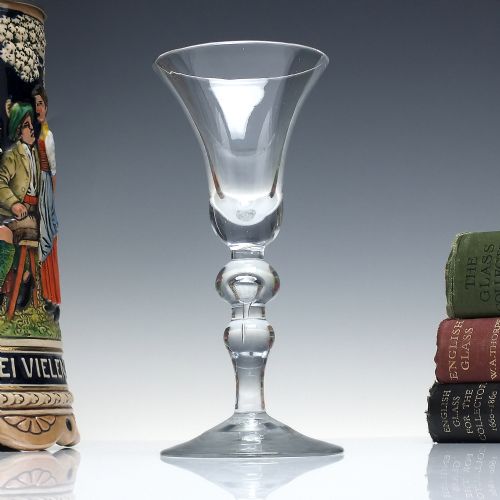
English Baluster Stem Glass
An English baluster stem glass is a heavy, tactile drinking vessel from the eighteenth century, prized for its substantial handle and clear lead metal.
English Baluster Stem Glass
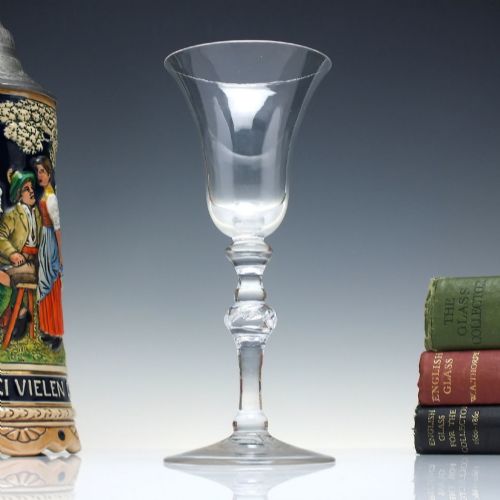
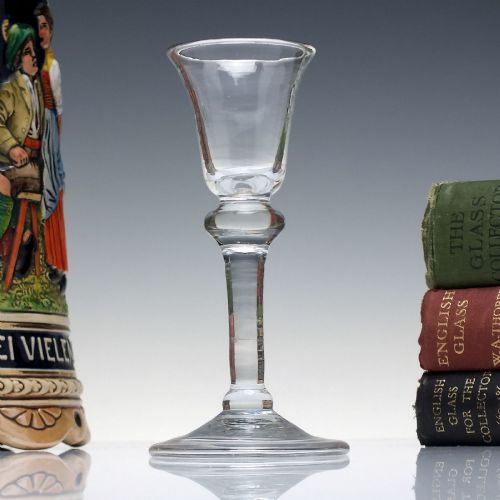
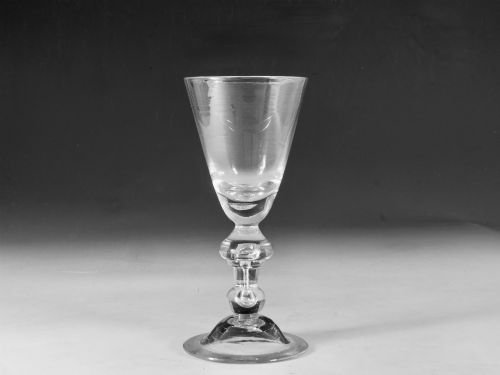
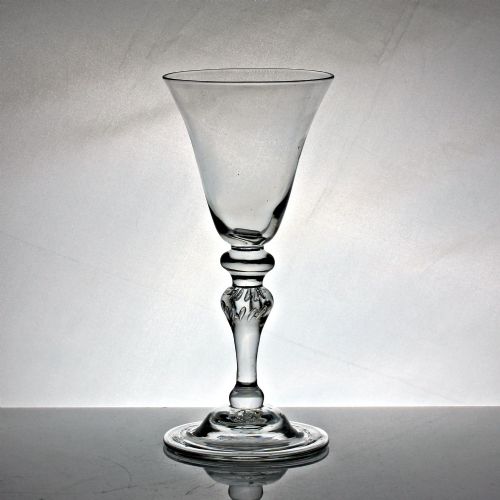
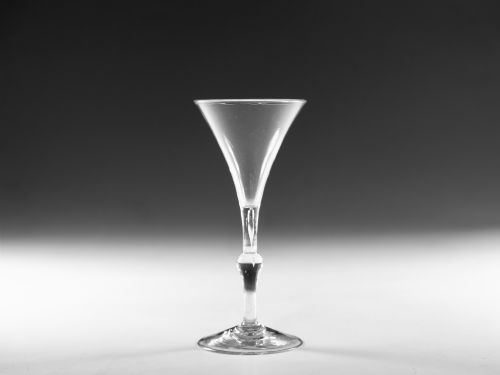
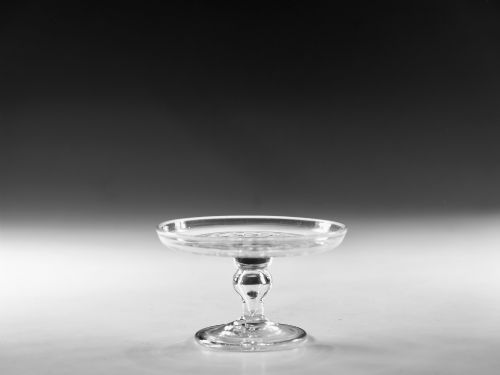
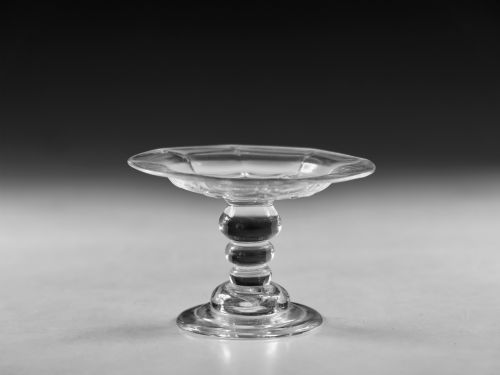
The English baluster stem glass is a drinking vessel defined by its sturdy, architectural stem, which borrows its shape from architectural balusters. Most pieces found here belong to the eighteenth century and the Georgian era, encompassing wine glasses, goblets, sweetmeat glasses, and patch stands.
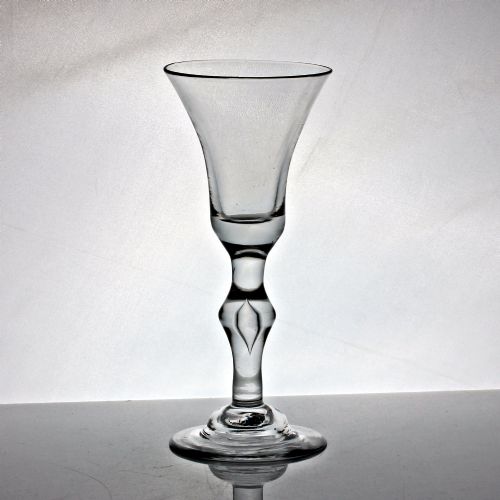
Makers shaped these drinking vessels with bell, flared, or ogee bowls, often incorporating internal air tears within the knops of the stem. These glasses represent a pinnacle of early English glassmaking, offering substantial weight in the hand and a deep resonance when struck.
Materials and construction
These pieces rely on lead glass and flint glass, formulations developed in England that yielded exceptional clarity and weight compared to continental soda glass. Craftsmen shaped each vessel while hot, blowing the bowl and applying molten metal to form the stem and foot separately.
Stems were fashioned using applied knops, collars, and baluster profiles, frequently enclosing tiny air bubbles known as air tears trapped inside the metal during manipulation. Pontil marks remain on the underside of the folded or domed feet, bearing witness to the manual detachment from the iron rod.
English Baluster Stem Glass Retail Price Guide 2026
Typical asking prices for english baluster stem glass among the pieces listed under this phrase on Sellingantiques today, from the lower quarter to the upper quarter. They describe what is for sale here now, not the wider market.
Listings span the Georgian and Victorian eras, recording lead glass, flint glass, and clear lead glass formed into wine glasses, goblets, patch stands, and candlesticks.
Distinctions in quality
Quality rests in the harmony of proportion between the heavy baluster stem, the bowl, and the foot, alongside the brilliance and purity of the lead glass metal. Glasses that maintain crispness in their knops and collars without excessive surface wear command greater attention.
The English Baluster Stem Glass Glossary
- Baluster
- A tapering architectural support with a bulbous lower portion, adapted by glassmakers to form the thick stem of eighteenth-century drinking vessels. It gives the glass its characteristic heft and solid balance in the hand.
- Balustroid
- A lighter, more slender variation of the traditional baluster stem, popular in the middle decades of the eighteenth century. These stems retain the knopped profile but use less metal.
- Air tear
- An intentional elongated bubble trapped inside the molten glass of the stem or knop during manufacture. Makers used them as a decorative feature to catch the light.
- Domed foot
- A foot rising convexly from the table edge to the base of the stem, often found on heavier goblets and sweetmeat glasses. This shape adds stability and visual height.
- Patch stand
- A small circular pedestal dish used on a dressing table to hold cosmetic patches or beauty spots. They share the lead glass material and stem construction of contemporary drinking vessels.
- Sweetmeat glass
- An ornate stemmed vessel with a wide bowl designed for serving small confectionery, nuts, or sweet preserves. They often feature moulded ribs and flared rims.
English Baluster Stem Glass: Frequently Asked Questions
What is a baluster stem glass?
A baluster stem glass is an eighteenth-century English drinking vessel distinguished by its heavy, knopped stem that resembles an architectural baluster. These pieces are celebrated for their high lead content and substantial weight.
They were principally used for wine and ale during the Georgian period, serving as both functional tableware and status symbols for the dining table.
How do I date an 18th-century wine glass?
Dating relies on observing the evolution of forms, from the heavy, thick-walled balusters of the early decades to the lighter balustroid and faceted stems of the mid-eighteenth century. Foot shapes, bowl profiles, and the presence of air tears also help narrow the decade of production.
Examining the metal under magnification reveals characteristics of lead glass batch preparation typical of English glasshouses active around seventeen-thirty to seventeen-fifty.
Can I use antique wine glasses?
While these glasses were made for drinking, their age and historical importance lead most modern owners to display them rather than use them at the dining table. Hand washing in tepid water without soaking is essential if they are ever used.
Displaying them in a cabinet protects the delicate lead crystal rims and fragile knops from accidental chips and thermal shock.