

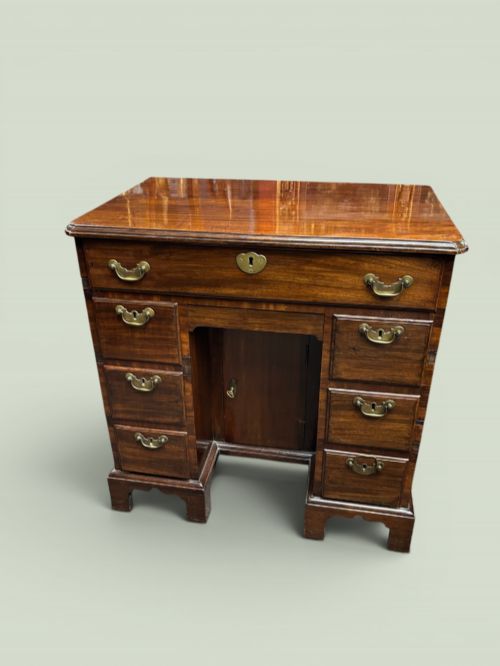
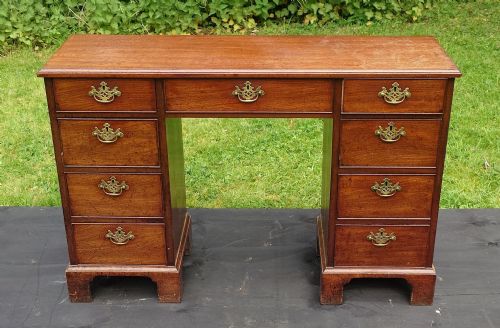
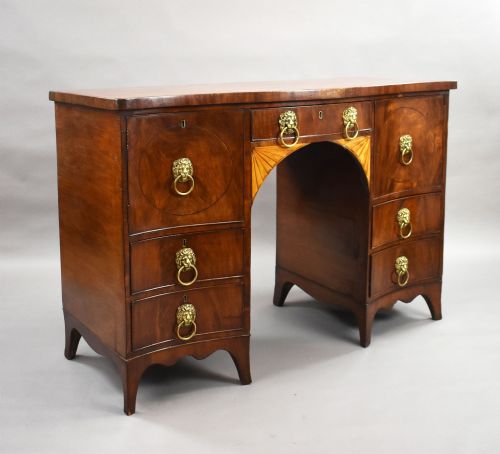
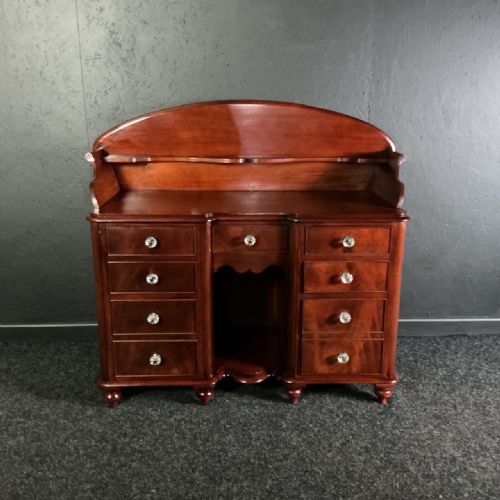


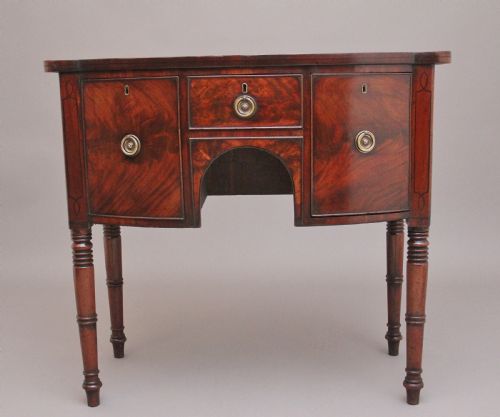
Georgian Kneehole Sideboard
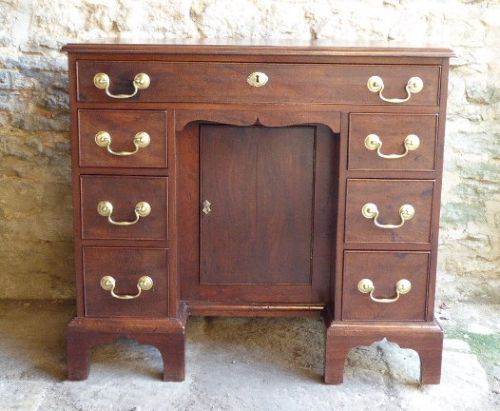
A georgian kneehole sideboard combines practical storage with formal presence, offering a fitted central recess flanked by drawers that anchors a traditional dining room.
Georgian Kneehole Sideboard
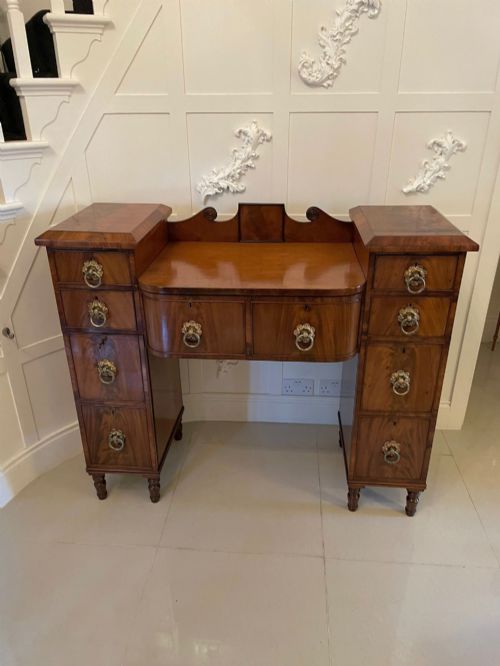
When you search for a georgian kneehole sideboard, you are looking at substantial timber case pieces designed for formal dining rooms and studies. These forms encompass low pedestals, kneehole desks, and bow-front serving tables intended to hold silver, linens, or writing materials.
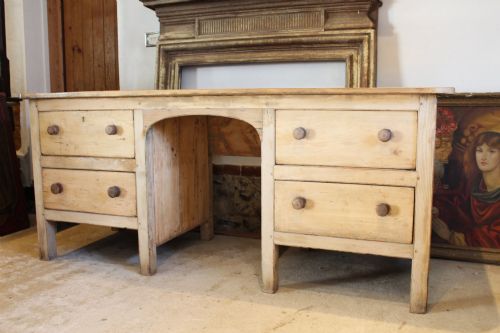
The versions most likely to meet you on this page date primarily from the eighteenth and nineteenth centuries, spanning George III and Regency periods. You will encounter mahogany timber predominantly, alongside occasional walnut, pine, and satinwood examples built with recessed central compartments.
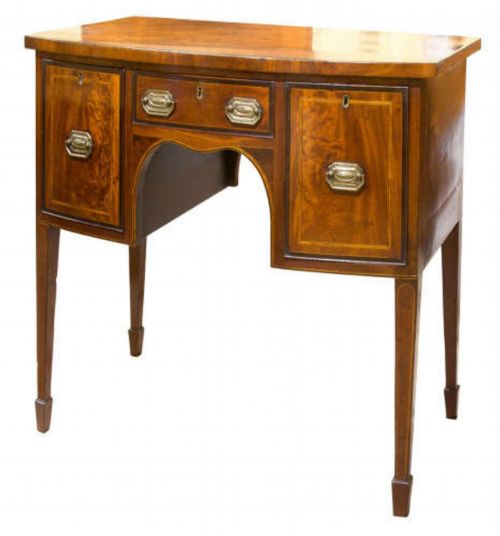
Object variations range from serpentine and bow-front serving surfaces to dedicated dressing tables and writing desks featuring multiple smaller drawers. The defining architectural trait is the central kneehole space, which separates banks of graduated drawers beneath a broad top.
How they were made
Cabinet makers built these pieces using solid mahogany, walnut, or pine carcases veneered with flame mahogany or accented with satinwood and boxwood stringing. Timber selection prioritized rich grain patterns, particularly on drawer fronts and curved bow-front or serpentine surfaces.
Construction techniques relied on hand-cut dovetails for drawer boxes and mortise and tenon joints for the structural frames. Brass hardware, including drop handles and backplates, was fitted to secure drawers that often incorporated sliding shelves or fitted desk interiors.
The inventory includes bow-front sideboards, kneehole desks, dressing tables, and miniature tea caddies.
What varies in quality
Quality rests in the selection of figured timber veneers and the precision of decorative wood inlay work, such as purpleheart banding or boxwood stringing. Superior examples display continuous grain patterns across drawer fronts and careful attention to secondary timbers used inside.
The sophistication of the silhouette defines the upper tier of pieces, particularly where cabinet makers shaped timber into complex bow-fronts or serpentine curves. Original brass handles, sound drawer construction without excessive timber shrinkage, and untouched surface patination separate finer workshop output from standard production.
The Georgian Kneehole Sideboard Glossary
- Kneehole
- A recessed central space beneath the main surface of a desk or sideboard, designed to accommodate the user's legs when seated. This configuration creates flanking pedestals filled with multiple stacked drawers.
- Bow-front
- A convex, outward-curving front profile popular on case furniture during the late eighteenth and early nineteenth centuries. This curved shape softens the rectangular outline of the sideboard.
- Serpentine
- A front contour characterised by a central convex curve flanked by two concave curves, or vice versa. This complex shaping requires advanced woodworking skill.
- Inlay
- A decorative technique where contrasting woods like satinwood, boxwood, or purpleheart are inserted into recesses cut into the primary surface. It creates geometric or botanical patterns across drawer fronts and borders.
- Dovetail
- A traditional corner joint formed by interlocking wedge-shaped fingers pinned together. Hand-cut dovetails indicate older cabinet making methods.
Georgian Kneehole Sideboard: Frequently Asked Questions
How do I date a georgian kneehole sideboard?
Dating relies on examining the secondary timbers, construction methods, and overall silhouette. Earlier pieces often display walnut veneers and simpler lines, while later Georgian and Regency examples favour mahogany, bow-fronts, and refined stringing.
Hardware placement and drawer dovetail regularity provide further clues. Hand-cut joints and original brasses help narrow down the period of manufacture.
Where were these pieces used in the home?
These furniture forms served multiple functions in formal rooms, acting as serving tables for dining accessories or as writing desks in private studies. The central kneehole allowed someone to sit comfortably while writing or attending to household accounts.
In dining spaces, the broad top accommodated silver platters and dishes, while the deep drawers stored linens and cutlery out of sight.
What is the difference between a desk and a sideboard?
Desks feature internal writing compartments, baize-lined surfaces, or pigeonholes designed specifically for correspondence and paperwork. Sideboards prioritize surface area for serving food and deep drawers for storing dining room items.
Many kneehole forms bridge these categories, serving as multifunctional pieces that adapt easily to modern living spaces as dressing tables or hall consoles.
How do I care for antique mahogany wood?
Maintain antique mahogany by keeping it away from direct sunlight and sudden temperature shifts that can cause timber to split. Regular dusting with a soft, dry cloth preserves the polished surface without building up residue.
Occasional application of traditional beeswax feeds the timber and enhances the natural grain patination. Avoid modern silicone-based sprays entirely.