

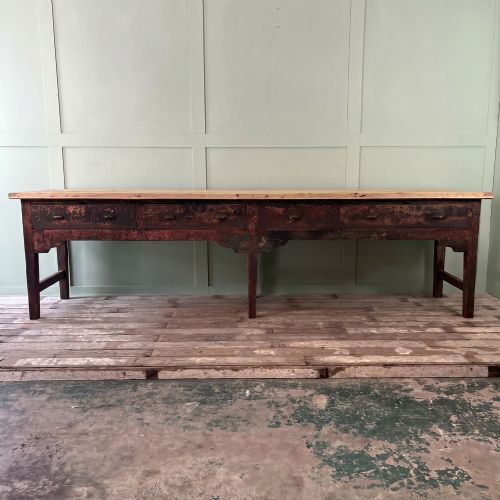
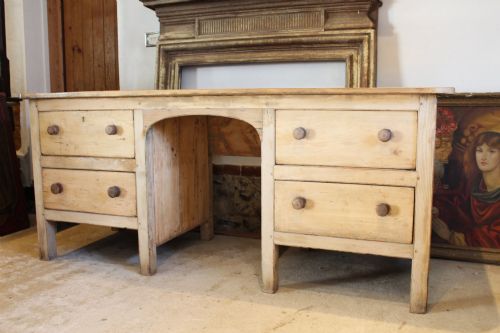
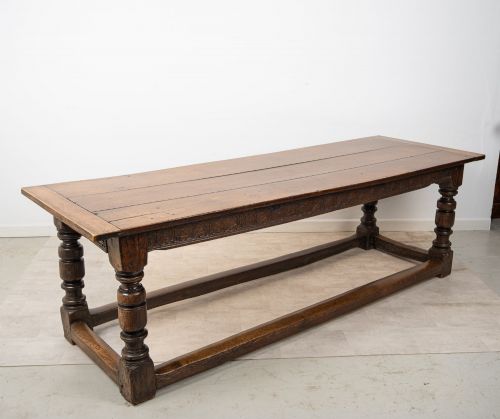
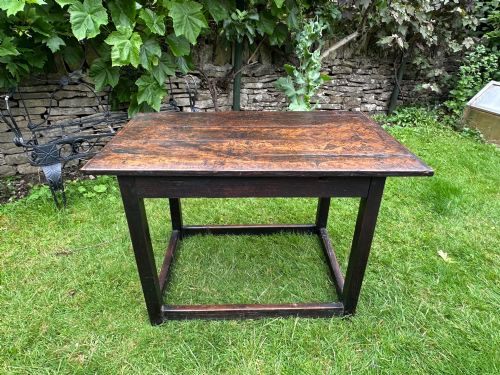
Georgian Kitchen Table
A georgian kitchen table brings solid oak, pine or elm timbers into daily domestic use, offering hard-wearing working surfaces built to last centuries.
Georgian Kitchen Table
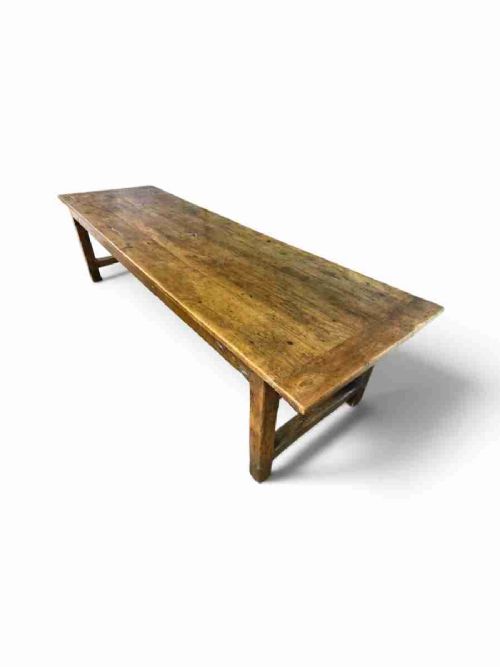
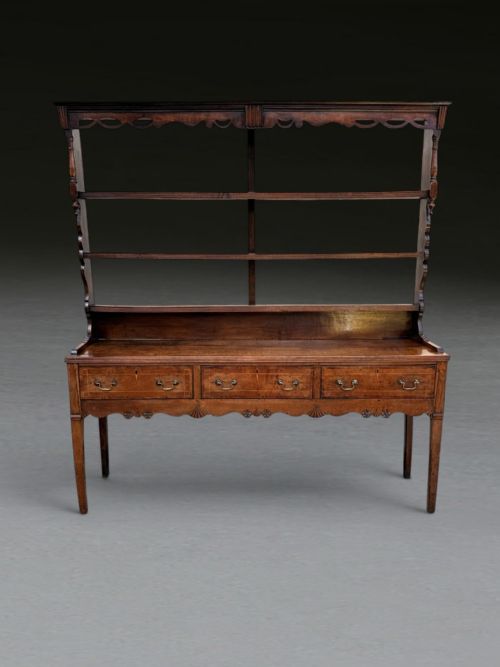
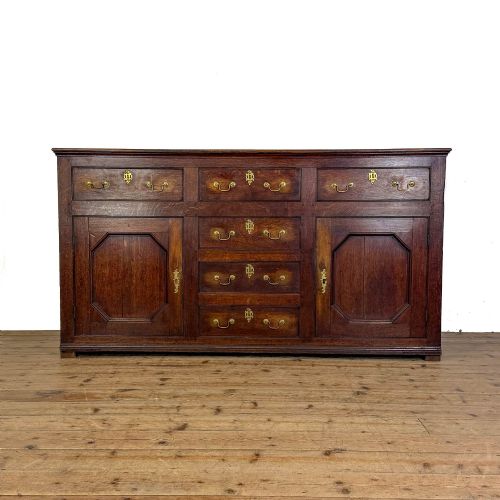
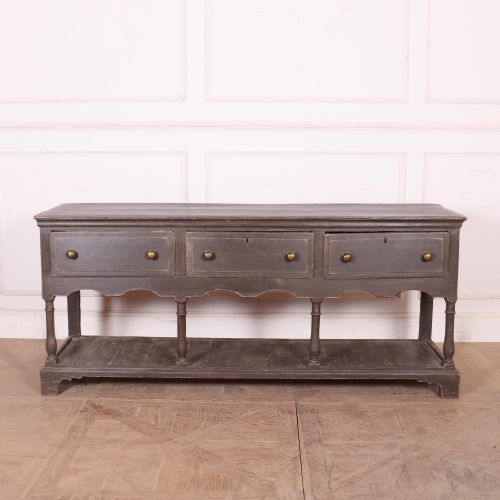
When you search for a georgian kitchen table, you are looking at utilitarian domestic furniture spanning the eighteenth and early nineteenth centuries. These pieces encompass sturdy farmhouse dining tables, drop-leaf pembroke tables, gateleg tables, and heavy potboard dresser bases used for food preparation and storage.
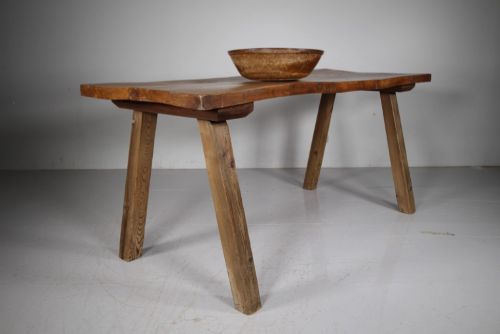
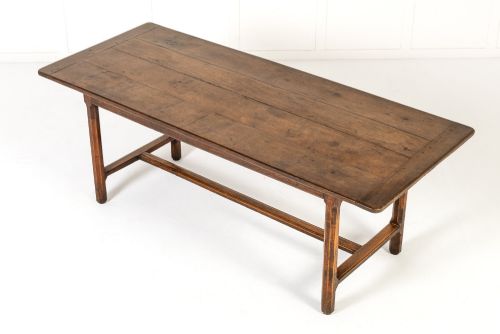
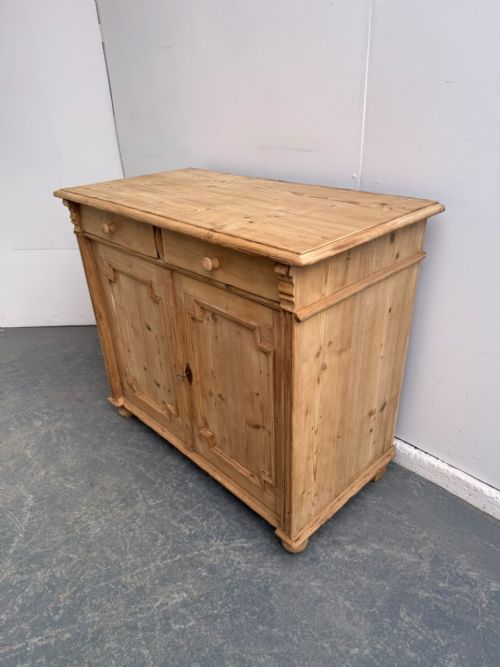
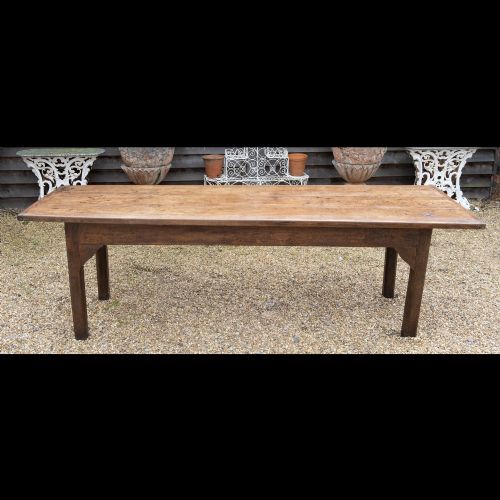
The versions you are most likely to meet on this page are substantial oak refectory boards, scrubbed pine scullery tables, and elm or sycamore dairy prep surfaces. Many originate from English country houses and farmhouses, reflecting the robust vernacular craftsmanship of the period.
How they were made
Makers constructed these tables using thick native timbers such as oak, pine, elm, and sycamore, often combining hardwoods for framing with softer woods for secondary parts. Plank tops were joined tightly to endure heavy daily labour, supported by sturdy stretchers and robust legs.
Surfaces frequently show the marks of hand-sawing and adzing, while painted finishes or raw scrubbed timber reveal decades of functional domestic use without modern machinery.
The listings here feature predominantly oak and pine timbers, spanning formal George III dining pieces down to rustic elm and sycamore dairy preparation tables.
What varies in quality
The grade of a piece rests upon the integrity of its timber and the retention of its original structural components rather than pristine condition. Thick plank tops with minimal warping and unblemished stretchers distinguish superior examples from heavily altered or patched specimens.
Proportion and timber selection dictate the upper tier, where well-figured oak boards or clean, untouched pine surfaces demonstrate the maker's eye for domestic utility.
The Georgian Kitchen Table Glossary
- Potboard
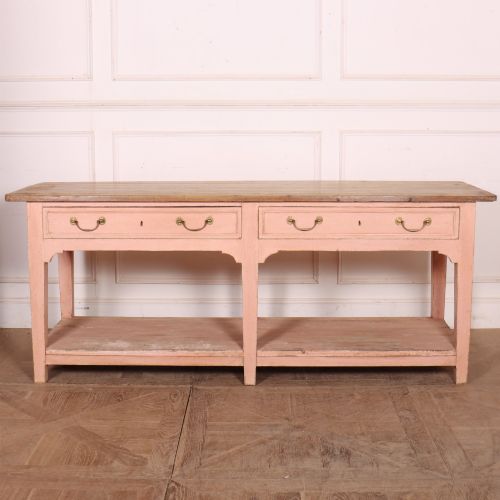
- An open lower shelf built into a dresser base or serving table, traditionally used for storing heavy pots and pans. This lower tier provides structural stability to the base frame.
- Refectory table
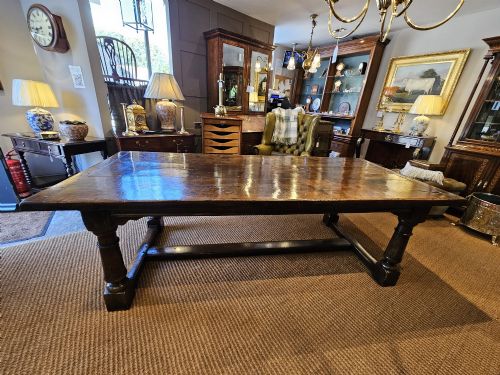
- A long, narrow dining table designed for communal meals, featuring sturdy legs joined by longitudinal floor stretchers. These tables were built to withstand heavy daily use in large domestic spaces.
- Pembroke table
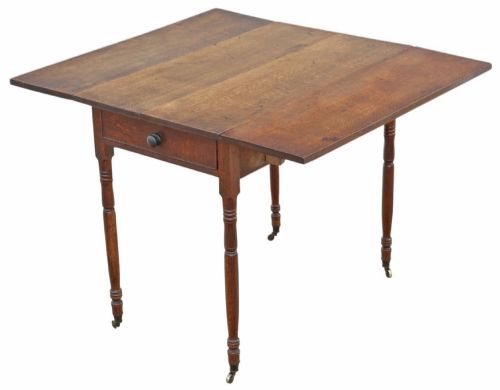
- A small, versatile table featuring drop leaves on either side supported by hinged brackets. This form allowed for easy expansion when extra surface area was required.
- Scrubbed top
- A wooden surface washed repeatedly with soap and water over generations, removing old finishes to leave clean, pale grain. This finish is typical of utilitarian pine and sycamore kitchen boards.
- Gateleg table
- A drop-leaf table where hinged legs swing outward like gates to support the folding flaps. This design maximises floor space when the leaves are dropped.
Georgian Kitchen Table: Frequently Asked Questions
What defines a georgian kitchen table?
These tables are defined by their utilitarian construction, solid timber frames, and domestic origins dating roughly between the accession of George I and the early Victorian era. They were built strictly for daily labour, food preparation, and family dining.
Unlike formal parlour furniture, kitchen tables from this period utilise durable woods like oak, pine, and elm without elaborate veneers or delicate inlay work.
How were these tables used daily?
Families and household staff utilised these surfaces for kneading bread, chopping meat, rolling pastry, and serving meals. The heavy timber tops absorbed continuous domestic activity.
Potboard shelves underneath held heavy earthenware and metal cookware, keeping essential culinary tools within arm's reach during busy kitchen hours.
How do I care for antique pine?
Maintain scrubbed pine surfaces by cleaning them with mild soap and warm water, avoiding harsh chemical strippers that strip the dry grain. Regular gentle waxing helps protect the wood from moisture.
Keep the table away from direct heat sources and drastic humidity changes to prevent the old timbers from splitting or warping.
How can I tell pine from oak?
Oak is a heavy hardwood featuring visible medullary rays and a dense, golden-brown grain that darkens gracefully with age. It resists heavy knocks and provides immense structural rigidity.
Pine is a lighter softwood with a paler, softer appearance, showing distinctive knots and ring patterns. It feels lighter to the touch and takes on a scrubbed, chalky texture through repeated washing.