





Georgian Irish Glass
Georgian Irish glass unites brilliant heavy lead crystal and striking ebonised mirrors, offering unmatched clarity and deep-cut brilliance for the serious table or wall.
Georgian Irish Glass
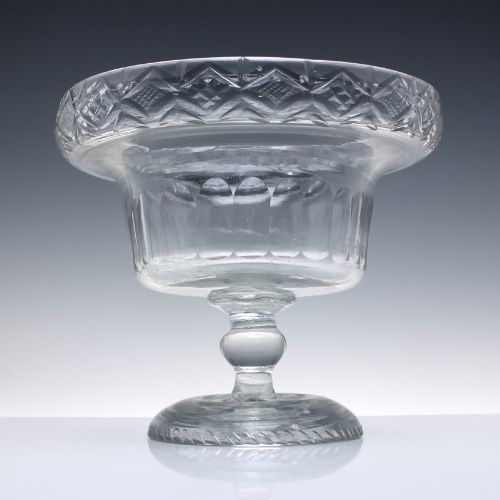
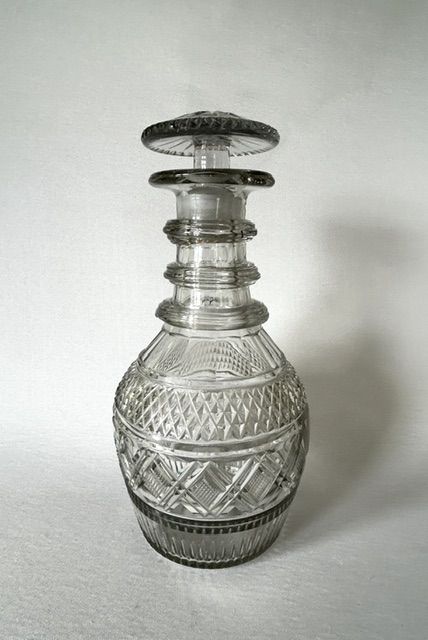
When buyers search for georgian irish glass, they encounter heavy lead crystal vessels alongside elaborate mirrors framed in ebonised wood. The drinking vessels, decanters, and standing bowls from this tradition display distinct deep-cut facets that catch candle and daylight alike.
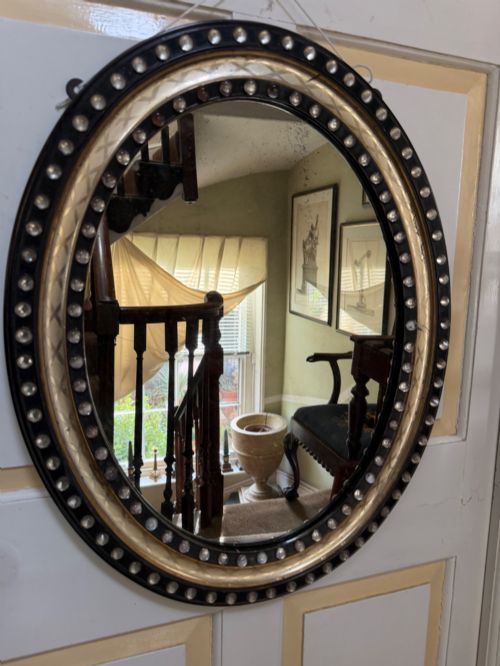
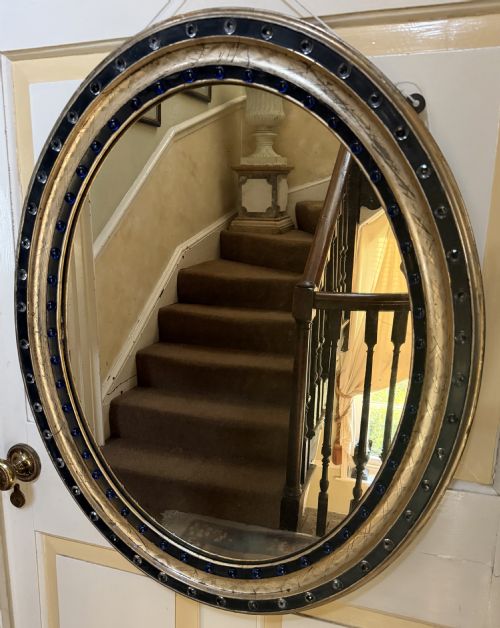
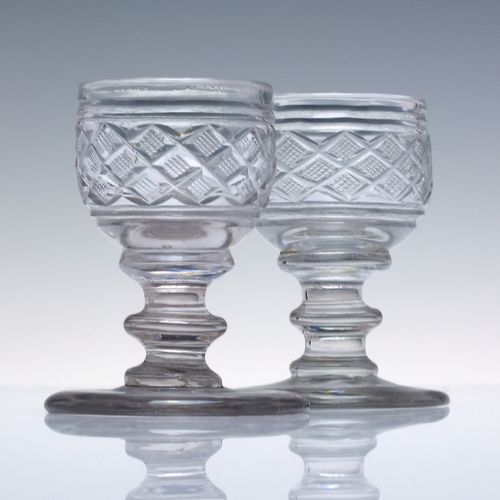
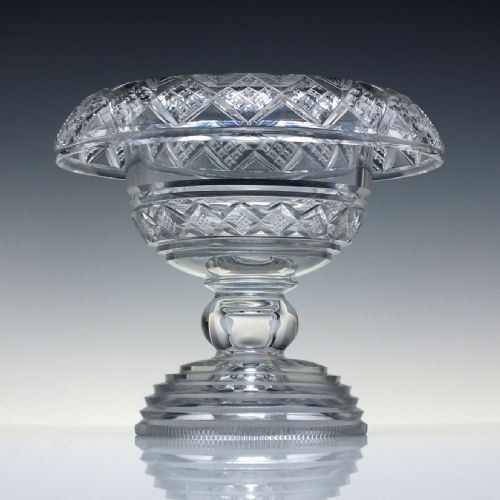
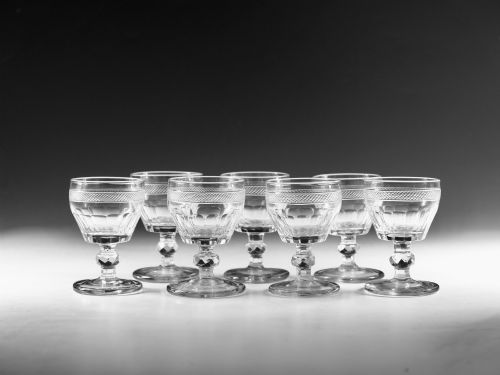
The pieces on this page span the late eighteenth century through the Regency period and into the early nineteenth century. Centrepiece bowls, rummers, and salt cellars dominate the glassware selection, while large oval wall mirrors with applied glass decoration represent the mirror forms.
Collectors also find associated items including solid sterling silver dish rings and mahogany stick barometers made in Dublin. This mix reflects the broader decorative arts output of Irish workshops during the Georgian era.
Materials and Manufacture
Makers utilised heavy lead crystal that allowed deep, crisp wheel-cutting without losing structural integrity. This dense metal gave decanters and rummers their characteristic ringing tone and considerable heft in the hand.
Mirrors combined ebonised wood frames with parcel silver-gilt details and applied glass elements such as facetted jewels and cobalt blue cabochons. Silversmiths additionally contributed sterling silver dish rings and mounts that complemented the glass.
The cutting technique involved pressing rotating wheels against the annealed glass blank to carve geometric patterns, flutes, and diamonds. Artisans polished the cut surfaces to achieve a bright finish that contrasted sharply against unpolished areas.
Georgian Irish Glass Retail Price Guide 2026
Typical asking prices for georgian irish glass among the pieces listed under this phrase on Sellingantiques today, from the lower quarter to the upper quarter. They describe what is for sale here now, not the wider market.
Listings feature lead crystal, sterling silver, and ebonised wood across forms including wall mirrors, decanters, rummers, and stick barometers.
Distinctions in Quality
Quality rests upon the depth and crispness of the cutting, where sharp, clean facets demonstrate superior handwork. Softer or rounded edges indicate less skilled finishing on the wheel.
The purity and colour of the metal itself separate standard items from exceptional ones. Premium lead crystal displays high refractive index and minimal bubbling within the substance.
For mirrors and framed pieces, the complexity of applied decoration and the preservation of original ebonising dictate the standing of the object. Surviving original gilt and glass jewels elevate the piece considerably.
The Georgian Irish Glass Glossary
- Lead crystal
- Heavy glass containing lead oxide that increases refractive index and softness for cutting. It produces a resonant tone when struck.
- Facetted glass
- Glass decorated with flat polished planes ground into the surface. These cuts catch and reflect light from multiple angles.
- Ebonised wood
- Timber stained or treated to imitate ebony. It provides a dark contrasting border for silver-gilt details and clear glass jewels.
- Dish ring
- An open-centred silver or metal stand used to elevate bowls on the dining table. They are frequently associated with Irish domestic silver.
- Rummer
- A large, sturdy drinking glass popular in the eighteenth and nineteenth centuries. They usually feature a short stem and a bucket-shaped bowl.
Georgian Irish Glass: Frequently Asked Questions
How do I identify genuine Georgian Irish glass?
Authentic pieces show heavy weight due to high lead content and hand-cut facets that feel slightly irregular to the touch. Look for deep wheel-cutting and the subtle optical distortions typical of early manufacture.
Examine the base for a pontil mark where the blowing iron was detached. Older lead crystal often exhibits a greyish or bluish tinge under bright light rather than a sterile modern clarity.
How were salt cellars and rummers used?
Salt cellars stood on the dining table to hold seasoning for individual guests or groups. Rummers served hearty portions of ale, wine, or punch during communal gatherings.
These functional objects formed a central part of formal dining rituals. Their thick walls helped withstand regular handling and heavy use in domestic settings.
What is the difference between Anglo-Irish and Irish glass?
Anglo-Irish glass refers to wares produced in either Ireland or England during periods of close trade and stylistic overlap. Distinguishing the exact workshop can prove difficult due to shared techniques and worker migration.
Irish production often emphasised particularly heavy metal and bold, deep-cut geometric motifs. Regional taxation laws also influenced the weight and size of vessels made in different locations.