



Cut Glass Standing Bowl
A cut glass standing bowl sits on a table to hold fruit or flowers, bringing weight and sparkle to a room.
Cut Glass Standing Bowl
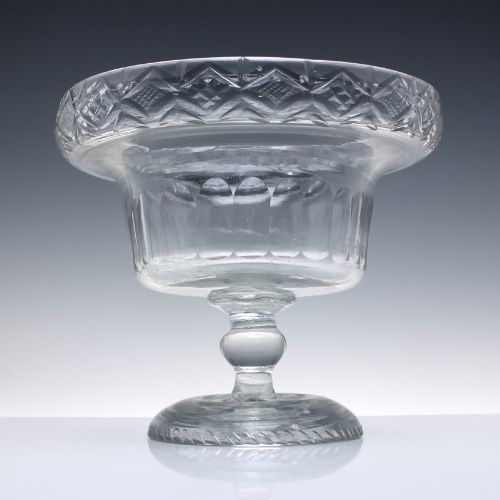
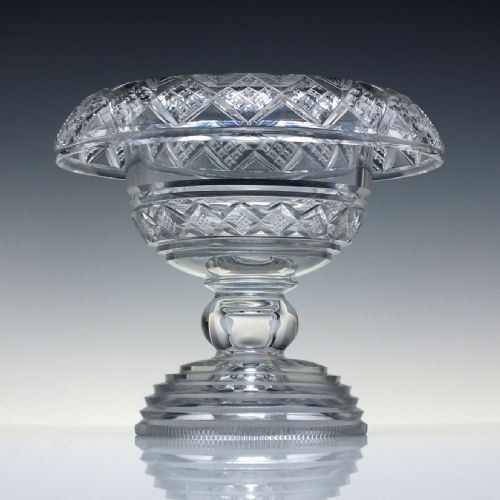
A cut glass standing bowl serves as a table centrepiece or decorative dish, raised on a base or pedestal to command attention. These pieces range from Georgian Irish kettle drum bowls and early nineteenth century examples to Victorian tazzas and Edwardian jam pots.
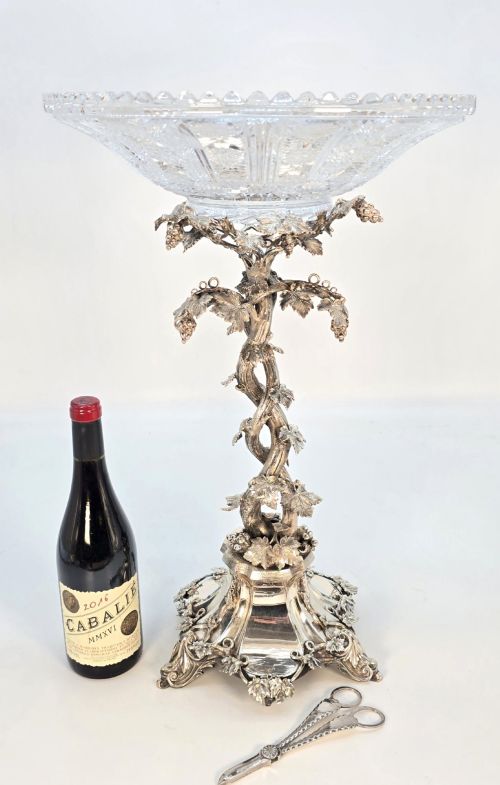
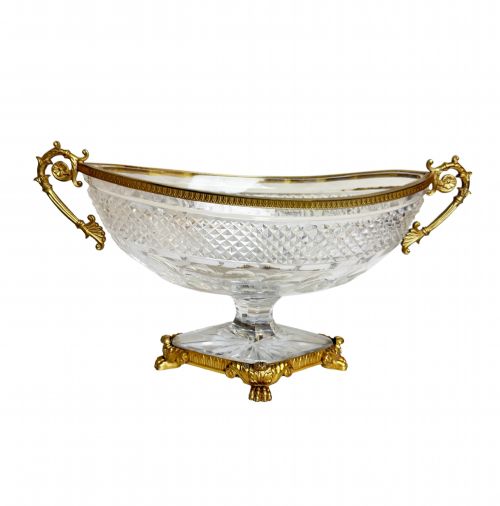
Buyers will most frequently encounter centrepieces and centrepiece bowls combining cut crystal or lead crystal with silver plate, Old Sheffield plate, or ormolu mounts. The forms vary from standard punch bowls to elaborate nautical designs and yellow over crystal tazass.
Materials and construction
Makers shaped these bowls from cut glass, cut crystal, lead crystal, and cased glass, applying wheel-cutting techniques to create deep facets and patterns. Many vessels incorporate etched motifs alongside the heavy geometric cutting.
Metalwork forms an integral part of the construction, utilising silver plate, Old Sheffield plate, gilt bronze, ormolu, and silvered bronze. These metals provide secure stands, mounts, and rims to support the heavy glass bodies.
Cut Glass Standing Bowl Retail Price Guide 2026
Typical asking prices for cut glass standing bowl among the pieces listed under this phrase on Sellingantiques today, from the lower quarter to the upper quarter. They describe what is for sale here now, not the wider market.
The listings on this site span the Georgian, Victorian, Edwardian, and early twentieth century periods, featuring French and English origins.
Assessing quality and execution
The distinction between tiers rests upon the clarity of the crystal and the crispness of the cutting, where sharper facets catch the light more intensely. Heavier lead crystal and deeply defined geometric patterns denote finer execution.
The integration of the metal mounts also dictates standard, with cast ormolu, silvered bronze, and substantial silver plating showing superior craftsmanship compared to simpler secondary metals. Well-balanced stands and undamaged rims elevate the standing bowl.
The Cut Glass Standing Bowl Glossary
- Tazza
- A shallow bowl or saucer mounted on a stem and foot, used historically for serving fruit or sweetmeats. These elevated dishes often feature cut or etched crystal.
- Old Sheffield plate
- A composite material made by fusing a thin sheet of silver to a thicker copper base, common in antique tablewares before modern electroplating.
- Ormolu
- Gilt bronze mounted on decorative objects, providing a rich golden finish that frames the glass bowls.
- Cased glass
- Glass composed of two or more distinct layers of different colours, allowing the cutter to expose the underlying layer by cutting through the top.
- Epergne
- A large table centrepiece featuring a central bowl with branching arms to hold smaller baskets or dishes.
Cut Glass Standing Bowl: Frequently Asked Questions
What is a standing bowl used for?
These bowls serve primarily as table centrepieces to display fruit, flowers, or sweetmeats during formal dining.
Their elevated design draws the eye upward, making them natural focal points for large dining tables and sideboards.
How do I clean a cut glass bowl?
Wash the glass gently in lukewarm water using mild detergent and a soft cloth to avoid scratching the surface.
Dry thoroughly with a lint-free towel to maintain the brilliant sparkle of the cut crystal facets.
How do I date a silver plated centrepiece?
Examine the base metal underneath the plating, noting whether it is Old Sheffield plate or later electroplated nickel silver.
Stylistic cues in the cutting and mount design, such as Victorian aesthetic movement motifs or Edwardian lines, also help determine the era.
Are these bowls heavy?
Genuine cut lead crystal and heavy metal mounts create substantial weight, ensuring stability when the bowl stands filled on a table.
This heft distinguishes older pieces from lighter modern glassware.