
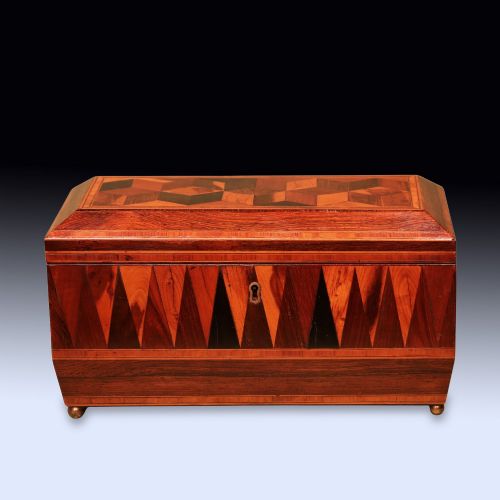


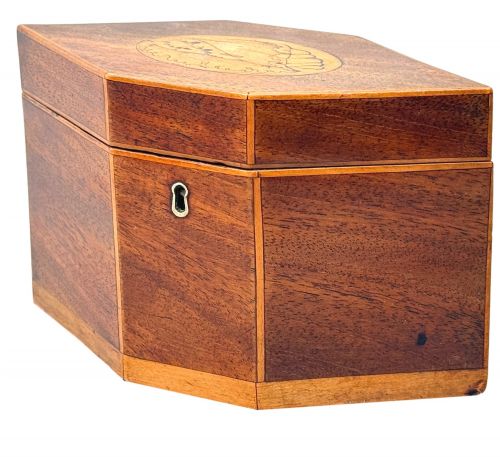


Georgian Inlaid Tea Chest
A georgian inlaid tea chest is a refined timber box designed to store precious tea leaves, bringing period craftsmanship directly into a modern room.
Georgian Inlaid Tea Chest
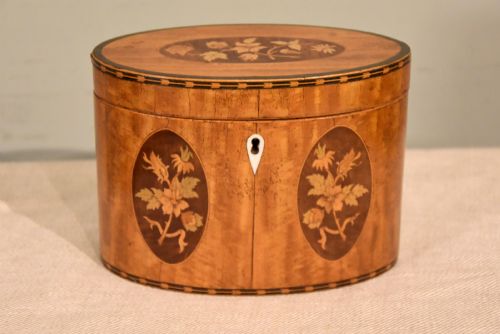
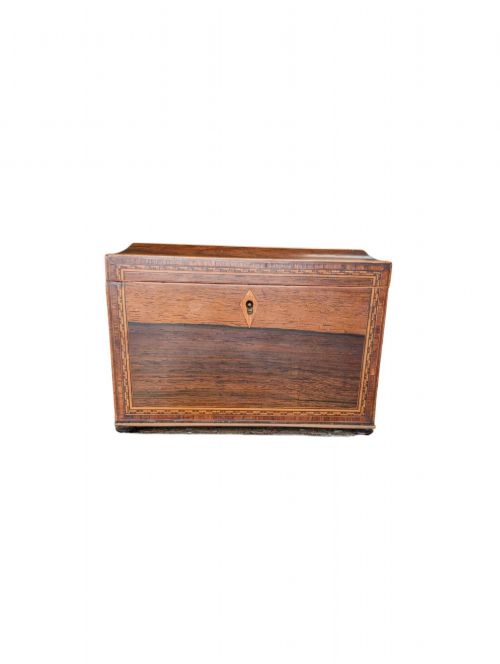
The specimens seen here span the eighteenth and nineteenth centuries, utilising woods such as mahogany, satinwood, rosewood, harewood, and yew-wood. The most frequent versions on this page are mahogany and satinwood caddies featuring intricate stringing, shell motifs, or butterfly inlays from the late eighteenth century onwards.
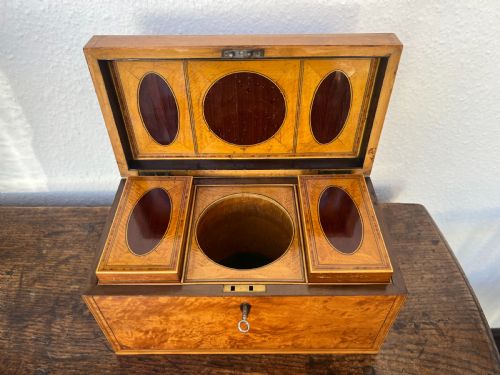
Makers designed these objects to sit prominently on side tables, incorporating fitted interiors that often included compartments for different tea varieties and a central mixing bowl. The presence of brass handles, lion masks, or parquetry details marks them as items intended for display as well as utility.
Materials and Construction
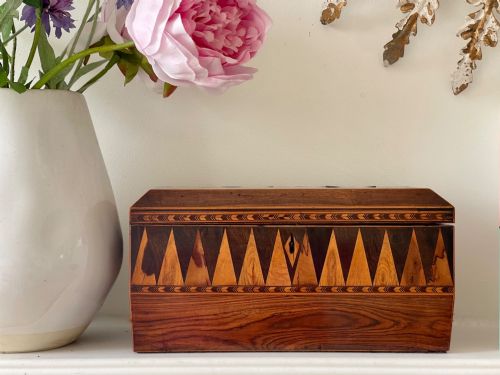
Cabinetmakers constructed these chests using solid framing and delicate timber veneers, combining dense base woods like mahogany and rosewood with contrasting light woods such as boxwood and satinwood for decorative effect. Wood inlay, parquetry, and marquetry techniques created geometric patterns, floral motifs, and banded borders across the surfaces.
Craftsmen embedded brass stringing and utilised specialised Tunbridge ware or intricate wood mosaics to decorate the exterior panels. Interiors frequently featured fitted compartments lined for the secure storage of delicate canisters and mixing vessels.
Listings feature woods including mahogany, satinwood, rosewood, harewood, yew-wood, ebony, boxwood, and partridge wood.
Distinctions in Quality
The standard of a piece depends heavily on the precision of the timber matching and the complexity of the veneer work, where tight grain alignment and varied timbers such as burr yew or amboyna indicate superior workmanship. Elaborate decorative additions like shell inlays, parquetry, and finely chased brass mounts separate standard utilitarian containers from masterwork examples.
Structural integrity and the preservation of original fitted interiors heavily influence the standing of a specimen. Examples that retain their original lockable mechanisms, interior lids, and unblemished wood surfaces demonstrate a higher grade of historical survival.
The Georgian Inlaid Tea Chest Glossary
- Teapoy
- A small stand or large caddy designed to hold tea, often raised on a central pillar or tall legs. They provided a convenient station for serving tea in the parlour.
- Parquetry
- A geometric mosaic of wood pieces used for decorative floors and box surfaces. It creates striking patterns through the precise arrangement of contrasting timber veneers.
- Marquetry
- The art of applying pieces of veneer to a structure to form decorative patterns and pictures. Craftsmen used various coloured woods to depict detailed floral and figurative scenes.
- Sarcophagus form
- A box shape featuring a sloping lid and a wider body, reminiscent of ancient stone coffins. This architectural style became particularly popular during the Regency period.
- Tunbridge ware
- Woodworking characterised by tiny mosaic tiles forming pictorial or geometric designs. It originated in the spa town of Tunbridge Wells during the eighteenth and nineteenth centuries.
- Stringing
- A narrow strip of contrasting wood inlay used to outline panels, drawers, or box lids. This technique defines the edges and adds linear elegance to the piece.
Georgian Inlaid Tea Chest: Frequently Asked Questions
What were tea chests used for?
These boxes stored precious tea leaves securely under lock and key when tea was an expensive commodity.
Servants or hosts brought the container to the drawing room to measure out portions for each pot.
How do I date a tea caddy?
Dating relies on identifying the prevailing timber choices, hardware styles, and inlay techniques of specific periods.
Late eighteenth-century pieces often feature satinwood and shell motifs, while Regency examples lean towards rosewood and brass inlay.
Where should I place a tea chest at home?
These chests suit placement on side tables, bookcases, or chests of drawers in living areas.
Keep them away from direct sunlight and strong heat sources to protect the delicate wood veneers and inlays.
What is the difference between a caddy and a teapoy?
A tea caddy is a tabletop box meant to be moved as needed during tea service.
A teapoy is typically a larger chest supported by its own pedestal or legs, standing independently on the floor.